FW
Turkey emerges the new global production hub
"Preferred by major consumer markets due to their cheaper costs, the Asia-based supply system is undergoing a major change. As a recent McKinsey Global Institute’s report indicates, large consumer markets are turning towards new and closer manufacturers."
 Preferred by major consumer markets due to their cheaper costs, the Asia-based supply system is undergoing a major change. As a recent McKinsey Global Institute’s report indicates, large consumer markets are turning towards new and closer manufacturers.
US and European apparel companies had earlier shifted most of their production to China and other Asian countries to benefit from the low labor costs that these countries offer. However, these countries cannot satisfy the requirements for quick product delivery as it takes at least 30 days for a product to be shipped from Asia to the Western markets. Geopolitical tensions that increase trade restrictions and uncertainty in exchange rates also reduce the benefits of this model.
Geographical proximity gains importance
Assessing this situation, McKinsey Turkey Country Director Can Kendi states the textile and apparel sector,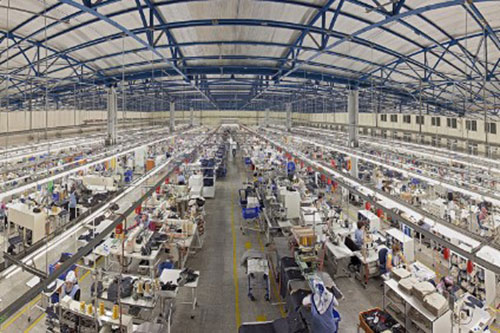 earlier based on raw materials and labor-intensive production, has changed significantly due to globalisation, new technologies, brand and designs. Geographical proximity and technology are some of the other factors that have gained importance in the market. Taking these factors in account South East Asian markets like Turkey are emerging as a favorite production destination for these manufacturers.
Automation reduces delivery time
Products manufactured in the Asian countries for the European market can be delivered in 30 days by ship, whereas those manufactured in Turkey can be delivered between 3 and 6 days. Advanced automation in Turkey makes it possible to reduce apparel production by 40-70 per cent. Labour costs in Turkey were five times higher than in China in 2005; this difference decreased to 1.6 times as of 2017. Geographical proximity also brings significant savings in transportation, bringing production costs to lower levels.
Labour wages and production costs are increasing across Asia. For example, in 2005, the cost of labour in China was one-tenth of the cost in the US; but today it is one-third. Mexico, which is close to the gigantic US market, now offers lower labour costs than China. Although the costs of manufacturers close to the European market are still higher than China, this difference is decreasing. On the other hand labor costs in Turkey, which were five times higher than in China in 2005; decreased to 1.6 times as of 2017. Its geographical proximity also brings significant savings in transportation, bringing production costs to lower levels.
European companies can reduce their production costs by 3 per cent if they manufacture their apparels from Turkey instead of China. Automated production in Turkey is expected to provide between $1:30 to $2 cost savings per piece. It can also provide a margin improvement of between 3 per cent-4 per cent.
With lower production, India’s cotton imports may rise this year
With a fall in output, India’s cotton imports will rise to a record high this year. Mills will be forced to import at whatever cost to keep their factories running. Exports are also expected to shrink. However, in view of the lower crop, if exports take place as estimated, prices of domestic and imported cotton will remain firm.
Prices in the international market have fallen sharply the past one month, which raises concerns about exports in the immediate future. However, prices in India are not falling in tandem. Global cotton fundamentals suggest world cotton prices are at seasonal low. However, there is a high chance that the benchmark US cotton futures contract has decoupled from the global cotton valuations as a direct consequence of the ongoing trade war.
If the last season’s low levels are breached, it would be due to factors outside the fundamentals of the commodity. The ongoing trade war between the world’s two biggest economies has brought the global economy on the verge of another financial meltdown. This has a direct bearing on cotton textile consumption and demand. If global cotton prices breach and sustain at last year's low levels, there is a high chance of this event materializing.
In such a scenario, if India’s exports also remain lower than estimated, imports will also not rise as mills will get domestic cotton.
Lenzing partners Hyosung for sustainable collection
Lenzing and Hyosung have collaborated on a new sustainable fabric collection. This new collaboration will showcase the sustainable benefits of the two companies’ leading brands, Tencel Modal from Lenzing and creora elastane from Hyosung, and offer brands and retailers new levels of performance and innovation.
The combination of natural softness, comfort and performance from Tencel and the power, fit and recovery of creora elastane offers customers new products for sports and leisure clothing with unrivalled sustainable credentials.
The collection offers Lenzing Ecovero with creora eco-soft for a softer touch, whiter whites and low heat settable for reduced energy consumption, Tencel Modal and creora PowerFit for smooth, natural feel with superior shaping and compression, and Tencel Modal and creora Black for breathable, softer touch and deeper black.
This innovative fabric collection delivers enhanced performance with products that use less energy and water and improved environmental care that today’s informed consumers demand. Collaboration is the way forward for the textile industry which seeks creative and performance solutions throughout the value chain and to meet changing market dynamics.
Hyosung is the largest elastane producer in the world. Lenzing is currently operating in a challenging environment. The group will put all its effort to readjust the execution of its growth plan to meet the strong market demand for its lyocell fibers.
Michael Kors acquired Versace to retain its glitz and glamour
Michael Kors, the 59-year-old designer acquired the luxury fashion brand Versace in September 2018 for $2.7 billion. His company, Michael Kors Holdings also officially changed its name to Capri Holdings and will trade under the new stock market ticker CPRI. However, despite its acquisition, Versace will remain Italian and retain its glamour, daring and inclusive attitude.
Michael Kors Holdings also purchased luxury footwear brand Jimmy Choo Ltd, for $1.35 billion in 2017 as part of his plan to break into the high-end fashion market. While Michael Kors is associated with all-American style and mass appeal, Versace is inextricably tied to Italian design and luxurious high-fashion flair.
Heimtextil predicts escapism trend to dominate in 2019
According to design themes predicted by the home and contract textile tradeshow Heimtextil, to be held in Frankfurt from January 8 to 11, 2019, the urge to escape dominates textile trends in today’s digital world.
Three of the five trends: Seek Sanctuary, Escape Reality, and Go Off-Grid—focus on retreating from the chaos of everyday life. According to the report, a minimalist color palette with carefully selected structural details, curvy shapes, and upholstery gives rise to comfort and warmth in the Seek Sanctuary trend. In Escape Reality, shimmering iridescent surfaces combine with mother-of-pearl effects and high gloss for a surreal journey into an alternate world.
Chasing a return to the natural world, Go Off-Grid is all about outdoor textiles that are durable, sophisticated, and inspired by nature and its beautiful imperfections. The remaining trends, Pursue Play and Embrace Indulgence, focus on enjoyment via color and geometry—either playful and bold or soothing with a focus on high-quality, honest materials, respectively.
Increasing costs a fallout of tariff war, disrupts sourcing
Apparel sourcing won’t catch a break in the coming year where costs are concerned. As companies look to scale back China sourcing to mitigate the impact of the US-China trade war, and higher tariffs and costs of uncertainty that have come with it, they’ll also be grappling with higher costs in alternative sourcing countries.
Vietnam, perhaps the biggest beneficiary of the US-China trade fallout, will see its minimum wage increase in 2019, adding costs for companies looking to find sourcing solace away from China. In Bangladesh, factory owners are working on the new pay structure and are expected to implement the wage hike in January. If so, it will mark a 51 per cent increase in labor costs for Bangladesh.
In October, garment workers in Cambodia got a seven per cent increase to their minimum monthly pay. The increase is smaller than the 11 per cent increase in October last year. However, conditions in Cambodia’s garment and footwear sector have improved, with areas like child labor and payment of wages showing progress, though sustainable change is still required. As of April this year, the minimum wage in Myanmar went up 33 per cent.
Chinese fashion firms focus on the Middle East
China’s fashion and e-commerce industries are bringing fast fashion and luxury clothing to the rising Arab fashion market. This includes a lot of embellished evening wear that caters specially to the Middle East market.
The Arab world is no stranger to Chinese products, including Chinese clothing. Since at least the 1990s, traders from Arabian countries have been traveling to China to buy low- to middle-end garments and accessories from wholesalers in cities like Yiwu in Zhejiang Province, home to the world's biggest wholesale market. Chinese e-commerce platform Jollychic has over 50 million users in the Middle East.
The Middle East is one of the fastest rising fashion markets in the world, with young, wealthy consumers willing to spend money on clothing and accessories. The region is powerful in terms of consumer buying power. In comparison, buying power in the US is mediocre, where consumers have higher sensitivity to prices. The European market, on the other hand, has too small a population.
Revenue in the fashion segment in Africa and the Middle East is expected to grow at 10.5 per cent over the next five years. In recent years, many Western fashion brands have been trying to adapt to the Arab market.
Bangladesh’s December apparel exports increase 15 per cent
As per latest data released by Bangladesh Export Promotion Bureau, Bangladesh’s apparel exports increased by over 15 per cent in December, plagued by a spate of labor unrest and factory shutdowns. The apparel export receipt stood at over $17.8 billion during the July-December period, gaining over 15.6 per cent on a year-to-year basis. For December alone, export receipt was $2.9 billion.
Further data analysis shows growth declined from 18.5 per cent in November, due to labour unrest. Export exceeded the strategic target (as set by Bangladesh government) of $15.7 billion by more than 8.5 per cent. Knitwear exports witnessed a receipt of $8.6 billion, a gain of almost 14 per cent. For the month of December alone, knitwear segment fetched about $1.3 billion, making up 45 per cent of the total apparel exports.
Woven segment on the other hand witnessed a receipt of $8.4 billion during the same period, a gain of over 17 per cent. For December alone, the segment made up 55 per cent of the basket with $1.6 billion in receipt.
All exports combined, Bangladesh’s total exports amounted to $3.4 billion for December, making a marginal gain of 2.8 per cent. Apparel exports accounted for over 85 per cent of the total exports in December 2018.
Cheap imports hit Indian silk
Silk fabric manufacturers in Varanasi, Bhagalpur, Bangalore, Tamil Nadu and Surat are hit by imports of cheap silk fabrics from Vietnam.
Such imports from Vietnam increased from two lakh square meters in 2016 to five lakh square meters in 2017.
Imports of silk fabrics from Vietnam attract zero per cent duty, making the indigenous silk fabric product in India costly.
Domestic fabric manufacturers have demanded a safeguard duty of ten per cent on the import of silk fabrics from Vietnam. They also want access to the accumulated input tax credit, a reduction in the import duty on textile machinery, a reduction in power tariff, and the withdrawal of the anti-dumping duty on polyester filament yarn and viscose filament yarn.
Chinese factories manufacture silk fabrics in Vietnam and dump them in India at cheaper rates. This has affected the growth of Indian silk weaving and silk exports and created employment problems.
Vietnam and Bangladesh have been included in India’s most favoured nation status with a provision to have free trade of major textile commodities where silk fabrics are also included.
China produces 80 per cent of global silk output while India’s share is 13 per cent. Production in other countries accounts for the remaining seven per cent.
US apparel makers rush to import goods to avoid cost escalation
The impending additional tariffs on Chinese imports is pushing Los Angeles clothing makers to import goods quickly. Steve Barraza, owner of Tianello, a brand of women’s blouses cut and sewn in a factory with 40 garment workers near downtown Los Angeles, normally would have waited to bring in his once duty-free silk and other fabrics from China after the new year. But with the new 10 per cent tariff, which could go up to 25 per cent in March, he brought in 5,000 yards of assorted silk prints and 20,000 yards of Tencel fabric in December to carry him through his Spring orders.
Everyone is carefully watching the current trade negotiations between the United States and China, which could determine whether those 10 per cent tariffs are upped to 25 per cent in March on an additional $267 billion in goods. In junior’s wear market, margins are very tight on clothing, which sells at modest price points.
David Vered, President, YMI Jeans isn’t adjusting his import plans too much this year. He isn’t too worried about new tariffs and believes something will be worked out between the United States and China to avert a trade war.