FW
Malaysian clothing imports up 425 per cent
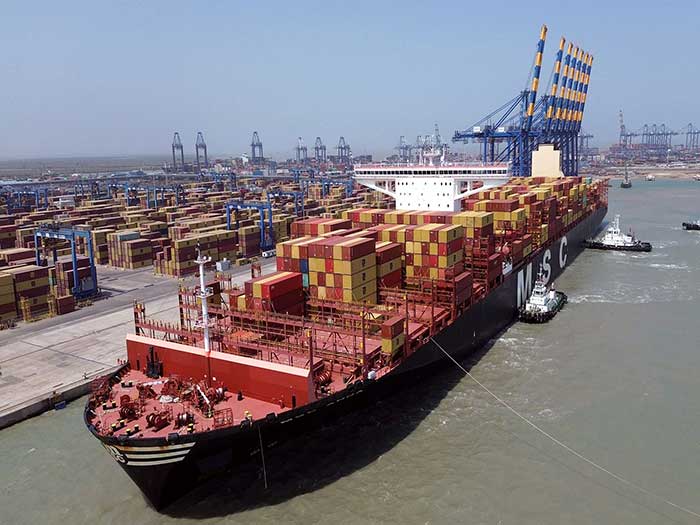
Malaysian clothing imports surged by 425 per cent in the seven years to 2017. Further import growth is likely as a result of increases in clothing sales in the domestic market -- in line with rising personal disposable incomes--as the government moves towards its goal of achieving high income status by 2020.
Another factor which is likely to contribute to growth in clothing industry is the age profile of the population which is young. The young tend to be much more fashion conscious than their elders and spend more money on clothing. One of the reasons for the surge in imports in recent years is the fact that clothing production has been rising at a much slower pace. This reflects a number of factors, including rising production costs, a general lack of skilled personnel, a high dependency on imported raw materials and, not least, competition from lower cost suppliers--especially those based in low cost producing countries in Asia. Exports have also been growing at a slower pace.
Further significant rise in clothing imports would provide opportunities for several of Malaysia’s key supplying countries. Among these are Cambodia, Indonesia, Thailand and Vietnam, which benefit from free trade with Malaysia through membership of the Association of Southeast Asian Nations (Asean).
Indian exporters seek hike in duty drawback
Indian apparel exporters are seeking a hike of duty drawback of about four per cent to 4.5 per cent to alleviate the embedded taxes which have been paid by them. This hike could translate into a Rs 5,000 crore boost to the apparel export sector and enhance its competitiveness.
This duty is embedded in various items like cotton seeds, electricity duty and taxes on diesel. India’s readymade garment exports to the world in the April-November period of 2018-19 decreased by 9.70 per cent compared to the corresponding period of the last fiscal.
Readymade garments exports in November 2018 grew 8.98 per cent as against November 2017. Growth in apparel exports is expected to be flat this year.
There has been a positive trend in exports for the entire textile value chain. The IIP production data for textiles and clothing also witnessed robust year on year growth during September 2018 as compared to September 2017. The textile and apparel industry saw a growth of 5.4 per cent and 20.9 per cent respectively during September 2018. Growing positive trend shows visible signs of recovery after a difficult period. The industry was under major stress especially after the implementation of GST.
Blossom Première Vision welcomes over thousand visitors to France
Blossom Première Vision was held in France, December 12 to 13, 2018. The number of targeted and high-quality visitors increased from France by 17 per cent, and from abroad by 35 per cent.
In December as in July, the event is an established, leading event for major French and European luxury and high-end fashion brands seeking exclusivity and exceptional creativity to design their pre-collections.
Blossom Première Vision welcomed 1,047 visitors from 23 countries, from the most prestigious fashion and luxury houses, who came to seek out and select new product developments and all the latest fabric and color innovations to build their spring/summer 20 pre-collections. Visitors included leading French fashion houses as well as a large and growing percentage of leading international brands. Following France, Italy had the second largest number of visitors. The United Kingdom, Belgium and the Netherlands followed.
Accessories manufacturers and component suppliers for clothing, jewelry, and leather goods were present as were specialists in textile accessories (ribbons) or metallic elements (buttons, buckles, rivets), buttons, zips and labels; and tanners for the fashion and leather goods markets: calfskin, lambskin, kid leather, exotic leathers etc.
In keeping with the values of the Premiere Vision group - selectivity, creativity, quality and innovation - Blossom Premiere Vision accompanies the season’s earliest collections thanks to a selective and extremely high-quality positioning.
FDI floods into Vietnam’s textile and apparel segment
Vietnam has become increasingly appealing to large foreign investor groups in the textile and garment industry. German-based Amann Group is constructing a factory. At the new production site, the group will produce around 2,300 tons of sewing threads per year, mainly for the manufacture of apparel and shoes. Amann is one of the world’s top three leading producers of high-quality sewing and embroidery threads. The new facility will be added to Amann’s existing network of factories in various countries across Asia, including Bangladesh, China, India, and Indonesia.
Kraig Biocraft Laboratories plans to set up a center for research and development of silk as well as grow mulberry to support spider silk in the country. Kraig is an American developer of spider silk-based yarn. Kraig has chosen Vietnam to scale up its spider silk commercialisation efforts.
Nearly $15.9 billion worth FDI was injected into more than 2,090 textile and garment projects in Vietnam by the end of last year. In the first half of 2018, the industry attracted another $2.8 billion in FDI. The domino effect created by FDI expansion in the textile and garment sector has also led to an increase in the number of foreign suppliers of machinery and equipment for the industry.
Bestseller unveils new business strategy with sustainability at the core
Danish brand Bestseller’s new strategy puts sustainability at the core of its business. The Fashion FWD strategy will cover Bestseller’s value chain and sets goals from 2019 to 2025 that will launch the company towards becoming climate positive, fair for all and circular by design.
The four focus areas are: Creating FWD, Making FWD, Engaging FWD and Delivering FWD.
Creating FWD is about working with innovative new fibers until everything Bestseller creates is made exclusively using sustainable materials. Making FWD aims to improve the environmental footprint of Bestseller’s products, supply chain and operations so they have a positive impact on the environment. Engaging FWD is an approach to embed human rights in the fashion industry, with a focus on the supply chain. The intention of Delivering FWD is to create a future circular model for fashion, where products and materials are ongoing resources.
Bestseller’s strengths are agility and responsiveness to trends. It will apply these strengths to respond to the changing demands of the planet and society, and to speed up the transition to a more sustainable reality. The company wants to play a significant role in overcoming the biggest sustainability challenges. Bestseller is present in 46 countries through more than 2,800 chain stores and 12,000 external multi-brand stores.
New curtains and sustainable terry articles——Karl Mayer
KARL MAYER sets the trend at Heimtextil, on Stand K 65 in Hall 3.0 at Messe Frankfurt and during an in-house show in Obertshausen
For the first time after roughly 40 years, KARL MAYER will again take part in Heimtextil in Frankfurt/Main. At the trade fair to be held from 8 to 11 January 2019, this innovative textile machine manufacturer will be introducing some worldwide novelties around the topics of terry fabrics and curtains. For this purpose, the company received from the organizers a stand located in the exhibition’s Trend Forum. There, KARL MAYER will be present on Stand K 65 in Hall 3.0 with an information booth. At the same time, an In-house Show will take place at the company’s headquarters in Obertshausen, which can easily be reached by shuttle bus. Machines and new textile developments will be shown there.
KARL MAYER will pool its new activities in the field of weft warp knits for Heimtextil under the WEFT.FASHION brand. For this purpose, a new weft curtain article will be produced for the In-house Show. The trendy pattern is captivating due to an extravagant design in the currently fashionable woven-like look. Sophisticated fancy yarn gives the warp-knitted weft curtain a completely new face. For this article, KARL MAYER announces a new weft-insertion warp knitting machine with an extremely attractive price-performance ratio – entirely in line with WEFT.FASHION: New HOME TEXTILES manufactured with the benefits of WARP KNITTING efficiency.
Moreover, there will be a machine premiere for the terry segment: for the first time, KARL MAYER will be showing its TM 4 TS-EL in a working width of 193? and in a gauge of E 28 in Germany. This efficient machine will reveal its high performance in Obertshausen by producing a revolutionary textile novelty: a double-face warp-knitted terry fabric with a soft velour layer made from microfibers on the outer face, and an absorbent surface made from cotton on the inner side. This article for bathrobes is not only functional and stylish, it also shows advantages in terms of environmental protection compared to woven counterparts, and this is due to the machine technology used for its manufacture.
KARL MAYER’s solutions for a sustainable production of terry articles can be found under TERRY.ECO, and the company’s entire commitment to a clean production stands under the heading CLEANER.PRODUCTIONS.
Great Interest in Mimaki Eurasia’s Sectoral Support Campaign
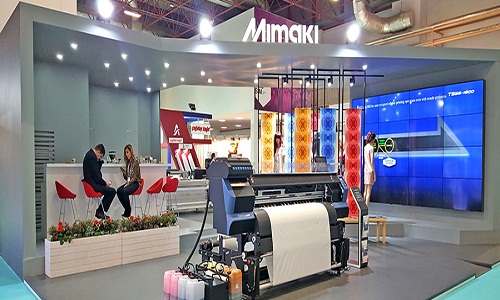
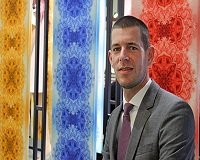 Mimaki Eurasia started a campaign at FESPA Eurasia 2018 in order to support the Turkish printing industry and became the central point of the show with their printing solutions. Mimaki Eurasia exhibited their advertising/graphic and textile printing applications in two separate booths, revealing their commitment and faith in the printing industry. Mimaki Eurasia, the main sponsor of the digital printing fair FESPA Eurasia 2018, was able to attract great attention through their message of strong support to the industry. Mimaki exhibited advertising and industrial printing solutions in Hall 10 and textile printing solutions in its booth at Hall 9, and turned into a centre of attraction of the fair with a user-focused comprehensive portfolio. FESPA Eurasia visitors experienced an unforgettable Mimaki experience for pre-processing, printing and post-processing.
Underlining the success of FESPA Eurasia 2018, Mimaki Eurasia General Manager Arjen Evertse said that they were pleased with the volume and productivity of the meetings. He said: “The intensity, from the first day of the fair was really nice. We have seen the positive response to the FESPA team’s work for overseas visitors. We hosted many foreign visitors at our booth in the first two days. Considering the whole of the fair, I can say that visitors from the Turkish printing industry constitute the main visitor category. We have realized productive meetings with our visitors in our hospitality area about their investments and the opportunities to expand their business.”
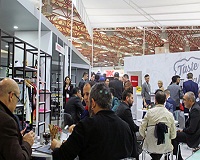 Evertse noted that the fair became the meeting point of the digital printing industry, and was a successful platform for hot sales as well. He continued his words saying; “In recent years, hot sales or order agreements did not take place in the fairs a lot. There was mostly an agreement for more forward-looking negotiations. However, FESPA Eurasia reminded how important fairs are for sales. We have realized significant sales in both industrial advertising and textile segments”. Evertse also stated that installations for some of the sales done during the fair had already started before the exhibition finished.
Sectoral Support Campaign will last until 31 January 2019
Underlining Mimaki Eurasia’s commitment to Turkey and the digital printing industry, Arjen Evertse said: "We believe in Turkey and its manufacturing power. We will continue to provide every kind of support we can give the industry in order to strengthen it and improve our users’ competitive position”. Evertse reminded that they have started a campaign covering up to 25% discount in various machine groups on the first day of FESPA Eurasia 2018, and said that it was the right time to invest.
“We want to support the Turkish market and investors with this campaign, which runs until 31 January 2019” said Evertse and continued as follows; “There are many print and advertising companies that want to invest. We have shown that this is the most favourable time period for sector professionals who were waiting on their investment due to the fluctuation in the market and who want to realize it as soon as possible”.
Mimaki Eurasia solutions dominate both halls
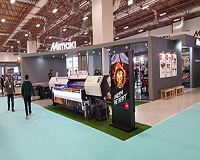
Mimaki Eurasia exhibited textile and digital printing/advertising printing solutions in 2 different halls. UV flatbed, roll-to-roll UV print/cut solutions were featured in the Hall 10 booth that addressed advertising and industrial printing. The TS30-1300 models were exhibited here with SIJ-320UV, JFX200-2513, CJV300-160, UCJV300-75 / 160, UJF-3042MkII EX, UJF-7151plus. Arjen Evertse stated that UCJV is already a very popular model in the market; “Our visitors have been curiously interested in the printing shown on copper film with the use of our superior UV-LED technology and in the new improved clear printing with special effects on silver film. They also experienced the unique 5-layer printing opportunity. They were also able to test our newly released silver metallic print ink on the Mimaki UJF-7151plus. Our technical information and successful results on the sample prints have affected the new investment decisions positively”.
Completely dedicated to textile, the pre-processing and post-processing units were exhibited for the first time in addition to the well-known digital printers at Mimaki Eurasia’s booth in Hall 9. Mimaki TR300-1850C/S coating and steaming units save cost and time in textile printing. Evertse emphasized that these products meet a significant need in the market; “Especially textile manufacturers from Bursa expressed their strong demands on these solutions. These positive feedbacks are very important for us, because as Mimaki, we have proved that we are offering full solutions for digital textile printing which goes beyond the offering of just printers”.
Another favourite of the textile booth was the TS55-1800 printer launched in the past months. Its high-speed features and the mini jumbo roll for the mid-segment manufacturers have attracted a lot of visitors. The Tx300P available both with belt and without belt can print directly onto fabric with different ink technologies enabling users to take on more niche and boutique jobs.
Digitally-Printed Upholstery Textiles
Crypton and Designtex have teamed up to introduce a special collection that pays homage to art, design, technology, performance, and two leaders in the contract textile industry. Designtex 5×5, A Crypton Collection features five contemporary artists from around the world, whose work is translated into five patterns in five colorways each, digitally printed onto Crypton-backed upholstery textiles to celebrate 25 years of fabric solutions.upholstery textiles
Crypton® is an intelligent, engineered fabric system offering permanent stain and odor resistance plus an integrated moisture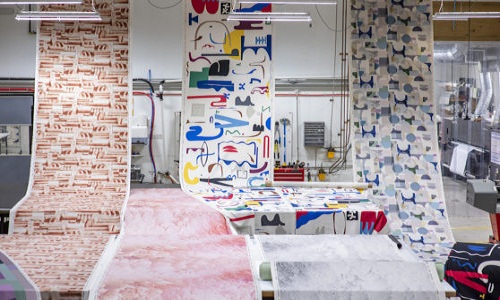 barrier.
Designtex commissioned the five artists and expanded their works into five colorways each to complete the collection. The 25 colorways are then digitally printed onto Crypton-backed upholstery textiles at Designtex’s state-of-the-art digital printing facility in Portland, Maine using a cutting edge digital printing process that insures a clarity of image and color. The featured artists include: Arturo Guerrero (Line Variations), Elizabeth Atterbury (Social Dance), Ellie Malin (Five Cities), Kapitza (CrissCross), and Phillip David Stearns (BitDrift).
“As a design director, it was challenging and exciting to work on the initial collaboration with Crypton 25 years ago,” says Susan Lyons, President of Designtex. “Through the inherent performance capabilities of Crypton married with the technological advancements of our digital printing facility, we were able to develop a collection that is both visually and (durably) superior. Combine that with five incredibly talented artists and the result is better than we could have imagined.”
The initial collection of Crypton textiles that was introduced 25 years ago was cutting edge and paved the way for the performance fabric category, allowing decorative fabrics to be placed in high-use applications. In that spirit, this new collection offers a boundless look towards the future, utilizing Designtex’s technical breakthroughs in print technology, with limitless scale and colors.
“It is a privilege to be able to work with Susan Lyons and Designtex again on such a special project,” says Randy Rubin, Co-founder of Crypton. “The first collection that we introduced will always have a special meaning to me and to the industry. This new collection takes art, design, and performance to a whole other level and we are so excited to see how the design community embraces and utilizes the capabilities for future projects in all of the various markets.”
Designtex 5×5, A Crypton Collection pays homage to the power that art and design have on a space, a mood, and even the healing process. To emphasize that power, Designtex and Crypton are partnering with RxArt, a non-profit organization whose mission is to help children heal through the extraordinary power of visual art. A portion of the proceeds will benefit this cause.
Created through parametric computation and cellular automata, BitDrift 3958 is sourced from sections of a photograph whose pixels have been algorithmically sorted and shuffled to generate a wholly unique composition that vacillates between order and entropy.
Informed by a wide range of references, from abstraction to natural forms, the studio’s distinct, vibrant aesthetic makes use of a wide color spectrum in CrissCross 3959, featuring a syncopated, striped pattern in five colorways: Gravel, Blossom, Meadow, Sky, and Earth.
Five Cities 3960 combines tonal planes and overlaid cutout shapes that together form a playful, abstract composition with a layered and dimensional depth. Line Variations 3961 features warm overlapping fields of earth tones and cool indigo blue. Social Dance 3962 grew out of a series of monoprints with Wingate Studio, from which the artist has reconfigured plates of abstract colorforms to create a wholly new composition.
Yearly conference addresses the current digital textile print market.
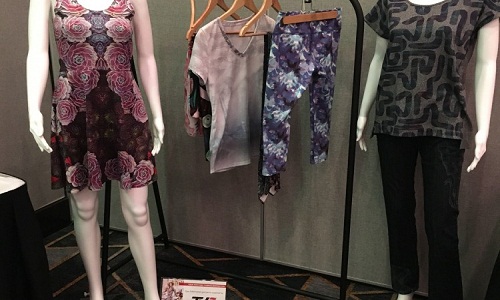
Members of the digital textile printing industry gathered in Durham, North Carolina, December 5-6 for the third annual “Digital Textile Printing Conference 3.0” hosted by the American Association of Textile Chemists and Colorists (AATCC) and SGIA. The “forum for collaboration” covered the current digital textile print market including digital textile design; color management, sampling, and digital workflow; technology and ink; and digital manufacturing and integration.
While screen printing is still seen as the dominant technology utilized in the textiles market, 371.4 billion square feet of digitally printed textiles have sold worldwide, said Duncan Ross, AVA CAD/CAM Group. And that number is destined to rise exponentially as printers and designers understand the value of digital print, from increased ROI to customizable, visually appealing designs to green practices.
Here’s what a few of the speakers had to say about digital print’s benefits:
“When you print digitally, you have higher volumes and a much higher profit margin,” said Mark Hanley, IT Strategies.
“Digital textile printing allows for endless rich and vivid design options, a number of colors without limitation, and multiple fabric types with the same inkset,” said Sharon Donovich, Kornit Digital. “Plus, it’s a 100-percent sustainable solution, and offers a fast learning curve and a clean chemical-free work environment for employees.”
“The benefits to digital textile printing include sustainability, high speed, and print on demand,” said Debbie McKeegan, TexIntel.
“Digital platforms can dramatically compress timelines. Results: decreased labor cost, increased responsiveness, reduced frustration, and higher close rates,” said J. Flint Davis, WeaveUp.
The Specifics
Another major benefit? Customization. Digital allows for short runs of whatever carefully crafted or person-specific design a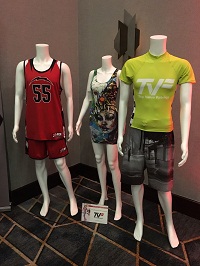 customer wants. Kristen Dettoni, Design Pool and Pattern Pod, broached the much-talked-about topic in the best possible way, with a scene from the iconic film “When Harry Met Sally...” Sally’s order goes like this: “I'd like the chef salad, please, with the oil and vinegar on the side. And the apple pie a la mode… But I'd like the pie heated, and I don't want the ice cream on top. I want it on the side. And I'd like strawberry instead of vanilla if you have it. If not, then no ice cream, just whipped cream, but only if it's real. If it's out of a can, then nothing.” And her character wasn’t even a millennial! Some people just want it how they want it. And digital print allows for that.
“The market now is ‘I want it how I want it,’” Dettoni said . “Brands in the textiles market allow for customization through micro manufacturing, flexible pricing, flexible sizing, and flexible automation.”
“Customer attitudes are fueling growth in customization. Millennials really like to tell a story with a product, so they’re seeking uniqueness,” Davis said. Think about what Big Picture has talked about before: Instagrammable and selfie worthy. They’re also willing to pay a premium. “More than 80 percent of consumers are willing to pay 10-15 percent more for a customized product,” Davis said.
“The footwear market is so successful because they embrace a disruptive technology. Think knit tops and 3D-printed bottoms, all customizable,” said Will Duncan, Seams, the association for the US sewn products industry.
First Things First
As printers, we focus largely on how to print on textiles. But how much do we know about actually designing for digitally printed textiles? McKeegan’s answer to addressing the first major step in the production process is understanding the textile technology. “The design to production cycle time today is instant: design, process, prepress, print ready,” she said. “However, working with multiple media across processes has its challenges.”
And as much as this industry is now accessible to wide-format PSPs, textile designers now have the capability to purchase machines and print in-house. “We’ve totally democratized print. Everything is online, whether it’s fast fashion, design, or interiors,” she said. “Print has become available to all, and the marketplace has shifted to customization. Designers are now migrating from fashion to interiors, to graphics and events because of digital print.” How will your shop adjust to a possible increase in competition?
Embee washers save water for textile printing industry
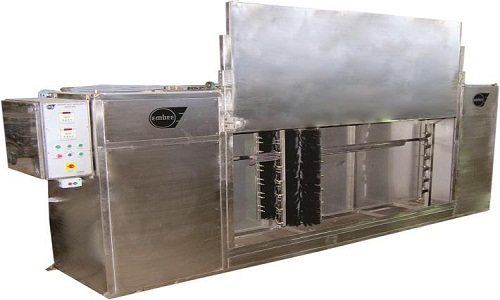
India-based Embee Group has introduced improvised washers for the textile printing industry. These washers also use filtered recycled water for washing, reusing 90 per cent of water. The improvised screen, squeegee and drum washers are perfect for efficient washing with minimum water consumption combined with water recirculation, the company said.
The need to reduce water consumption and pollution are not just important but a growing necessity all over the world today. Water pollution is also a growing concern in the textile industry. One area of concern is the printing section were water is consumed in large amount for washing screen, squeegee and drum. Currently, majority of the washing is done manually and as a result there is no control over the water consumption. Understanding the current need, Embee has introduced improvised washers which also use filtered recycled water for washing, and in this way 90 per cent of water is reused.
“One of our customers was facing problem with reduced productivity and to overcome this problem they were planning to buy new textile rotary printing machine. After understanding and analysing their problem, we proposed them a simple solution. We convinced them to invest on Embee’s highly advanced screen washer, squeegee washer and drum washer. Moreover, the investment on these washers is negligible as compared to the new printing machine. Today, the customer is not only just satisfied with our washers but after using our washers their productivity has increased by up to 50 per cent,” Harsh Shah, MD and board member, Embee Group, told Fibre2Fashion.
Unique advantages of new Embee washers include significant increase in efficiency and productivity. Gone are the days, when the customer demanded for long printing run. Today, the trend has changed; customers are now demanding for short printing run. If the customer just wants to print up to 2,000 meters then achieving increased efficiency becomes very difficult with the manual washing of screens, squeegees and drums. Embee’s high tech washers can wash 6 screens and 6 squeegees in the same time duration while only 1 screen and 1 squeegee can be washed with manual method. In this way, design overtime can be reduced to 10 minutes which significantly increases efficiency and productivity up to 60 per cent.
Another advantage of Embee washers is perfect and efficient washing for all types of screens. High pressurised water jet uniformly cleans thoroughly from all sides with the aid of bristles. In conventional manual washing there is always a risk of damaging the delicate nickel screens and improper washing of drums. Further in manual washing, screens and drums are not washed properly from inside and outside.
There is significant water saving, compared to conventional cleaning, which is carried out with enormous wastage of water as well as messing up the workplace. Embee strongly believes in conserving nature and as a part of this belief all washers of Embee use minimum water as compared to conventional cleaning.
Water reusability is another feature of all the washers of Embee – screen washer, squeegee washer and drum washer, which have water recirculation system. There are 2 connections—one for fresh water and another connection for filtered recycled water. Users can set timer according to the requirement and as result up to 90 per cent of the water can be saved.
There is also significant time saving. In manual washing, even though the screen/squeegee takes 5-10 minutes for washing, it is not properly washed. Whereas, 6 multiple screens and squeegees can be washed within the same time with Embee washers. Further with drum washer and squeegee washer, waste water can be filtered and reused for washing purpose; thereby, saving up to 90 per cent of water consumption.
Further, there is minimum requirement of labour. The growing textile sector is evolving fast towards decreasing the running cost, which is dependent on labour and resources. Keeping the cost factor in mind, Embee has manufactured washers which need minimum labour unlike conventional cleaning. Since washing is an automated cycle completely devoid of human interference, labour is required only to load and unload the screens/drums.
Embee washers also give the fastest payback, possibly within few months, since significant time, water and labour saving can done. There is also space saving as the compact design of the machine requires minimum space and can be easily placed along side of the rotary printing machine.
Established in 1956 with a small beginning, Embee has always believed in continuous innovation and research for the betterment of today’s and tomorrow’s commitments to the textile industry. All products of Embee are aligned with its vision to be the most trusted global leader in innovative technological solutions, focused on ‘higher efficiency’ and ‘returns’ for sustainable growth of all the stakeholders.
More than six decades of experience with continuous research, technical modernisation, cooperation of its technical and R&D teams enables Embee to offer unique textile machinery products of high quality and precision. Today, Embee provides a complete range of textile rotary printing systems. “Innovation has been not only a core strength but also a tradition at Embee,” says Shah. (RKS)