FW
Micro-textile model promises a new dawn for the industry
"A T-shirt manufacturing factory proved to be the torchbearer for digital printing technology and DTG (direct to garment) printing that facilitated customised manufacturing. Today, multiple textile technologies offer a sustainable option to conventional production. They rationalise workflow besides offering the client “just in time” manufacturing. The traditional textile model is risky as both the manufacturer and retailer are unreasonably exposed during all cycles of this model, be it speed to market, value of stock, or consumer relevance."
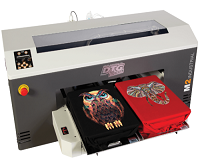 A T-shirt manufacturing factory proved to be the torchbearer for digital printing technology and DTG (direct to garment) printing that facilitated customised manufacturing. Today, multiple textile technologies offer a sustainable option to conventional production. They rationalise workflow besides offering the client “just in time” manufacturing. The traditional textile model is risky as both the manufacturer and retailer are unreasonably exposed during all cycles of this model, be it speed to market, value of stock, or consumer relevance. Also, the market uses extended financial credit lines which leads to reduced yields and offers a meager return on investment. As a result, profits grow slightly; stock grows in line with profits, until the time is reached when all of the profit is in the stock.
Providing a way forward
The Digital Textile Revolution including developments in CAD/CAM, augmented reality software, online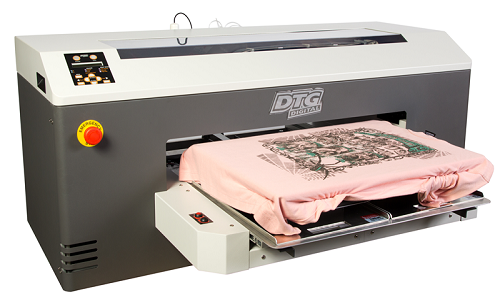 workflow, laser cutting, and digital textile printing are providing a way forward that is not only risk free but also consumes fewer resources.
The micro-factory model of “Sell, Produce, Deliver,” and not “Produce, Sell, Deliver” is driven by an online sales presence, alongside AR and AI software. The client selects buys and pays for their product before the item is produced. The model is capable of producing and delivering in 24 hours through n the speed of image processing, computerised workflow, digital printing and cutting and with computerised sewing (as an option) then dispatch,
This business model was first used by direct to garment (DTG) printers, who would deliver a sale within 24 hours of receiving the payment. The producer was able to cater to its consumers demands by creating and approving artwork, sending it to print, then packing and dispatching the blank t-shirts within the timeframe expected by the customer. The model has grown to encompass and attract many other sectors, with athleisure, swimwear and fashion taking up the opportunity to rationalise their production systems.
The online e-commerce tool in this model uses all the visual space of the selling website to make an extended offer in terms of product, color, size and design. When online orders are received, they immediately go into a computerised workflow, where the artwork is completed, the customer contacted and, upon approval, the production is initiated, all within a matter of minutes.
Adaptability with efficiency and profitability
The micro-factory produces textiles by using digital textile printing. The machinery is a fraction of the size of traditional machinery and also smaller in dimension. It consumes lesser heat, light, water and power than the traditional textile manufacturing model.
The micro-factory model is infinitely adaptive. A huge online range can be serviced efficiently and profitably, without enormous warehouses, without the risk of clearances, and without the uneconomic use of scarce cash reserves. It’s no wonder then, that the model is hailed as a new dawn for textiles, with its efficiency and profitability bringing manufacturing back to a more local base and offering jobs for workers in the country of origin.
Dutch brand Mud Jeans gets Nordic Swan ecolabel
Dutch brand Mud Jeans’ entire denim collection, or 41 styles, has received the Nordic Swan ecolabel certification. The ecolabel evaluates a product’s total lifecycle from raw material to recycling. The certification works to reduce the environmental impact from production and consumption of goods and make it easier for consumers to make eco-conscious purchasing decisions through labeling. The ecolabel is the holy grail of Scandinavian clothing certifications.
The Nordic Swan ecolabel certification is the official ecolabel of Nordic countries. It has a transparent and flexible supply chain and structured way of using materials and is known for its leasing program that allows consumers to keep, switch or recycle their jeans after one year.
The brand works with one denim mill and one garment supplier. All of its jeans contain post-consumer recycled denim and organic cotton and are finished with sustainable laser and ozone technologies. The internal audit for the certification took more than a year to complete. Through the process, Mud Jeans had to tweak some of its materials like adopt 100 per cent recyclable buttons. Mud Jeans has made mighty strides in sustainability, from not using any plastic polybags to eliminating the use of potassium permanganate to using waste as a resource.
India: Strong rupee hits cotton exports in Gujarat
Cotton prices in Gujarat have fallen. Among the reasons for the fall are: lackluster demand and exporters’ losing competitiveness due to appreciating rupee. A strong dollar allows Indian exporters to offer cotton at competitive prices in the international market as their realisations in rupee terms remain high even after some discounts. Overall, demand for the natural fiber has weakened as there are fewer buyers. Even the yarn market is bad and demand in the international market is also not encouraging.
Amid low demand, arrival of cotton in local markets, has slowed. Around 40,000 bales are arriving daily, as against 70,000 to 75,000 bales during the same time last year. Gujarat is expecting a 16 per cent decline in cotton output in 2018-19 despite an increase in the area under cotton cultivation.
There has been crop damage in major producing states such as Maharashtra and Gujarat. Almost half the country's cotton comes from these two states. Deficient and erratic Southwest monsoon this season followed by a long dry spell this winter season has impacted the standing crop. While the first cycle of cotton picking is over, the second and third cycles are likely to get impacted badly due to spoilt flower buds.
Spain refuses to sign China’s Silk Road plan
Spain has rejected China's ambitious "One Belt, One Road" initiative that seeks to better link Asia and Europe. The multi-billion-dollar initiative, unveiled by Xi in 2013, aims to link the continents through a network of ports, railways, roads and industrial parks. Beijing plans to develop the network through 65 countries representing an estimated 60 percent of the world's population and a third of its economic output. So far, around 70 countries have signed an MoU pledging their interest in the project. In Europe, countries such as Poland and Greece have signed but the project has created considerable anxiety that it masks an attempted Beijing influence grab.
SEAMS launches first ever Sewn Products Reshoring Award
SEAMS has launched its first ever Sewn Products Reshoring Award. Eligibility for this award includes production reshoring from offshore back to the United States or represent new production that has taken market share from imports between January 1, 2014, and January 31, 2019. The awards will be given in three industry categories including cut-and-sew manufacturers; brands/OEMS/vertical retailers; and textile providers.
Reshoring is the practice of transferring offshore business operations or sourcing back to the United States, and includes new or significantly increased production in the United States of product previously imported. The Made-in-America movement is focused on increasing production in the United States to strengthen the economy and bring jobs back. The SEAMS organisation drives this trend with a membership of the leading US brands, manufacturers and retailers in the sewn products industry.
Pure London collaborates with CFC to highlight philanthropic brands
Leading festival of fashion Pure London has collaborated with the Conscious Fashion Campaign (CFC) supported by the United Nations Office for Partnerships at the February 2019 show. A dedicated installation, located within the Conscious section, will highlight fashion brands that are working to end poverty, protect the planet, practice sustainability, and raise awareness through meaningful philanthropic and customer engagement initiatives in an effort to transform our world through fashion.
United Nations representatives will take part in the Pure London Content Programme of seminars to discuss and address the key issues facing the fashion industry and the importance of the United Nations Sustainable Development Goals.
Pure London introduced its Conscious section for ethical and sustainable brands last season and joined forces with the United Nations to launch the Power of One campaign, to support the Sustainable Development Goals with individual pledges aimed at collectively creating change.
Loss of EBA may affect Cambodia’s apparel industry
Cambodia has strong ties to the EU, accounting for more than 40 per cent of the former’s garment exports. However, Cambodia’s economy could see possible downside risks due to the cancellation of the Everything But Arms (EBA) scheme. It could severely affect trade, investor sentiment, and the overall economy followed by a possible sovereign rating downgrade.
A rating downgrade would dampen the confidence of future investors, and raise the cost of financing for Cambodia in future. Loss of preferential access to key export markets could hamper exports and foreign direct investment, and dent confidence.
The risk would be exacerbated if countries like Australia and Canada also review their existing trade agreements with Cambodia in response to political and human right concerns.
The preferential trade status is an important element underpinning the success of the garment industry in Cambodia. As the single largest formal employer, it provides over 6,00,000 jobs in more than 500 export factories with production amounting to 30 per cent of the gross domestic product and over 70 per cent of exports.
In addition concerns about credit quality, external funding, rising concentration in real estate and unregulated lending by developers, and growing systemic importance of micro finance institutions continue to pose risks to financial and macroeconomic stability.
India: Call for modernisation of textile industry
Addressing the CITI Global Textiles Conclave 2018, Vice President M Venkaiah Naidu has called for modernisation of textile industry by proving requited skill, investment and market to recapture India’s past glory in the textiles sector. With the world moving towards 4th industrial revolution based on cyber physical systems, Naidu urged the Indian textile industry to take lead in industry 4.0 in view of the distinct advantage enjoyed by us in the IT sector. He called upon the textile industry to fully tap the potential of IoT cloud, artificial intelligence and big data and analytics.
He also urged the industry to establish textile industry 4.0 learning factory in all major clusters adopting ‘Hub and Spokes’ model with hub focusing on advance training and spokes focusing on basic training. Accountability and transparency, ethics in business and standards in products need to be maintained to sustain in the global competitive scenario. Naidu also stressed on the need to give major thrust to skill development, upgradation and use of digital technology and adoption of lean manufacturing systems to remain globally competitive.
H&M faces wage protests
H&M is nowhere near ensuring a living wage for workers who make H&M clothes. Hundreds of thousands of workers sewing H&M clothes cannot feed their families, send their children to school, see a doctor when they need one, or cover other basic needs.
The continued failure by H&M to ensure a living wage exposes women garment workers to risks of violence in numerous ways. Workers in parts of H&M’s vast supply chain have been speaking up about their working conditions and expressing solidarity. Workers in Bulgaria earn less than one-tenth of an estimated living wage.
A wave of actions against poverty wages has hit H&M’s largest markets and production locations. There have been street actions and online campaigning in Austria, Belgium, Cambodia, Croatia, India, Indonesia, Italy, Germany, Hong Kong, the Netherlands, Romania, Spain, Sri Lanka, Switzerland, the United Kingdom, USA, and Turkey, among others.
In Italy, actions have included a flash mob turning up in front of an H&M store in Milan during prime shopping time. In Germany, activists turned up in front of an H&M with a couch, blankets and other props to demonstrate that they are sitting around and waiting for H&M to fulfil the living wage promise.
Horizon Ventures grants $2.2 million series seed fund to AlgiKnit
AlgiKnit, a biomaterials company which is developing yarn spun from kelp, has received a$2.2 million series seed funds from Horizons Ventures. The funding aims to help the start-up in its manufacturing and commercialisation of bio-derived yarn.
AlgiKnit spins yarn from a combination of algae and plant biopolymers, primarily including kelp, one of the fastest growing organisms on earth. This seaweed absorbs the greenhouse gas carbon dioxide at a rate up to five times faster than land-based plants and improves marine habitats. By using a non-toxic wet-spinning process, the company aims to transform these biopolymers into a strong, hypoallergenic and compostable yarn. In theory, when products made from AlgiKnit’s yarn are worn out, they can be bio-recycled and reclaimed for the next generation of products.
Horizons Ventures, the private investment arm of Li Ka-shing, is a leading investor in some of the world’s most innovative companies and disruptive technologies including Facebook, Waze, Spotify, Siri, Improbable and Impossible Foods.