FW
CCI plans two cotton purchasing centers in AP
The Andhra Pradesh government and Cotton Corporation of India (CCI) have jointly planned to set up two cotton purchasing centers (CPC) in the district soon. Cotton crop is being cultivated in the district in Bhamini, Sitampeta, Sarubujjili, Palakonda, Santhakaviti, Ranastalam, Rajam, Regidi and Vangara mandals in an extent of 30,000 acres. Due to lack of proper purchasing centers, middlemen are exploiting cotton farmers every year. Previously only one centre had been arranged every year in December last week by that time middlemen used to procure cotton from farmers at cheaper price and in turn they sold the same produce for high price.
As against government fixed price of Rs 4,100 per quintal middlemen paid Rs 3,100 as a result, farmers lost Rs 1,000 per quintal cotton. Joint Collector KVN Chakradhara Babu has directed officials to organize two purchasing centers at Rajam and Sitampeta by November-end for early procurement of cotton from farmers.
Contrasting results for Italian textile machinery sector
According to a survey by ACIMIT, textile machinery orders index for July to September 2018, remained stable. The value of index stood at 108.3 basis points (2015 basis= 100). However ACIMIT acknowledged that its manufacturers experienced a slowdown for the first nine months of the year. In China, particularly, its main export destination, trade tensions with the United States halted investment plans for many manufacturers.
Orders received by Italian machinery manufacturers however indicate contrasting trends. The index in Italy, stood at an absolute value of 121.9 basis points, i.e. a 30 per cent increase compared to the period from July to September 2017. On the other hand, in terms of foreign markets, the index declined by 2 per cent, with an absolute value of 107.4 basis points.
Pakistan should develop its apparel sector to solve myriad issues
"Due to a massive crisis in its balance of payments (BoP), Pakistan is facing immense pressure on its Forex reserves. The country’s dollar reserves have fallen to $8,408 million, sufficient only to cover its import bill for few months. To buttress these depleting reserves, the country’s finance minister plans to knock on IMF’s doors for the 13th time. The country will seek structural adjustment package bailout package for $11 billion from the international organisation; however, this bailout package is likely to come with some strings attached. Pakistan will continue facing BoP crisis as long as its imports exceed its exports. To get out of this conundrum, the country needs to increase exports from $24.7 billion in the last financial year"
 Due to a massive crisis in its balance of payments (BoP), Pakistan is facing immense pressure on its Forex reserves. The country’s dollar reserves have fallen to $8,408 million, sufficient only to cover its import bill for few months. To buttress these depleting reserves, the country’s finance minister plans to knock on IMF’s doors for the 13th time. The country will seek structural adjustment package bailout package for $11 billion from the international organisation; however, this bailout package is likely to come with some strings attached.
Need to focus on short-term growth
Pakistan will continue facing BoP crisis as long as its imports exceed its exports. To get out of this conundrum, the country needs to increase exports from $24.7 billion in the last financial year. For this, Pakistan needs to focus on achieving short term growth rather than a broad-based growth. Pakistan will have to focus on its competitive advantage, which at present, are textiles. Thus, its next step towards growth should be moving towards the apparel industry.
Attracting more FDI in apparel sector
The apparel industry in Pakistan, unlike some high-end manufacturing industries, does not require a technology transfer. The industry can also absorb the uneducated and unskilled labor force, which is abundant in Pakistan. Also, it takes just a few weeks to train people in skilled tasks such as operating sewing machines, and only a few days for tasks such as pressing the product, folding and packaging. Thus, numerous jobs can be generated for the unemployed in the country.
The state should make credit available for entrepreneurs wishing to develop apparel exports. It can also attract FDI by inviting more foreign clothing brands to set up their facilities here. However, the minimum wage in Bangladesh garment industry is around $95, lesser than Pakistan’s minimum wage of $150. Hence, Pakistan can subsidise electricity to this developing sector for a limited time period to offset Bangladesh’s cheaper labor costs.
Creating conducive growth environment
The recent trade war between the US and China has also opened a window of opportunity for Pakistan’s manufacturing sector. China exports apparel worth $27 billion to the US, and in light of trade restrictions, Chinese investors can be encouraged to establish manufacturing units in Pakistan to circumvent US duties and also to utilise the cheaper labor here. Thus the sector offers immense opportunities, but to exploit these, the government needs to create conducive conditions for growth. Currently, most of the investments in the country are made in the real estate sector; these need to be diverted to the export sector.
Focusing on the apparel industry will help Pakistan solve its myriad issues including unemployment, stagnant growth and a trade deficit. This should therefore be the government’s number one economic priority at present.
US women’s apparel prices fall in October
Women’s apparel prices in the US fell 1.7 per cent in October after rising 1.6 per cent in September. Pushing the decline was the women’s outerwear category, where prices declined 6.4 per cent. But all women’s apparel categories saw price decline in October, potentially owing to the sector’s more competitive nature and buying habits.
Prices of dresses were down 4.3 per cent, suits and separates prices fell 0.5 per cent and the underwear, nightwear, sportswear and accessories group dipped 0.1 per cent. Girls’ apparel prices were up 1.1 per cent month over month. Men’s wear pricing power proved much stronger, with prices rising 1.5 per cent. The suits, sport coats and outerwear group posted a price gain of 3.9 per cent, as prices for pants and shorts rose 2.3 per cent. Smaller increases of 0.9 per cent for furnishings and 0.6 per cent for shirts and sweaters rounded out the men’s story for the month.
Boys’ apparel prices were up 0.9 per cent, while infants’ and toddlers’ apparel prices rose 0.8 per cent. The critical fourth-quarter holiday selling has kicked in and promotions have begun. A tariff war with China is on but retailers in the US are continuing to import merchandise in order to meet consumer demand.
Portugal to star at Pitti Uomo in Italy
Menswear show Pitti Uomo will be held in Italy from January 8 to 11, 2019. Portugal has been selected to be guest nation. Eight Portuguese labels will present their autumn/winter 2019-20 collections. They are a cross-section of Portugal’s fashion landscape, between emerging labels, artisanal brands and established names. Hugo Costa was founded in 2010. The label’s distinctive trait is the architectural construction of its menswear, with designs hovering between minimalism and street culture.
Nycole is another menswear label from Portugal. Its fresh style blends classic men’s clothes with sportswear. Caiagua is an emerging label created exactly a year ago, whose specialty is functional, design-driven outerwear with cutting-edge research on details and colors.
Ecolã is Portugal’s oldest certified family-owned artisanal workshop. Ecolã is famous for its burel felt, made from the highly resistant fleece of local sheep and used to produce rugs, garments and accessories. Portugal is well-known as a go-to European manufacturer of quality apparel and accessories, and in the last few years its design creativity has also blossomed. The country is becoming increasingly dynamic as a venue for fashion and creativity. Apart from Portugal, Pitti Uomo will also have a special focus on South Korean, Japanese and Scandinavian fashion labels.
Nanotechnology used for sustainable cotton finishing
Ultra thin coating technology offers new opportunities for cotton finishing. Researchers at the University of Georgia are exploiting nanotechnology to develop sustainable dyeing and finishing techniques for cotton textiles. The research group has come up with nanocellulose gels that can be used to dye cotton and blends.
Nanocellulose gels obtained from bleached pulp are dyed to obtain nanocellulose-dye dispersions, which are then coated on to textiles. Spray coating and screen printing methods can be used to obtain the coloration using the gels. Pretreatments such as scouring and bleaching do not affect the dyeing efficiency. The ultrathin coating technology has been used to dye cotton using reactive and indigo dyes. The gel technology uses less water and the dye fixation is higher than the exhaust method.
If cost-effective sustainable processes can be made commercially viable, that can move the textile industry into the next phase. Ultra thin films can be coated on primary fine particles without significant aggregation by atomic layer deposition in a fluidized bed reactor. Precursor doses can be delivered to the bed of particles sequentially and, in most cases, can be utilized at nearly 100 per cent efficiency without precursor breakthrough and loss, with the assistance of an inline downstream mass spectrometer.
With a revival in manufacturing, jobs go a begging in the US
Manufacturers in the United States are experiencing some of the highest levels of growth seen in decades, yet the industry seems unable to keep up with the resulting rebound in job growth. Five out of 10 open manufacturing positions in US are staying unoccupied thanks to the skills gap.
Jobs requiring digital talent, supply chain talent, skilled production, or roles for operational managers will be three times as hard to fill in the next three years. Nearly two million vacant new jobs are expected by 2028, compounded by 2.69 million vacancies from retiring workers. So the number of open positions could be greater than ever.
The problem is threefold: a negative perception of manufacturing, a shift in desired skill sets owed to the intro of advanced technologies, and baby boomers retiring. Despite renewed interest in domestic manufacturing, and an uptick in some areas, the workforce crisis is casting a bleak pallor over the industry’s future.
Over the next three years, the inability to fill open positions is expected to have the greatest impact on manufacturing companies that are maintaining or increasing production levels to satisfy growing customer demand. Thanks to technological change, the industry overall is trending toward jobs—including entry-level jobs—that are high-skilled and require irreplaceable human skills, such as creativity, critical thinking, design and innovation.
AFAM and RCFS sign MoU to promote African Fashion
Canada-based African Fashion and arts Movement (AFAM) and Rwanda Cultural Fashion Show (RCFS) have signed an MoU to promote African fashion and arts, and create public awareness about the talent and quality designs in both Canada and Africa. The partnership will explore the areas of potential collaboration across different disciplines and projects including, collaborating by exchanging skills in event management, and technical support such as training for African models and fashion designers.
Both parties also agreed to support designers to participate in the African fashion and arts movement in Vancouver, Canada, and develop opportunities for African artists, including fashion designers, runway and photogenic models, photographers, cultural and traditional dancers, and tailors.
Futurum St. Petersburg holds 15 catwalk shows
The first Futurum St.Petersburg held 15 catwalk shows and open lectures including a Fashion Global Talk about state-of-the-art technologies and materials, approaches to the international markets, as well as protection of own designs and intellectual property rights. The event also comprised shows and presentations by modern St. Petersburg-based fashion designers took place during the bar camp National Technological Revolution 20.35.
The event was organised on November 8, 2018 at TochkaKipenia (Boiling Point) in St. Petersburg (LenpoligraphmasH’s Technopole). Futurum St.Petersburg opened with a show by Vilena Timoshenko, an emerging brand. The collection featured fur coats, chains, and vinyl were the major trends that appeared at the catwalk. Other brands that showcased that collections include Primora, Polina Ignatova, ZA_ZA, Amplituda, M_U_R, Olga Chernoschekova, Esenina, Math, Sniff, С7МЬ, Snezhana NYC, Theash
Textile trade shows in Japan to address sustainability issues
"Japan Fashion Week Organisation will organise two of Japan’s biggest textile shows; ‘JFW Japan Creation 2019’ (JFW-JC) and the ‘Premium Textile Japan 2019 A/W’ (PTJ) salon, concurrently from Nov. 21-22, 2018 at the Tokyo International Forum. Exhibitors at both these trade shows will address the growing global fashion trend toward ‘sustainability.’ Some of the major exhibitors at the shows will include: Hataoka Co will showcase Tactus a two-way stretch eco-friendly fabric comprising triacetate and a processed compound yarn that uses Japan-made polyurethane alongwith Tactus BIS to expand sales for athleisure applications."
 Japan Fashion Week Organisation will organise two of Japan’s biggest textile shows; ‘JFW Japan Creation 2019’ (JFW-JC) and the ‘Premium Textile Japan 2019 A/W’ (PTJ) salon, concurrently from Nov. 21-22, 2018 at the Tokyo International Forum. Exhibitors at both these trade shows will address the growing global fashion trend toward ‘sustainability.’ Some of the major exhibitors at the shows will include:
Hataoka Co./Asuwa Kogyosyo
Hataoka Co will showcase Tactus a two-way stretch eco-friendly fabric comprising triacetate and a processed compound yarn that uses Japan-made polyurethane alongwith Tactus BIS to expand sales for athleisure applications.
The range will also include Super Heritage; a compound textile combining triacetate and specific polyester. The company merges its previously reputed fabric and newly developed functional polyester fabric using the present thread axis. It will also introduce a fresh range of fabrics using recycled polyester yarns.
The company’s uses raw yarns made in Japan for manufacturing its products. Its twisting yarns and weaving are managed in in-house factories, while dyeing and finishing are managed in two other cooperative factories. The company manages its factories through the adaptation of SDGs.
Koyaguchi Pile Fabric
Aono Pile Co., Ltd., a Koyaguchi Pile Fabric Group company will showcase Float Velour, an eco-fur as a 3D velour comprising pile and plain stitch for animal welfare and conservation and a fabric fusing fashion and high technicity
Nishino Leather Co., Ltd.
Nishino Leather Co., Ltd., representing the Tokyo Metropolitan Government, will showcase eco-leather products including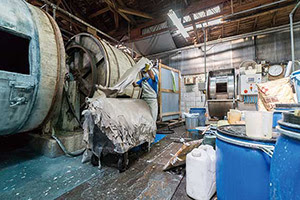 tanned pigskin, pig suede (in pure white) and pigskin nappa (unfinished leather).
The company recently acquired the ‘Japan Eco-Leather Standard’ certificate for its pigskin; enacted by the Japanese Association of Leather Technology (JALT) and the Tanners’ Council of Japan. This certification is awarded to companies that use factory-made genuine leather that handles wastewater and solid waste, and excludes substances harmful to health and the environment