FW
Istanbul Yarn Fair opens in February 2019
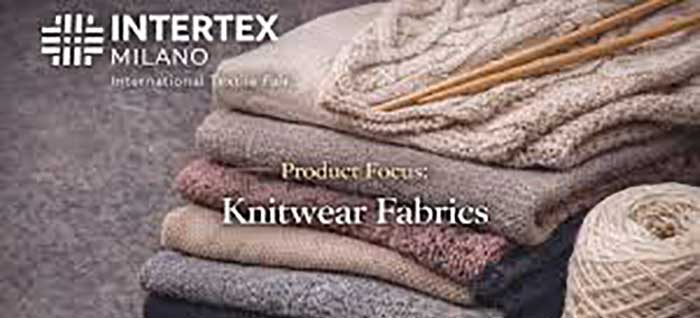
Istanbul Yarn Fair will be held from February 28 to March 2, 2019. This event showcases products like knitted fabrics, cotton yarns, cotton blended yarns etc. in the textile, fabrics and yarns industry. It is a platform where professional visitors, buyer groups and investors from Eurasia and Africa will meet and exchange information.
This is the world’s second biggest yarn fair. It brings together the international textile industry. It hosts participants and visitors from various countries to become a sales and marketing platform that shapes the international yarn trade and textile production.
The fair is the most important commercial gathering of the international yarn industry. It stands out as an opportunity not to be missed for yarn companies that want to access new markets.
Turkey is a major yarn manufacturer. Istanbul Yarn Fair allows the formation of new distribution channels while increasing the export opportunities of the yarn industry in Turkey. As a reflection of the Turkish yarn industry, Istanbul Yarn Fair is opening up new markets in parallel with the growth trend. The fair aims to create new export and import opportunities for the industry. Among the fabric manufacturers are those of knitted fabrics, tricot, underwear, hosiery, blankets, denims, home textile, carpets, yarns, technical and military textiles.
TPP-11 to be implemented on December 30, 2018
The 11-nation Trans-Pacific Partnership free trade agreement will be implemented on December 30, 2018. Six legislatures of member states have ratified the pact. The trade deal takes effect 60 days after at least six countries complete the ratification process. Nicknamed the TPP-11, the agreement was once known as the Trans-Pacific Partnership but was formally renamed the Comprehensive and Progressive Agreement for Trans-Pacific Partnership last year.
Australia notified New Zealand that it has ratified the agreement. Mexico, Japan, Singapore, New Zealand and Canada had already completed the procedures. Vietnam's parliament is expected to approve the deal by mid-November. Once the trade pact comes into force, a TPP committee of ministerial-level officials from member states will meet and decide on needed steps for countries hoping to join, such as Thailand and the U.K.
TPP-11 will lower tariffs on agricultural and industrial goods, as well as unify rules for business. Tariffs on 99.9 per cent of Japan's industrial products and 98.5 per cent of its farm, forestry and seafood products will eventually be abolished. Tariffs on agricultural products exported from Australia and New Zealand to Japan will also go down.
Oerlikon orders up 22 per cent
Oerlikon’s orders for the third quarter increased year-over-year by 22.2 per cent. Sales were up 28.9 per cent. The group’s ebitda came in higher year-over-year at 15 per cent of sales. Ebit for the third quarter corresponded to a margin of nine per cent. The third quarter performance resulted in a significantly improved rolling 12-month Oerlikon Group return on capital employed of 11.7 per cent.
Ebitda margin of 15 per cent reflects the higher operating costs related to investments and a larger share of revenues generated by equipment and project businesses in this quarter. The company continued to grow its surface solutions business, increasing orders and sales in almost all of its end markets. The surface solutions segment sustained topline growth, delivering double-digit increases in both year-over-year orders and sales.
For the manmade fibers segment, Oerlikon recorded significantly higher orders and achieved a historical high in sales. It has delivered strong results and is on track to deliver on its guidance for the full year of 2018. For continued operations for the full year of 2018, ebitda margin is expected to exceed 15.5 per cent after accounting for increased operating expenses from higher investments, particularly in additive manufacturing and impacts from the divestment of the drive systems segment.
US to announce tariffs on all remaining Chinese imports
As per report from Citigroup economists, the US is preparing to announce tariffs on all remaining Chinese imports by early December and their impact may be as much as 10 times higher than earlier rounds of levies. The new penalties, which could take effect in early February, will encompass Chinese-made consumer goods like Apple iPhones and Nike shoes that the Trump administration has so far left untouched. The impact of a 10 percent tariff on the $267 billion of imports could be 10 times larger than the first $50 billion round and double that of the $200 billion tariffs in the second round, the analysts wrote.
According to Stephen Lamar, Executive Vice President of the American Apparel & Footwear Association, producers and retailers of apparel and footwear are already planning for the higher tariffs. As companies consider switching to suppliers in other parts of Asia, the law of supply and demand is putting upward pressure on costs in neighboring countries.
Amsterdam Denim Days attracts numerous exhibitors, artisans and more
Amsterdam Denim Days was held last weekend. Dutch labels, artisans and a mix of global denim mills came together. The festival immersed denim heads in the world of denim, from mill to retail, with exhibitors spanning Naveena, Berto and Boss, to Kings of Indigo and Nudie Jeans.
For We Wear the Pants creators, Marta Goldschmied and Gabriella Meyer the event was an opportunity to continue to spread their collection’s message about gender equality in the wake of the #MeToo movement. Denim Days was also an effective platform to explain why the collection’s premium price point was required in order to achieve its sustainable attributes. The designers didn’t skimp on quality. The collection showed their devotion to sustainability.
Sustainability was also top of mind for Naveena. The mill partnered with Dutch designer Jonathan Christopher Homme to make and sell unisex, multi-purpose kimonos made with its Horizon fabrics. The fabrics combine eco-friendly dyeing and finishing processes that use 81 per cent less water, 40 per cent less energy and 50 per cent less steam compared to conventional processes. Italian mill Berto sold specially made screen-printed denim table runners, aprons and accessories like tote bags and laptop cases.
Nudie Jeans showcased jean jackets with Dutch-themed chain stitching.
Indian mills profit margins rise in Q2
Profit margins of Indian textile mills improved during the second quarter. Input costs were low, driven largely by a fall in cotton prices. Welspun India’s net profit for example grew 21.4 per cent. Sales grew 11 per cent. Raymond’s sales increased 16 per cent, ebitda by 36 per cent and net profit by 63 per cent. Better capacity utilisation in garmenting, higher gains from currency depreciation and continued focus on efficiencies may drive Raymond’s margin expansion in the second half.
Raw material prices remained subdued during the quarter, though cotton demand from domestic textile manufacturers was robust, as mills needed to prepare stocks for the festival and seasonal demand in October-November. These dynamics might change in the coming quarters with demand for cotton coming from Pakistan, China and other importing countries at a time when output of the natural fiber is estimated to decline. As against the earlier forecast of 36 million bales of output, the new estimate is about 33 million bales this year.
Cotton prices in major producing centers such as Punjab and Madhya Pradesh have declined to nearly 10 per cent below the minimum support price. China has since turned to India for import of cotton due to a higher import duty levied on its traditional supplier, America. Pakistan is also likely to procure from India this year.
Invista launches three new technologies for Lycra
Invista, owner of Lycra, Thermolite and Coolmax brands, and an innovation leader in the legwear segment, has introduced three latest hosiery innovations at the fifth edition of Lycra Fiber Moves conference that took place in Lake Como, Italy on October 18, 2018.
The first of these included the Lycra Fusion True To You technology, a patent-pending innovation allowing the creation of transparent 3D hosiery that delivers a natural-looking shine to the legs. The innovation is a combination of a new Lycra Fusion yarn with new 3D knitting construction, therefore combining the ‘no ladder’ benefits to the fit and uniformity, all in a natural shine sheer hose.
The Thermolite FIR technology comprises a spun dyed black fibre embedded with special ceramic pigments that absorbs the wearer’s infrared radiation and reflects it back to them as heat energy. This improves the body’s heat retention and keeps legs warmer, longer. Knitted with Lycra Black technology, it fulfils consumers’ expectation for true black leggings that won’t fade or wash out after wearing or washing.
The third technology was Lycra Made to Fit You technology, originally created for knee-highs, which has been expanded to offer the same benefits to stay-ups (thigh-highs). The technology uses a patent-pending construction that can be knitted on a standard hosiery machine. It features a single-layer tube with a special knit structure on the edge to limit roll-over.
Holistic strategy needed for Bangladesh
A holistic strategy will be adopted by the apparel industry in Bangladesh.
There has been a realization that tax benefits and similar incentives go only so far and do not ensure sustainable growth.
Domestic competitiveness, cost of doing business, workplace safety, product and market diversification, skilled labor force, foreign direct investment and technological advancement and automation in production process are also seen as key to retaining the momentum in apparel export growth.
The fact that Bangladesh’s exporters have not really made efforts to ensure a living wage for workers also places the industry at a competitive disadvantage compared with other Asian countries. While apparel workers in Cambodia work for 47 hours a week, in Bangladesh it is 60 hours a week. Moreover, 54 per cent of workers are paid below the minimum wage.
To reap fair prices for export product, a strategy will be adopted to improve negotiation skills at both the entrepreneur and the government level and to empower local exporters to develop a relationship with global buyers on an equal footing.
Another issue is that of lead time. This would be a matter in readymade garment exports in future as the country might lose the cost advantage in coming days.
New sustainable denim dyes from Garmon Chemicals save energy, water, time
Garmon Chemicals has unveiled a line of 22 direct dyes that use less energy, water and time than their reactive-dye counterparts. These Old Vintage Dyes range were launched at denim expo Kingpins in Amsterdam. These dyes offer “excellent dischargeability” and a deep and even distribution color that meets the rigorous requirements of even the “most demanding buyers,” according to the Italy-based firm. The dyes are used in the cationised dyeing process, which employs the surface deposition of color to create vintage effects characterized by high contracts on abraded areas, Garmon said.
The company’s new offerings require an average of five process steps instead of the usual eight, a lower quantity—and higher performance—of both dyes and auxiliaries and “much easier” corrections for final shades. Branded by Garmon as eco-friendly, safe for human health and Restricted Substances List-compliant, the dyes save 40 percent more processing time, while saving 40 percent more water and 35 percent more energy than rival products, yet deliver no aesthetic compromises.
Garmon also used the Kingpins Expo to preview the new features of its Stretch Care innovation line, including Elam Sense, an aminoethylethanolamine (AEEE)-free softener for high-quality finishes on super- and hyper-stretch fabrics; and Fortres Flex, an “outstanding” dispersal agent that protects elastane fiber even at low temperatures, preventing backstaining —i.e, the redepositation of dyes—during all washing steps.
EU adopts restrictions on 33 textile chemicals
The European Union (EU) has restricted the use of 33 hazardous substances in clothing, footwear and other textile articles based on recommendations by the European Chemicals Agency and following broad consultations with stakeholders. These measures are designed to protect the health of European citizens by limiting their exposure to CMR chemicals—substances classified as carcinogenic, mutagenic and toxic for reproduction—that may be “particularly harmful” when in frequent contact with human skin.
The EC originally had considered 286 substances, which textile-trade groups such as the European Apparel and Textile Federation, Independent Retail Europe and the International Wool Textile Organisation balked against in 2016, calling the expansive scope of the proposal “deeply concerning” and “likely to have a negative economic impact.” Now much whittled down, the new rules have been incorporated into REACH (Registration, Evaluation and Authorization of Chemicals) legislation