FW
Itema launches new textile solutions at ITMA ASIA
Prosperity Textile, one of the main denim producers worldwide, launched one of the most interesting and sustainable-oriented Itema technologies, iSAVER equipped on the Itema R95002 denim.
This new technology completely eliminates the left-hand weft waste, allowing the insertion of the weft yarns in the fabric without the need of additional yarns.
iSAVER significantly reduces raw material waste, leading to tangible benefits in terms of machine’s efficiency, cost reduction and energy saving. iSAVER, will also 1.000 kg of cotton per machine per year – the 3 per cent of the total raw materials - will be saved, thus avoiding the waste of 20 million liters of water, equivalent to 400.000 showers. iSAVER is one of the key features of the Itema R95002 denim, the rapier weaving machine born and designed to weave denim guaranteeing to weavers superior textile quality.

French innovations at ITMA Asia 2018
 Some of the French innovations at ITMA Asia +CTME 2018 included:
NSC Fiber to Yarn
At ITMA ASIA 2018 in Shanghai, “NSC fiber to yarn” which includes N.schlumberger and Seydel trademarks will exhibit one drawing head of the new model GC40 chain gill drawing machine well-known for producing of high quality yarn in long staple fibres for combing, recombing, spinning preparation and tow to top in polyester and acrylic.
NSC fiber to yarn will advertise its latest technological advances made to its product range. A new GC40 family drawing machines, GN8 intersecting drawing machine, evolution of its ERA comber will be particularly unveiled to its international customers.
During the ITMA ASIA 2018, NSC fiber to yarn will take the opportunity to introduce its service centre with its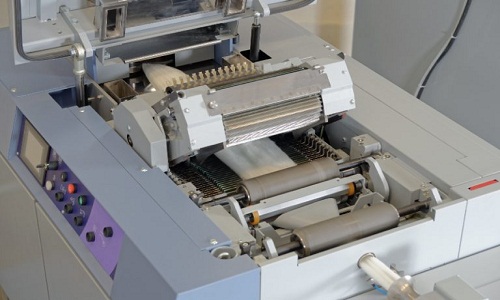 genuine spare parts stock in Zhangjiagang, Jiangsu and significant evolutions such as performances of production, quality standards, operating and maintenance costs, instant control and diagnosis, cost energy savings thanks to a reliable concept of construction, to electronic controls implying a user-friendly man-machine dialogue and an increase productivity
Laroche
Laroche has been a major player in the textile waste recycling and airlaid nonwoven field and is deeply involved in new technologies for turning post consumer goods into valuable products. The company has recently introduced new lines that can open used clothing back into fibers whilst removing the metal and plastic contaminants. The fibers can then be airlaid and thermobonded into felts for the automotive, bedding and furniture industries.
Old mattresses can be deconstructed and the foam can be shredded into chips, the textile portion can be opened back into fibers and airlaid and thermobonded back into components for new mattresses.
Superba
Superba, a member of the Vandeweile family of companies is the world leader in space dyeing and heat setting for carpet yarn. The company’s TVP3 heat-setting line offers the highest pin-point definition with their saturated steam processes. The recent improvements in Superba’s space-dyeing technology like bicolor printing or dyeing polyester yarn are likely to arise great interest among the Chinese manufacturers.
FIL Control
At ITMA ASIA 2018, FIL Control recommends a newly tension sensor MYT-T, This is a load cell sensor devoted to assembling, winding and texturing operations. It delivers an analog signal proportional to yarn tension. This information is used by the machine controller to keep yarn tension constant or stop the spindle if tension is out of normal operation range.
AESA Air Engineering
AESA supplies air conditioning and waste collection system for the textile industry as well as various other industrial processes. The company offers Weave Direct Systems that offer substantial reduction in power consumption combined with an accurate process condition on weaving looms thanks to a dedicated supply air ducting system with diffusers above ach loom.
The user friendly and accurate Digivent Control and Monitoring System communicates in interactive screen functions and allows a wide usage of recorded data for analysis, statistics and housekeeping.
India: Tirupur manufacturers opening units abroad to tap US, EU markets
"The multi-million Indian knitwear industry, which faced the brunt of demonetisation and GST, is in doldrums today as many garment manufacturers are shifting their units from Tirupur to countries like Ethiopia and Sri Lanka that provide free access to major markets like the US and EU. The country offers excellent infrastructure to young entrepreneurs. It also has geographical advantage over others as the flying time from Coimbatore to Colombo is just 70 minutes. In the past six months alone, four well-known garment manufacturers, who excelled in the sector for decades, opened factories in Ethiopia."
 The multi-million Indian knitwear industry, which faced the brunt of demonetisation and GST, is in doldrums today as many garment manufacturers are shifting their units from Tirupur to countries like Ethiopia and Sri Lanka that provide free access to major markets like the US and EU. The country offers excellent infrastructure to young entrepreneurs. It also has geographical advantage over others as the flying time from Coimbatore to Colombo is just 70 minutes. In the past six months alone, four well-known garment manufacturers, who excelled in the sector for decades, opened factories in Ethiopia.
Cheap labor, market access lures manufacturers abroad
Some major reasons why many manufacturers are opting to open units in foreign countries are: cheap labor, free market access to the EU and US, readily available infrastructure and absence of red-tape. The Indian industry, which was growing at over 10 per cent every year, has been reporting a 7 per cent dip since 2011, resulting in loss of a whopping Rs 2,000 crore ( US$ 0.27billion) . Exports, valued at Rs 26,000 crore ( US$ 3.54 billion) in 2016-2017, declined to Rs 24,000 crore ( US$ 3.27 billion) in 2017-2018 and domestic sales stood at around Rs 18,000 crore( US$ 2.45 billion) .
India does not offer free market access to EU and the US, which puts manufacturers in Tirupur at a disadvantageous position since entry tax is levied once goods reach the destination countries. Bangladesh and Sri Lanka, on the other hand, offer free access to the EU; Ethiopia also offers free access to both the EU and the US – thus attracting most of the buyers.
The labor cost in Tirupur is $150 to $200 (between Rs 11,000 to Rs 15,000) a week, while it is just $75 (Rs 6,000) in Ethiopia. Secondly, in India, separate labor is hired for stitching, packing, etc. Foreign countries, however, train their labor to multi-task, saving much more on the cost involved.
Plug and play model add to the attraction
The Ethiopian government keeps its infrastructure ready for garment manufacturers – all they have to do is to go with their machines, hire employees, train them and their factory is up and running. This plug and play model attracts manufacturers as they don’t have to go through the hassle of looking for land, constructing a building and get permissions. Everything is done by the government; all they have to do is to start our operations
R Rajkumar, Managing Director, Best Corporation, which launched operations in Hawassa, Ethiopia a couple of months ago, operates 500 machines in the country in two shifts. The company plans to increase capacity to 2,000 machines gradually. Santex Inc, which was also lured by the free market access that Sri Lanka offers to the EU, has opened a factory near Kandy in the country.
Indonesia explores new markets
Indonesia will open more markets through numerous trade deals. It currently has signed trade deals with Pakistan, India, United States of America, Spain, Swiss, Tunisia, Bangladesh, Taiwan, New Zealand, and Morocco. The United States and the European Union are the main destinations for Indonesia’s textile exports. With such agreements in place Indonesia expects its exports of textile and textile products to increase three-fold.
The cooperation agreement with Japan has helped increase Indonesia’s exports. The country’s trade balance had experienced a surplus of $230 million throughout September 2018, a contrast to the previous month, which experienced a $1.02 billion deficit. The industry in Indonesia wants downstream products to be protected from the onslaught of imports.
Other aspects that need improvement include electricity tariffs, ease of distribution and quality of human resources. For Indonesia, trade agreements with partner countries can increase the export value and increase market share. Despite the export growth, Indonesia’s imports still exceed its exports.
Till now lack of market access has been a constraint for the textile industry. Meanwhile, textile products from neighboring countries, such as Vietnam, can enter with a zero per cent import duty.
At present, the market share of new domestic textile products is around 1.8 per cent while in Indonesia the textile industry has been integrated from upstream to downstream so that the potential for development is still large.
Safety of textile chemicals in focus
Large amounts of commodity chemicals used in the textile industry are contaminated with potentially hazardous substances that routinely end up in wastewater. Some of these substances are phthalates, chlorobenzene, toluene and other restricted chemicals.
Commonly used chemicals such as salts, soda ash, organic and inorganic acids, peroxide and caustic soda – which are often by-products of other industries – can be laced with potentially hazardous substances. The safety of specialty textile dyes, pigments and auxiliaries has long been under the microscope. Traded on the open market by dealers, and often repackaged under different trade names, these bulk commodity chemicals are often bought based on price only with price being directly related to the purity of the product.
Reports of a new potential huge source of hazardous contaminants in textile wastewater will come as a shock to many apparel brands and retailers. Identification of the problem could also help the textile sector to identify unknown sources of wastewater contaminants that have puzzled the industry for many years. Already, the development of a new screening tool for commodity chemicals is one positive outcome of this research, which aims to help textile mills make better informed decisions on the type of commodities they source.
Yarn Expo Autumn features over 500 exhibitors from 15 countries
Yarn Expo Autumn, held from Oct 15-17, 2018, featured over 500 exhibitors from 14 countries. The expo showcased a range of yarn & fiber products at the National Exhibition and Convention Center. The fair organised by Messe Frankfurt (HK) and the Sub-Council of Textile Industry, CCPIT, attracted leading industry players like: PT Indo-Rama, Chemtax, Shandong Ruyi, Jiangsu Shenghong and Jilin Chemical Fiber Group among others who use the fair as a platform to debut new products each year.
New companies included Safilin from France, that offered premium linen products developed through the brand’s extensive history, and Italy’s Sinterama Asia who showed their range of 1,200 diverse chemical fibers and end uses. Novetex Textiles from Hong Kong featured super soft merino in a wide range of colours, along with sustainable options in glen merino and 100 per cent lamb’s wool. Parkdale Mills from the US, the world’s leading manufacturer of spun yarns, showcased cotton varieties, such as open end fibres, ring spun, air jet and vortex, in different blends.
Sweden supports North African textile industry
Sweden and the International Trade Centre will strengthen international competitiveness of textile and clothing producers in Egypt, Jordan, Morocco and Tunisia. The program will support the four countries to build sustainable export-oriented sectors with increased sales to traditional markets in Europe and North America along with new markets in sub-Saharan Africa.
Creating long-term and better-paid work, especially for women and young people, is a key goal of the project along with boosting exports, creating jobs and raising incomes across the Middle East and North African region. Another goal will be to strengthen regional economic integration among the four countries.
To achieve lasting improvements in the sector’s export competitiveness, the project will focus on bolstering the capacities of national institutions such as textile and clothing business associations and training centers to help better support local businesses. This will involve improving internal management processes and service portfolio development.
The project will also work directly with domestic enterprises, providing advisory services, training and coaching designed to help firms move up the value chain from cutting and sewing to fabric sourcing, product and design development and branding. The vast majority of products from Morocco and Tunisia go to the European Union, while Egypt’s and Jordan’s top export destination is the United States.
6th India International Silk Fair garners positive response
The three days long 6th India International Silk Fair (IISF) received a positive response. The over 100 exhibitors from across India got a good number of buyers. Organised by ISEPC, the fair was visited by over 145 buyers from across the world.
New and interesting products offered by some of the players were one of the reasons for the event to fetch more export orders. Socks, lingerie, undergarments, and umbrella made of Eri silk are a few of such products which witnessed increasing demand from overseas countries.
Apart from buyers interested in just silk, the event saw some other buyers who were interested in buying fabrics other than silk too who were flocking the stalls of exhibitors selling non-silk based products. L K Mishra, Janki Exports, Delhi and Ayan Sadh of Ayan Collection, Noida were some of the exhibitors in the fair who got good enquiries from the overseas buyers.
AAFA takes up a program against forced labor
The American Apparel & Footwear Association (AAFA) and the Fair Labor Association have drawn up a program aimed at fair treatment of workers in the global apparel, footwear, and travel goods supply chain. The commitment is a proactive industry effort to address potential forced labor risks for migrant workers in the global supply chain.
More than a hundred apparel and footwear companies have signed the commitment. Each signatory commits to working with its partners to create conditions where no worker pays for their job; where workers retain control of their travel documents and have full freedom of movement; and workers are informed of the basic terms of their employment before joining the workforce.
The signing companies have also agreed to work to implement these practices, to incorporate the commitment into their social compliance standards by December 31, 2019, and to periodically report the company’s actions through sustainability and/or modern slavery legal disclosures.
Through this commitment the American Apparel & Footwear Association aims to show customers that it takes the issue of forced labor seriously and is proactively working together as an industry to initiate measures to ensure these values are respected throughout the supply chain.
Creating a more transparent supply chain has long been a focus of the apparel and footwear industry and removing the possibility of forced labor is a major part of these efforts.
Pakistan seeks leather market in Japan
Pakistan wants Japan and Canada to allow duty free access for its leather garments. Currently Japanese importers of leather garments have to pay a high duty rate for the import of leather garments from Pakistan. Previously these importers and brands were using China as their manufacturing base and Pakistan was shipping finished leather to China for conversion to leather products like jackets. However, with the rise of costs in China Japanese importers have been trying for the last two years to find another production base.
Pakistan is well suited to make value added finished jackets for the Japanese market, but due to duty free access from Vietnam, it is cheaper for Japanese customers to source Pakistani finished leather and get the garments made in Vietnam. Although the FOB price offered by Pakistani exporters for the same product is more competitive import duty costs are cheaper for the Japanese importer when working through Vietnam.
Duty free access to the Japanese and Canadian market would mean Pakistan would be able to deliver more competitive and shorter lead time deliveries to them. A preferential trade agreement would make it easier for value added Pakistani products to enter the Japanese and Canadian markets.