FW


CENTRESTAGE, Asia’s premier fashion event, organised by the Hong Kong Trade Development Council (HKTDC), opened today and will continue till September 9 at the Hong Kong Convention and Exhibition Centre (HKCEC). The four-day show features more than 210 fashion brands from 22 countries and regions, along with nearly 40 fashion events, including the opening gala fashion show, CENTRESTAGE Elites, some 20 fashion shows, as well as designer sharing sessions, an industry forum, trend forecast seminars and networking activities.
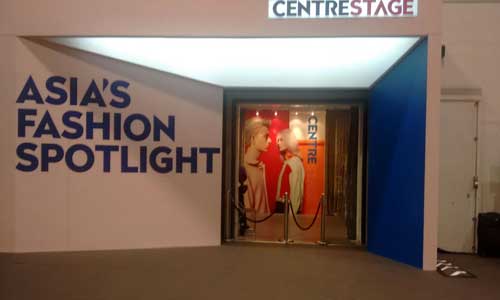
Talking about the second edition Byron Lee, Senior Exhibitions Manager, HKTDC says, “CENTRESTAGE in its second edition seeks to consolidate position of Hong Kong as vanguard of fashion. It is shaping as a platform for providing business opportunities, going beyond fashion catwalks and exhibition, with many buyer forums and first edition of Fashion Summit (HK) 2017-Zero Impact, the Asia’s largest panel for discussing sustainability in the fashion industry, first of its kind in Asia for the next two days.”
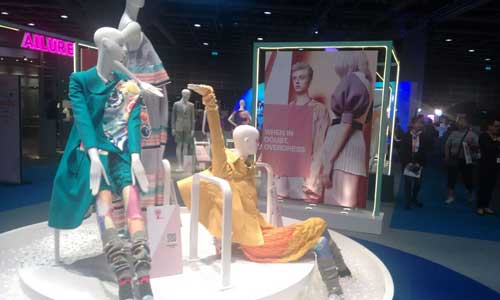
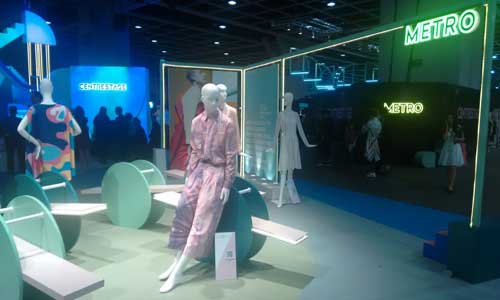
CENTRESTAGE debuted last year as a new promotion and launch platform for international, especially Asian fashion brands and designs, reaffirming Hong Kong’s position as Asia’s fashion capital. Under the theme “Nouveau Playhouse,” this year’s CENTRESTAGE, which is one of the celebration activities of the 20th anniversary of the establishment of the HKSAR, features three thematic zones: GLAM, ALLURE and METRO. Exhibiting fashion brands include those from the Chinese mainland, Taiwan, Australia, France, India, Italy, Japan, Korea, Sweden, Thailand, the United Kingdom and the United States. Overseas brands include BARBARA DI DAVIDE - I CASHMERE, CHENG PAI CHENG, Edward Achour, GLAMOROUS, IVAN Pettersson, KEEPSAKE, LUNNAPADAR, N12H and Zero Design. Numerous local brands are also taking part in the show, including anagram, Angus Tsui, HARRISON WONG, izzue, Yi-ming and more.
The HKTDC has organised 34 buying missions to visit the show, bringing buyers from more than 1,000 companies from 25 countries and regions, including Galeries Lafayette from France, Andreas Murkudis from Germany, Shinsegae from Korea, Isetan from Japan, select shops DONGLIANG and AnyShopStyle from the Chinese mainland and Breeze Center from Taiwan, along with local retailers such as Lane Crawford, Harvey Nichols, D-mop, DFS, Club 21 and more.
CENTRESTAGE ELITES and other catwalk shows to preview upcoming style
Some 20 fashion shows have been organised during CENTRESTAGE, including FASHIONALLY Collection #10, presented by online fashion hub FASHIONALLY. The show spotlights 10 up-and-coming local fashion designers collaborating to showcase Hong Kong’s design prowess.
Tonight’s large-scale opening gala fashion show, CENTRESTAGE ELITES, will feature the 2018 spring/summer collections of Hong Kong fashion brand FFIXXED STUDIOS, founded by Kain Picken and Fiona Lau, and Korean design master Juun.J. The Korean brand’s first runway show in Hong Kong has been made possible with the collaboration of brand partner JOYCE and the HKTDC. JUUN.J’s 2017 fall/winter collection is also currently available at JOYCE.
The “FASHION HONG KONG” RUNWAY SHOW”, will follow CENTRESTAGE ELITES, showcasing the 2018 pre-spring and spring/summer collections of six local brands: HARRISON WONG (designer: Harrison Wong), KENAXLEUNG (designer: Kenax Leung), LOOM LOOP (designer: Polly Ho), DORISKATH (designer: Doris Kath Chan), Maison Vermillion (designer: Dora Chu), and HOUSE OF V (designer: Vickie Au).
Another show highlight is the finals of The Hong Kong Young Fashion Designers’ Contest 2017 (YDC), which will be held in the evening of 9 September. Over the years, the YDC has identified many outstanding designers for the local fashion industry and nurtured numerous Hong Kong designer brands. This year, 15 shortlisted young fashion designers will compete for the top three awards, the Best Footwear Design Award and the newly established New Talent Award. The VIP judge of the year is Mug, founder and designer of popular Japanese fashion brand G.V.G.V., who will come to CENTRESTAGE to share her insights and ideas with the finalists.
Tomorrow (September 7), fashion environmental NGO Redress, will stage the grand final show of The EcoChic Design Award 2017. The following day (September 8), the Knitwear Innovation and Design Society will organise the Knitwear Symphony 2017 and the seventh Hong Kong Young Knitwear Designers’ Contest. More local design talent will be uncovered on 9 September at The Hong Kong Footwear Design Competition, organised by the Federation of Hong Kong Footwear Ltd and co-organised by the HKTDC. In addition, numerous overseas brands, including Cindy Zhang (UK), DRESSEDUNDRESSED (Japan), MAXRIENY(Chinese mainland), POURQUOI (Macau), STYLE MEISEN (Japan), and local brands such as 112 mountainyam, Blind by JW, izzue, IKA BUTONI, YEUNG CHIN and WHOSTHAT are staging fashion shows during CENTRESTAGE to launch their latest collections.
Global industry experts to discuss market trends
The HKTDC has also invited experts from WGSN, Pantone and Fashion Snoops to forecast the coming year’s fashion and retail trends. Tomorrow’s (7 September) inaugural Fashion Summit (HK) 2017 is expected to be the first large-scale summit in Asia on fashion sustainability. The Summit is organised by the Clothing Industry Training Authority, Hong Kong Design Institute, Office of the Hon Felix CHUNG Kwok-pan, Member of the Legislative Council, Redress, Sustainable Fashion Business Consortium, The Hong Kong Research Institute of Textiles and Apparel and the World Wide Fund for Nature Hong Kong. Industry experts will gather at the two-day conference to discuss hot industry topics under the theme “Zero Impact.”
At various sharing sessions, CENTRESTAGE ELITES’ FFIXXED STUDIOS, YDC VIP judge Mug, and Korea’s Samsung C&T Corporation Fashion Division Vice President Jean Colin will offer insights into their creative journeys and markets.
Hong Kong in Fashion
The HKTDC had launched Hong Kong in Fashion citywide campaign to spread the fashion buzz to the wider community. Between August 15 and September 30, more than 90 fashionable activities are being staged around Hong Kong. The campaign is organised in collaboration with over 100 partners, including high-end hotels, shopping malls, fashion boutiques, restaurants and design institutes.
CENTRESTAGE will become “OPENSTAGE” on closing day (September 9) and welcome general public aged 12 and above free of charge. A series of events, including a fashion parade, lifestyle tips-sharing, make-up and nail-art demo, will be arranged. Members of the public will have the chance to experience this major international fashion event and check out the latest designs from leading brands.
The prospect for the cotton crop in the US has been lifted above 20 million bales, an 11-year high. This is despite damage from Hurricane Harvey. The upgrade was only 50,000 bales short of July estimates before Hurricane Harvey struck. This is the first major hurricane to make landfall in the US in 12 years.
There have been continued attempts by cotton investors to assess damage to the US crop from the storm, which affected Texas in particular, which is typically responsible for about half of the domestic output of the fiber. Some estimates for damage have exceeded 6,00,000 bales, including losses of so-called modules, the temporary storage piles of compressed crop at the edge of fields. However this would represent a relatively small part in production terms of the cotton harvest.
Hurricane Harvey and its aftermath represent a more concentrated version of the uncertain weather market that cotton has faced all summer. This uncertainty will continue now around the question of whether the 2017 crop can get enough heat units and clear weather to mature. The forecast for the crop in India, the world's top grower, has been raised to 6.46 million tons and that for production in China to 5.16 million tons.
Fashion shows organised by Messe Frankfurt, Apparel Sourcing, Avantex, Shawls and Scarves and Texworld Paris will take place in France from September 18 to 21, 2017. The program offers visitors highlights about the current concerns of the textile industry and fashion trends, with a concrete insight into the future of the sector through the collections and innovations presented.
There will be 27 conferences and round tables on topical subjects, animated by numerous experts and actors. Fashion shows will demonstrate the exhibitors’ dexterity and knowhow and the creators’ inventiveness.
The program will feature a presentation of 12 Chinese ready to wear brands, a session exploring design and color trends for autumn/winter 18-19, perspectives of denim as well as a session on market access for the textiles and clothing industry and a presentation on web interfaces and social networks, among others.
A session will be on the Myanmar textile and garment industry followed by a presentation on Vietnam as a reliable partner country, a discussion about Cambodia’s remarkable progression in Europe, and a session on circular economy. The day will end with sessions on the responsibility of buyers with regard to their subcontractors, responsible production and consumption.
Fashion Matrix Overseas is a Bangalore-based export house. It started in 2003 and today has a total three units – two in Bangalore and one in Ludhiana. Much of Fashion Matrix’s production is of Bavarian garments--tees, blouses, tops, dresses, sweaters.
Careful and strategic selection of clients has also helped Fashion Matrix Overseas grow as it does not chase big orders for bulk buyers and only caters to buyers who want high value items and quality and are ready to pay the price. The company is 60 per cent into woven and 40 per cent into knits while its Ludhiana unit is only for sweaters. Moving further, it is already having a strong hold on quality and eco-friendly digital printing which it is expanding on.
With a capacity of one lakh pieces a month, the company has a turnover of Rs 50 crores and would be increasing its capacity next year by another 50,000 pieces. Fashion Matrix has also entered into agreements with fabric suppliers for getting organic fabrics. In October, it is launching an online brand which will be completely based on organic and natural fabrics. Customers can get customized garments according to their needs. The company has its core market in Europe and also has an office in the US.
Maiden denim show ‘Denimsandjeans’ will be held in Bangalore from September 25 and 26, 2017. The two-day show will bring together all segments of the Indian denim industry, including denim brands, retailers, traders, second tier brands, garment manufacturers and exporters, buying houses, global buyers and others, on one platform.
Premium denim companies from India, Bangladesh, Turkey, Spain, Switzerland, Brazil, Italy and Ethiopia among others will participate. Major retailers and brands including H&M, Marks & Spencer, VF Corporation, Landmark Group, Gap, Zara, Tesco, Pepe Jeans, Killer Jeans, Spykar, JC Penny, Target, Benetton, V-Mart, Shoppers Stop, Westside and others are expected to visit the show.
The show will also host important talks on the latest trends, technologies, sustainability, innovation and developments by renowned global experts from Turkey, Italy, Spain and the US.
There will be sessions on the secrets of making a denim brand successful, on why rigid denim is coming back but stretch is still being used. Jeanologia will give details about the evolution of jeans finishing from hand to technology and how this has changed the jeans world. Top European brands will provide denim wash trends for autumn/winter ’18. A trend area on the major trends will highlight the latest looks in various categories.
Post its turnaround Aeropostale will now open its first store in Spain by the end of the year. This will only be the starting point for an expansion plan for the brand in Spain and Portugal. The distribution will combine its own stores, franchises and corners.
Aeropostale is an US brand rescued from bankruptcy last year by a consortium led by Authentic Brands Group. Aéropostale's offer consists mainly of sweatshirts, T-shirts and jeans for young people between 16 and 22. Average prices are between 30 and 40 dollars in the case of blouses and 55 dollars in the case of jeans.
After changing hands, the company maintained a network of 700 establishments, of which 400 are in the United States and Canada and the rest are distributed between Latin America, Europe, the Middle East and southeast Asia.
Aeropostale was founded in the 1980s by RH Macy, the company that owns Macy’s department store, which launched it as a chain of shops specializing in urban fashion for teens. Authentic Brands closed 2016 with a turnover of more than 4,470 million euros. The group controls, in addition to Aéropostale, companies like Frye, Juicy Couture and Greg Norman.
In the US market, Authentic Brands competes with other brands struggling to make room in teenage lockers like Pull & Bear and Springfield.
In 1973, 2.4 million people worked in the US textile and manufacturing industries.By 1996, that number had dropped to 1.5 million. Today, the industry employs just 3,85,000 people. After cheap labor led to companies taking their businesses overseas in the ’80s and ’90s, almost 98 per cent of American apparel is now being made abroad.
But recent investments in automation and technology at American factories, as well as a rising emphasis on Made in America’ products, are promising for the domestic manufacturing industry. For US apparel companies, keeping their supply chain in the US is less a valiant act of patriotism and more about maintaining clarity and control over production. Direct-to-consumer brands that aren’t beholden to wholesale pay-outs and promotional cycles don’t need to send their production overseas in order to cut costs. And by keeping production domestic, direct-to-consumer brands get another advantage: they can react quicker to customer demands.
To get a low price overseas, companies have to order a lot of product, and have to order it at least six months in advance. But more and more, customers don’t want something produced in such massive quantities. Retail is getting pushed hard, and people aren’t shopping the way that they used to.
Vietnam is seeking partners in Armenia to develop garment production projects. Vietnam is the first country to sign a free trade agreement with the Eurasian Economic Union that includes Armenia. Vietnam will consider production and business cooperation with big companies of Armenia that already have distribution networks in Russia and the EU. Vietnam will mainly contribute machinery and production administration.
Armenia has expressed its desire to cooperate with major firms with much experience in production management so as to revive the local garment industry and boost export. Armenia will encourage investment attraction, create favorable conditions for foreign investors, and provide special mechanisms for Vietnamese investors through cooperation policies, multilateral and bilateral cooperation agreements, and granting of work visas.
Some 94 businesses are operating in the textile and garment industry of Armenia. The country exported 50 million dollars and imported 170 million dollars of textile and garment products in 2014. Armenian companies specialising in clothing, knitting and textile processing co-operate with European and American partners, while their main export markets remain the CIS states. They have substantial experience in cut, make and trim and full package contracting. Textiles are one of the oldest branches of the Armenian economy, and accounted for over one quarter of the total workforce during the Soviet era.
Textile companies are expecting a revival in their fortunes in July to September on a rebound in customer footfalls and restocking by traders following GST compliance. Profit margins of textile firms remained under pressure in the first quarter of the current financial year due to traders’ destocking ahead of the GST implementation effective July 1. Primary textile players had stocks returned to them amid fears of the GST’s burden on unsold inventory.
Not just small players large ones too, saw profits being squeezed in the quarter ended June. The implementation of GST has disrupted the unorganised sector, which has been demanding its removal on fabrics and resolution of the inverted duty structure. Besides, cotton prices, which remained elevated last year on low output, are expected to decline this year on expectations of a bumper crop. Adverse rupee movement against the Chinese yuan is affecting textile players. In addition, high cotton prices have posed a challenge. With supplies likely to rise in the upcoming season, cotton prices are expected to moderate by five to ten per cent.
India’s cotton output is likely to be higher in 2017-18 on an increase in acreage. Textile companies with low debt and a better product mix are likely to perform better.
Taiwan’s textile exports showed sound recovery signals in July amid improving industry sentiment. Textile exports rose 0.73 per cent year-on-year from the same month last year. The 0.05 per cent year-on-year increase in the first seven months is an improvement from a 0.04 per cent annual decline in the first six months of this year.
The country’s textile and fabric makers may benefit from rising demand ahead of next year’s FIFA World Cup in Russia. Some fabric makers are expected to secure large orders of sports apparel from global brands. Several other top manufacturers have expressed optimism about revenue and earnings picking up in the second half of this year.
The Taiwanese textile industry has developed environmentally-friendly concepts and done recycled polymer and polymer blends. From yarns for apparel to industrial and sport accessories, recycled yarns are growing in importance and are a core part of Taiwan’s textile industry.
Mixtures of new technologies and fashion allow new design elements that were hard to imagine in the past. Polymer based yarn developments in polyester, nylon, recycled and blended with natural fibers, lead the way. It is possible to have the look and feel of natural fiber fabrics with the performance and flexibility of synthetics.