FW

The World Fashion Convention will be held in Mumbai, September 27 to 28, 2016.
It will bring together some of the leading industry stakeholders across the value chain to deliberate and present insights into various opportunity areas – covering the entire spectrum from manufacturing to technology to branding and retailing.
Insights into the fast growing Indian domestic market given by major Indian players will give delegates a very good understanding of how to capitalize on growth opportunities in complex emerging markets.
The convention's speakers cast will again form a strong combination of Indian and international industry leaders from brands, retailers, manufacturers, academia and suppliers to the industry.
World Fashion Convention is being hosted by the International Apparel Federation together with the Clothing Manufacturers Association of India.
India has one of the world's fastest growing economies and is being watched by international brands, retailers and manufacturers. India stands out for the size of its domestic market, for its enviable growth rate, for its deep rooted own design tradition.
The convention has as one of its main goals connecting the local fashion industry of the host country to the global fashion industry network.
World Fashion Conventions are known for their prominent and high quality speakers. Past speakers include top executives from Hugo Boss, H&M, Inditex, G-Star, Tommy Hilfiger, Zegna and Benetton.
The UK has launched a program to support its textile sector.
The program is aimed at businesses within the textiles sector and covers manufacturers from carpets to clothing, as well as industry suppliers, such as textile machinery manufacturers and designers. It supports businesses in accessing finance and grants, and practical help with exporting and websites.
A combination of capital and revenue grants are available for projects related to new or improved premises, plant, machinery, equipment, energy efficiency, workforce training, research and development and products.
The Textiles Growth Program has been launched focused on Greater Manchester, Lancashire and West Yorkshire where the UK’s historic textile and clothing sector and home ware manufacturing is concentrated to support capital projects, skills training and research and development.
One of the companies to benefit from the program so far is Grafea, which makes a range of high-end leather bags, rucksacks and satchels for luxury markets in Italy, China, Russia and America.
As the popularity of its products grew, the company recognised the need for a significant expansion program, including the purchase of new equipment so it could increase production capacity and cater to the growing demand.
The program is helping the company expand into new premises and grow its presence overseas.
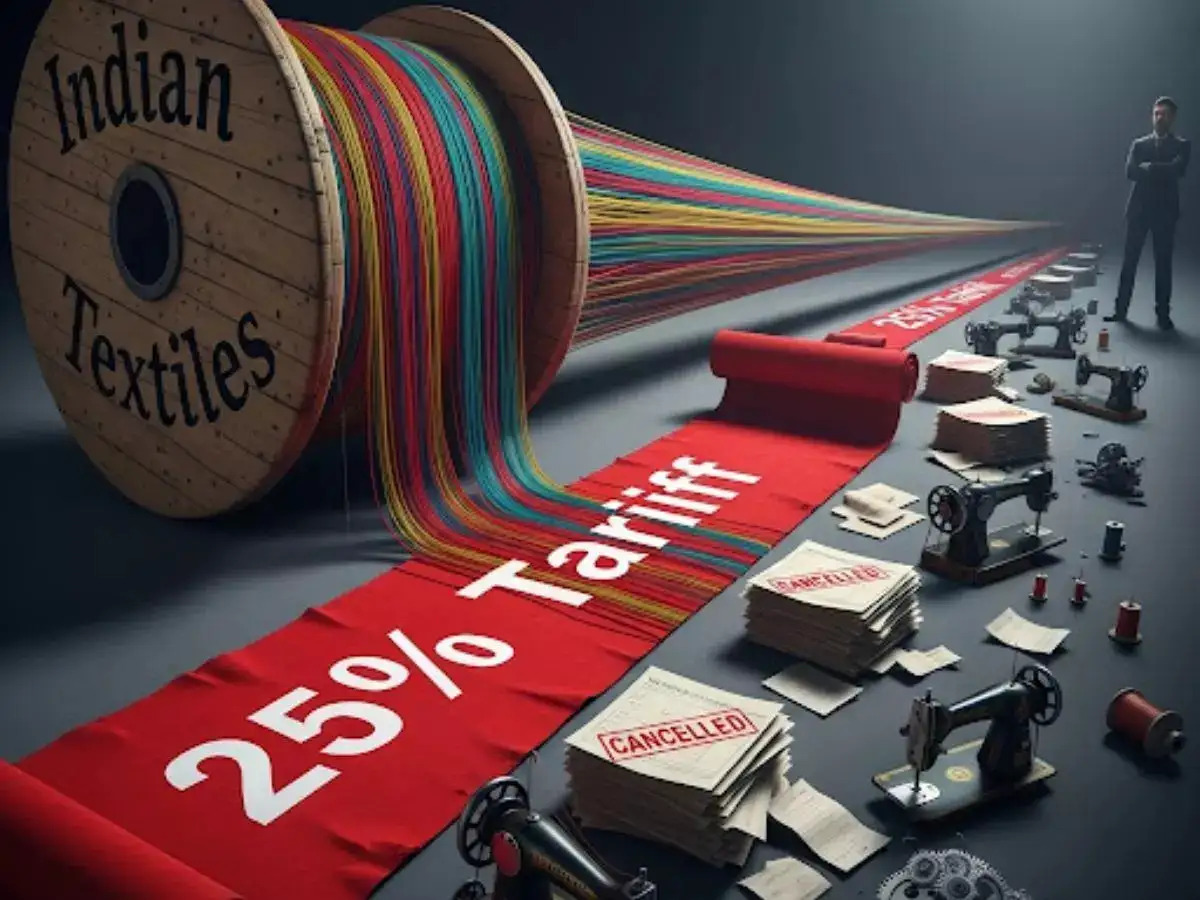
The Indian textile industry is facing serious issues.
It is reeling from an increase of a third in the price of raw cotton over the last four months, caused by delayed rains and pest attacks on cotton fields. Spinning mills have reduced production by 15 to 20 per cent.
The industry is highly fragmented, subject to volatile swings in prices because of antiquated trading systems, and ill-equipped to fend off growing competition from more efficient rivals such as Vietnam and Bangladesh.
Inaccurate production data gives room to speculators to spread rumors of a shortage of cotton, causing extreme volatility in cotton prices. India’s cotton yields, already among the world's lowest, have fallen due to delayed rains and white fly problems.
The textile industry came under unwelcome international scrutiny after Welspun India, the country’s largest textiles exporter, was accused by a major US retailer of passing off cheap cotton sheets as containing valuable fine Egyptian cotton.
The textile industry’s future is critical to India’s social and economic prospects. It employs 45 million people, including the informal sector -- second only to agriculture -- and was recently the target of an 895 million dollar package of incentives with the aim of catalyzing investments of 12 billion dollars over the next three years.
The US may restore trade benefits to Myanmar that had been suspended more than two decades ago amid rights abuses. The aim is that Myanmar should be able to benefit from preferential tariffs for poor countries under the Generalized System of Preferences scheme.
Myanmar’s GSP eligibility was suspended in April 1989 due to concerns about labor abuses. The country has been seeking to regain the trade benefits since 2013, the same year it gained GSP status from the European Union.
However not all sanctions will be scrapped.
GSP is the largest and the oldest US trade preference program. The status will grant Myanmar tax privileges on exports to the world’s largest economy and in turn fuel foreign investment into the industrial sector. The GSP status could bolster investor interest in the garment sector.
But it is unclear which sectors the special tariff preferences would be applied to and whether the fledgling garment sector would be included.
Trade between Myanmar and the United States is still minimal. Myanmar’s total bilateral trade for the 2015-16 fiscal year to November came to about 17.1 billion dollars. Bilateral trade between Myanmar and the US for the first six months of 2016 came to 238 million dollars.
Over the last year, textile quantities produced by Première Vision exhibitors increased 2.1 per cent.
By economies, exhibitors from emerging markets claimed an increase of 9.8 per cent compared to a market gain of 4.2 per cent while exhibitors hailing from mature economies noted a 1.6 per cent gain compared to a 1.1 per cent dip across the whole developed market.
Asian exhibitors, meanwhile, witnessed a 5.9 per cent increase in 2015 as production slumped in Europe down 2.8 per cent.
Premiere Vision is a textile and leather trade show. In textiles as in leather, there is a premium in value-added materials. By material, Première Vision Leather exhibitors strengthened production by 3.9 per cent compared to only 0.9 per cent on the market as a whole. Emerging market leather producers do not attend the trade show, but production in these nations gained 2.9 per cent.. However exhibitors from developed nations were largely split. Première Vision producers recorded 3.9 per cent in growth in 2015 compared to a global market drop of 4.3 per cent.
Europe managed, however, to limit the impact of its production volume decrease when converted to sales. Asian exhibitors residing in developed markets also managed to maintain their revenue while emerging market producers saw an increase.
Clovia’s Everyday Essentials is a collection of lightweight, comfortable bras in highly usable styles and trendy patterns and in a wide range of vibrant colors.
Clovia is an Indian online lingerie brand. It aims to balance the art of lingerie designing with the latest technology.
The collection includes over 140 different products in a variety of styles like full coverage cups, low back thin band, and skin colored bras to wear under summer pastels and cotton T-shirts. This collection offers a great versatile range to go with different dress cuts and designs. The bras have also been designed to provide additional support with features like parallel five ring stitches and concealed support panels. They come in new and improved cotton and cotton spandex fabrics, focusing on everyday comfort with pop colors and prints.
Clovia's categories include a wide range of premium fashion lingerie, innerwear, nightwear, and shape wear. The company's attractive offers throughout the year in each of its categories allow consumers an indulgence in something fanciful at a reasonable cost.
With an in-house designing team and sourcing team, Clovia produces its own products with imported fabrics, laces. Clovia offers more than 200 styles a month and over 75 per cent of the inventory is less than 30 days old.
Acreage of American Pima cotton is up 23 per cent in California, Arizona, New Mexico, and Texas this season. California’s 1,53,000 acres represent a 53 per cent increase in acreage from last year and more than 80 per cent of the total US American Pima production. The acreage could have gone higher if water had been available. Low processing tomato prices also prompted the cotton acreage increase.
Export sales for 2016-2017 are off to a robust start with 2, 01,300 bales already registered compared to 70,500 bales last year at this time. The US produces 31 per cent of the world extra-long staple and long-staple cotton.
China is the biggest producer and consumer of ELS cotton, but its imports dropped sharply last season from 51 per cent of the world market to 35 per cent. Some of the loss was picked up with increased sales to India, Pakistan, and Turkey.
Global supply is expected to be smaller this year. Carryover stocks from the 2015-2016 crop are estimated to be virtually unchanged.
Consumption is forecast to increase further following a large increase last year. Global stocks at the end of this year are expected to be 9 per cent lower. Despite water challenges, yields of American Pima have done remarkably well.
Bayer’s plan to acquire Monsanto is likely to spur US regulators to demand the sale of some cotton seed assets to alleviate concerns that the $66 billion deal could hurt competition in one of the country’s largest row crops. The deal also faces conglomerate antitrust issues. Cotton seed, canola seed and glufosinate herbicide assets, with sales totaling about $1.2 billion, may need to be divested.
Monsanto became the largest US cotton seed company in 2007. To satisfy antitrust concerns, Monsanto agreed at the time to sell its Stoneville Pedigree Seed unit, which had 12 per cent of US cotton seed sales, to Bayer for $310 million. It also agreed to divest its smaller NexGen cotton seed brand. After those asset sales, Monsanto had 51 per cent of US cotton seed sales and Bayer 41 per cent.
This year, Monsanto’s Deltapine brand had 33 per cent of the market, an increase of two percentage points from last year. Cotton seed generated $523 million of sales at Monsanto last year, about 3.5 per cent of the company’s total revenue. Bayer had 1.27 billion euros of seed sales in 2015. Monsanto’s seed sales totaled $10.2 billion.
Textile manufacturers in Vietnam want to explore Italian production technology as well as seek potential collaborations to upgrade their technology and improve their production capacity. One of the biggest challenges for many textile enterprises in Vietnam is to upgrade their current production technology, much of which is still retrograde and low-yield. They need to improve their competitiveness and meet the quality demands from Vietnam’s export markets such as the US, the EU and Japan.
Italian manufacturers of textile machinery have the most modern technology available in the market for sock knitting machines, garment finishing and global solutions for the cutting room. Mechanical engineering represents one of the strengths of Italy, in which the garment and textile technology Made-in-Italy is highly appreciated worldwide.
Busi Giovanni is a leading Italian sock knitting machines producer. It specializes in the design and construction of single-cylinder machines with rib needles in the dial for the production of high-quality stockings, socks and tights. Tonello is a leading manufacturer of garment finishing technologies, specializing in high-quality and eco-friendly washing and dyeing machines.
Morgan Technica provides a wide range of solutions for the cutting room, producing several types of roll loading and handling systems, automatic spreaders, spreading tables, labellers, automatic cutters with different lay thickness, software for CAD, cut order planning, PDM and virtual fitting.
A robot has been developed in the US which can make complete garments. The Sewbo system works by temporarily stiffening fabrics with a water-soluble synthetic polymer, allowing the machine to assemble garment pieces without any human intervention. While machines already can cut and measure fabrics, they can't handle soft materials like cloth with much dexterity. With stiffened fabrics, a bot could take the already-cut pieces and assemble them like sheet metal.
Sewbo is the world’s first fully robotic sewing system which can make complete garments. The system uses a custom built industrial robot, which has been taught to operate a consumer sewing machine. Sewbots are able to accurately place two pattern pieces, transport them, and sew the outside seam on a pair of jeans. They use a variety of vacuum devices to pick up the fabric pieces and then place them correctly at the sewing machine, and the technology uses cameras to make sure the sewing happens in the correct spot.
Digital manufacturing can revolutionise fashion, even down to how people buy clothes, by allowing easy and affordable customisation for everyone. Avoiding labor issues and shortening supply chains can help reduce the complexity and headaches surrounding today’s intricate global supply network.