FW

The Zero Discharge of Hazardous Chemicals (ZDHC) group is launching an online portal that will assess whether a chemical formulation complies with its manufacturing restricted substances list (MRSL). The ZDHC chemical registry will include a list of chemical products and an MRSL conformity assessment for each chemical formulation.
It will also provide textile manufacturers with documentation showing the extent to which a chemical product conforms with the ZDHC MRSL and other chemical accreditations.
It is due to be launched in August.
The open, flexible data portal will help brands, suppliers and chemical companies assess a chemical’s compliance. Without this type of portal, each textile manufacturer would need to assess every product from each of their chemical suppliers against the ZDHC MRSL to ensure conformity.
The first step sees a chemical company register as a producer, manufacturer, or supplier of chemical formulations. The user can then register its formulations. To be listed and visible on the registry, a formulation must have a safety data sheet (SDS).
Once listed, the chemical company can apply for the formulation to be assessed for conformity with ZDHC’s MRSL.
The assessment, which includes the use of criteria from accreditation companies such as bluesign technologies, will attribute the formulation with a confidence level.
ZDHC will be working with chemical companies worldwide to include their product lists in the chemical registry.
Cambodia will host the World Economic Forum on Asean, June 1 to 2, 2017. Cambodia is one of the fastest growing economies in Asia. The country’s gross domestic product has been growing steadily by more than seven per cent since 2013 and is expected to keep up that growth pace right through next year.
The country has embraced the factory Asia model of economic growth, deploying low-cost labor to manufacture products for export. As the price of labor has increased in China, and other Asian countries, Cambodia has been able to attract many of these investors. Cambodia’s large supply of inexpensive, low-skilled labor has attracted substantial foreign direct investment into the production of garments and footwear for export.
Industry will grow next year by 9.5 per cent, supported by diversification in garments and footwear toward products with higher value add. Services, the second biggest contributor to growth, grew by an estimated 7.1 per cent while the finance, transport and communications sectors all grew by about eight per cent and tourist arrivals rose by 6.1 per cent, in 2015.
Cambodia’s bid to host the World Economic Forum on Asean next year comes in the midst of recessions in many markets and the attendant slump in global trade.
Bangladesh plans to cut taxes for the garment industry. The targeted growth rate is more than seven per cent for the second year running. Gross Domestic Product growth is expected to edge up to 7.05 per cent this fiscal year on the back of increased spending in infrastructure and the energy sector and a hike in private investment.
Although a quarter of its 160 million people still live below the poverty level, Bangladesh has registered an annual growth of around six per cent nearly every year since the turn of the millennium. But it needs at least eight per cent growth to provide work for the two million people who enter the job market every year.
And the garment industry -- which has continued to thrive despite recent deadly disasters and political strife -- is crucial to the prospects of keeping growth ticking along and generating employment. Bangladesh’s exports of garments and clothing in 2015 rose by around 10 per cent.
Acknowledging this, Bangladesh is providing substantial tax benefits to this sector. The tax rate of the readymade garment sector will be reduced from 35 per cent to 20 per cent.
Budgetary spending for the financial year beginning in July would be 30 per cent higher on the previous 12 months.
After three years of creation of the Accord on Fire and Building Safety in Bangladesh, its current status and future challenges were discussed at a side event at the International Labour Conference (ILC) in Geneva recently. Despite some unacceptable delays in remediation progress, the Accord is making significant headway according to representatives from both workers and brands.
With the collapse of Rana Plaza on April 24, 2013, killing 1,134 and injuring thousands more, came an end to the tolerance of voluntary, non-transparent, non-enforceable factory inspections in Bangladesh.
Said Industrial general secretary, Jyrki Raina at the sidelines of the ILC that they will not accept anything less than a legally binding agreement to make Bangladesh’s garment industry safe and sustainable.
Scott Nova, executive director of US-based Workers Rights Consortium, said that the challenges in Bangladesh’s garment industry were not new and not unknown for brands and retailers. Both the Rana Plaza and Tazreen factories had been subjected to numerous voluntary inspections prior to the deadly disasters.
The difference lies in the enforceability of the Accord, which to date, has been signed by 217 brands. Swedish retailer H&M was one of the first brands to sign, and H&M senior advisor KG Fagerlin said that collaboration has been a key factor behind the changes the Accord has brought to the workers in Bangladesh
The African Growth and Opportunity Act (AGOA) has opened up a new opportunity for Bangladesh’s readymade garment sector.
Under AGOA African less developed countries enjoy zero duty benefits for exporting their products to the US market and this facility will be available for the next ten years.
Capitalising on this opportunity, the DBL Group, one of the largest apparel groups in Bangladesh, has decided to invest 100 million dollars to set up an integrated textile and garment factory in Ethiopia. It is expected to go into production in February next year. A total of 3500 workers including 150 executives will be employed in the Ethiopian factory. All of them would be recruited from Bangladesh.
Bangladesh though a LDC country does not enjoy zero duty benefits in the US market as the US suspended the generalized system of preferences for Bangladesh in June 2013 after the Rana Plaza tragedy.
The DBL Group, which produces items from yarn to garments, employs 22,600 workers in different factories in Bangladesh. The group is expecting shipment of apparel worth 340 million dollars by the end of the current fiscal, which was about 320 million dollars last fiscal.
The cost of doing business in Bangladesh is much higher compared to that in other developing countries. This induces Bangladeshi investors to look for alternative places for investment.
"With the normalisation of relations between Vietnam and the US in 1995, what followed was the signing of the Vietnam-US Bilateral Trade Agreement (BTA) on in 2000. The treaty opened up a new chapter in investment and trade between the two nations. Then onwards, the textile and apparel industry made remarkable strides, impressing US importers with its reasonably-priced, high-quality products."
With the normalisation of relations between Vietnam and the US in 1995, what followed was the signing of the Vietnam-US Bilateral Trade Agreement (BTA) on in 2000. The treaty opened up a new chapter in investment and trade between the two nations. Then onwards, the textile and apparel industry made remarkable strides, impressing US importers with its reasonably-priced, high-quality products.
And as Le Quoc An, Former Chairman of Vietnam National Textile and Garment Group (Vinatex) opines the local textile and garment sector moved from being merely a processing market for the relatively tolerant Soviet Union and Eastern European markets, to conquering the US market – a market renowned for its strict regulations.
Export milestones
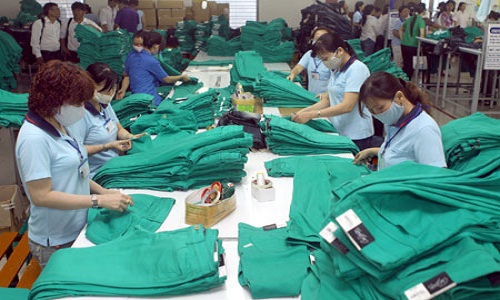
The prominent companies that had the wherewithal to enter the US market at the time were: Garco 10 (May 10), Viet Tien Garment, and Nha Be Corporation. The turning point for Vietnam’s textiles and garments reaching the US market in a meaningful, professional manner did not come until the end of 2001 when some 20 local companies came to a trade fair and the launch of a Vinatex office in New York. Thanks to this event, Vinatex finally got the opportunity to meet leaders in the field including the American Apparel and Footwear Association (AAFA), the US International Trade Admission (US ITA), and from the JC Penney Company. One year later, these leaders began to co-operate with Vietnamese textile companies and textile exports to the US began to pick up.
In 2001, prior to the BTA taking effect, Vietnam’s textile and garment exports to the US was $47 million. In 2002, it skyrocketed to $957 million, a 20-fold increase. In 2004 Vietnam’s textile and garment exports to the US reached $2.4 billion; and by the end of 2015, the figure hit a whopping $11.5 billion. Vietnam’s textile and garment market has become the US’ second-biggest import market, following China.
Vietnamese account for 9 per cent of the US import market share. The value of textile and apparel exports to the US is expected to reach $13 billion in 2016, and touch $20 billion by 2020, says An. However, AmCham predicts the magic $20 billion number will not be reached until 2025.
Growth of local businesses
The BTA has created a foundation for local apparel makers to grow quickly through knowledge gained from doing business with global partners. What was once a small sector that needed a visa for every single export order is now the number one export industry in Vietnam, says An. Many local companies were encouraged to invest in machinery, equipment, and technology, as well as enhance their human resource base to manage and utilise new production systems and technology, as Vietnamese textile and garment products gradually charmed the US market. Crucially, this changed the perspective and mindset of local businesses, moving them from a collection of small, scattered businesses, to a network of well-managed enterprises with a common goal and the management skill necessary to efficiently handle large orders from the US market.
Noted Tran Van Pho, Chairman of Hoa Tho, after some 20 years of exporting textile and garment products to the US, the company has become a trustworthy partner of many world-famous brands including Snickers, Burton, Novadry, Haggar, Perry Ellis Portfolio, and Calvin Klein.
Of course, it is not by luck that the Vietnamese textile and garment sector has gained a strong foothold on the global textile map, or in the US market, for that matter. According to Pho, in the first few years of targeting the US market, Vietnamese apparel firms were overwhelmed by trade barriers and complicated regulations on quality, specification, technology, and the environment. As such, the industry’s determination and hard work to adapt to higher market standards was the secret to its success.
According to An, the rapid boost in exports to the US has helped improve the added value of the textile and garment chain in Vietnam, in terms of massive investment injected into upgrading the entire industry. The scale of production has multiplied as a result, and companies are now familiar with international business standards and export markets.
Meanwhile, local textile businesses have also taken the initiative to cut out intermediary phases, and have increased their direct exports to international markets. Previously, Vietnam textile and garment companies needed to pass at least three intermediary steps to reach the US market. According to Vinatex director general Le Tien Truong, the TPP, will slash 60 per cent tariffs to zero, and promote textile and garment exports at an estimated growth rate of over 20 per cent.
A number of large investment projects have been carried out by Vinatex since the end of 2013, with 60 per cent of total investments used in material projects. Vinatex expects to spend some $459 million during the 2015-16 to invest in what are considered to be weak production lines.
Can the US textile and apparel industry capitalise on the dynamic growth of digital fabric printing to WTiN North America Digital Textile Conference, to reinvigorate ‘Made in America’ manufacturing? That’s the question that will be examined at the conference which will take place in New York on July 13.
Digital textile printing grew globally by 28 per cent in 2015 to reach output of 1.2 billion square meters, supported by rapid investment in high-speed industrial machinery and inks. Print design has evolved to take advantage of its new opportunities, while leading brands and retailers have embraced shorter product development cycles and new, more responsive supply chain models – often involving production close to the final customer. The technology has also led to the blossoming of a new industry of personalized web-to-consumer printing on demand.
The US is already participating in this boom, with a global market share of more than 6 per cent and a growth rate last year of over 40 per cent. In this background, the WTiN North America Digital Textile Conference will take place at the Javits Convention Center, alongside the leading Texworld USA fabric show, on Wednesday, July 13. Sponsors are Kiian Digital, Lubrizol, SPGPrints, Sensient Technology, Expand Systems and Diamond Dispersions.
Joe Farren is the new CEO of British Wool Marketing Board (BWMB). He succeeds Ian Hartley who led the organisation for 22 years. Farren is a lawyer and advises on company mergers and acquisitions. He has worked with a multinational distributor of building and home improvement products and with Lloyds Bank. He is part of a farming family.
BWMB serves the interests of wool producers and helps in maximising the value of their wool. It manages the auction process so as to maximise prices for producers and promotes wool strongly on the global stage as the pre-eminent fiber, being aesthetically attractive, known for being high performance and environment friendly.
Established in 1950, the farmer-run organisation was created to operate a central marketing system for UK fleece wool, with the aim of achieving the best possible net return for producers. The not-for-profit body is required to register all producers with four or more sheep.
The BWMB remains the only body in the world that collects, grades, sells and promotes fleece wool, its preference for the auction method being another of its stand-out qualities.
Originally, the board was a statutory body, but it’s now a producer cooperative. It provides courses and training on shearing.
Denimsandjeans.com is ready to host its maiden denim show from June 16 to 17 in Vietnam. The objective of the show is to bring some of the most reputed international mills, local vendors, top brands and retailers as well as supply chain partners together on a common platform. A series of seminars, panel discussions and presentations will also take place at the show.
Vietnam is a growing apparel exporting country. It presently ranks the fourth largest exporter of apparel after China, Bangladesh and Hong Kong and it has around 4,000 garment factories employing about 2.5 million workers. Increasing approximately at the rate of 19 per cent compared to 2013, Vietnam’s textile and garment exports crossed $24 billion in 2014.
Vietnam’s apparel industry has emerged as the next major sourcing destination for buyers, especially from the US market. US apparel imports from Vietnam grew by 38 per cent in February 2016. About 37 exhibitors from different regions of the globe will participate in the show. They include four major denim mills from Bangladesh. These are planning to explore this market through this show and make the most out of it. Denimsandjeans.com is the pioneer of denim shows in Bangladesh.
The Fashion Awards 2017 in partnership with Swarovski will award Stella McCartney OBE with a Special Recognition Award for Innovation, celebrating her outstanding contribution to the fashion industry. McCartney will be honoured on December 4 at the Royal Albert Hall for her commitment to material innovation and for using her influence to raise awareness on environmental issues. Her constant investment as a responsible, authentic and modern business is what makes her one of the industry’s most respected designers.
Stella McCartney’s commitment to environmental issues started at an early age. As a vegetarian passionate about animal rights, McCartney has never used any leather, fur, skins or feathers in her designs. After completing a degree in fashion design at central St Martins, McCartney’s international career officially commenced in 1997, when she was appointed Creative Director at French luxury house Chloé. In 2001, Stella McCartney established her eponymous fashion house in 50/50 in partnership with global luxury group, Kering. Since its launch, Stella McCartney’s brand has had a deeply rooted commitment to ethical values, believing the company is responsible for the resources it uses and the impact it has on the environment, constantly exploring innovative ways to become more responsible from design to store practices and product manufacturing. McCartney’s main goal is to combine her brand’s commitment to sustainability without compromising on luxurious beautiful designs. This is what makes her a game changer in the industry, a true innovator.
McCartney exults, “I’m incredibly proud to get this award. What I am most proud of is that it is a new award that is introduced into the Fashion Awards, a special recognition on innovation. I am hoping that as being the first recipient, I can inspire other design houses to follow suit and to make this the most prestigious award, not just a one off.”