FW
HanesBrands scores high for water management in CDP Report
HanesBrands, a leading global marketer of everyday basic apparel under world-class brands, has earned above-average scores for water management and supply chain after voluntarily disclosing data for the CDP 2016 Climate Change Report. CDP, formerly known as the Carbon Disclosure Project, is a global disclosure system that enables companies and other entities to measure and manage environmental impacts.
Hanes’ A- water score was higher than the apparel industry and S&P 500 averages in the following categories: context, governance and strategy, direct risks and response and indirect risks and response. The company’s B supply chain score was ahead of the supply chain average in all reporting categories: governance and strategy, risk and opportunity management and emissions management.
Hanes scored high because it owns the significant majority of its manufacturing and supply chain operations, achieved its CDP scores for implementing a range of best practices to reduce water use and mitigate water risk, along with a holistic program to reduce energy consumption in its supply chain. The company has set 2020 goals of 40 per cent reduction in energy use and carbon emissions, 50 per cent reduction in water use, and sourcing renewable energy for 40 per cent of the company’s needs.
Gapexpo opens in Bangladesh
Bangladesh is hosting Gapexpo from January 18 to 21. Some 400 exhibitors from 24 countries are participating in the ongoing expo. On display are latest collections of garment accessories, packaging including labels, zippers, tags, tapes, thread, ribbon, buttons, rivets, laces, hooks, transfer film, paper, ink etc.
Gapexpo provides a platform for members to display their collections to readymade garment exporters and buying houses. The Bangladesh Garments Accessories and Packaging Manufacturers and Exporters Association was set up in 1989. It represents more than 1,500 garment accessories and packaging industries in the country. This sector earned $6.12 billion during 2014-2015. This figure is likely to touch $12 billion by the end of financial year 2018 and $18 billion by the end of 2025.
The garment accessories and packaging sector is an important component of backward linkages, which is critical for the growth of the readymade garment sector in the country. By way of support to the sector Bangladesh is thinking of cash incentives for exporters of garment accessories and low interest bank loans for infrastructure development, which can boost the sector and create more jobs. The country has already established an international standard accessories sector, which contributes to value addition and reduces lead time.
Fast Retailing establishes Denim Innovation Centre in LA
Fast Retailing has established a Denim Innovation Centre in Los Angeles, a city known as the home of denim. This is the group’s first facility to focus on research and development of denim fabric, in Los Angeles, California. The facility aims to bring specialists in jeans development from premium denim brand J Brand and other companies affiliated to the Fast Retailing Group. The Centre has been established to develop jeans utilising innovative technologies and materials based on the established tradition of jeans.
In fact, its first project would be to conduct research on Uniqlo and J Brand jeans. Products developed for both brands will be available from Autumn/Winter 2017. By establishing the Denim Innovation Centre, the global hub for information on denim, Fast Retailing will be able to quickly incorporate the essence of current trends in its designs.
Moreover, the centre has a full range of in-house equipments for product development, to produce higher quality jeans. Previously, Fast Retailing outsourced production of samples and other operations to external manufacturers. But now with the Denim Innovation Centre, the company will be able to manage the entire process in-house. By using the latest equipment, the centre will be able to quickly create and evaluate sample products, enhancing the speed and quality of product development considerably.
The Centre can also be used by contracted producers as a research centre, which will increase the integrity of the finished product during actual production. In addition, the facility will focus on environmentally friendly processing and production methods, conducting R&D on chemicals and techniques used for fading and distressing of jeans.
India’s cotton yarn production slows down
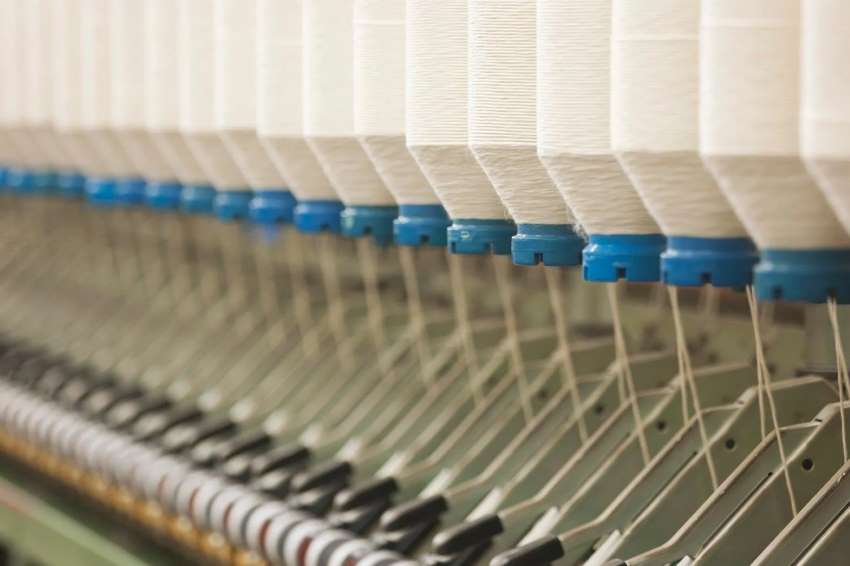
Cotton yarn manufacturers in India may not add much to capacity in the next five years. Reason: a decline in exports to China and slowing purchases from local fabric makers, who prefer to use manmade fiber than yarn; demonetisation-induced cash crunch has forced the closure of smaller spinning mills.
By the end of financial year 2016, India had 50 million spindles. There is overcapacity and so the cotton yarn industry is expected to add only about three million new spindles between 2016 and 2021. Since 2014, China has preferred to use its internal resources rather than rely on imports. So its cotton yarn imports from India have declined consistently.
India’s cotton yarn production is estimated to fall by about five to seven per cent in financial year 2017. High cotton prices and easy availability of manmade fibers at competitive rates have led to the slower growth of production of cotton yarn. Though yarn exports to China are likely to remain low, demand for yarn in other export markets including Vietnam, Bangladesh and Pakistan is likely to remain healthy. India’s cotton yarn exports are likely to be at 1,250 million kg for financial year 2017 as against 1,309 million kg in financial year 2016.
Three-day India International Garment Fair opens in Delhi
"The 58th edition of the India International Garment Fair (IIGF) got underway yesterday. The three-day Fair, organised by the Apparel Export Promotion Council (AEPC), India, will cater to Autumn-/Winter 2017/ 18. The Fair was inaugurated by Union textile minister Smriti Irani. Also present on the occasion were Ajay Tamta, Minister of State for Textiles, Rashmi Verma, Secretary (Textiles), Ministry Of Textiles and Subrata Gupta, Joint Secretary, Ministry of Textiles amongst many others."
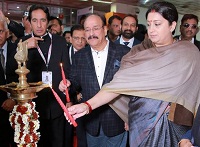
The 58th edition of the India International Garment Fair (IIGF) got underway yesterday. The three-day Fair, organised by the Apparel Export Promotion Council (AEPC), India, will cater to Autumn-/Winter 2017/ 18. The Fair was inaugurated by Union textile minister Smriti Irani. Also present on the occasion were Ajay Tamta, Minister of State for Textiles, Rashmi Verma, Secretary (Textiles), Ministry Of Textiles and Subrata Gupta, Joint Secretary, Ministry of Textiles amongst many others.
Speaking at the inauguration, Irani said festivity in terms of trade had begun under the aegis of AEPC which is organising its 58th Fair. She congratulated the Fair participants for presenting their talent to the rest of the world. She hoped that through these endeavours, AEPC would go from strength-to-strength and small and medium enterprises that are new in the world of exports use these platforms that are comparatively cost effective.
Speaking at the inauguration Verma said, from next week apparel and garment exporters will be reimbursed for the state levies paid by them, with the Textiles Ministry securing Rs 500 crores from the Finance Ministry in this regard. In June last year, the government had approved a Rs 6,000 crores special package for textiles and apparel sector to create one crore new jobs in three years, attracting investments of $11 billion and generating $30 billion in exports. She said "Many of the exporters have already given their claims to the Customs department. Very soon these reimbursements will start, in fact from next week, you will start getting your money." Verma hoped We hope garment manufacturers will use this package to augment capacity to set up new units so that more investment comes and more jobs are generated and India emerges as a key player in the international market. "China currently is ceding space, it is a huge opportunity and I implore upon all our exporters to take advantage of this opportunity," Verma said.
Speaking on the occasion, Ashok G Rajani, Chairman, AEPC said India’s RMG export during April-December 2016-17 declined 0.2 per cent compared to the same period last financial year. Market sentiment were affected due to delays in roll out of special package announced for the apparel sector in June 2016 and stagnation in the Europe and US markets.
Around 1,081 buyers from 94 countries from across the world are the Fair Fourteen states are participating. A total of 312 participants are showcasing women’s wear, accessories, kid’s wear and men’s wear. The Fair aims to be one of the largest platforms in Asia where overseas garment buyers can source and forge the business relationship with India’s finest in Apparel and Fashion Accessories domain.
Intertextile Shanghai Apparel Fabrics spring edition to return on March 14
"Global apparel fabrics and accessories industry is looking forward to its key spring summit from March 14 to 16, 2018. It is one of the biggest trade platform where the entire sector gathers to do business, discover latest fashion trends, find new innovations and discuss what’s in store for the year ahead. The 2017 spring fair was the most international yet, with over 71,000 trade buyers from 103 countries and regions doing business with more than 3,300 exhibitors from 26 countries and regions."

Global apparel fabrics and accessories industry is looking forward to its key spring summit from March 14 to 16, 2018. It is one of the biggest trade platform where the entire sector gathers to do business, discover latest fashion trends, find new innovations and discuss what’s in store for the year ahead. The 2017 spring fair was the most international yet, with over 71,000 trade buyers from 103 countries and regions doing business with more than 3,300 exhibitors from 26 countries and regions.
With the focus turning now to the first trade fairs of 2018, Wendy Wen, Senior General Manager, Messe Frankfurt (HK), put forward the case for why Intertextile Shanghai Apparel Fabrics is at the forefront of the industry. “As a sourcing platform, Intertextile is unrivalled in the industry. With this many exhibitors under one roof covering the entire apparel fabrics and accessories product spectrum, and across all price and quality points, the fair is the most efficient and effective way to discover new suppliers and make purchasing decisions. For these suppliers, the internationality, relevance and quality of the buyers, which is boosted by concurrent events such as Chic, China’s premier garment fair, is what keeps them coming back year after year.”
Matching market demand
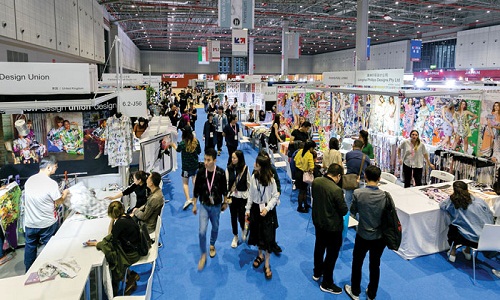
While one of Intertextile’s biggest strengths is that the entire apparel fabrics and accessories sector gathers at one place for three intense days of business, the fair is also conveniently categorised to ensure sourcing efficiency. A number of country & region pavilions as well as group pavilions will demonstrate their capabilities to the audience, while the product zones will maximise the opportunities for the Chinese and Asian markets.
In the last two Spring editions, the number of exhibitors in the Accessories Vision zone grew nearly 70 per cent. This demand comes from the fact that more than 21 per cent of buyers attend the fair to source accessories. With the Chinese Government implementing ever stricter pollution control measures on the one side, and increasingly eco-conscious domestic consumers and higher requirements from export customers on the other, demand from the local textile industry for sustainability products & services continues to grow. The sustainability zone remains the key sustainability event in China for the wider industry.
China produces more than 2.5 billion denim garments per annum, with much of this output then exported to the US and Europe, ensuring demand for imports of quality denim fabrics is high. Around 18 per cent of buyers at the 2017 Spring Edition were interested in sourcing denim, making Beyond Denim pavilion a huge success. Digital Printing Zone in China is amplified due to increasingly stringent national environmental protection policies. With Chinese consumers moving to the athleisure segment, Functional Lab has been gaining tremendous boost. This is evident in Intertextile’s buyer profile also, with 27 per cent of buyers stating functional wear and sportswear as their main area of interest at the 2017 edition.
Growth in the domestic consumption of high-end overseas wool fabrics remains strong, particularly for suiting as Chinese men increasingly adopt Western-style office attire and that’s where the importance of Premium Wool Zone lies. Overseas participants in this zone such as Huddersfield Fine Worsteds, regularly confirm that satisfactory numbers of their target buyers, including tailors and menswear specialty stores, visit this zone.
Penchant for design
While the original pattern design market in China has matured since its fast-growing early days, sales during the fair in this zone remain strong. Around 8-9 per cent of buyers at the fair are in design roles or looking for design & styling products, representing a relatively large buyer base for this niche market. In addition to the sourcing event, four other textile fairs also take place at the National Exhibition and Convention Center: Yarn Expo Spring, Intertextile Shanghai Home Textiles – Spring Edition, Chic and PH Value. Participants of these fairs will also look to source from exhibitors of Intertextile Shanghai Apparel Fabrics, ensuring extra business opportunities are provided by the entire textile supply chain gathering under one roof. Intertextile Shanghai Apparel Fabrics – Spring Edition 2018 is co-organised by Messe Frankfurt (HK); the Sub-Council of Textile Industry, CCPIT; and the China Textile Information Centre.
Vinatex signs strategic agreement with Japanese firm Itochu
Vietnam Textile and Garment Group (Vinatex) has signed a strategic co-operation agreement with Itochu, a Japanese firm where Itochu is expected to help Vinatex make a change in textiles and garment production and business method from cut—make-trim to ‘Free on Board’ to develop a sustainable retail distribution network to enjoy long-term benefit.
Under the agreement, Itochu will assume the role of a consulting partner for Vinatex and its member companies in developing the textiles and garment supply chain from fibre to thread, fabric and sewing, retail distribution, co-operation and introduce domestic and foreign partners. Shuichi Koseki, Senior Managing Executive Officer and representative director said since Vietnam’s textiles and garment were an important part of Itochu, therefore, it wanted to develop this area with Vietnam, so that Vinatex could become its number one partner.
The two sides would discuss in detail the co-operation plan and implement actions immediately to make a change in Vinatex’s textiles and garment production and business method from cut—make—trim to Free on Board, developing a sustainable retail distribution network to enjoy long-term benefits. Itochu, is Japan’s leading economic group operating in areas like textiles and garment, has aligned with some 100 textiles and garment companies of Vietnam.
The trading company has signed a framework agreement to support several projects in dyeing and materials production in Vietnam, training in the country's dyeing sector and utilizing the capacity of Vinatex's dyeing factories in the central region in 2015. At that time, Itochu owned five per cent stake in Vinatex through a subsidiary company. In the near future, Itochu would boost co-operation between the two sides to develop textiles and garment products and supply them globally.
Vietnam targets 7 per cent export growth in textiles and apparels sector
Vietnam hopes for a seven per cent growth in exports of textiles and garments this year. In 2016, Vietnam’s apparel exports were up 5.7 per cent year on year, lower than expected. However, Vietnam recorded higher growth than major competitors such as China, Bangladesh and Indonesia. Garment employees’ average income rose eight per cent over the previous year.
The industry gained strong results because enterprises focused on increasing productivity and ensuring deadlines on delivering goods. Reforms on administrative procedures for saving money and time improved the business environment and created great support for garment exporters by increasing their competitiveness and exports. Garment and textile enterprises have received enough orders to keep them busy through the first quarter of this year. The Vietnam-EU free trade agreement will come into effect in 2018. After the FTA is in place, Vietnam can compete with other countries exporting garments to the EU through the Generalised Scheme of Preferences, which allows developing countries to pay less or no duties on some exports.
Other bilateral and multilateral trade agreements are expected to bring in more opportunities in exporting textile and garment products to small and medium-size enterprises. However, enterprises still have to improve productivity, reduce the time needed to deliver cargo and strengthen distribution systems to international markets.
Tirupur readies to make up for RMG exports dip in last three quarters
In the just third quarters of current financial year (till Dec 31) vis-à-vis the corresponding period of 2015-16 fiscal, exports of readymade garment from India have seen tepid growth in rupee terms and negative growth in dollar terms. This scenario (knitwear and woven combined) has left exporters in clusters like Tirupur with a daunting task in the ongoing fourth quarter to make up for the sluggishness and surpass last fiscal’s performance.
Statistics indicate exports from India stood at Rs 83,309 crores during first three quarters of the current fiscal (April 1 to December 31 in 2016), as against Rs 80,461 crores in the corresponding period last fiscal, growth of 3.54 per cent. This growth rate was much lower compared to 9.16 per cent achieved in the first three quarters of 2015-16, against the same period of 2014-15 fiscal.
In dollar terms, growth was negative till December 31 of this fiscal and stood at minus 0.15, as against 2.48 per cent during same period in 2015-16 fiscal. In Tirupur cluster, garments worth around Rs 16,600 crores were exported between April 1 and December 31 in the 2016-17 fiscal as against the annual exports of Rs 23,050 crores attained during the entire 2015-16 fiscal.
Tirupur Exporters Association president Raja Shanmugam is optimistic about surpassing last year’s performance by this fiscal end when. He says growth slowed a bit during the initial phase of this fiscal due to negative market sentiments that created purchase contraction in global markets following Brexit and also because of greater penetration in global market share by countries like Bangladesh, Vietnam and Cambodia. With more industry-friendly policies/ incentives, exports from the country will definitely scale higher.
Technical textiles can benefit from existing fiscal sops: Textile Minister
Materials of technical textiles that are used for their technical performance and functional properties can benefit from some existing fiscal sops for the textile industry including the package for made-ups and apparels announced earlier this fiscal and the technology upgradation funds (TUF) scheme, Textiles Minister Smriti Irani has says. Responding to demands from the industry for fiscal incentives to promote the sector at a curtain-raiser for Technotex 2017, the sixth international exhibition and conference on technical textiles scheduled in Mumbai this April, Irani observed that her team could advise the industry on how to approach the government for benefits.
Like home textiles, technical textiles and clothing textiles would be eligible for benefits under the fiscal package for made-ups and apparels. The textile ministry can advise the sector on how to approach the government, the minister informed at the even organised by industry body FICCI.
There are 12 broad categories of technical textiles which include industrial textiles, eco textiles, geo textiles, home textiles, packaging textiles, protective textiles, sports textiles, clothing textiles, agro textiles and construction textiles. Although the domestic industry has been growing steadily from about Rs. 73,688 crore in 2013-14 to an estimated Rs. 1, 15,217 crores in 2017-18, India comprises just 4 per cent of the global technical textiles exports and 3 per cent of technical textiles imports.