FW

Textile manufacturer and distributor Himatsingka Seide’s income during the fourth quarter ended March 31, 2021, grew 58.7 per cent to Rs 748.04 crore compared to Rs 471.40 crore in the corresponding period of prior fiscal. The company’s EBITDA during the quarter rose to Rs 129.66. Profit after tax improved to Rs 37.57 crore, whereas total expenses increased to Rs 695.36 crore
The company is currently ramping up capacity at its new terry towel facility which is expected to complete in FY22. It also reported a strong demand for bedding and bathing products during the quarter. In FY22 it will focus on deleveraging and improving its capital efficiencies. The Himatsingka Group is a vertically integrated home textile major with a global footprint. The group focuses on manufacturing, retailing and distribution of home textile products spread across Asia, Europe and North America.
Founded in 1985, the Himatsingka Group focuses on design and product development, best-in-class manufacturing processes and efficient supply chain capabilities to ensure the highest level of customer service in the industry.
A US ban on Xinjiang cotton has encouraged China to import more than usual cotton this year. As per Business of Fashion, the country will soon issue another batch of import quotas to meet rising global demand for textiles after awarding 700,000 ton last month, said Xu Yaguang, Anaylst, Huatai Futures. Last year, China issued 400,000 ton in quotas.
Early this year, the US banned all products using cotton from Xinjiang over China’s alleged ill-treatment of its ethnic Uyghur Muslim minority. Fashion brand H&M also refused to use cotton from this region. The US also plans to ban some solar products made in the region.
China has already increased its cotton imports following the US ban, customs data show. Its inward shipments have averaged around 275,000 ton a month in 2021, compared to 179,000 ton last year. Its next batch of import quotas is likely to be less than 700,000 ton last month. China also issues 890,000 ton of low-tariff cotton-buying quotas on an annual basis, so the extra amounts come on top of that. The country awarded 800,000 ton additional quotas in 2019 before COVID-19 savaged the global economy.
Besides additional quotas, Beijing also plans to hold its annual sale of cotton from state reserves, said Wang Qianjin, Senior Analyst, Shanghai International Cotton Exchange.
Australian cotton may lose its once favored market status in China as demands for domestically produced cotton, particularly produced in Northwest China's Xinjiang Uygur Autonomous Region, is soaring, says a report by the Global Times. A report on Chinese cotton news portal cncotton.com reveals, the quantity of Australian cotton that passed customs clearance at major Chinese ports in 2019 and 2020 was low. Most Chinese traders and middlemen were cautious about purchasing Australian cotton, says the report.
Data calculated by the China Cotton Association also shows a fall in cotton import from Australia since 2019. The decline further intensified in 2020 when China imports of Australian cotton declined 68 per cent to 40,170 ton. In the first four months of this year, China’s import of Australian cotton further declined 68 per cent to 12,706 ton.
China was the major destination of Australian cotton from September 2020 to March 2021, accounting for 36.5 per cent of its total cotton exports. The drop in China's imports of Australian cotton came amid growing friction in bilateral relations. In 2020, China's imports from Australia decreased 4.6 per cent on a yearly basis to 796 billion yuan ($123 billion).
As per Jiao Shanwei, Editor-in-Chief, cngrain.com, a website specializing in grain news, slumping exports are a result of cooling diplomatic relations between the two countries.
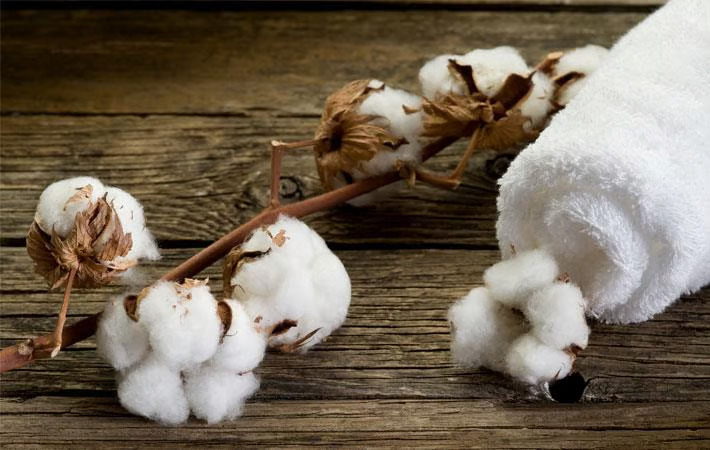
 Although cotton production is projected to increase by 5 per cent in 2021, it is unlikely to return to 2019 levels. Demand on the other hand, is expected to outpace supply leading to a rise in global cotton prices. As per a World Bank report, the global average price of raw cotton will rise to $1.72 per kg in 2021.
Favorable weather, increase in area to boost cultivation
The main factors driving up prices rise is increasing demand from global markets, says Indexbox’s new report ‘World Cotton Lint-Market Analysis-Forecast, Size, Trends and Insights’. It states, favorable weather conditions and increase in area under cotton cultivation will boost yields in the US by 523 tons, in Brazil by 436 tons, Australia 239 tons and Pakistan 174 tons during the year. On the other hand, production in China will decline giving way to India to increase its share of cotton production to 24 per cent. Pakistan, India, Bangladesh, Vietnam, Turkey and China will be the major demand drivers of cotton lint in 2021. China in particular, will step up imports as local production will not be able to meet domestic demand.
Recycling technologies to curb water consumption
In 2021, growth in cotton market will be challenged by strong competition from other natural and functionally similar materials such as hemp or flax as well as synthetic textile materials. Farmers will prefer growing hemp for its convenience and lower water consumption. Also, cotton requires large amounts of pesticides and is often grown by countries employing forced labor. This compels many apparel manufacturers to divert their supply chains towards more ethical suppliers. In order to make cotton production more sustainable, industry leaders need to introduce a new cost-effective recycling method that also reduces water consumption.
India’s cotton exports decline in 2020
In 2020, India’s cotton lint exports decreased for first time since 2016 by 9.2 per cent. India exported 965,000 tons of cotton lint during the year followed by Brazil which exported 865,000 tons. Together, the two countries made up 23 per cent of global cotton lint exports. They were followed by other exporters including Benin, Greece, Cote d'Ivoire, Burkina Faso, Nigeria, Australia and Uzbekistan which together made up 19 per cent of total exports.
The US was the largest exporter of cotton lint during the year in value terms. It exported 46 per cent of global cotton lint followed by India and Brazil. The average price of cotton lint exports declined 6.9 per cent in 2020 to $1,616 per tons. Nigeria commanded the highest price for cotton lint exports at $2,222 per tons followed by Uzbekistan whose exports were priced at $1,823 per ton and India whose cotton lint exports fetched $1,501 per ton.
China the largest cotton lint importer
After growing for nearly three years, cotton lint imports declined by 16.8 per cent to 7.1 million tons in 2020. Value also declined to $12.2 billion during the year. With 1.9 million tons, China was the largest importer of cotton lint during the year followed by Vietnam with 945 tons and Pakistan 819 tons. Together the three countries along with Turkey and Indonesia imported 79 per cent of world’s cotton lint. In value terms, China imported 29 per cent of global cotton lint. Imports amounted to $ 3.6 billion second largest importer Vietnam imported $1.4 billion. Pakistan was the third largest importer of cotton lint with a 12 per cent share.
The average price of cotton lint imports declined 5.3 per cent in 2020 to $1,706 per tons. India’s imports were priced highest at $1,979 per ton followed by China at $1,929 per ton, Viet Nam at $1,486 per ton and Turkey at $1,519 per ton were amongst the lowest.
Show organizer Premiere Vision has announced the dates and the first seminars for the upcoming Digital Denim Week.
The show, which runs from July 5 to 9, features the trends of Manon Mangin, head of Premier Vision’s fashion products. It also includes a seminar hosted by Giusy Bettoni, CEO, Class Sustainable Platform, Andre Bonfini, Art Director, Fade Out and Designer Grossi.
Companies and mills exhibiting virtually include Berto, DNM Denim, Orta Anadolu, Bossa, Advance, Azgard9, Kilim, AGI Denim, and Soko Chimica.
According to Fabio Adami Dalla Val, Show Manager, the Digital Denim Week will give them an opportunity to come together and work together in also creative business environment designed to help and develop ambitious goals.
Though Australia’s manufacturing sector has declined by 5.70 per cent over the two years through 2020-21, its knitted product manufacturing industry has increased revenue by 13.20 per cent to US $ 90.60 million in the same period, as per IBIS World,
The pandemic disrupted supply across North Asia, which typically accounts approximately 40 per cent of the global apparel manufacturing industry. However, this benefited the Australian clothing manufacturers, as per an Apparel Resources report.
Australian exports of knitted apparel to Japan jumped by more than 320 per cent in 2019-20, and exports across the manufacturing of men and boys clothing segment increased by 33.9 per cent, informs Ross Dean, Senior Industry Analyst.
According to IBISWorld, while domestic demand of clothing in Australia is projected to continue declining, exports of knitted garments are forecast to grow by an annualized 1.80 per cent over the five years through 2025-26.
The growth can be attributed to the recent changes to tariffs on knitted apparel and other clothing items to New Zealand and ASEAN.
Invista Nylon Chemicals (China) Co has launched a project to set up its new Asia Innovation Center at the Shanghai Chemical Industry Park (SCIP).
As per Sourcing Journal, to be developed with an investment of more than $15 million, the project marks the company’s next milestone in growing the nylon 6,6 value chain in China. It will also allow Invista to advance innovation to better meet evolving customer demands across the region.
Invista’s lab will be among the first at the Shanghai International Chemical New Materials Innovation Center. The 26,000-square-foot facility will be equipped with state-of-the-art polymer research and development equipment and will include polymer compounding extrusion and injection molding capability, and analytical and mechanical test equipment to characterize polymer resin properties.
Further, the Asia Innovation Center will promote the company’s comprehensive nylon 6,6 capabilities in China–R&D, production, sales and technical services–to provide customers with high quality nylon products and solutions.
According to recent data released by National Bureau of Statistics, China’s apparel retail sales increased by 12.30 per cent in May ’21 on Y-o-Y basis.
China’s fashion brands and retailers clocked RMB 113 billion (US $ 17.44 billion) from domestic retail sales in May this year.
The total retail sales of consumer goods in May ’21 valued RMB 3,594.50 billion ($ 554.76 billion) and apparel constituted 3.14 per cent of that!
The apparel retail revenues of China in first five month period valued RMB 556.80 billion ($ 85.93 billion), marking 39.10 per cent yearly surge. China also maintained an average growth of 9.30 per cent in e-commerce fashion segment for over two years.
Gildan Activewear and its portfolio of company-owned brands, including Gildan, Alstyle, American Apparel, and Comfort Colors have joined the US Cotton Trust Protocol. Glenn Chamandyl, President and CEO says, the move will increase transparency in the company’s supply chain besides assuring cotton purchased from the US is sustainable.
As per a Knitting Industry report, Gildan is one of the world’s largest manufacturers of everyday basic apparel, and also one of the largest domestic consumers of US cotton, which represents the majority of the fibre used in Gildan’s products. The company has a proven track record of a strong commitment to sustainable practices.
The US Cotton Trust Protocol is a farm level, science-based program that sets a new standard for more sustainably grown cotton. It brings quantifiable and verifiable goals and measurements to sustainable cotton production as well as drives continuous improvement in six key sustainability metrics: land use, soil carbon, water management, soil loss, GHG emissions, and energy efficiency. Members will also be provided with full supply chain transparency through the Protocol Credit Management System.
Prada and Ermenegildo Zegna groups have teamed up to acquire majority stake in Filati Biagioli Modesto SpA, a cashmere and other precious yarns producer. Prada and Ermenegildo Zegna will each hold 40 per cent stake in the company. A 15 per cent stake will be held by founding Biagioli family while the remaining 5 per cent will be owned by Renato Cotto, CEO of the new company.
Both Gildo Zegna, CEO, Ermenegildo Zegna and Patrizio Bertelli, CEO, Prada, believe, the deal will help both companies preserve their manufacturing expertise and technical knowledge. It will also boost their Made in Italy production chain. Gildo Zegna will be the chairman of the new company, while Franca Biagioli, a key representative of the founding family, and Bertelli will join the board of directors.