FW

Robert Young, Trustee, Philippine Exporters Confederation (PHILEXPORT) and President, Foreign Buyers Association of the Philippines (FOBAP) has urged the government to address the deteriorating shipping and logistics situation in the country. Young said, the domestic garment industry is losing millions of dollars due to supply chain squeeze. Exporters are facing transport issues, including vessel capacity constraints and surging freight prices, leading to cargo delays of two weeks to two months and revenue setbacks.
This is creating production issues in the country besides delaying shipments delays and restricting cash flow, Young added. Besides slow release of permits and import license, rising cost and shortage of raw materials, it is adding to manufacturing costs and leading to continuing loss of business in favor of Vietnam and Indonesia. Sergio Ortiz-Luis Jr President, PHILEXPORT urged the government and private sector to work closely together to effectively address the logistics constraints.
Although the group continues to be affected by COVID-led disruptions, H&M Grou’s sales have reached pre-pandemic levels in recent weeks. As per Women’s Wear Daily, sales surged 75 per cent in the second quarter ending May 21 up 35 per cent in local currencies for June 1 to 13 period compared to 2019, they surged by 2per cent.
The group’s quarterly sales figure fell slightly short of analyst expectations. However, as per analyst, progress achieved at the outset of the third quarter is ahead of consensus forecasts which helps it to maintain forecasts. H&M, which operates Cos, Monki, & Other Stories, Arket and Weekday in addition to H&M, has also been cutting costs and shedding jobs in Spain. The group has been renegotiating leases for retail network since the pandemic. Executives at the group are continuously evaluating the fleet of physical stores, even as they wait for customers to return. In recent years, the group has also been integrating digital shopping avenues with stores as a key priority.
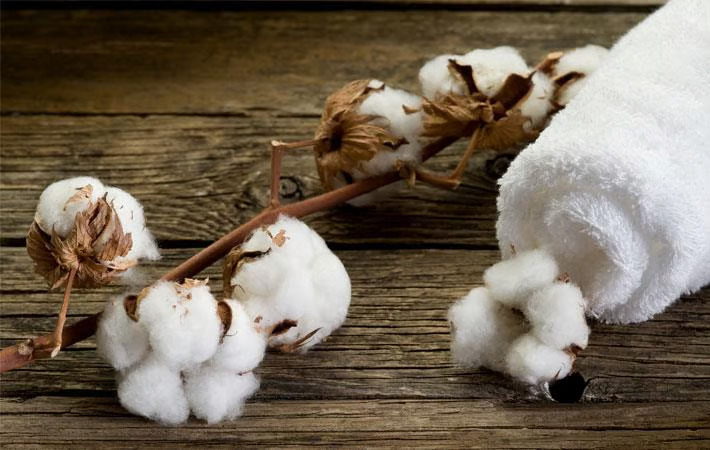
Kevit Desai, Kenya’s Principal Secretary, East African Community (EAC) has urged partner states to explore export opportunities for raw cotton to the global market. As per All Africa report, the EAC region produces 100,000 metric tons of cotton, compared to its potential to produce 400,000 metric tons. It currently exports only 8 per cent of cotton to the world market, notes Dr Desai.
To boost exports, the region needs to promote the textile value chain. It needs to invest production of leather and textile goods and turn a crop like pyrethrum into aerosols, adds Desai. Desai, who is also the Chairperson of the Coordination Committee that brings together Permanent/Principal/Under Secretaries for EAC Affairs in the partner states, was addressing the media at the EAC Headquarters in Arusha. He says intra-EAC trade currently stands at only 15 per cent as compared to other regional economic communities like the European Union (EU) and the Southern African Development Community (SADC).
He emphasized on the need for greater aggregation and consolidation to increase the region's exports to external markets. EAC partner states should also create the necessary networks to promote collaboration, he says.
The combined operating revenues of major Chinese garment enterprises grew by 13.4 per cent year-on-year to 407.8 billion yuan in the first four months of this year, shows data from the Ministry of Industry and Technology. From January to April, total profits of 12,444 major garment firms increased by 37.9 per cent from a year ago to 18 billion yuan. The companies also witnessed a 23.87 per cent rise in their output to over 7.05 billion pieces during the period from a year ago.
China's online apparel retail sales grew 33.8 per cent year on year in the first four months, while the garment exports soared by 51.7 per cent year on year to $44.4 billion. China is the largest producer and exporter of textiles and apparel in the world. Textile exports increased 30.4 per cent in 2020, boosted by the demand for face masks and personal protective equipment (PPE) in the wake of the Covid-19 pandemic. Its closest rival, the European Union economic bloc, exports only 75 per cent of that, with regional competitors exporting far less.
In 2019, China was the top ranked global clothing exporter with a share of approximately 30.8 per cent, followed by the European Union (27.6 per cent), Bangladesh (6.8 per cent) and Vietnam (6.2 per cent).
Pakistan’s textile exporters say the Federal Budget 2021-22 fails to meet expectations as it does not restore zero rating of GST, reduce withholding tax rate to 0.5 per cent or suspend EDF surcharge. Jawed Bilwani, Chairman, Pakistan Apparel Forum; Jawed Tariq Munir, Chairman, Pakistan Hosiery Manufacturers & Exporters Association (PHMA) South and North Zone; Rafiq Godil, Chairman, Pakistan Knitwear and Sweater Exporters Association Chairman, etc say imposition of 17 per cent GST has made textile exporters, especially SMEs financially unviable due to stuck up liquidity. The tax has made it difficult for them to fulfill export commitments, pay utilities and salaries to staff and workers, and to clinch new export orders.
Exporters had requested the government to reduce and fix tariff for electricity, indigenous gas and RLNG, which they complained had not been addressed. They say though the government has allocated Rs 20 billion for DLTL scheme, cases amounting to Rs 32 billion were pending with the State Bank of Pakistan. They had requested the government to increase allocation to Rs 75 billion for clearance of backlog and new DDT / DLTL claims.
They also opposed raising sales tax on import of plant and machinery from 10 per cent to 17 per cent. They are against the introduction of new 203(A) section to arrest and prosecute according to which the Federal Board of Revenue (FBR) would have the power to arrest on their discretion.
Faruque Hassan, President, BGMEA has requested Switzerland to extend the EBA (Everything but Arms) scheme under its Generalized System of Preferences (GSP) program for 10 years for Bangladesh's smoother transition.
The request was made at the recent meeting held between Hassan and Nathalie Chuard, Ambassador of Switzerland to Bangladesh, Thomas Baumgartner, Head, Political, Economic and Cultural Affairs at BGMEA office in Dhaka.
Syed Nazrul Islam, First Vice President, BGMEA and Md Shahidullah Azam, Vice President also attended the meeting. The discussions covered issues pertinent to the readymade garment industry in Bangladesh, and its progress in the area of social and environmental sustainability.
It discussed progress of garment industry in the area of social and environmental sustainability, highlighted the future potential of the industry. Leaders also talked on the need for an industry upgrade particularly in the area of skills and efficiency enhancement, technological expertise, and diversification of products.
The BGMEA sought support from the embassy regarding the need for unified code of conduct for the social audits and collaboration to promote the untold stories of the industry's transformation.
Decrease in work orders from the US is compelling Bangladesh RMG manufacturers to accept all types of work orders, says Fazlul Haque, Managing Director, Plummy Fashions. He expects the spike in coronavirus infections to delay business recovery by six-seven months. Haque also expects RMG exports to decline if the COVID-19 doesn’t rapidly improve. As per Textile Focus, US apparel imports declined 25 per cent in 2020. In the first two months of 2021, imports improved slightly as COVID cases fell. Imports from Bangladesh also increased during these two months.
However, due to a new spike in infections, imports again declined. OTEXA stats show, US imported $64.07 billion (6,407 crore) of clothing products in 2020. In the first two months of 2021, US’ clothing imports declined 13.85 per cent to $10,91 billion. In the first two months of 2021, imports from Bangladesh declined to $1 billion (Rs 8,500 crore). After China and Vietnam, Bangladesh has become the third biggest exporter of clothing to the US market.
In January-February 2021, US’ imports from Vietnam declined 12.9 per cent to $2.09 billion. Over the corresponding period of 2020, Vietnam exported clothing worth $2.34 billion to the US. Imports from India and Indonesia to the US also declined during these two months. India’s imports declined 21.89 per cent to $590 million.
 Bangladesh has come a long way since the Rana Plaza tragedy in 2013. The building collapse, which killed 1,134 people, majority of whom garment workers compelled Bangladesh to reflect on its safety measures for RMG workers safety. Bangladesh soon adopted the Accord on Fire and Building Safety agreement, paving the way for the creation of Alliance for Bangladesh Worker Safety. It also established the LEED Certified Green Factories program to acknowledge pioneers of energy and environmental design in the country.
Lack of contracts increases labor vulnerability
Yet, the RMG sector continues to face many health and safety challenges. An Asia Foundation report shows, workers in the country are mostly ignorant of their legal rights. They are often hired without proper contracts or appointment letters by factories which makes vulnerable to easy layoffs during challenging times. Also, workers are often underpaid, especially for overtime. Around 30 per cent workers in a research by the Centre for Policy Dialogue highlighted increased workplace demands without growth in payments.
Violation of women laborers’ rights
Workers also often face discrimination on the grounds of religion, race, caste, sex, or place of birth. Most of these workers are women who are often paid lesser than their male counterparts. They are also often denied promotions, indicates a 2014 study by the International Growth Centre
Many employers in Bangladesh claim their factories are adequately equipped to ensure workplace safety. However, a new study points to the contrary. According to this study, only 68 per cent workers believe their workplace can handle emergencies.
The Labor Act introduced by Bangladesh in 2006 granted compulsory maternity leave for women factory workers. Yet, 66 per cent women laborers in the country are unaware of their rights and continue to work during the statutory leave period of their pregnancy. Around 24 per cent workers are also denied sick leave or permissions to take lunch or bathroom breaks.
A slow transition to better governance
A reason for this is lack of unified voice amongst Bangladesh workers to express their concerns to employers. The Bangladesh government is addressing this issue by collaborating with German development agency GIZ on projects such as PSES to promote social and environmental standards in the industry. Sustainable business organization BSR has also launched a project called HER to focus on women’s health, financial inclusion, and gender equality. International Labor Organization has launched two projects; the Better Work initiative to improve working conditions in the RMG sector and SDR project to improve social dialogue and industrial relations.
Bangladesh is slowly moving away from its overdependence on cheap labor which made it one of the least productive garment industries in Asia. Uplifting its workers’ conditions can help the country improve its rankings in the global RMG market
Global apparel retailer Uniqlo launched its Uniqlo LifeWear collection in India. As per Indian Retailer report, the collection was launched under an ‘Everyday Performance’ concept. It has been created in joint venture with Sweden’s top athletes to support health and better living, maximizing comfort and performance in everything from working out to a life on the go.
The collection, Uniqlo+ was inspired by direct input and testing feedback from Uniqlo Team Sweden athletes, as well as other UNIQLO global brand ambassadors. Items in the new collection optimize comfort, even in sweltering summer conditions, so people everywhere can lead healthier, better lives.
Uniqlo+ reflects an enduring commitment to functionality and sustainability. Fabrics used incorporate recycled polyester made from collected PET plastic bottles and polyester fibers made from renewable biomass. Parkas in the collection employ fluorine-free water repellents. To create the knitwear, UNIQLO also used techniques that minimize material losses.
The first quarter revenues of upmarket British retailer Ted Baker fell by 20 per cent due to coronavirus restrictions during the period.
The British company also reported an underlying pretax loss of €59.2 million ($83.53 million) for the year ended January 30, compared to a €4.8 million profit the previous year. Its average pretax loss amounted to €76 million, according to Eikon data from Refinitiv.
Ted Baker's annual sales also plummeted 44 per cent to €352 million partly due to its focus on formal and occasion wear. E-commerce sales rose by 22 per cent to €144.9 million pounds.
The London-listed company, under new boss Osborne, has been working on winning back customers and investor trust after a string of setbacks that followed the departure of previous chief executive and founder Ray Kelvin following misconduct allegations. He has denied the accusations.
Founder by Ray Kelvin, who named the company after a self-styled alter ego, Ted Baker established its first store in March 1988 in Glasgow, and opened further stores in Manchester, and Nottingham. In 1990 Ted Baker opened a store in Covent Gardenand Kelvin bought the company outright from part-owners Goldberg and Sons. A new range, Ted Baker Woman, was launched in 1995.