FW

The global apparel market worth more than $750 billion in 2018, is expected to reach $1,200 billion by 2022. As per Fortune 500 rankings, TJX is the largest apparel company with revenues worth $41,717 million. The company deals in off-price apparels and home fashion products. It operates through four segments - TJX International, TJX Canada, Marmaxx, and HomeGoods. TJX’s CEO is Ernie L. Herrman and has about 320,000 employees:
TJX is followed by sportswear brand Nike on the second spot. Founded in 1976, Nike designs, develops, markets and sells athletic footwear, apparel, accessories, equipment and services. John J. Donahoe II is the CEO of the company headquartered in Beaverton, OR with over 75,000 employees.
The third largest apparel company according to the Fortune 500 rankings is Gap with revenues worth $16,383 million. Founded in 1969, this company is in the apparel retail business, and offers apparel, accessories, as well as personal care products for men, women and children. Sonia Syngal is the CEO of the company. Gap is headquartered in San Francisco, CA and has more than 117,000 employees.
VF Corp Founded with popular brands like: Supreme, Vans, Timberland, Kipling, Icebreaker, Dickies, Napapijri and The North Face ranks fifth in the list. L Brands and PV H follow in sixth and seventh positions respectively.
Paris Fashion Week’s organizer FHCM from the PwC consultancy has launched a new platform to enable companies simulate and confidentially record environmentally-sensitive decisions for the Fashion Week’s events. As per Business of Fashion, the tool aims to provide a comprehensive view of a fashion show and the impact of the designer collection on climate and the environment, including from transportation, servers for video streaming, materials, or set design.
While individual brands’ results will remain private, FHCM will use the system to report aggregated information on Paris Fashion Week’s environmental impact going forward. Having around 100 members, the Fédération de la Haute Couture et de la Mode brings together fashion brands that foster creation and international development. It seeks to promote French fashion culture, where Haute Couture and creation have a major impact by combining traditional know how and contemporary technology at all times. It contributes to bolstering Paris in its role as worldwide fashion capital in particular coordinating Paris Fashion Week.
Consumers looking to reaffirm their identities post lockdowns are opting for bright colors and bold prints, says a new report by product intelligence company Trendalytics. The report states, women are opting for fur-trimmed jackets, tiered ruffled dresses and patterned pants. Men are also playing with bold patterns, fun accessories and flashy materials like bucket hats, satin shirts and patchwork jackets. For example Louis Vuitton’s Fall/Winter 21-22 collection features cowboy boots and metallic suiting.
Inspired by the growing maximalist trend in men’s jewelry, Jewelry brand Kendra Scott plans to launch its own range known as ‘Scott Bros. The kidswear category is also becoming more opulent with sequins, rainbows and tulle skirts become more popular. The maximalist trend is also appearing in beauty, with colored mascara, wigs and glitter nail polish skyrocketing in popularity.
Brand Paloma Wool serves this maximalist look, using organic cotton, linen and lyocell throughout its line. House of Sunny, known for its psychedelic prints and knits, use only faux fur and biodegradable labels.
Leading supplier of sustainably produced specialty fibers, the Lenzing Group has welcomed the new guidelines for the implementation of Single-Use Plastics Directive (EU) 2019/904, which took effect on June 05, 2019.
Prepared by the European Commission, the guidelines specify the type of products that fall within the scope of the directive, thus providing clarity in the joint fight of the EU member states against environmental pollution from plastic waste. Lenzing’s wood-based, biodegradable cellulosic fibers such as those of the VEOCEL™ brand comprise a sustainable and innovative solution to this man-made problem.
The Commission implementing regulation EU) 2020/2151 to the Single-Use Plastics Directive stipulate uniform labeling requirements for some single-use plastic products on packaging or the product itself, starting July 3, 2021. These encompass feminine hygiene products and wet wipes for personal and household care containing plastic. As per Jürgen Eizinger, Vice President- Global Nonwovens Business, Lenzing, the Single-Use Plastics Directive enables consumers to make a more informed purchase decisions.
Latest innovations in screen and digital printing, consumables, workflow and color management will be displayed at the upcoming FESPA Global Print Expo, Amsterdam. To be held from October 12-15, 2021, at the RAI exhibition centre in Amsterdam, the exhibition will display management solutions from over 300 industry suppliers.
The trade show will also focus on hardware solutions from confirmed gold sponsors Brother and Mimaki, as well as suppliers including Agfa, Canon, Durst, Fujifilm, Han Glory, and Roland DG; substrates from 3A, Ahlstrom Munksjö, Avery Dennison, Hexis and Re-board Technology AB; automation, workflow and colour management solutions from Barbieri Electronic, Inedit, OneVision, ONYX Graphics and Print Factory; and consumables from CHT Germany, Easy Inks, and Sun Chemical.
It will be co-located with the European Sign expo, the leading European exhibition for non-printed signage. The European Sign Expo will connect signage professionals with companies specialising in channel lettering, digital signage, dimensional signage, engraving and etching, illuminated displays, out of home media, LED and sign tools. The event is supported by the European Sign Federation, and gold sponsors Efka and Ledit Yaki.
American denim brand Lee has introduced a new water-saving dyeing technology that reduces the number of chemicals needed to manufacture a pair of jeans. As per Textile Today, the technology also enables the brand to recycle water at the dyeing stage. Called Crystal Clear, the technology uses indeterminate organic ingredients in dye baths to reduce the amount of water and energy needed to make a pair of jeans. Meanwhile, Lee has also collaborated with Los Angeles-based streetwear brand Hundreds to launch a workwear-inspired collection, featuring denim jeans and jackets, plus t-shirts and sweatshirts.
The aim is to use 100 per cent laser dyeing methods by 2023 besides partnership with companies engaged in upcyling garments.
An iconic American denim and casual lifestyle apparel brand founded by HD Lee, it has 130 years of experience in denim design and craftsmanship. Lee launched various denim styles for men, women, girls and boys during these years.
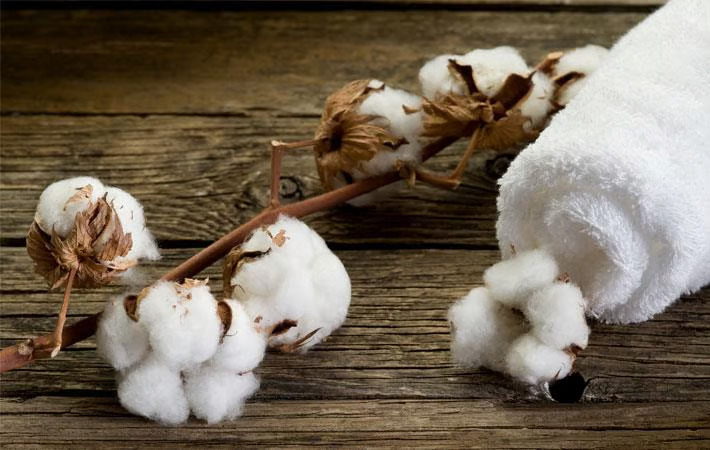
The government plans to launch a new policy on cotton solvent to encourage ginning mills in the state. Agriculture Minister Niranjan Reddy says the government aims to encourage ginning mills to manufacture cotton by products such as oil, cake and solvents. These byproducts command a good price at the international level and the ministry plans to give more incentives to the mills to manufacture them.
According to the minister, earlier, the Cotton Corporation of India and traders used to take the cotton purchased here to Maharashtra and Andhra Pradesh but now there was no such need. The government has set up ginning mills in rural areas to provide direct employment to 100 people in each mill and indirect employment to another 500, he added.
Data released by the Ministry of Commerce and Industry shows, India’s kids wear exports declined 6.11 per cent during Q1 FY21 to $436.59 million compared to Q1 ’20. Knitwear exports grew 14.58 per cent to hit $ 243.72 million export revenues, while the shipment of woven kids wear sunk drastically by 23.55 per cent to $192.87 million.
In March ’21, growth in both knit and woven kids wear segment remained positive with collective exports growing by 18.06 per cent on Y-o-Y basis to $142.95 million. Amongst top five export destinations for Indian kids wear the US, UAE and France grew during Q1 ’21, while exports to UK and Germany declined. Exports to the US grew 58.60 per cent in March ’21 to reach $22.41 million from $14.13 million in March’20.
Retail footfalls in major European countries declined in the range of 26 per cent to 40 per cent in 2020 on account of recurrent national and regional lockdowns, says a study by retail intelligence specialist TC Group. Based on data gathered between 9 a.m. and 9.30 p.m. daily on passers-by taller than 120 cm, the study showed a degree of disparity between countries.
For instance, consumer footfalls in UK’s main commercial high streets declined just 26.4 per cent or 3,225 people per day. The UK managed to stem the decrease in footfall by easing lockdown restrictions roughly in parallel with periods when footfall normally tends to increase, such as June-July and October-December. The worst result was recorded by Portugal, which witnessed a 40 per cent slump in footfall, equivalent to 2,245 people per day. Germany too was badly affected with footfalls on commercial streets falling by 38 per cent and in-store visits declining by 46.8 per cent, on average 217 people per day.
In Italy, high-street footfall fell by 31 per cent with the number of in-store visits decreasing by 40 per cent. In Portugal, pedestrian traffic fell by 30 per cent while in-store visits decreased by 41.3 per cent. France managed to limit its footfall decrease to 28.2 per cent while the number of in-store visits in the country plummeted, by 49.1 per cent, on average 334 people per day in the year.
Spain fared a little better, with high-street footfall falling by only 27.9 per cent while the number of in-store visits fell by 37.5 per cent at peak times.
For its upcoming edition of S/S’22 from August 10-13, Copenhagen Fashion Week aims to feature a strong line-up of labels. The event will feature 38 labels including established names and new talent. Some big brands participating in the event include Nordic brands such as Ganno, Stine Goya, Holzweiler, Saks Potts and Marimekko. The event will also feature returning brands such as Han Kjøbenhavn, Helmstedt, Brøgger and Hope.
Around 30 of the 38 brands will host physical shows which will be live-streamed on the fashion week’s website along with remaining digital shows. The event will also focus on menswear with a curated selection of brands, including, Schnayderman's, (di)vision, Berner Kühl and Nikolaj Storm Copenhagen. Established names such as Henrik Vibskov, Souland and Samsøe Samsøe will present both womenswear and menswear.
This year’s inaugural Talent Slot will be held by A Roege Hove, who will explore knitwear to indicate future Nordic design dexterity. Louise Lyngh Bjerregaard, will also debut at the event and The Royal Danish Academy will present a selection of its MA students' graduate collections.