FW

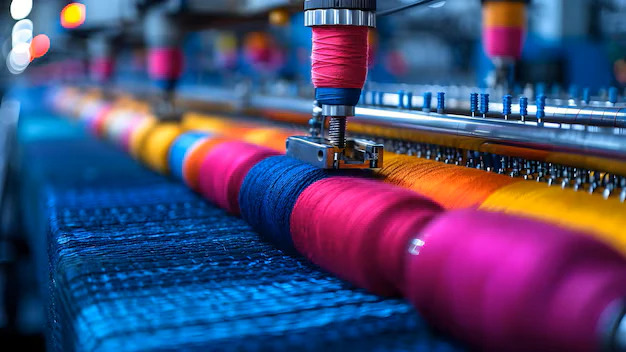
Alchemie Technology has joined HeiQ in its efforts to rollout the third quarter production of its Novara digital multifunction finishing solution. Novara also enables lifestyle product innovations at lower production cost for fashion, sportswear, technical clothing and upholstery. The solution is suitable for finishing all fabric types from 50 to 1,000 gsm, including polyester, cotton, nylon and polycotton.
The solution can apply single-sided, or simultaneous two-sided, coating of multiple finishes to specific areas of textile like combining anti-odor and water repellency in one material. Using Novara for single-sided finishing of HeiQ Viroblock required 52 per cent less chemistry, 66 per cent less water and 50 per cent less energy, while achieving a 99.7 per cent reduction in antimicrobial activity after 15 washes, notes Dr Simon Kew, Managing Director, Alchemie Technology.
Kew noted extensive testing using HeiQ’s chemistry with Alchemie’s digital finishing technology has achieved exceptional finishing performance with half the chemistry required of traditional finishing methods.
Fashion retailers like Primark, Bestseller and H&M planning to resume sourcing in the Myanmar.
As per Apparel Resources, Danish fashion retailer Bestsellerhas commissioned an independent report to evaluate its due diligence to ensure responsible production in Myanmar. The retailer says there are no grounds to assume that its three factories located in Myanmar are either directly or indirectly, owned by the military.
H&M too has gradually started placing new orders again. The Swedish retailer is focused on avoiding the imminent risk of its suppliers having to close their factories in Myanmar.
Primark, the Irish fashion retailer, also will be now sourcing in the country. The retailer is committed to fulfilling all existing orders with its suppliers in Myanmar.
Meanwhile, organisations like the Clean Clothes Campaign are urging all suppliers, brands and retailers, active in Myanmar, to publicly condemn the military coup, call for the restoration of democracy and the rule of law.
The Nigerian Textile industry produced 10 million yarn materials in 2020 despite the COVID-19 pandemic and widespread insecurity.
Godwin Emefiele, Governor, Central Bank of Nigeria disclosed that the apex bank financed over 278,500 hectares in 2019 and 2020 with over 90,000 metric tons of cotton seed harvested.
In addition, nine ginneries were brought back to life and ginned cotton all year round for the first time in 10 years.; over 620,000 direct and indirect jobs created in two years; while the industry capacity of the ginneries increased from an average of 19 per cent to 51 per cent.
Emefielerevealed that the textile sector got 100 per cent of their major raw material (cotton lint) at a CBN-subsidized rate of N440,000 as against the market price of N593,000 and that uniformed Services have started patronizing made-in-Nigeria textiles for their uniform.
Between 2019 and 2020, a memorandum of understanding was signed among critical stakeholders across the value chain, including cotton farmers, ginneries, textile and garment companies and end-users of cotton products and this has led to at least 5 agencies partnering with local textile manufacturers, said Emefiele.
For the 2021, the Bank plans to involve ginneries inbackward integration by cultivating an average of 53,100 hectares with an estimated output of 106,200 Metric tons at two metric Tons per hectare.
The Bank is also working with existing prime anchors for 10,000 hectares of land with an estimated output of 20,000 metric tonne, Emefiele declared while adding that CBN will be working with associations to cultivate about 80,000 hectares of land with an average output of 120,000 Metric tons at 1.5 Metric Tons per hectare.
He reiterated that CBN remained committed to ensuring the successful implementation of the CTG program across the country and will continue to dedicate appropriate resources to driving its implementation.
Italian sportswear brand Fila’s largest store in China was inaugurated last month in Beijing.
As per the Fashion Network, the megastore spans over 1,700 square metres, across three floors. Dubbed the 'Fila Sport Fashion House', the store blends the brand’s Italian DNA with the local culture, aesthetics and architecture of Beijing.
Its interiors boast of a typical Hutong roof and a decorative wall. The tracks of the Milanese metro characterize the fitting room area. The final touch is the splash of brand colors that delineate an area entirely dedicated to Instagram fans.
The stores sells all Fila sport lines, as well as items from various collaborations, such as the new MSGM X Fila collection dedicated to tennis in store. Designed by Massimo Giorgetti, Founder and Creative Director, MSGM for the Roland Garros tennis tournament in Paris, the collaborative collection includes halter tops, mini skirts, shorts, polo shirts, and t-shirts in MSGM’s iconic tie-dye prints or marble motifs.
Earlier this month, Fila also unveiled a vibrant capsule collection to celebrate the European Football Championship taking place between June 11 and July 11, 2021.
Daniel Grieder, Former CEO, Tommy Hilfiger has been appointed as the new CEO of Hugo Boss and also a member of its supervisory board for five years.
As per Fashion Network, Grieder worked for Tommy Hilfiger for more than 20 years and was largely responsible for the successful establishment of the brand in the European market. He became its CEO in 2008 and after the integration of the business into the Phillips-Van Heusen (PVH) Corporation, he became CEO and President of Tommy Hilfiger Global and PVH Europe in 2014.
His appointment comes at a time when Hugo Boss is bouncing back from the pandemic that affected demand for one of its core product areas, formalwear. In recent periods it has worked to introduce more casual clothing into its line-up.
Easing of lockdowns in several states has raised delivery hopes of garment and textile manufacturers whose goods are lying in warehouses. Vinod Thapar, Chairman, Knitwear Club, expects the movement of goods to start in the next 7-10 days though things may not return back to normal as of now, he says.
Harish Kairpal, Finance Secretary, Knitwear Club hopes majority of shops and showrooms are allowed to open in a day or so to enable customers to receive the goods. The company has been getting calls from customers based in states like UP, Rajasthan and Delhi for holding discussions about goods that were in transit or are held up at godowns and offices of the transport ever since the lockdown.
Narinder Mittal, General Secretary, Ludhiana Business Forum, adds, customers are calling for finalizing payment schedule of undelivered consignments as they are confident of getting their goods after their state governments ease the lockdown curbs.
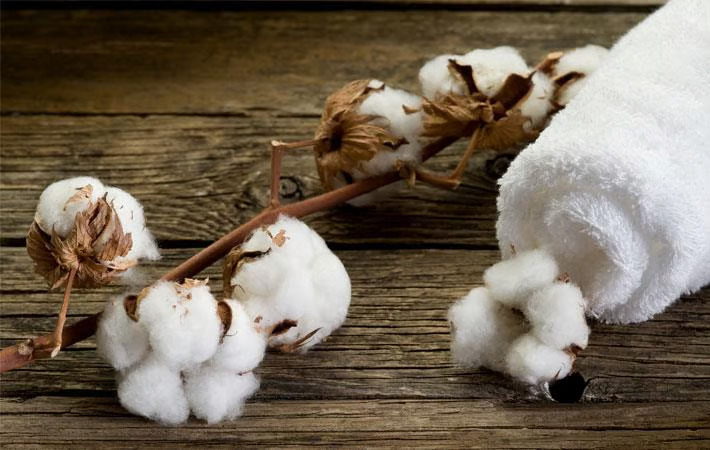
As per the June 2021 edition of Cotton This Month, global cotton production is expected to increase by 5.5 per cent in the 2021-22 season while consumption is expected to increase 2 per cent. The report estimates global trade will increase 2 per cent.
As estimated by the International Cotton Advisory Committed, production is expected to increase to 25.5 million tonne due to an increase in planted area in the US and West Africa. On the other hand, consumption is expected to increase to 25.3 million tonne and global trade is expected to increase to 10 million tone. Global ending stocks are also expected to increase to 22 million tonne as the stocks-to-use ratio declines to 0.87, although China’s stock is expected to decrease as the rest of the world’s expands slightly.
Cotton This Month is published at the beginning of the month with the Cotton Update published mid-month. The Cotton Update, which is included in the Cotton This Month subscription, is a mid-month report with updated information on supply/demand estimates and prices.
Global supplier of wood-based specialty fibers Lenzing has signed a cooperation agreement with Swedish pulp producer Södra, to process 25,000 tonne of textile waste per year by 2024. As per Sourcing Journal, the agreement involves the transfer of knowledge between the two companies, which have been proactively working toward creating a circular economy for many years, and a joint process development followed by a capacity expansion for pulp from post-consumer waste.
Both companies will work together to give textile recycling a major boost by further developing technologies towards a broader, industrial-scale use of post-consumer cellulosic waste. They will use the jointly developed pulp ‘OnceMore as a raw material for producing Lenzing’s Tencel x Refibra branded specialty fibers. Södra will also increase production capacity of the pulp 10-fold during 2022 and have a higher level of recycled textile content, says Lotta Lyra, President and CEO.
With an aim to create a global Industry 4.0 player for the fashion, automotive and furniture markets, Lectra has acquired all outstanding shares of Gerber Technology. As per Innovation in Textiles, these shares worth €175 million were acquired through a loan of €140 million, available cash and transfer of €5 million newly-issued Lectra shares to AIPCF VI, Gerber Technology’s sole shareholder.
The union of both companies’ expertise, state-of-the-art technology and resources will enable Lectra offer long-term value to customers, opines Daniel Harari, Chairman and CEO, Lectra. Founded in 1973, Lectra reported revenues of €236 million in 2020 and is listed on Euronext (LSS). Like Lectra, Gerber Technology develops software and automation solutions for businesses around the world.
An US -based company founded in 1968. Gerber Technology develops software and automation solutions for fashion, automotive, furniture and other businesses across the globe.
Mother of Pearl, Nikolaj Storm Copenhagen and Teatum Jones are the three finalists for this season’s Sustainability Award at the Copenhagen Fashion Week. As announced by online retailer Zalando, the three finalists will present their collections during the fashion week to be held from August 10-13, 2021. The seasonal award aims to encourage brands to explore environmentally friendly alternatives and acknowledges sustainable efforts to improve the industry. It forms a part of Zalando’s sustainability strategy, do.MORE, which works to be part of the solution and aims to address the fashion industry’s waste problem.
The three finalists will receive funds to cover the production costs and will debut their designs in the Zalando Greenhouse - the official hub of Copenhagen Fashion Week that showcases the latest in sustainable fashion. The winner will receive a prize of €20,000 and a partnership with the online retailer in developing an exclusive capsule collection, which represents sustainable advancements and innovation.