FW

Textile chemical management authority Bluesign Technologies has appointed Daniel Rüfenacht new CEO. As per Eco Textile, Rüfenacht will replace Jill Dumain, who has been promoted as the Global Vice-President for Sustainability Solutions, SGS Group, of which Bluesign is a member.
After over a decade of experience in the textile industry, Rüfenacht joined SGS as the Vice President-Corporate Sustainability in 2008. He was promoted as the Group Vice President-Corporate Communications and Sustainability in 2017. In his new role, he aims to galvanize suppliers, manufacturers and brands to reduce the overall footprint of the textile industry and enable a better, safer and more interconnected world.”
Based in St. Gallen, Switzerland, Bluesign works with the entire textile value chain to eliminate harmful substances within the manufacturing process to minimize the impact on people and the environment. Established in 2000, Bluesign, has become the leading sustainability solutions provider for environmentally friendly, safe and resource-efficient textile production with a global system partner network of chemical suppliers, manufacturers and brands.
Published by Global Industry Analysts, a new report ‘Denim Jeans-Global Market Trajectory & Analytics’, estimates global denim market to grow at 4.7 per CAGR from 2021-2026 to reach $83.2 billion by 2026. It projects the offline segment will grow at 4.2 per cent CAGR and reach $71.8 billion by the end of the analysis period. Growth in the online segment is readjusted to a revised 7.4 per cent CAGR for the next 7-year period. China, the world`s second-largest economy, is forecast to reach a projected market size of $18.4 billion by the year 2026, trailing a CAGR of 7.5 per cent over the analysis period.
Among the other noteworthy markets, Japan and Canada are forecast to grow at 3 per cent and 3.8 per cent respectively over the analysis period. In Europe, Germany is forecast to grow at approximately 3.1 per cent CAGR. The US represents the biggest consumer of denim jeans worldwide and has the world’s largest per capita consumer of jeans. Increasing disposable income levels, higher fashion consciousness, and the shift towards casual dressing in the workplace are major factors driving demand for denim jeans in these regions.
A major portion of future growth in the denim jeans market is likely to emanate from developing nations such as China, India, South Korea, Brazil, Mexico, Turkey, the UAE, and Saudi Arabia.
Faruque Hassan, President, BGMEA, hopes increased vaccinations in the US and reopening of retail markets will revive Bangladesh’s garment exports by October this year. Hasan also hopes store reopening in Europe will fuel demand for Bangladesh made garment items. In first 10 months of current fiscal year, Bangladesh’s apparel exports increased by 6.24 per cent year-on-year to $26 billion, he informs.
Of this, knitwear exports accounted for $13.99 billion registering a 15.34 per cent year-on-year growth while woven exports declined by 2.71 per cent to $12 billion, Hassan adds. Demand for knitwear is increasing as people are spending more time indoors, he adds further. Currently, Bangladesh exports $6.5 billion worth of garment items to the US annually. And to the EU it exports garments worth $21 billion annually.
Gap Inc has increased its outlook for the year. Driven by e-commerce growth, the American fashion retailer expects sales to increase by 20 per cent this year. The retailer saw a massive surge of 89 per cent in first quarter sales to clock $4 billion in revenues. Of this, revenues from online sales accounted for 40 per cent in Q1. As per Sonia Syngal, CEO, Gap Inc, indoor malls accounted for only17 per cent of the company’s overall sales in the first quarter. Hence, the retailer has decided to close Gap and Banana Republic Stores.
The retailer also plans to expand Athleta and Old Navy brands as they accounted for $166 million profits in Q1. Old Navy, the retailer’s biggest brand, earned $7.5 billion in revenue last year globally, while Athleta remains the company’s highest-margin business. Going forward, Gap plans to open at least 30 Old Navy locations and 20 Athleta stores this year.
Though the prices of direct-spun PSF in China surged with improving sales post May Day holiday, sales ratio has dropped. As per SRTEPC reports PSF futures slumped from early to mid-May. Transactions by way of basis showed obvious advantages, pressuring the sales of direct-spun PSF plants. This led to a downturn in the prices of direct-spun PSF alongside the ups and downs of polyester feedstock and PSF futures during the period.
The modest interest shown by downstream spinners resulted in increase of inventory of direct spun PSF plants. It has increased to 4.3 days currently. The actual product inventory in the warehouses of direct-spun PSF plants has risen to high level at 21.3 days. To deal with this, many plants started to cut production. For example, Yizheng Chemical Fiber, Jinlun and Huvis (Sichuan) all arranged maintenance or production cut during May. By the end of May, the operating rate of direct-spun PSF plants moved down to about 93 per cent.
On the other hand, the sale of downstream blended polyester yarn has been smooth since April, encouraging spinners to shift production from pure polyester yarn and TC-type one to CVC-type one which contains less PSF than the former.
At the 33rd foundation day of the North India Section of The Textile Institute (UK), T Rajkumar, Chairman, Confederation of Indian Textile Industry (CITI), informed the government plans to invest $211.7 million in technical textile sector till 2024. It has already established Centers of Excellence in different fields of technical textiles across the country, he added.
Shirshir Jaipuria, Chairman and Managing Director, Ginni Filaments, emphasized the importance of technology in textile industry. He said, emerging trends of technology, development, sustainable products and marketing strategy will impact the future of textile sector in India. And recommended the industry should focus on data exchange and adapt to the changing requirements.
Professor Vijay Kothari emphasized on the need for better coordination among academia, research organization and industry. He advised the industry to stop working in silos and adopt an integrated approach. The industry also needs to focus on developing new cost-effective products that cater to health care, environment and industrial needs of consumers.
 With the Accord agreement on Fire and Building Safety in Bangladesh set to expire in the next three months, the Bangladesh garment industry once again faces the risk of natural and human disasters like the Rana Plaza Factory disaster in 2013. The Accord on Fire and Building Safety was signed by 200 European brands and retailers like Inditex, H&M and Primark, labor unions and Bangladeshi factory owners in 2013. As per New York Times, the agreement made periodic inspections at Bangladesh apparel factories mandatory for their owners. Factory owners also had to collectively contribute funding for safety training and some factory improvements. Any companies that violated the terms could be fined or expelled from the group.
The agreement was originally set to expire on May 31, 2021. However, brands and union’s demands for a replacement deal led to an extension of the expiration date to August 31. Yet, the future of the Bangladesh garment industry looks uncertain as it struggles to monitor its annual $34 billion apparel exports.
Global pioneer of worker safety
The world’s second largest garment exporter, Bangladesh houses nearly 4,500 export facilities. These facilities employ over 4.5 million people making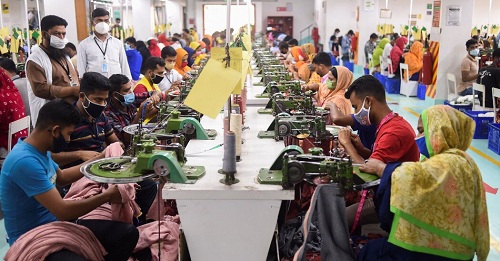 them highly vulnerable to fire and electrical hazards. In the last five years, Bangladesh fixed 120,000 such hazards with the help of the Accord agreement. Nearly 200 factories with two million workers lost their contracts due to poor safety standards after 38,000 inspections. The Accord was thus known as a pioneer of global worker safety and auditing in the industry. The agreement ensured garment manufacturers made the required changes in factories besides improving their supply chain transparency, says Michael Posner, Professor-Ethics and Finance, Stern School of Business, New York University. The agreement went through a period of transition in the last 12 months with the Ready Made Garments Sustainability Council proposing a new framework excluding key elements of the Accord such as individual brand accountability and monitoring by third-party auditors. Monitored by BGMEA, the agreement aims to give more power to trade unions, says Christy Hoffman, General Secretary, UNI Global Union
New agreement minimizes brand accountability
However, Christina Hajagos-Clausen, Director-Textiles and Garments, IndustriALL, alleges, the proposal by brands is motivated by their desire to include more American brands such as Walmart in the agreement. The proposal minimizes individual accountability by enticing North American retailers to contribute towards collective safety monitoring, adds Hajagos-Clausen said. It reduces the overall credibility of the program, making it impossible to be used as a blueprint for worker safety globally, she says further.
A boon for Bangladesh workers
Bangladeshi factory workers are however, looking forward to this agreement. The pandemic has devastated the country’s apparel sector with factories losing orders worth $3.5 billion. Investments needed to meet safety standards have already squeezed profit margins of small and size garment factories. Order reductions and cancellations are further adding to their financial constraints. They also face the uphill task of upgrading their factories to new COVID-19 related safety measures.
Though Bangladesh has launched many initiatives, it still has a long way to go in terms of worker safety, says Posner. The country has over 5,000 garment factories, of which only 2,500 factories are covered by the Accord and Alliance. The remaining factories continue to operate in unsafe conditions. A successor to Accord is thus the need of the hour, adds Posner.
 Its glamorous side cannot hide the fact that much of fashion industries shine comes from the hard work and toil of 65 million workers employed in thousands of garment factories across South Asia. As a 2019 ILO report highlights, garment factories in South Asia employ around 75 per cent of all garment workers worldwide. However, most of them face ethical, environmental and sustainability issues, said Designer Derek Lam to the Women’s Wear Daily.
Introspecting supplier treatment
The WWD report says, there has also been a upsurge in violence against the Asian American and Pacific Islander community in some of these factories. To change this balance of power between brands and suppliers, brands need to introspect on their behavior with suppliers, observes Joni Simpson, Senior Gender Specialist, ILO-Asia and Pacific. They need to create sustainable conditions for workers, she adds.
Consumers too have been urging brands to be more transparent in their operations. Johnson Yeung, Regional Urgent Appeal Coordinator, Clean Clothes Campaign East Asia Coalition says, the industry employs some of the most vulnerable, marginalized, poor neighborhoods and communities in South Asia and they need to be made accountable for workers well-being. Pandemic fuels labor abuses in Asian factories
Most countries in the Asia Pacific region are politically unstable and lack proper infrastructure. This makes them more vulnerable to labor abuses by Western companies. When the pandemic hit some of these countries, brands cancelled orders and deferred payments for orders already delivered. This made it difficult for factory owners to pay workers. As per Clean Clothes Campaign research, workers are currently being paid only 2 to 5 per cent of the clothing made by them.
The fashion industry mainly employs low-cost, low-skilled laborers. Roughly 80 per cent of them are women, reports ILO. The Asian and the Pacific countries employ 35 million women workers in the garment, textiles and footwear sector, notes Simpson. Some of these workers are underage making them vulnerable to sexual exploitation by supervisors and other male counterparts, he adds.
Need for organized change
Addressing some of these atrocities, a report by global risk consulting firm Verisk Maplecroft says, the pandemic has worsened the risk of modern slavery in some of Asia’s manufacturing hubs. COVID-19 led disruptions are fuelling labor and human rights abuses in Asian garment factories leading to a drop in their rankings, adds Sofia Nazalya, Human Rights Analyst, Verisk.
The industry really needs to make an organized change in its method of functioning says, Yeung. It needs to stop being profit-oriented and focus on improving supply chain transparency. It can improve their workers’ conditions by ensuring fair wages, giving them an opportunity to voice their opinions and implementing a code of conduct in factories. This will enable the industry to lift e workers out of poverty and provide them with a real life.
Data released by Cambodia’s General Department of Customs and Excise shows, the country’s apparel exports in Q1 FY21 declined 6.43 per cent to $1.775 billion compared to $1.897 billion exports during the corresponding period of last year. As per Textile Today, Cambodia exported garments worth $7.420 billion in 2020, a 10.24 per cent decline over previous year’s exports. To boost exports, the Cambodian government has announced eight rounds of financial support programs.
According to these programs, the government will provide $40 per month to each worker, while factory owners will pay an additional $30, taking workers’ total monthly pay to $70. One of the reasons for the decline in Cambodia’s exports was a decline in international demand. However, the country hopes to increase exports in the second quarter with opening of lockdowns in the US, UK and other European countries. The Asian Development Bank forecasts the Cambodian economy will grow 4 per cent this year and 5.5 per cent in 2022, as the economic recovery in major trading partners boosts demand for Cambodia’s exports.
Growing demands from the construction and automotive industry is fuelling growth of global textile staples market, says a Global Market Insight report. It says, staples are mainly used in apparel, interior flooring, upholstery, filtration, medical and construction industries. As per Textile Focus, growth in this market is likely to be fuelled by growing concerns about worker’s safety in various industries owing to rising accidents and deaths. These staples are used for manufacturing personal protective clothing for industries and their employment has augmented with stringent government regulations and expected to propel textile staples market.
Medical industry has shown rapid growth in the use of textile staples for wound care and preventing chronic wounds due to properties such as biocompatibility, flexibility and strength. Automotive and transport sectors use these staples for making seat covers, roof, carpet and door liners.
The global textile staples market is dominated by Asia Pacific. North America led by the US also has a substantial share with fast paced economic growth and infrastructure development. Europe, led by Germany has moderate share in textile staples market owing to well established and flourishing automobile industry hosting giants that includes Audi and Volkswagen. The share of Middle East and Africa is expected to increase with demand of protective clothing due to stringent government regulations for workers.