FW

As per a new report by Bain & Company, the luxury market could gain 30 per cent probability or exceed $340 billion in sales of high-end items such as apparel, handbags and jewelry in two years.
This is a revision from Bain’s prior forecast of a full recovery by 2022 or 2023, says analyst Forbes. It is being driven by China and the United States’ unexpectedly strong economic rebounds, thanks in large part to swift vaccine distribution.
French luxury giant LVMH Moet Hennessy Louis Vuitton announced in April that it had returned to growth in the first quarter, with $16.75 billion in sales across its more than 70 brands. Fashion and leather goods in particular had an excellent start to the year, generating record revenue of $6.7 billion, or 37 per cent higher than the same period in 2019.
Consumers in China have likewise shown incredible resilience. According to the National Bureau of Statistics, retail sales of consumer goods rose 17.7 per cent in April compared to the same month in 2020, 8.8 per cent compared to April 2019. As strong as this growth sounds, it’s a slight slowdown from February and March, when sales increased 33.8 per cent and 34.2 per cent, respectively, over last year.
Looking ahead, China is set to contribute an additional $6.6 trillion in global consumption between now and the end of the decade, according to Hong Kong investment bank CLSA.
According to a new market study by Global Industry Analysts Inc, the global market for denim jeans is projected to reach a revised size of $83.2 billion by 2026, growing at a CAGR of 4.7 per cent over the analysis period. Offline, one of the segments analyzed in the report, is projected to record 4.2 per cent CAGR and reach $71.8 billion by the end of the analysis period. Online segment is expected to grow at 7.4 per cent CAGR for the next 7-year period. The popularity of online sales channels will bedriven by a growing number of consumers using the Internet to browse various websites and indulge in web based shopping. In addition, ability of online stores to offer less expensive products in comparison to physical formats of these stores, along with eliminating the requirement of dealing with queues and crowds drives consumers towards online retail purchases.
China, the world`s second largest economy, is forecast to reach a projected market size of $18.4 billion by the year 2026 trailing a CAGR of 7.5 per cent over the analysis period. Among the other noteworthy geographic markets are Japan and Canada, each forecast to grow at 3 per cent and 3.8 per cent respectively over the analysis period. Within Europe, Germany is forecast to grow at approximately 3.1 per cent CAGR.
. A major portion of future growth in the denim jeans market is likely to emanate from developing nations such as China, India, South Korea, Brazil, Mexico, Turkey, the UAE and Saudi Arabia, among others.
 Some of the biggest US players, who opened stores recently, focused on boosting liquidity reserves by cutting operational costs. As per a Women’s Wear Daily report, many of them also managed to cut debts, while others like VF Corp were able to make new acquisitions.
Emerging business models
The crisis also led to companies adopting new business models. For instance, Ralph Lauren shifted to a licensed model last year for its brand Chaps. The retailer also sold its Club Monaco business, exited from over 200 US department stores and cut off-price business to build on its namesake brand and boost prices. As the company values its brand more than its business, last year it added 4 million new customers to direct-to-consumer network, informs Patrice Louvet, President and CEO. These new consumers will help the company boost profit margins, he adds.
Fashion retailer Macy’s is focusing on beauty and accessories category. The retailer expects a strong demand for fragrance, fine jewellery, boots and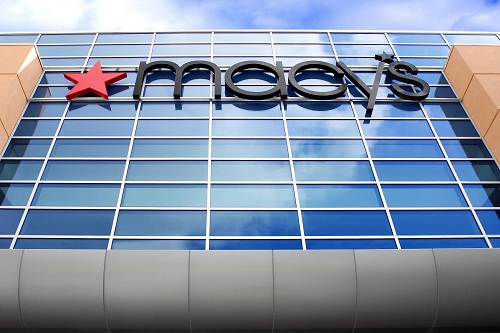 handbags in coming weeks as customers are ready to get out and spend again, adds Jeff Gennette, Chairman and CEO.
Seeking new styles
Retailers also expect shoppers to get more active with their return to normalcy. Michelle Gass, CEO, Kohl, opines, while still preferring comfortable casuals, consumers will continue to seek new fashion styles as they resume work and travel.
Though the COVID-19 halted operations for most retailers, Walmart and Target continued to sell groceries and other essential items. This helped Target achieve $1 billion sales in the first quarter of this year. The retailer used most of its stores to fulfill its online operations, says Brain Cornell, Chairman and CEO.
Store expansion and upgradation
After a year of focusing on e-commerce, retailers are once again reopening their stores. This presents an opportunity for retailer for TJX Cos, Inc, the parent company of J. Maxx and Marshalls to grow its global store base. The company plans to open more than 1,600 additional stores to grow to about 6,275 stores in the long term with its current brands and sales locations. It also plans to relocate some of its existing stores to newer destinations.
Last year was also a year of technological transformation for many fashion companies. VF Corp focused on central consumer data platform last year which enabled them, to serve consumers in a more meaningful way, says Steve Rendle, Chairman, President and CEO. The company continues to explore new technologies and processes to enhance its digital operations.
Some companies are also supporting countries suffering from fresh COVID-19 outbreaks. Walmart for example is donating oxygen concentrators, PPE and financial support in India. The company was able to expand its business during the pandemic. Its global e-commerce sales grew by 43 per cent in constant currency to represent 12 per cent of the company’s total sales, adds Dough McMillion, President and CEO.
Global industry non-profit Textile Exchange has launched its latest Material Change Insights (MCI) Report summarizing how the industry is progressing in its shift to preferred materials.
The 2020 MCI reveals that the average overall score is up 9.8 points - or 17 per cent - this year while remaining at Textile Exchange's Level 3 'maturing' performance band. However, the number of companies in the Level 4 'leading' band more than doubled from 16 to 36.
The uptake of preferred materials was up by nearly a quarter, now accounting for 44 per cent of the MCI portfolio. Preferred renewable cotton and recycled polyester accounted for most of this growth.
Circularity scores increased on average by 37 per cent with the biggest growth among outdoor/sports brands. Nine companies - C&A, H&M Group, Knickey, MUD Jeans, Nudie Jeans, Outer known, Patagonia, prAna and The North Face - achieved the 'leading' Level 4 ranking.
Greenhouse gas savings also showed some improvement, mostly linked to the use of recycled polyester. Savings there were 0.7 million tons CO2eq, a 16 per cent saving over conventional polyester.
Participation in the program was up 10 per cent. A total of 191 companies took part, compared to 173 the previous year, with the most growth within the apparel and footwear sub-sector.
Supermarket Chain Tesco has admitted receiving evidence of widespread forced labor of migrant women in cotton spinning-mills across Tamil Nadu.
The supermarket chain admitted there were several issues in relation to wages and benefits and verbal intimidation of workers in one of the mills it has links to in the region, and is working to stamp out abusive practices.
An investigation by NGOs Somo and Arisa, which interviewed 725 workers at 29 cotton-spinning mills in Tamil Nadu found evidence of multiple labour abuses including deception, intimidation and threats towards vulnerable female workers, abusive working and living conditions and excessive overtime.
The spinning mills of Tamil Naduhave long been associated with human rights abuses. A Guardian investigation in 2018 revealed that Hugo Boss had found young female workers held captive and prevented from leaving the premises in garment factories linked to its company in Tamil Nadu.
The authors of the report believe the alleged abuses they found in the 29 mills surveyed are likely to be replicated across the Tamil Nadu textile sector.
The ACT initiative has published guidance for its members on how to treat their suppliers in Myanmar.
ACT is an agreement between 20 global brands - including H&M, Inditex, Primark, Next, PVH, Tesco, Zalando, ASOS, Bestseller and C&A - and the IndustriALL global union in pursuit of living wages for workers in textile and garment supply chains.
As per Eco Textile, key elements to its advice include engaging suppliers on a case by case basis, endeavoring to maintain open and effective lines of communication and ensuring an accessible complaints mechanism is available for suppliers should they feel they have been unfairly penalized for delays.
The statement also says that ACT members have developed a framework to address any need to pause manufacturing orders, placed by global brands with local suppliers, due to the ongoing circumstances in Myanmar.
Brands including H&M, Bestseller, Primark, C&A and Benetton have temporarily halted orders from their suppliers in Myanmar following the coup, although most of these companies are now sourcing from the country again. This can increase the pressure on employers as well as placing at risk the rights of the workers they employ, the statement continues.
ACT also warns that respect for freedom of association (FOA) for workers in garment factories across Myanmar remains a major concern following the coup.
It states that the current situation poses a threat to the effectiveness and implementation of the FOA Guideline due to the breakdown of communication and a host of new challenges facing workers and employers.
It adds that the Fast-Track Dispute Resolution Mechanism (DRM), negotiated by ACT member brands, IndustriALL and the Industrial Workers Federation of Myanmar (IWFM), can also be used to address and resolve disputes on workers’ rights.
Sales of jeans and tops by American Eagle Outfitters Inc accelerated after the apparel retailer reported a first-quarter results beat on increased spending, driven by stimulus checks.
Stimulus-led spending confidence among customers allowed the apparel retailer to cut promotions and sell at full prices, pushing the company's gross margin to 42.2 per cent from 36.7 per cent in 2019.
The company is also optimistic about the back-to-school season denim trends as it revamps fashion styles to cater to the looser fits that millennials and teens are sporting these days.
Pent-up demand for loose-fit jeans, tops and leggings coupled with the $1,400 stimulus checks that Americans received in March lifted the company's sales for the first time since the onset of the pandemic.
The company also reported a 57 per cent surge in digital revenue in the first quarter compared to 2019 levels, fueled by a redesigned app and enhanced curbside and in-store pickup features.
Excluding one-time items, the company earned a profit of 48 cents per share, above analysts' average estimate of a profit of 46 cents per share, according to IBES data from Refinitiv.
Total net revenue surged nearly 90 per cent to $1.03 billion compared with expectations of $1.02 billion.
The Turkish textile industry plans to expand its production capacity to $100 billion in coming years by forging lucrative partnerships with globally recognized brands and textile companies.
Ahmed Oksuz, President, Istanbul Textile and Raw Materials Exporters Association (ITHIB), says, the upward momentum in the field of technical textiles in recent years the sector’s impressive production capacity along with Turkey’s strategic position between Europe and Asia, offer the chance for potential partnerships that could bring tremendous benefits to all stakeholders.
Turkey expects to export roughly $12 billion worth of textiles in 2021, and $30 billion including finished apparel. The sector currently employs more than one million people. It is fully compliant with EU standards and norms and has reduced carbon emissions at all its facilities, adds Oksuz.
Tirupur Exporters Association (TEA) has urged Union Finance Minister Nirmala Sitharaman to announce an economic stimulus package for MSMEs in Ready Made Garment (RMG) Sector. Raja M Shanmugham, President, TEA President has urged for extension of moratorium on all existing loans for at least three months to SMA-2 (Special Mention Accounts) also, as these companies have been classified as SMA-2 due to COVID-19.
He says, these units have been facing a financial crisis since 2019 and struggling to repay their loans. During the pandemic, RMG sector saw a huge rise in demand for casual wear due to growing work from home culture. Moreover, the RMG sector creates jobs equivalent to or better than agriculture and hence it needs to be protected, he added.
He further added, these measures will help the sector achieve its normal growth rate, enhance exports and increase employment.
A new survey by the US-based Genomatica reveals, around 86 per cent of consumers in the country aim to shop sustainably but 48 per cent are unaware of the mode of sustainable shopping while 42 per cent are confused about what makes clothing sustainable.
Nearly 72 per cent consumers claimed to be aware about sustainability issues in the fashion industry while 52 per cent viewed sustainability as an important factor in fashion and 47 per cent aimed to make more sustainable clothing choices. Almost half consumers expressed concern over the materials used for making clothes and their impact on the environment. Another 47 per cent ranked clothing made with renewably-sourced or natural materials as a top sustainability characteristic, with around 46 per cent listing production processes with few to no toxic chemicals as one of their top three priorities.
Almost 55 per cent consumers wanted clothing brands to reveal their sustainability initiatives. Another 50 per cent urged brands to add a sustainability labels to their clothes while 38 per cent urged for clearer information about sustainability features in garments.
The survey reveals, 44 per cent consumers purchased less clothing during the pandemic with more women reducing their shopping trips than men.