FW

The Indian textiles ministry has decided to develop Kanihama village in Jammu and Kashmir’s Budgam district as a handloom village. The village is the traditional seat of Pashmina and Kani shawl weaving in Kashmir.
The village has around 250 handloom weaver households besides having more than 500 weavers and artisans. Facilities like looms, handlooms and handicraft showrooms and training for latest and innovative designs will be made available to the artisans in the village, according to media reports from the state.
The work that will be carried out under the project includes repair and construction of internal village roads, installation of ATM, drinking water and toilet facilities construction of 30 work sheds, 20 looms, parks, display of publicity hoardings, signage, installation of solar and street lights, beautification of surroundings and creation of tourist attraction points, craft demo in the village and plying of eco-friendly buses.
Advance Denim has opened a new fully integrated denim mill in Vietnam with Advance Sico. Located in Nah Trang, Vietnam, Advance Sico is designed to efficiently manufacture and ship more products to fulfill growing demand throughout Vietnam and Cambodia. With Vietnam emerging as a popular manufacturing alternative to China in recent years, Advance Sico believes the country will continue to grow as a global apparel powerhouse with its support.
Advance Sico aims to use 90 per cent sustainable fibers by 2023. Additionally, 100 per cent of all indigo used at Advance Sico will be Archroma aniline-free liquid indigo. This ensures that minimal sodium hydrosulfite will be used and no carcinogenic aniline will be present in the company’s indigo dyeing process, ultimately eliminating hazards within the production process. During typical denim production, some aniline stays locked into the indigo pigment and can be difficult to wash off the fabric. The remainder of the aniline impurity is discharged during dyeing. This poses concern as aniline is toxic to aquatic life, and elevated exposure levels can put factory workers at risk.
While Advance Sico aims to commit to pure indigo, the mill also operates its own state-of-the-art reverse osmosis water purification system on site to remove any harmful impurities from its effluent water supply. As Advance Sico grows and diversifies its manufacturing capabilities, the company isn’t losing sight of its goal to produce the highest-quality denim with minimal environmental impact.
The manufacturer believes that crafting true indigo comes from rope dyeing, and it is already operating two indigo rope ranges designed to dye the highest-quality vintage shades. To replicate these shades, Advance Sico has a team of expert Japanese dyeing technicians that have been crafting rope shades for more than 30 years.
The Indian textile market is slowly and gradually recovering, even though the impact of COVID-19 is massive, says Prabhu Damodharan, Convenor, Indian Texpreneurs Federation (ITF). Low-end, essential and value for money goods segments are moving well though fashionable apparels that depend on showrooms in malls are yet to make a recovery, he added.
The federation advised and cautioned members to scale-up production only after carefully analyzing demand. There is a good opportunity for Indian textile products to enter Japan market in the near future and 51 members of the federation have already expressed interest to make products for this promising market. Stating that the MSME financial package from the Centre had been helpful in increasing liquidity, Prabhu said people with eligibility criteria had easy access to get this package benefits, he added.
The brick-and-mortar side of the retail scene is set to worsen, with Hennes & Mauritz AB planning to add to the wave of store closures. The Swedish fast-fashion retailer, which owns Cos, Monki, Weekday and & Other stories, as well as its namesake chain, plans to close around 170 stores while emphasizing larger flagships — outfitted with state-of-the-art garment tracking technology. It aims to accelerate the integration of online channels, and is using RFID tracking technology in 20 markets.
The brand has increased its online customer base with many of its in-store customers now becoming multichannel customer. The group aims to adopt the omnichannel strategy in future to meet the customer wherever they choose to go. H&M reported a first-half loss after tax of 3.06 billion Swedish kroner, or $328 million. Executives flagged a faster recovery rate in recently reopened stores. The brand’s sales in June declined by 25 per cent in local currencies compared to the same period last year. Most of the label’s stores have reopened, but 350 units, or 7 percent, remain closed.
Earlier this month, the Swedish firm reported sales of 83.61 billion Swedish kronor, or $8.96 billion, for the first half, down 24 percent in local currencies, with the strongest impact from the COVID-19 crisis felt in the second quarter.
The group’s inventory decreased 3 percent year-on-year in local currencies at the end of May, compared to a rise of 2.5 percent at the end of April, which was a positive surprise, noted analyst Chamberlain who had expected an increase due to delayed shipments from China and Bangladesh.
Fashion brands Gucci and Saint Laurent have agreed to the recent call made by the Council of Fashion Designers of America and the British Fashion Council to embrace a slower pace and focus on only two main collections a year Gucci has announced its intentions to reduce the number of shows it presents each year from five to two. Similarly, French fashion label Saint Laurent has opted out of Paris fashion week this fall saying it will reshape its fashion calendar in a departure from the norm.
These so-called waves of radical change refer to a sudden understanding of the precariousness of the fashion industry in the face of economic shutdowns; a budding awareness and alarm over the pollution generated by the fashion industry, from textile production to manufacturing to showing internationally to disposal; and the increasing poor quality of items on the marketplace.
The pandemic-induced lockdown has also opened people's eyes to the superfluity of many clothes and, more specifically, how they're able to make do with less. A recent UK study found that 28 percent of people are "recycling or reusing more clothes than normal" and 35 percent of women say they plan to buy fewer clothes once the lockdown ends. This is a significant shift from the insatiable shopping habits of pre-coronavirus times, and while it may not stick forever, fashion labels cannot ignore such changes, even if they are only temporary.
Despite 47 per cent decline in apparel exports to the country in April, Bangladeshi garment exporters are hopeful of Canada as an export destination. As per the Canada Bangladesh Chamber of Commerce and Industry in Bangladesh (CanCam), Canada is one of the traditional markets for Bangladesh where the trade balance is heavily tilted towards the latter with products worth CAN $ 726 million going to Canada in 2019.
Bangladesh’s exports to Canada grew 14.53 per cent year-on-year to CAN $1.97 billion in 2019, riding on the trade privilege extended by the North American nation. Further, in 2018, Bangladesh’s shipments to Canada were worth CAN $ 1.72 billion, where more than 92 per cent were apparel items. However, Bangladesh’s exports declined by 46.63 per cent in April this year as confirmed by the official custom statistics of Canada. The country exported $715.15 million worth of apparels in April ’20 as compared to that of US $ 381.70 million in April last year.
The country also saw a drop of 33.17 per cent to clock just $68.92 million revenue from apparel exports to Canada in April this year, while the export value in the corresponding month of the prior year was $103.12 million.
Of all the exporting destinations, China remained the most affected country with over 54 per cent fall in its apparel exports shrunk to below $100 million. The Chinese apparel shipment to Canada valued at just $97.38 million in April this year as against $212.13 million worth of shipment in the same month of 2019.
The Federation of Indian Export Organisations (FIEO) expects India’s exports to decline by around 10 per cent in the current fiscal. But in case of a second coronavirus wave, the contraction may reach 20 per cent, it anticipates. FIEO is receiving a lot of enquiries from countries where anti-China sentiments are high and many of these enquiries have been converted into orders.
However, the demand in employment-intensive sectors like gems & jewellery, apparels, footwear, handicrafts and carpets is still a challenge, FIEO said.
The export recovery is likely to be led by pharmaceuticals, medical and diagnostic equipment, technical textiles, agri and processed foods, plastics, chemicals and electronics. As the domestic demand for petroleum products is extremely low, India may witness increasing exports of petroleum as well for such companies to sustain in business, said FIEO in a press release.
FIEO suggested its members to look into a three-pronged strategy: focus on countries like the United States and the United Kingdom that are providing demand stimulus; explore countries having high anti-China sentiments, including European Union nations, the United States, Japan, South Korea, Australia, New Zealand and Canada; and revisit economies depending on crude and commodities exports as prices of such products are likely to be subdued.
The federation urged the government to provide an ecosystem that addresses the cost disability of Indian manufacturing. Import substitution manufacturing should attract interest subvention on credit, offsetting inland freight disadvantage besides equalisation of import tariff from free trade areas.
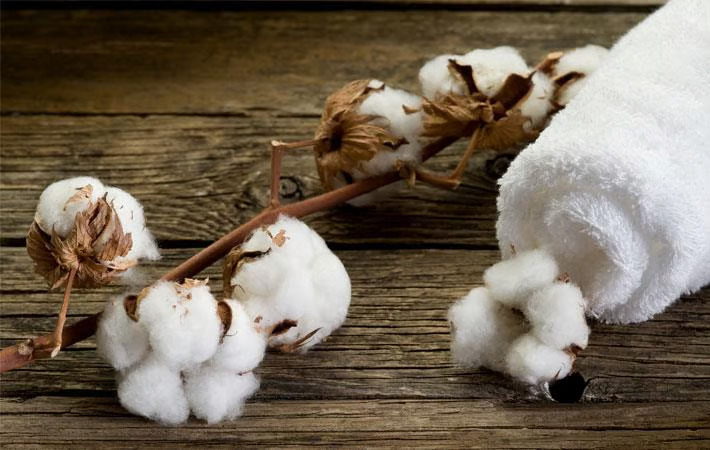
CSIRO researchers have genetically modified cotton to make it naturally coloured The development will be lead to wrinkle-free, naturally dyed, stretchy cotton to outperform synthetic fabrics. It will benefit the $2 million Australian cotton industry. Though renewable, recyclable and biodegradable, the cotton still needs to be dyed, and the use of sometimes harmful chemical dyes is considered a blot on the industry's environmental copybook. The naturally black cotton will replace black dyes, which are regarded as the most polluting of textile colors.
It's estimated that on average, each Australian produces about 25 kg of textile waste each year. Much of it is synthetic and it ends up in landfill, where it will take hundreds of years to degrade. Genetically modified cotton, known as biotech cotton, could have a substantial impact on the textiles world. A move away from synthetic materials in favor of cotton would be an important step in protecting the environment.
The team is also working on a longer-term project, creating wrinkle-free cotton that doesn't require ironing. It involves screening and testing thousands of cotton plants to transform them into new super-cotton varieties to produce fiber with greater elasticity that can compete with synthetics.
China Customs Statistics (CCS) states, garment exports from the country grew 13.10 per cent to $7.63 billion as against April this year. The month-on-month surge indicates pick-up in apparel exports as retailers worldover are gradually opening stores and seeing consumers stepping out up for shopping. However, the cumulative value of Chinese apparel shipment declined by 26.40 per cent on year on year basis to clock $33.37 billion revenue.
Exports of textile yarns, fibers and other products too increased on month on month basis by 41.30 per cent to clock $20.65 billion in May ’20. The cumulative exports, however, increased massively on Y-o-Y basis by 79.20 per cent and values stood at $57.95 billion.
Of all textile products, textile yarns saw a fall of 58 per cent and exports of the same were valued at $3.87 billion, while the export of textile fabrics tumbled by 46.50 per cent to clock $17.05 billion in Jan.-May ’20 period.
Probably the massive shipment of textile products such as masks and coveralls led China see staggering surge of 295.90 per cent on Y-o-Y basis and these textile products hit $38.13 billion revenue for the country.
Though China increased on monthly basis in its apparel exports and on yearly basis in textile exports, the upcoming months will only tell when will China be able to stabilize exports of both textile and apparels.
The Global Fashion Agenda (GFA) plans to stage an online event to urge the European Union (EU) to commit to circularity in the textiles industry in its post-pandemic recovery plans. The event will examine the impacts of COVID-19 on EU textiles policy and call for even stronger commitments to accelerating the circular economy, both regionally and globally, going forward.
To be held on the Zoom platform on July 7, will bring together high level representatives from EU institutions, the fashion industry, the civil society as well as intergovernmental and international organizations. The event will unveil the recently-launched Policy Hub report, 'Recommendations for Green Recovery in the European Apparel and Footwear Industry.’ The report is a collaborative effort between the Sustainable Apparel Coalition (SAC), Federation of the European Sporting Goods Industry (FESI) and the GFA.
The event will be divided up into three key sections: 'The Big Picture: European Recovery Plan(s)', 'Are Textiles still the new Plastics for Europe?', and 'Regional Focus, Global Relevance'.