FW

Italian fashion label Fendi will organize Milan Fashion Week from September 22-28. The show will open with a collection from Fendi. The show will be a physical event with limited number of guests. On June 20, Fendi organized a concert entitled "Fendi Renaissance - Anima Mundi" at the Palazzo della Civiltà Italiana. The event featured the musicians of the Accademia di Santa Cecilia and violinist Anna Tifu, who performed "L'Estate" ("Summer") from Antonio Vivaldi's "Four Seasons" on the steps, under the arcades and on the roof of the famous monument.
On June 24, the Italian house also presented a new capsule "California Sky" created in partnership with Los Angeles-based artist Joshua Vides. A teaser unveiled by Fendi offering a glimpse of the new collaboration shows that it will feature ready-to-wear and leather pieces marked by black and white motifs that are typical of the contemporary artist.
The new creations can be found in Fendi's online store at Fendi.com. The brand's website is also offering internet users a chance to watch a full-length video of the Fendi Renaissance - Anima Mundi concert.
 As India and Bangladesh emerge from COVID-19-induced lockdowns, the scenario in the textile and apparel industries of both countries is quite dismal. Though several Indian SMEs have started operations with 25 per cent capacity, starting production isn’t feasible unless 90 per cent of the markets open and consumer demand is revived, feels R K Dalmia the President of Century Textiles and Industries. Hence, textile and apparel makers in the country are looking forward to the Diwali season for demand revival. Manufacturers aim to restore operations at the earliest. However, they are struggling with few workers, as little public transport is available in the country.
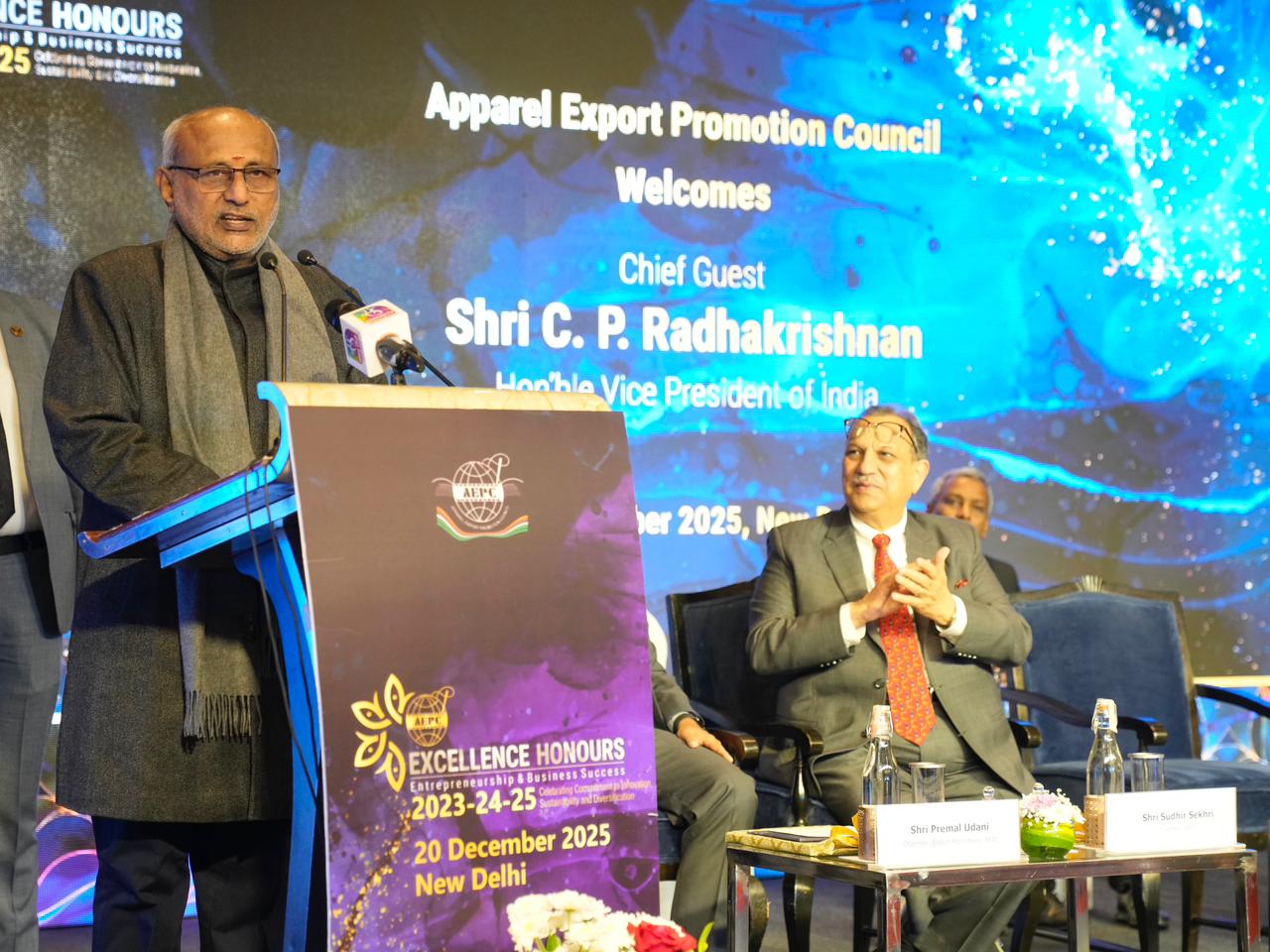
To address this issue, A Sakthivel, Chairman, Apparel Export Promotion Council (AEPC) has urged the government to increase shift duration of available laborers from 8 to 12 hours with normal wages. He has also urged the government to consider normal wage rate for the additional four hours rather than twice the rate.
Need for more FTAs
Experts point out, one of the key reasons India lags in exports to the EU is the lack of FTA. Hence, India should sign more FTAs with the EU. The recent FTA between Vietnam and EU can be a huge threat to India as it allows Vietnam duty free access to EU garment markets. On the other hand, Indian supplies continue to be taxed at 9.6 per cent. Hence, India needs to not only promote its garment clusters but also initiate structural reforms and tailored policy interventions, says Raja M Shanmugham, President, Tirupur Exporters Association
Amongst the five key exporters to the EU, India is the only country whose garments suppliers to the trade bloc dropped from €4.47 billion in 2016 to €4.31 billion in 2019. However, all remaining countries like Bangladesh, Sri Lanka, Cambodia and Pakistan – continue to get preferential treatment. Though the EU slaps a 12 per cent import duty on Chinese garments, Beijing undoubtedly remains far more competitive than India and offers an impressive range of apparels. Experts also view post COVID-19, the Indian industry should work on strengthening its sportswear and active wear categories and aim to become one of the largest producers of manmade fiber products.
Budgetary constraints in Bangladesh
In comparison, Bangladesh government plans to generate Tk 378, 000 crore revenue in its upcoming fiscal year while also borrowing Tk 84,980 crore from banks to plug the deficit of the budget. Dealing a huge blow to the apparel sector, the government intends to raise source tax for apparel shipments from 0.25 per cent to 0.5 per cent.
To resurrect their respective textile and apparel industries during “Unlock 1.0,” leaders of Indian and Bangladesh textile industry need to increase collaboration. And as Rubina Huq, President, BGMEA says, this will help both India and Bangladesh to efficiently market their products across Europe. She believes, organizing virtual fairs and virtual marketing initiatives will provide a further fillip to the industry in both these countries.
 The clarion call of ‘Atmanirbhar Bharat’ (self reliant India ) given by Prime Minister Narendra Modi does not just imply import substitution but also capacity building to dominate the global market. Pursuing such a policy can help Indian manufacturers boost manufacturing and export capacities. However, certain sectors like textiles are already self-reliant and can play a larger role in global market with a little boost from the government.
Stagnating exports hampering India’s textile growth
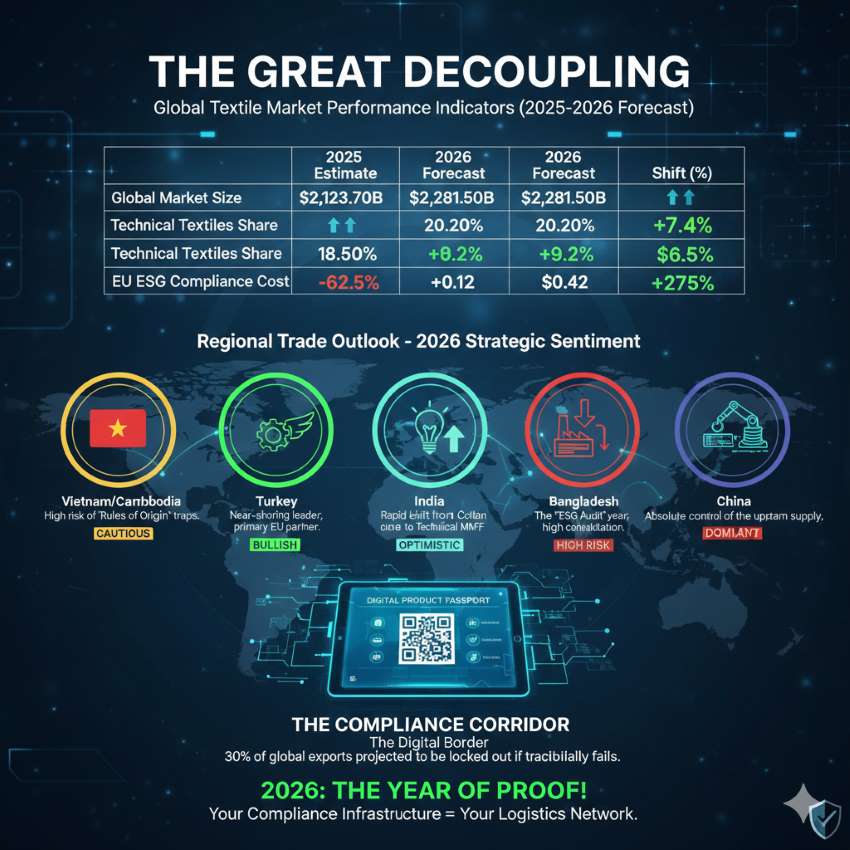
India is the largest and second-largest producer of cotton and man-made fibers — polyester and viscose respectively. Over the years, the country has established a large spinning, weaving and apparel making capacity to convert these raw materials into end-products. India also has abundant labor supply and a strong domestic market. However, despite these advantages, the country’s textile exports remained at the $40-billion level for the last few years with share in overall exports declining from 15 per cent in FY16 to 12 per cent FY 19.
In contrast, exports from Bangladesh, Vietnam and Cambodia have increased substantially. Bangladesh exports rose from $26.60 billion in 2015 to $33 billion in 2019 while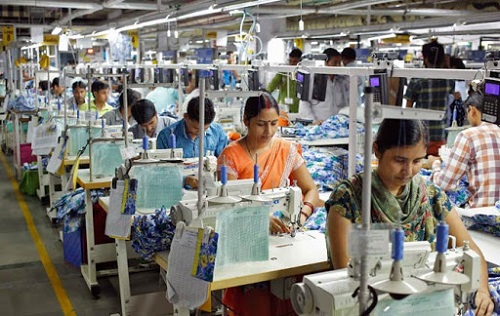
6Vietnam’s increased exponentially to make it the third largest apparel exporter in the world. On the other hand, Indian apparel exports declined from $18 billion in FY17 to $17 billion in FY19.
Roadblocks to growth
Some reasons for the stagnation in Indian textile exports are: low scale of operations, preference for cotton over other fibers and lack of trade agreements with other countries.
Low scale of operations: On average, Indian apparel units have around 100 machines each. In contrast, Bangladesh factories have at least 500 machines each. Additionally, Bangladesh enjoys tariff benefits being a ‘least developed country’. To overcome these disadvantages, India needs to set up mega apparel parks close to ports with ‘plug and play’ facilities and common infrastructure for effluent treatment, etc.
Preference for cotton over other fibers: Cotton has always been one of the favorite crops among Indian farmers. Nearly 5.8 million farmers are engaged in cotton cultivation in India. Also, GST on cotton is uniform at 5 per cent for fiber, yarn and fabric. This is not the case with man-made fibers (MMF), which are taxed at 18 per cent for fiber, 12 per cent for yarn and 5 per cent for fabric. This inverted tax structure makes MMF textiles costly. Hence, MMF account for just $6 billion of the $39-billion textile exports. However, to emerge as serious player in the world fiber market, India needs to adopt an impartial tax policy besides upgrading technical skills in the industry.
Lack of trade agreements: India can gain duty free access to large textile markets such as the EU, Australia and the UK by signing duty free agreements with them. These agreements can also help Indian textile players counter Bangladesh which, as a ‘least developed nation’, gets duty-free access. Hence, the Indian government should sign appropriate FTAs with these countries. This can lead to the creation of 0.15 million jobs in the textile sector.
India’s dream to be Atmanirbhar cannot be possible until and unless the government turns its focus to sectors that are already self-reliant and capable of taking the country on the path of growth.
Taiwanese composite and technical textile companies are exploring partnership opportunities with Indian firms across various industries to meet their growing demand.
India’s technical textile industry is expected to grow at a rate of 20 per cent annually to touch $30 billion over the next five years. The composite industry is also pegged at $2.2 billion with an expected growth of 15 per cent per annum over the next four years.
The Bureau of Foreign Trade (BOFT) and Taiwan Textile Federation (TTF) are forming the Taiwan Pavilion for the fourth time jointly with Taiwan Composites Association (TCA) participating in ‘Technotex 2016’, organised by the Ministry of Textiles and an industry body in Mumbai this week.
Nineteen leading Taiwanese companies producing high-end composites, innovative technical textiles, raw materials, accessories and non-woven machinery will exhibit their products at the event.
The multiple industries and sectors Taiwan is focusing on include automotive, defense, police, fire departments, sports gear and apparel, rain wear, outdoor tents and canopies and protective and safety products among others.
Hollingsworth & Vose, global producer for nonwoven material and engineered paper used in filtration and other industry application, has unveiled a new material for the manufacturing of non-surgical medical gowns.
The material has been made to encounter the immediate need of the personal protective equipment (PPE) for medical staff in hospitals, nursing homes and other medical facilities. The manufacturers can easily convert these materials into medical gowns using the standard method.
The development has been tested and meets the following requirements like AATCC 42 impact penetration and AATCC 127 hydrostatic pressure tests. The production has been done in Easton, New York. The material was manufactured quickly to meet the immediate demand by collaborating with companies like third party testing and different industries expertise. The company was able to launch the material within a weeks’ time and started giving it to the PPE manufacturers.
Multi-brand luxury Indian fashion retailer Ensemble, which recently launched its e-commerce store, recorded 50 per cent more than expected sales.
Some of the brands that retail on Ensemble’s e-commerce store include Kshitij Jalori, Ituvana, Chola, Payal Singhal, Jayanti Reddy, Manish Malhotra, Tarun Tahiliani, Kiran Uttam Ghosh, Amit Aggarwal, Arpita Meht, and Anushree Reddy among others. The site has a ‘ready to ship’ section for shoppers requiring swift delivery and the site ships internationally.
Shoppers can order clothing online and pick their order up at their local Ensemble store, according to the business’ website. With stores only allowing in limited customers to maintain social distancing, a number of stores are enabling customers to shop online as much as possible.
Ensemble’s boutiques in Mumbai and Delhi are now open with anti-coronavirus regulations in place. The business reopened the stores with a large-scale sale. Customers visiting Ensemble’s brick-and-mortar stores are required to wear a mask, have their temperature checked, and use hand sanitiser to reduce the risk of spreading COVID-19.
Luxury brand Chanel could lose a significant amount of its revenue and profits in 2020 due to the coronavirus crisis.
The next 12 to 18 months would be particularly tough for the brand as a strong recovery in countries where the group’s shops have reopened could not make up for the lack of international travel.
Like rivals, Chanel had to shut shops across the globe and idle manufacturing sites as the virus first emerged in the sector’s key market of China and then spread to the rest of the world.
Some 85 per cent of the group’s stores have now reopened and Blondiaux said Chanel had seen sales rebound in China - by over 100 per cent in some weeks. Shoppers were returning in Paris, Milan and Berlin.Consultancy Bain says the $310 billion luxury goods sector is on course for a sales fall of up to 35 per cent this year.
Chanel, which still expects to turn a profit this year, is reducing advertising and promotions by more than a quarter, cutting production and has cancelled or transformed some events like fashion shows this year, including by streaming them online.
Cambodia’s minister of commerce Pan Sorasak recently urged Adidas and H&M to continue ordering garment products from the country. The call was made during a recent meeting between the minister and representatives from Adidas led by Matthew Armstrong and Christer Horn af Aminne, H&M’s production manager in charge of Cambodia and Vietnam.
During a press conference at the office of the council of ministers, municipal labour department director Choun Vuthy said out of the 706 garment factories in Phnom Penh, 121 have temporarily halted operations due to raw materials crunch and production setbacks experienced amid the COVID-19 crisis, according to Cambodian media reports.
The suspended factories left lakhs of workers unemployed and affected millions of families. The government has provided $40 in wage support for unemployed workers.
Meanwhile, Better Factories Cambodia (BFC) has launched a hotline to provide information to workers in the garment, footwear, travel goods and bag industries regarding measures that help prevent the spread of COVID-19. The hotline, part of the ‘COVID-19: Worker Safety’ programme, uses interactive voice response (IVR) technology.
The contents of the service are derived from guidelines and recommendations from the World Health Organisation and the ministry of health and will be regularly updated in line with the latest official advice.
Apparel store sales from January to November in the US were 7 per cent higher compared to the same period in 2021 however, but due to high inflation, volume growth was limited. At the same time home furnishings store sales are witnessing stagnancy and have seen muted growth of only 1 per cent in the same period, says Wazir Advisor’s November report ‘Apparel Trade Scenario in Key Global Markets and India’ focusing on apparel consumption and import data of the US, EU and Japan and exports stats for India shows.
With lower base value apparel store sales in the UK from Jan to Nov were 21 per cent higher than 2021, as demand in 2021 did not recover to pre-covid levels. Same holds true for apparel imports data from Jan to Aug, which is 19 per cent higher than last year, but the base (2021 data) is quite low. For EU, apparel imports from Jan to Oct have grown 41 per cent over the same period last year, again a reasonable explanation is the lower base value from the same period in 2021. In Japan’s case, apparel imports from Jan to Sep have grown merely 5 per cent in 2022 compared with the values in the same period last year.
For India however, the good news is apparel exports have started to recover from the decline in last quarter. The export value in Nov 2022 is 9 per cent higher than in the same period last year.
Key highlights of US market
Nov 2022, US monthly apparel store sales are estimated to be $18.7 bn which is 7 per cent less than Nov 2021. On YTD basis, the sales are 7 per cent higher than in 2021. Apparel inflation has remained in the range 5.5 to 8 per cent during 2022, indicating nil to negative volume growth, the report shows. In Q3 2022, online sales of clothing and accessories registered a growth of 9 per cent over Q2 2021 but it was marginally lower than Q2 2022 sales.
Store sales of home furnishing in Nov 2022, were estimated at $5.6 bn, an 8 per cent drop compared to Nov 2021 sales. On YTD basis the sales are only 1 per cent higher than 2021.
US Consumer Confidence Index declined to 100.2 from in Nov compared to 102.2 in Oct 2022. The index is on a constant decline for several months considering high inflation and recession.
Apparel import in Oct 2022 was $8.2 bn which is 1 per cent less than in Oct 2021. On YTD basis, the imports are 30 per cent higher than in 2021. China’s share in the US market has dropped 8 per cent since 2019, comparatively Vietnam and Bangladesh’s shares grown 2 and 3 per cent respectively. India on the other hand has seen its share rise merely 1 per cent since 2019.
China, Bangladesh market share increase in UK, EU
In Nov 2022, UK’s monthly apparel store sales were £4.1 bn, 3 per cent higher than in Nov 2021. On YTD basis, the sales are 21 per cent higher than 2021. High growth is mainly on account of low base value. Apparel imports in August 2022 were around 15 per cent higher compared to Aug 2021. On YTD basis, imports in 2022 are 19 per cent higher than 2021 but still below 2019 values.
In terms of market share in the UK, China, Bangladesh and Turkey have seen a growth by 5, 4 and 3 per cent respectively, since 2019.
EU apparel imports in Oct 2022 were 32 per cent higher compared to in Oct 2021. On YTD basis, imports in 2022 are 41 per cent higher than 2021. The high growth is mainly because of high price inflation and low base value. Country wise market share of China has increased 1 per cent whereas Bangladesh’s share has increased by 3 per cent since 2019.
In Japan also China’s share fall
Japanese apparel imports have been on the rise as well. Import figures in Sep 2022 was $2.7 bn a good 7 per cent higher than Sep 2021. On YTD basis, imports in 2022 are 5 per cent higher than last year.
The country’s apparel imports from Bangladesh’s and Cambodia’s increased 1 per cent each, however China’s share declined 1 per cent compared to 2019.
India’s apparel exports revive in Nov
India’s Nov 2022 apparel export was 9 per cent higher than in Nov 2021. On YTD basis exports are 10 per cent higher than in 2021 but considering high
inflation level, there is nil to minimal volume growth over 2019. Country wise, US’ share increased 8 per cent, whereas UAE’s and UK’s share declined 3 and 1 per cent, respectively since 2019.
Apparel companies are directing resources toward digital platforms in order to better engage with customers, accelerating fleet optimization initiative, augmenting supply chain and concentrating on improving financial flexibility. They are also focusing on superior product strategy to resonate well with customers and advancing omni-channel capabilities.
The Children's Place, Inc has been making investments to upgrade its omni-channel capabilities as part of its digital transformation strategy .The company has enabled ship-from-store capabilities in roughly 85 per cent of its US stores, which more than doubled its daily shipping capacity. Its e-commerce sales rose 12.2 per cent during first-quarter fiscal 2020, and represented approximately 53 per cent of total net sales, as online sales accelerated following the closure of store effective Mar 18.
The Gap, Inc leveraged its omni-channel capabilities to cater to customers’ demand online, at a time when its stores were temporary closed. This Zacks Rank #3 company witnessed a 13per cent year-over-year increase in online sales in first-quarter fiscal 2020. Moreover, the company recorded online sales growth of 40 per cent in April. Last month, the company registered more than 100 per cent growth in online sales.
American Eagle Outfitters, Inc reported a 33 per cent increase in digital demand, as measured by ordered sales. Its digital demand surged by 75 per cent at Aerie and 15 per cent at AE. The company introduced curbside pickup with re opening of stores. The company is enhancing digital capabilities, strengthening inventory management and reassessing store fleet to position itself for a new future of retail industry.