FW

Apparel-industry trade-show organizer Informa Markets Fashion plans to postpone the August edition of its biannual Las Vegas events to provisional dates of September 29-October 1 stemmed from issues due to the COVID-19 pandemic and shifts in this year’s buying season.
Featuring WWDMAGIC, Project and MICAM Americas, the Informa Markets Fashion shows are to be hosted at the Las Vegas Convention Center. When the Informa-branded events open to exhibitors and attendees during the conditional fall dates, there will be noticeable changes that serve the current climate, which necessitates social distancing, crowd control and increased cleaning measures.
The company revealed that a more mindful show-floor layout could include micro markets which will afford smaller, more-personal setting for business. Informa Markets Fashion is also developing an increased digitized approach to its events that will complement its on-site shows, affording greater options for its business-to-business audience.
According to the recent CRISIL research, India’s yarn exports are estimated to have nosedived 80-90 per cent in April and are expected to decline by 40 per cent yar-on-year during the ongoing fiscal 2020-21,
Yarn exports to major buyers like China and Bangladesh have declined due to the COVID-19 pandemic. Exports of textiles and cotton yarn, which were coming apart even before the pandemic struck because of competition from Vietnam, Chinese stock liquidation and lack of free trade pact support, have been shred.
In the quarter ended March 2020, India’s yarn exports contracted by 30 per cent as imports by China, which accounts for a third of India’s yarn exports, fell as garment units there shuttered. Imports by Bangladesh, which accounts for nearly a fifth of India’s yarn exports, also declined.
Crisil projects India’s readymade garment (RMG) exports to dive 30-35 per cent this fiscal. In the March quarter, India’s garment exports slipped ~16 per cent and in April, the fall was a drastic ~91 per cent.
The US and the European Union, which together account for 64 per cent of India’s RMG exports, are staring at a recession. The US is the worst-infected country now, and the pandemic-driven lockdown has ripped many apparel retailers there. Besides, a spike in unemployment and fall in personal incomes would cut spending on apparel.
 COVID-19 is compelling the fashion industry to change the way it sells and delivers garments. The pandemic is leading to the emergence of several fashion industry-driven initiatives that indicate what this change could involve.
Slow the pace of collections
One initiative launched by the Council of Fashion Designers of America (CFDA) and the British Fashion Council (BFC), urges the industry to slowdown the pace of new collections. This initiative believes the current delivery model fails to meet customers’ requirements.
This initiative is joined by another initiative #rewiringfashion.org launched by a group of independent fashion designers and facilitated by the Business of Fashion — and Forumletter.org. This initiative, kicked off by designer Dries Van Noten and Lane Crawford’s president Andrew Keith along with Altuzarra’s CEO Shira Sue Carmi — petitions for a change in the industry.
Reset event calendar
Both initiatives have so far gathered over 2,100 signatures from fashion brands, CEOs, designers, textile producers, university professors, and others who have signed either one or both. They have been joined by prominent names such as Chloé, Oscar de la Renta, Tory Burch, Gabriela Hearst, Isabel Marant, and Missoni and stores such as Harvey Nichols, Selfridge's, Lane Crawford, and The Webster appear on the petitions.
#rewiringfashion.org has three objectives: to reset the fashion calendar, re-imagine shows and counter fashion's addiction to discounting. The plan recommends designers to combine the Spring/Summer 2022 and Resort 2022 shows for press, buyers, and other industry by timing the sales of both collection one after another.
Stop mid-season sales to end discounts
The group also urges retailers to defer their end-of-season market downs and stop mid-season sales. This would prevent them from offering heavy discounts. The discontinuing of in-season markdowns, including Black Friday, Cyber Monday, and Singles Day by earlier designers have trained the customer to anticipate the yearly sales period and shop accordingly.
Agreeing to this, Gary Wassner, CEO, Hilldun Corporation recently hosted a Zoom call with major retailers to discuss how the industry can adapt to this change. Retailers at this discussion viewed that a law should be passed to change the discounting schemes that retailers follow. This law should overcome American antitrust laws, even temporarily. This way, retailers, most affected by price wars, can coordinate the acquisition of their merchandise and plan their promotions and markdowns.
Realign deliveries
The Forumletter.org recommends designers to realign deliveries in such a way that the Autumn/Winter collections are sold from August to January, and Spring/Summer from February to July. Staggering their deliveries would allow designer to retain the 'newness' of their collections besides giving them ample time to create desire.
The CFDA and BFC also recommend designers to limit their collections to two in a year. Designers should showcase their main collections within the fashion calendar in one of the global fashion capitals once in-person shows resume. The two bodies pledged support in organizing the Spring/Summer 2021 presentations slated between early September and early October of this year with virtual presentations.
 Recent estimates by McKinsey indicates, around one third of global fashion players operating in Bangladesh are not likely to survive the Coronavirus pandemic whose impact is hitting places where companies and employees cannot always access government-funded emergency support.
To survive, instead of placing orders as they normally do, retailers across Bangladesh are trying to unpick existing contracts. Peacocks has refused to pay for over 43,000 pairs of jeans that Denim Expert’s employees in Chittagong have already sourced, sewn or shipped. Similarly, Arcadia has refused to pay the company for its orders worth $2.5 million.
Billions lost due to lack of payments
Till now, Bangladesh has lost out on over $3billion worth of payments for T-shirts, shoes and designer dresses already produced or sourced since the outbreak of COVID-19,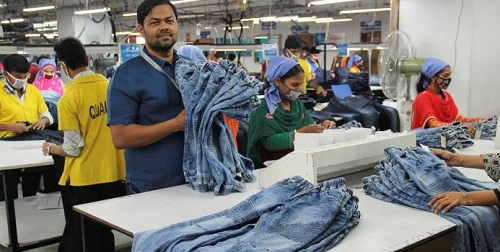 reveals BGMEA. Over half of the workforce has been laid off. In April, the government granted 65 per cent workers wages in the form of loans that they are expected to repay. Some companies like the Baird Group have taken longer than usual to pay its suppliers as its flow of money has slowed down. In recent decades, Bangladesh, Vietnam and Sri Lanka have become global production hubs for much of the rich world’s clothing, accessories and footwear.
Their success has been accentuated by fashion retailers encouraging more frequent consumption of fast fashion — to drive revenue, believes Patsy Perry, Senior Lecturer in fashion business at the University of Manchester. These retailers have always had the upper hand in their relationships with Asian manufacturers, with demands for retroactive discounts.
Despite this torrid experience of bricks-and-mortar retailers in recent times, the global fashion industry is one of the ‘rare economic success stories’ of the past decade, views McKinsey. However, behind this success is a story of extreme consolidation. In 2019, 97 per cent profits in the industry were generated by just 20 companies, including Inditex and Nike.
Slow response by retailers
H&M is one of the first global retailers to promise to support manufacturers and workers. However, some retailers have been accused of acting too slowly. A case in point is the UK high street retailer Primark which promised to pay its workers affected by cancelled orders in April. However, wages account for only about 15 per cent of the £256m worth orders that Primark cancelled with Bangladeshi manufacturers, says BGMEA.
Some argue many of them are simply not in a position to pay suppliers. He revealed his clients are already trying to shorten the time it takes for an ordered shirt to arrive in shops, boosting their flexibility in the face of demand shocks. This is in tune with those who have urged retailers to return production closer to home but, says Carry Somers, Designer and Founder of industry campaign group Fashion Revolution. However, Paul Lister, Head of Ethical Trade at Primark, does not expect the pandemic to have an impact on where the retailer manufactures its clothes in the future. Unless retailers pay for clothes already in production, they will have no business to save.
Asda a British supermarket retailer has been accused of cancelling or suspending garment orders without full payment.
The retailer has been targeted in a petition by anti-fast fashion activist group Remake, alongside Gap, C&A and Primark.
The petition says the retailers named have not yet promised to pay suppliers for all orders that were cancelled or paused as a result of coronavirus which has left millions of garment workers in Bangladesh jobless with no severance or access to healthcare.
According to Remake, Asda is refusing to accept a percentage of George orders and is imposing "enormous discounts" from 40-70 per cent on suppliers for a proportion of orders that have not yet been completed.
This is particularly disturbing when noting that Asda and Walmart have both been able to remain open during Covid-19 because of their food sales and are both presumably making a significant profit, said the group.
The Edinburgh Woollen Mill (EWM) Group has responded to BGMEA and BKMEA’s threats to place an embargo on business and to potentially blacklist Peacocks, Jaeger, Bonmarché, and other brands owned by EWM, unless they pay their outstanding dues to their suppliers in Bangladesh. EWM is the parent company of Peacocks, Jaeger, Austin Reed, Jacques Vert, Country Casuals, Windsmoor, Baumler of Germany, Bonmarché, and Ponden Home.
The company said it had already paid for majority of future stock when the COVID-19 crisis hit but is now talking to manufacturers about the remainder. The company has looked at literally every option on the table and worked hand-in-hand with all its suppliers to find solutions. However, it also needs to recognise that these are difficult and complicated issues.
According to the BGMEA, EWM has so far cancelled orders worth $8.22 million (£6.76 million) across five factories. It is understood that EWM has reached agreements with suppliers on more than half of this total, with about $2-3 million yet to be settled.
The association alleged that certain buyers have been taking advantage of the coronavirus situation by demanding unreasonable discounts. It asked EWM owner Philip Day to settle dues by May 29, or otherwise face an embargo on doing business in Bangladesh.
Beximco Pharmaceuticals, Bangladesh’s only US FDA Certified company has shipped 6.5 million PPE gowns to US brand Hanes for ultimate delivery to Federal Emergency Management Agency (FEMA). The gowns were made in just two months by the company which unleashed its world-class manufacturing, technical and design talent to switch over and start making personal protection equipment and help increase the supply of PPE which is urgently needed in Bangladesh and worldwide. The Beximco-Hanes partnership will help the two nations to combat the COVID 19 pandemic
Beximco Textile Division is one of South Asia’s largest, fastest, agile/flexible, most innovative, and sustainable vertical textile and fashion apparel manufacturing operations employing 40,000 people, shipping around 400,000 garments daily to gold standard companies like Target, USA, Zara, Michael Kors, PVH, Tommy Hilfiger, Calvin Klein, Amazon, C&A and Yellow
Voice of Industry Specialists in Textile and Apparel (VISTA) organized a webinar on ‘Unlocking Opportunities for Apparel & Textile Sector’ recently. Key speakers included: Gaurav Bhargav, Founder and CEO, LPH Apparel Inc; Vivek Bhatnagar, Founder and CEO, Fusion Group; Anupama Singal, Co-founder, Slicer; Manish Bharati, Business Head, Bhartiya International and Abhaya Gupta, CEO, Nanya Inc
The webinar raised many interested questions as to why India has not created its own index like Higgs Index so far, why is sustainability in Indian apparel industry buyer-driven and why are buyers not bothered with the certificates. The webinar urged Indian apparel manufacturers to focus on UN’s SDG. It was also highlighted that Mexico has a lot of opportunities for Indian companies, but India should ship goods for Mexico through US only. Notably, resort wear is a huge business in Mexico. Besides, it was also emphasized that India should focus on Russia, Romania and Poland.
Quoting a survey, Bharti highlighted that people in Europe are buying luxury products online and are very happy with this experience. Hence, he emphasized that digitalization is a must for all. Gupta was of the view that small buying agents and buying agencies can be the change-makers now, and they now need to bring new clients to India. A lot of small vendors need the help of buying agents and these agents have to lead the way.
As a part of a major shake-up to revitalize the business post-Coronavirus, UK footwear manufacturer and retailer Clarks plans to slash around 900 jobs. The company recently made 160 redundancies globally and over the next 18 months, it will make another 700 or so employees redundant.
However, Clarks’ total reduction of 900 corporate roles in its global workforce will be partially balanced by the creation of around 200 new jobs. The retailer is actively supporting staff to find alternative employment within or outside of Clarks.
The announcement is part of Clarks’ ‘Made To Last’ turnaround strategy, which was first launched at the end of last year and is aimed at ensuring the heritage British retailer has a sustainable future.
The strategy includes a focus on sustainability, product innovation, design and quality, and digital enhancement to help customers properly interact with the Clarks brand, and select and buy shoes in convenient ways.
The UP government is looking to replicate the success of Vietnam and Bangladesh in becoming major textile manufacturing and exporting hubs. With the state starting the process of skills mapping of incoming workers, more than 12,000 workers have so far, in the first phase of enlisting, been found to be trained in garment making and tailoring.
The state government has also decided to involve the district level employment exchanges in the process of providing jobs to these workers by sharing their skills database. It recently set up a Migration Commission for the welfare of migrants. The government has named the panel as Kaamgar/Shramik (Sevayojan evam Rozgar) Kalyan Aayog.
The Commission will also take steps for insurance cover to the migrants. Besides, the government is planning to leverage the central stimulus package to provide housing facilities to the migrants.
Under the comprehensive Rs 20 trillion economic stimulus package to overcome the covid-19 challenges, the Centre has announced a scheme to help the migrant labourers in getting residential accommodations. The central government will provide affordable rental housing to the migrants and urban poor under the flagship Pradhan Mantri Awas Yojana (PMAY) scheme.