FW

Recent data from eShopWorld shows, April’s year-over-year apparel orders in the US grew by 98.4 per cent followed by sporting equipment with 96.2 percent growth in order volume, and footwear which saw 60.2 per cent growth in order volume. The categories continued to see growth in the first half of May at 118 percent growth, 58.5 per cent growth and 106.6 per cent growth year-over-year, respectively.
Many brands in these categories experienced exponential sales during this time. Brands that reacted quickly to properly address international markets during the pandemic saw the most growth. Companies that were able to offer easy availability through e-commerce were able to effectively and efficiently acquire a larger share of the market with new audiences.
The top 10 countries that consumed US brands for April year-over-year included Israel, Ireland, New Zealand, Canada, United Arab Emirates, Chile, Australia, Belgium, Switzerland and France, ranging from 92 to 178 percent growth in order volume. Returns from e-commerce consumers also lowered during this period.
John Harmon, Senior Aanalyst at Coresight Research in a recent webinar hosted by Planalytics revealed around 25,000 retail stores may close this year, twice the number as last year, as the coronavirus pandemic continues to have an impact on consumer behavior.
Harmon expected a U-shaped recovery as retailers navigate government-dictated staged reopening across the country but business is not expected to immediately return to post-pandemic levels. Harmon said in the last five weeks, around two-thirds of consumers were buying online than they had previously. But they were mainly buying food and sanitation products, home office supplies and fitness equipment.
Harmon predicted that post-lockdown; consumer demand will change dramatically as only 18.6 per cent of consumers are expected to buy apparel, footwear or accessories. Evan Gold, executive vice president of global partnerships for Planalytics, predicted shoppers to more attuned to weather than ever before and shop for seasonal merchandise in season, rather than before.
The AEPC has said, India’s apparel industry is prepared to play a key role in the global market for PPEs, estimated at over $60 billion over the next five years, The Indian government recently announced plans to procure two crore PPE kits from the country’s apparel industry.
The government has disallowed PPE exports in order to meet domestic demand first. This leaves the large global market for PPEs open to countries like China, Bangladesh and Vietnam, with a key competitor missing. Therefore, India’s vision should now shift from “first local-then global” to local with global, views Rohit Choraria an Adjunct Faculty at Christ College, deemed university, Bengaluru.
The country has production capacities up to 30 per cent across 95 approved PPE producers. Besides, there are 300 certified producers who are ready to take orders, as per the Textile Ministry. The key reason for such massive production capability is due to the lack of orders for fashion apparel from foreign markets in the wake of pandemic restrictions in those countries.
India has a combination of available spare production capacities and addressable global market, but no market access due to government restrictions. Therefore, India should examine the export policy of Vietnam and Bangladesh, which are key competitors in the global market. The country cannot afford to ignore global market opportunities, which will shrink with each passing day due to myopic government restrictions.
Due to the economic situation caused by the global pandemic and travel restrictions, Messe Frankfurt has jointly decided with the German Textile Cleaning Association and the VDMA Textile Care, Fabric and Leather Technologies to postpone Texcare International to November 2021. The event will now be held from November 27 to December 1, 2021 in Frankfurt am Main.
In November 2021 Texcare, a leading international technology fair, will offer manufacturers of plant and machinery an outstanding and eagerly awaited platform to position the textile-care industry, together with its customers from all over the world, to cope as well as possible with the challenges of the future following the Corona crisis.
Texcare International is held every four years in Frankfurt am Main and, in its regular rotation, reflects the innovation cycle of the industry. It is the leading international trade fair for textile care, with a high degree of international participation, both among exhibitors and visitors. As a provider of innovations and incentives for the international textile-care business, it is a venue which cannot be missed.
The crisis caused by the Covid-19 pandemic is compelling long-established and internationally renowned Parisian trade show Tranoï to reinvent itself at very short notice. Boris Provost, who has been in charge of the event and its staff of 17 since September 2019, is currently busy seeking new financial partners. On April 15, Provost applied for and was granted a protection procedure for the company, allowing its debts to be frozen.
He also emphasised that the transformation projects he began to implement at Tranoï are still on the cards. Filing for court protection was simply necessary for the company to turn the corner.
A year ago, Armand Hadida and Patrick Lecêtre (Tranoï’s shareholders, together with the HLD group), asked Provost to lead a change in company governance and to reposition Tranoï on the market. It was this challenge that prompted him to come on board. The company’s transformation led to exit of Hadida and Lecêtre in the next two to four years.
Tranoi is therefor,e seeking new investors. It is currently negotiating with everyone from French and international trade show organizers, to digital companies, which could contribute useful tech expertise, to investment funds in a variety of shapes and sizes. Its vision is to team up with partners for the medium and long term, with men and women keen to get involved and whose know-how is complementary to that of our existing staff, so that we can collectively transform our services in order to ensure a return on our clients’ investments.
Comparable sales of US-based retailer Target Corporation grew by 10.8 per cent in the first-quarter FY 2020 as customers made fewer but bigger shopping trips. On the other hand, there was a huge jump in the retailer’s digital comparable sales, which grew by 141 per cent. Digital comparable sales accelerated every month in the quarter, from 33 per cent in February to 282 per cent in April.
Its total revenue of $ 19.6 billion grew 11.3 per cent compared to last year. The retailer saw healthy market-share gains across all five of its core merchandise categories. Target’s positive results are a good sign for Indian home furnishing manufacturers as there are many companies in India, which are supplying textile products (soft goods) to the retailer.
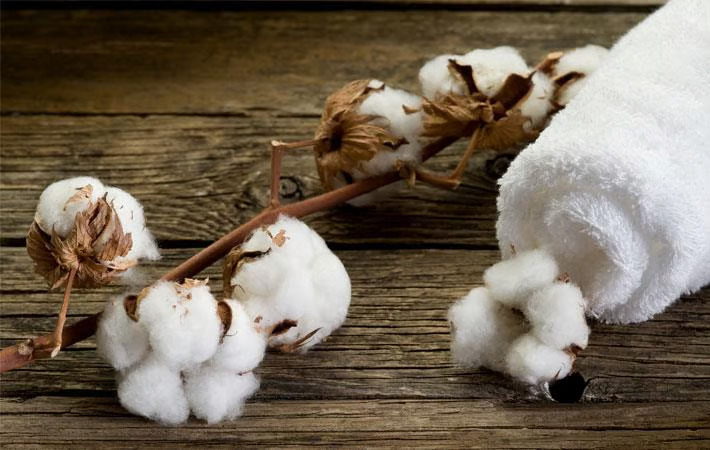
The Cotton Corporation of India (CCI) has procured a record 92 lakh bales from cotton growing regions across the country .The total procurement by CCI is valued at around Rs 25,000 crore. CCI had purchased a record 90 lakh bales in the year 2008, which was again a national record, she said.
Of the total crop of 360 lakh bales, around 297-300 lakh bales have arrived in the market so far. Farmers have another 60 lakh bales remaining with them of which 25 lakh bales are likely to arrive in the market. Of this, CCI is likely to procure around 10 lakh bales. Currently, CCI is procuring some 45000 bales a day.
The cotton procured so far has been purchased from farmers in Gujarat, Maharashtra, Haryana, Telangana and Punjab. The season in Tamil Nadu has just begun and will continue till September 30.
The minimum support price for the medium-staple variety of cotton is Rs 5,255 per quintal and that for the long staple one is Rs 5,550 per quintal this year. The Cotton Association of India has pegged 2019-20 crop at 354.5 lakh bales, compared with 312 lakh bales last year.
In Maharashtra, CCI is procuring about 15,000 bales a day. However, the state government has now threatened action against cotton ginners for keeping their units shut and not cooperating with the state cotton federation and the corporation. CCI had suspended cotton procurement during the lockdown and restarted operations from May 3.
With the pandemic and social isolation, Abit (Brazilian Association of the Textile and Clothing Industry) launched ‘Tamo Junto’ (We Are Together) campaign, which calls on brands to encourage consumers to buy 100 per cent national products. The Brazilian textile industry is one of the most representative in the world and the largest complete chain in the West. It ranges from plantation inputs to products that are ready for the national and international market. In 2019 alone, the sector generated $48 billion.
Many companies have worked to publicize and improve domestic production and boost domestic consumption not only during the pandemic, but also in the future. The Lunelli Group, which developed the ‘Conscious Consumptiom’ campaign, also spoke in favor of Brazilian fashion. Without being able to physically serve customers, Brazilian brands have also invested in online content, either for the benefit of consumers or to promote products and make themselves visible.
For example, Colcci relied on its famous models to connect with consumers and created Lives on Instagram with names like the famous Brazilian actor Cauã Reymond. Lunelli Group shares recipe tips with followers on Instagram, while Círculo publishes videos on YouTube with crochet tips to make at home.
Still online, companies are taking a closer look at their sales platforms in social media. For example, EcoSimple has understood that this trend is now getting stronger and is developing an e-commerce platform.
Despite the challenges faced by the company due to COVID-19, Coats Digital, the world’s largest manufacturer and distributor of sewing thread is confident of dealing with the virus impact as it has a strong balance sheet with comfortable liquidity.
The management of the company reported a 40 per cent decline in operational costs in the second quarter compared to the same period in 2019, helped by lower activity levels and cash-saving actions. Its last month’s numbers led to a 17 per cent reduction in sales for the period 1 January to 30 April compared to the prior year.
The company also reported a 23 per cent decline in demand for apparel and footwear as fashion companies cut back spending amid widespread Coronavirus uncertainty. Many brands and manufacturers cancelled their orders or deferred orders from mid-March, which significantly impacted demand in April. This hit some of its largest apparel and footwear markets.
Benefiting from its recent acquisition of Pharr HP, the group’s performance in materials division was more resilient. Though its organic sales declined by 12 per cent year-on-year, Pharr’s contribution led to a 6 per cent increase in overall sales.
Kohl’s Corporation, a leading omnichannel retailer, reported 40.6 per cent decline in its first revenue decline to $2.4 billion compared to the revenue of $4.0 billion in same period prior year. The company reported a net loss of $541 million during the quarter compared to net income of $62 million in Q1 FY19.
Its selling, general and administrative expenses were $1.0 billion as against $1.2 billion in Q1 FY19. Operating loss were $718 million compared to operating income of $118 million.
The company recently reopened about 50 per cent of its stores across the country. In doing so, it has taken special care to equip its stores with the latest health and safety measures