FW

The Nigerian government is targeting N 5.089 billion from the partnership with the private sector to revive the garment and leather industries. Director general of the Infrastructure Concession Regulatory Commission (ICRC) Chidi Izuwah recently said the amount would be made up of 80 per cent debt and 20 per cent equity with zero contribution by the government.
Hewas was speaking at an event to present the full business case (FBC) compliance certificate to the Nigeria Correctional Service (NCS) in respect of the proposed NCS shoe and garment factories in Aba in Abia state and the Janguza Tannery Factory in Kano state under the PPP mode.
He said the PPP would lead to the creation of 1,290 direct jobs, several indirect jobs locally and savings on foreign exchange, according to Nigerian media reports.
The arrangement between NCS and local company Erojim Investments and its technical partner, China’s Poly Technologies Inc., is aimed at establishing a world-class factory using the most modern technology and quality inputs to produce high quality shoes, garments and leather products.
JC Penney, which filed for bankruptcy protection on Friday, plans to close 242, or 29 percent, of its 846 stores over the next two years, according to a filing with the Securities and Exchanges Commission.
For the current fiscal year, 192 stores are expected to close and then 50 the following year, the document notes. After the closings, the company will have 604
As SGB reported earlier Monday, Nike was left with an unpaid bill of $32.1 million in the bankruptcy of J.C. Penney, according to court documents. Other firms in the active lifestyle space landing on the list of the top-50 unsecured creditors included Adidas, owed $7.1 million; Supreme International, $5 million; Izod, $4.6 million; and New Balance, $3.2 million.
Nike’s unsecured claim was second only to Wilmington Trust Global Capital Markets, which on a combined basis is owed over $1 billion.
JC Penney filed for bankruptcy in Texas. The company has an agreement with most of its lenders on the turnaround plan that will allow it to stay in business as a more financially healthy company, but will include closing about a quarter of its 846 stores.
Vietnam’s accomplishment in pushing back the pandemic was driven partially by a program of focused testing and the mass, concentrated isolation of a huge number of individuals. Following five years of development, foreign investment in Vietnam fell by 15.5 percent in the initial four months of the year to $12.3 billion, as indicated by information from the General Statistics Office (GSO). Despite this, the country is targeting annual GDP growth of above 5 per cent this year.
For this quick response, the country in on the verge of getting huge foreign investments to pour in after the pandemic. Kizuna Joint Development Corporation, a company that builds read-to-go factories in Vietnam plans to complete a 100,000 square meters factory in southern Vietnam fully expecting an expansion in post-pandemic interest
Sequential Brands Group’s first-quarter results were impacted by store closures due to the COVID-19 outbreak. However, its active brands – including AND1, Avia, Gaiam and SPRI – were cited as “bright spots” as consumers look to stay active at home.
Revenues, which consist of royalties from licenses, reached $20.2 million in the quarter compared to $25.5 million in the prior year quarter, a decline of 20.8 percent.
The net loss came to $85.3 million or $1.30 per share, after non-cash impairment charges of $85.6 million related to the trademarks for the Jessica Simpson, GAIAM, Joe’s and Ellen Tracy brands, reflecting the financial impacts of COVID-19. In the year-ago period, the net loss was $4.8 million or 7 cents a share.
On a non-GAAP basis excluding special items, the net loss was $10.4 million or 16 cents, compared to $4.3 million, or 7 cents. Adjusted EBITDA declined 13.3 percent to $9.8 million from $11.3 million a year ago.
The company’s licensing partners have been affected by mandatory store closures and shelter-in-place orders.
In response to COVID-19, Sequential Brands is implementing significant compensation reductions across the company, reducing all non-essential expenses, maximizing liquidity by drawing on its revolver, and working with lenders to provide more flexibility.
AATCC (the American Association of Textile Chemists and Colorists) is set to host a Textile Testing Workshop on September 23-24, 2020, at the AATCC headquarters in Research Triangle Park in the US. The association provides test method development, quality control materials, education, and professional networking for a global audience.
Attendees to the workshop will learn how to properly perform and interpret test results for approximately 20 colourfastness and physical properties test methods and evaluation procedures. colorfastness tests to be addressed include crocking, light, washing, and perspiration. Tests for evaluating physical properties include dimensional change, skewness, soil release, water repellency and resistance, and appearance retention. AATCC staff will discuss and demonstrate these procedures and registrants will be involved in hands-on participation, according to AATCC.
Sessions will be conducted on colour basics and measurement. Participants will be shown how to use the AATCC grey scales for staining and colour change, and the AATCC chromatic transference scale.
ASTM methods, Standard Test Method for Pilling Resistance and Other Related Surface Changes of Textile Fabrics: Random Tumble Pilling Tester, D 3512; Standard Test Method for Abrasion Resistance of Textile Fabrics (Martindale Abrasion Tester Method), D 4966; and Standard Test Method for Pilling Resistance and Other Related Surface Changes of Textile Fabrics, D4970 will also be discussed and demonstrated.
In addition to the workshop, a new supplemental session of FM100 colour vision screening and certification will be offered. These sessions will take place the day before and after the workshop at the AATCC technical centre on September 22 and 25, 2020, with spots capped at five screenings per day. Participants who complete the test will receive a certificate with their FM100 colour vision score and the test date. An additional fee and separate registration is required. Participants have the option to receive a one-time discounted rate for the FM100 Hue Kit, bundled with the testing. Spots are extremely limited-registrations will be accepted on a first come, first served basis.
The Turkish and Egyptian garment manufacturing sectors, which employ millions of people, are left in a lurch as big brands have cancelled orders even of goods already produced and waiting to be dispatched. Up until March, around one million Egyptian and 1.5 million Turkish workers were busy spinning, dying, cutting and sewing garments for the summer season, which accounts for around half of annual sales. However soon COVID-19 started to sweep across Europe and North America and countries there went into lockdown mode with major brands and retailers going incommunicado.
Around 80 percent of Turkish factories closed in the first several weeks of the lockdown - - leaving the sector with over $2.5billion in ordered inventory and a further $1billion in orders in production, or already produced, that were cancelled until further notice, said Hadi Karasu, President of the Turkish Clothing Manufacturers’ Association. In Egypt too, manufacturers were left in the lurch by the buyers as buyers are refusing to accept orders of finished garments.
Around 60 percent of Egyptian exports are to the USA, the remainder to Europe. When the buyers did get in contact with manufacturers, they wanted to impose new terms and extend payment terms by 90 days to 180 days. Manufacturers and export associations have called for greater cooperation with buyers to hash out agreeable terms. Many of Egypt’s 7,000 garment and textiles factories are expected to go under this year if the situation continues. Egyptian exports of “white gold”, extra-long staple cotton acclaimed for being the best in the world, is also likely to be impacted.
Tamil Nadu is optimistic about exports to the UAE and Australia.
The optimism is based on the fact that the UAE is the gateway to Africa and the Arab world and Australia is a large continent with a growing market.
India signed free trade agreements with both countries in 2022 and they have already been showing their effects for several months. Textiles, leather and footwear are among the industries which are expected to benefit from the free trade agreements.
The India-UAE startup bridge is a one-stop platform where information is expected to be easily accessible to entrepreneurs and stakeholders from both countries. And Tamil Nadu with its strong ecosystem for start-ups and entrepreneurship hopes to benefit immensely.
Around $ 253 million worth of readymade garments were exported by Tamil Nadu to the UAE and Australia from April 2022 to November 2022. The UAE alone accounted for around $ 159 million from this amount. The apparel trade between India, UAE and Australia is predicted to double in three years.Australian buyers are showing a keen interest in importing readymade garments from Tamil Nadu. There are several businesses in the UAE that source readymade garments from India and export them to Gulf Cooperation Council countries.
Against this backdrop, duty-free access to the UAE will probably boost apparel exports from Tamil Nadu. So Tamil Nadu expects to benefit from the two free trade agreements.
Dedagroup Stealth, an Italian software platform that manages production and distribution for global fashion and luxury brands, has acquired UK-based fashion enterprise resource planning (ERP) software Zedonk for an undisclosed sum.
The Zedonk deal brings more than 650 small fashion businesses into the Dedagroup portfolio of clients and combines the platform’s ERP capabilities with Stealth’s features, which cover product life cycle management, from initial design and production, through to multichannel distribution in retail, wholesale, marketplaces and social commerce channels. Dedagroup says the Stealth technology powers more than 60 percent of Italy’s best-known global fashion brands.
Zedonk solutions include design and production management, stock inventory, purchase orders, style management as well as customer and supplier relations, with all data managed and protected in the cloud. Dedagroup Stealth consultants will join the Zedonk team in their new London headquarters.
Dedagroup isn’t the only Italian player looking to make waves among smaller businesses. Entrepreneurs across various SMBs in Italy have developed a platform dubbed Sistema Italia designed to offer foreign companies including high-end luxury and fashion brands the opportunity to network and dialogue with executives and access large-scale international business opportunities together.
The free service aims to facilitate a rapid recovery from the COVID-19 pandemic and tackle national and international markets cohesively. By signing up, businesses will gain analysis and insights on how to be compliant with local and federal legal principles.
 Shifts in political, cultural and financial situations across the world due to the outbreak of COVID-19 is forcing the fashion sector to now focus away from niche areas of corporate social responsibility teams and sustainability experts to climate crisis. In place of the old doctrine of shareholder primacy, the sector is now lobbying for a new form of “stakeholder capitalism” that requires companies to consider the interests of employees, suppliers, local communities and the planet, alongside making money for investors.
This new, friendly version of capitalism focuses on purpose of the business. Proponents off this theory believe that any short-term losses they incur now will pay dividends in the future as it will give companies long-term license to operate in an increasingly aware socio-political climate and embed resilience against systemic shocks into corporate strategies.
A report by the Business of Fashion and McKinsey & Company, ‘Coronavirus Update to the State of Fashion 2020’ opines the pandemic will reemphasise values around sustainability by intensifying discussions and further polarising views around materialism, over-consumption and irresponsible business practices.
Focus on responsible business
The Business of Fashion report stated, at the heart of any responsible business is integration of protection of air, water and the land into the business' thinking. Responsible business practices evolve with technological innovations and cultural perceptions. Historically, they have often been limited to piecemeal CSR initiatives that are not embedded into businesses’ overall strategies.
The United Nations has laid out 10 principles of corporate sustainability in its global compact states over 3,000 companies can be certified as B corporations. Within the fashion world, brands like Patagonia, Allbirds and Eileen Fisher have gained the certification. And yet the fashion industry remains addicted to sales growth that sits uncomfortably alongside climate goals. Many companies continue to operate business as usual while touting “sustainable” collections or plans to eradicate virgin polyester, and doing little to address social issues within the supply chain.
Supply chain inequities exposed
COVID-19 has also laid bare the inequities within fashion’s supply chain that leave millions of vulnerable garment workers at risk of destitution and disease. Companies are also being held publicly accountable for their strategic decisions. Brands failing to address these issues are facing scandal, reputational damage and lost consumer confidence.
Despite these challenges, the industry has also been instrumental in lifting millions out of poverty and driving growth in economies like China, India and Bangladesh. And there are signs of progress, even amidst the current criticism, with some companies committing to support their manufacturers and protect employees
Cutting waste
While COVID-19 has forced the industry to face some of its structural inequalities, brands are being tempted to shift focus away from costly initiatives. To be compatible with global climate goals, the industry needs to drastically reduce emissions and cut back the waste it generates. Companies need to put resources into understanding their supply chains down to the raw material level and into transitioning to less extractive modes of operating. Arms-length sourcing practices need to shift to a point where companies are supporting regenerative models of agriculture that sequester carbon and protect biodiversity. Brands need to find solutions to ensure old clothes don’t end up in landfill or incinerated, and find ways to continue to drive profitable growth while producing less.
A tricky business
But balancing demands in a troubled retail climate is increasingly tricky and nuanced. Many businesses have been forced to make painful choices to lay off workers and cut back operations simply to survive.
Even before the current crisis hit, many brands were vague about their spending plans. Hence, analysts see the current crisis as a rare opportunity for radical change.
Building a responsible business
The first step is a reset in corporate culture. Top executives need to shift their mindset away from a profit-first model. Resilient business strategies need to focus on a more holistic approach to success that takes into account positive impact on people and planet as well as financial gain. Executive remuneration should be tied to delivery on environmental and social targets and putting in place mechanisms to ensure those goals are given adequate weight in strategic decision making.
Fixing supply chain issues
For years, a major barrier to fixing many of the social and environmental issues within the fashion industry have been its sprawling and convoluted supply chains that enable abuses and leave businesses ignorant of the extent of their impact. That needs to change. Companies need to monitor and measure their social and environmental impact in the same way they do their financial performance in order to ensure accountability and progress.
Meanwhile, the tools to understand and monitor labour practices have also often proved to be inadequate in a world of distant and sprawling supply chains. Most companies rely on third-party audits to ensure codes of conduct are being upheld within their supply base, but these have frequently failed to identify and prevent abuses.
Fixing such problems requires investment as less damaging materials are often more expensive. Technological innovations to enable the industry to move towards a more circular model require investment to develop and scale. Manufacturers need financial support to shift away from fossil fuels and towards renewables and energy-efficient technologies. Similarly, ensuring that wages are sufficient throughout the supply chain inevitably means spending more on salaries.
Any real change also requires much greater engagement with governments because brands cannot achieve their goals to operate more responsibly without systemic shifts. No individual brand can ensure workers in its supply chain are getting a fair wage if all its competitors continue to undercut it. Similarly, reducing emissions across manufacturers will require a wholesale shift to cleaner energy that will likely need government support to facilitate.
Collaboration is a relatively new concept that is gaining traction in the industry. Over the last few years, initiatives like the UN Fashion Industry Charter for Climate Action and the Fashion Pact have drawn in dozens of brands to collaborate on efforts to reduce the industry’s environmental impact. While both groups’ plans remain somewhat hazy, they provide the industry with a platform though.
Meanwhile the crisis caused by COVID-19 has created an opportunity to bring together stakeholders to address some of fashion’s social issues. Trade union groups have worked with the UN’s International Labour Organisation to issue a call to action for the industry to protect workers from the immediate fallout from the pandemic and establish sustainable systems of social protection for the long-term.
Companies that want to operate responsibly also need to embrace new business models and abandon established systems. The industry is facing a reckoning. Industry watchers have complained of a broken system for years, but Covid-19 has irrevocably exposed the long-standing weaknesses in the sector’s standard business model.
There is no perfect solution. Many may be tempted to return to business as usual in pursuit of a near-term recovery. But the world is changing and brands that start to factor environmental and social considerations into their business strategies now will likely be better-placed to weather future crisis.
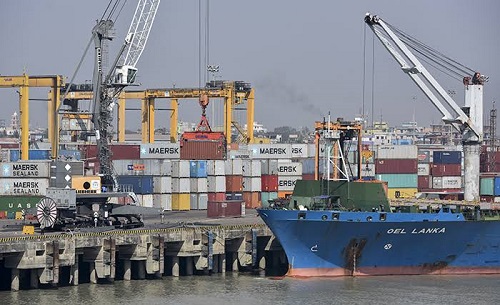 With COVID-19 reshaping the entire world; earlier theories like learning about customers, competitors and market conditions may not fit into tomorrow's rapidly changing business environment. The same is true about the readymade garment sector in Bangladesh which is heading towards a major phase of turbulence. COVID-19 has catalysed significant changes in the country’s RMG business. Therefore, all those involved in this sector need to make a greater collective effort to curtail the challenges ahead:
Ensuring worker’s safety
The first and most pressing challenge for the country’s RMG industry is to ensure health and safety of workers. The industry should protect them at any cost. Bangladesh Garments Manufacturers and Exporters Association (BGMEA) have already issued guidelines on health and safety protocols. These guidelines are consistent with those developed by health experts and all factories have been ordered to strictly comply with them. BGMEA and the Department of Inspection for Factories and Establishments (DIFE) should ensure a proper implementation of these guidelines, close supervision and collective approach of all employers,
Operational and diversification plans
Another challenge before producers is to prepare for intense competition and formulate plans for operating at less than full capacity as order volumes will shrink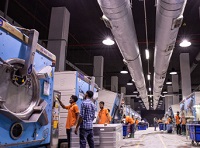 substantially — at least for the next couple of months. They should diversify their production by exploring the PPE market that is projected to reach $92.5 billion by 2025.
Engage in constructive dialogue
All stakeholders should now take more time to proactively reconnect with one another, gather insight and engage in a constructive dialogue. Clothing manufacturers and retailers should exchange views to come to a mutual understanding about the issue.
Make contingency plans compulsory
As the sector becomes more global, and with a profound impact on it due to various national or international issues, leaders and decision-makers should make contingency planning a compulsory and a central part of their work. Everyone from small and medium-sized enterprises (SMEs) to large ones should have their own set of crisis preparedness and business continuity plans ready and tested in order to mitigate and respond to potential unexpected events.
Stakeholders should avoid pointing fingers at others and make a collective effort to deal with the situation. The Bangladesh apparel industry is closely linked to the development of the country as the largest export earner having an immediate impact on the lives of some four million workers. It must therefore, be given high priority.
While industry leaders take these initiatives, on its part the government should monitor their activities and support them at all times.