FW
Myanmar unions complain of repression
Harassment and the unfair dismissal of workers who become actively involved in labor union activities is commonplace in Myanmar’s footwear and garments sectors. Moreover, those who are fired for labor activity often find it difficult to find jobs at other factories, with some suspecting that factories share information on workers they consider troublesome. One factory is said to have forced workers to carry loads even though they were employed as machine operators and silk printers and not as general laborers. Even requests like graded bonuses for workers conducting more skilled tasks or adequate time for toilet breaks or partitions between male and female toilets are ignored.
This is the case at factories supplying to major European brands and retailers, despite these companies having policies in place that explicitly acknowledge workers’ right to unionise. Supervisors routinely use abusive language. Many of these practices are in violation of the brands’ policies, and in some cases appear to be breaches of Myanmar law.
The allegations come at a time when Myanmar’s garment sector, whose exponential growth has been a rare economic success story, is threatened by the EU’s decision to review Myanmar’s duty- and quota-free access to the European market, where the bulk of garment exports are currently destined, because of allegations of human rights violations.
Lenzing, Solvay team up to develop innovative fabric
Lenzing has collaborated with Solvay to develop a new fabric. The back of the innovative fabric is made of Lenzing’s Tencel Lyocell fiber derived from renewable, responsibly managed wood sources while the front is enhanced by Solvay’s Amni Soul eco yarn, which is the world’s first biodegradable polyamide 6.6 fiber.
Lenzing is an Austrian cellulosic fiber producer. Solvay is an international chemical and fiber group. The new fabric is designed to optimise the benefits of the two fibers. Since it is in direct contact with the skin, Tencel Lyocell offers microscopic fibrils of cellulosic fibers with cross sections structured to regulate the absorption and release of moisture providing breathability that supports the body’s natural thermal regulation. Also, it provides a less favorable environment for bacterial growth, enhancing the fabric that possesses better hygiene qualities.
On the fabric front, Amni Soul eco polyamide provides better abrasion resistance with great benefits in terms of dimensional stability, color retention and drying speed. Where other polyamide fibers take decades to decompose, Amni Soul Eco is designed in such a way that it biodegrades in around five years when disposed off in well-controlled landfills. The combination of Tencel active fibers and Solvay’s Amni Soul Eco polyamide fibers enhances biodegradability, which in turn results in a more sustainable, comfortable, easy-care fabric that advances the concept of the circular economy.
India’s cotton exports to China on the rise
India will ship 8,00,000 bales of cotton to China. Demand has surged from the world’s biggest consumer of the fiber due to a rally in prices in China.
India has already shipped around 6,00,000 bales to China so far in the 2018-19 marketing year that started on October 1. Exports from the world’s biggest cotton producer will help China in augmenting supplies, but could weigh on global prices.
The United States, the world’s biggest exporter of the fiber, has cornered the bulk of Chinese imports for at least a decade. But China’s decision to impose a 25 per cent import tax on cotton, in retaliation for tariffs enacted by the US, has allowed India to grab a bigger share of the Chinese market. China has also been buying cotton from Brazil in the last few days due to depleting stocks. Cotton ending stocks in China are forecast at 6.58 million tons in 2018-19 down from 7.43 million tons. China’s buffer cotton stocks began depleting since 2015.
Despite good demand from China, India’s cotton exports in 2018-19 could fall 27.5 per cent, the lowest in a decade, due to a drop in production, low closing stocks and higher minimum support prices.
GOTS certified textile facilities increase 14.6 per cent
As per GOTS, the number of certified facilities in 2018 increased 14,6 per cent to 5,760 facilities. These certified facilities are located in 64 countries around the globe, GOTS certification covers the processing of certified organic fibres along the entire supply chain from field to finished product.
Countries and regions with the largest growth in percentage terms include Bangladesh (+29 per cent), North America (+25 per cent), Pakistan (+23 per cent) and South Korea (+23 per cent). In terms of total numbers, the highest increase is reported from India (+315), followed by Bangladesh (+155) and Europe (+98). The top 10 countries in terms of total number of certified facilities are: India (1973), Bangladesh (689), Turkey (519), Germany (500), Italy (340), China (301), Pakistan (238), Portugal (215), USA (127), and South Korea (85). The 18 GOTS accredited independent certification bodies reported more than 2.02 million people working in GOTS certified facilities.
Chile upgrades FTA with China
The China-Chile free trade agreement has been upgraded. With this, Chile has abolished tariffs on Chinese textiles and clothing. The China-Chile free trade zone has become China’s free trade zone with the highest level of open trade. This is also China’s first FTA upgrading agreement with a Latin American country.
With the upgraded FTA, 98 per cent products under bilateral trade would enjoy zero tariff. The agreement further explores the potential of bilateral economic and trade cooperation, enhances the level of trade liberalisation and facilitation between the two countries, and enriches the comprehensive strategic partnership between the two countries, which is of great significance for further deepening the economic and trade cooperation between China and Latin America. The agreement has also revised and supplemented the chapters including the rules of origin and economic and technical cooperation, and added new rules on topics including e-commerce, competition, environment and trade.
The China-Chile FTA was signed in 2005 and was implemented in 2006. In November 2016, China and Chile launched the FTA upgrading negotiations and signed the same in November 2017. In 2018, China-Chile bilateral trade registered an increase of 24 per cent year-on-year. China now accounts for almost one-third of Chile’s total foreign trade.
Bangladesh exports up 13 per cent
Bangladesh’s exports grew almost 13 per cent in the first eight months of the current fiscal. Earnings from apparel exports registered a 14.17 per cent growth, accounting for 84 per cent of the total earnings. Earnings from knitwear products were 13.5 per cent higher than the same period a year ago. Earnings from woven products were up 14.84 per cent compared with the corresponding period a year earlier. Earnings from exports of agricultural products were up 58.23 per cent compared to the same period of the previous fiscal year.
The pace of export earnings picked up from the beginning of the current fiscal year compared to last fiscal year. But amid the uptick, there are small blips. Export earnings from leather and leather products dropped 11.50 per cent. Earnings from jute and jute goods also fell during the period.
Export earnings are expected to further increase more in the coming months. Bangladesh is now exporting high end garment products. The country’s exporters want the currency devalued against the dollar and incentives so that they can target more markets. India, Brazil, Mexico and Chile are turning into major export destinations for Bangladesh. Garment exports to non-traditional markets have been growing since 2010-11.
Vietnam imports 20% more cotton in 2018
"In January 2019, export value of textiles and garments reached $2.65 billion, decreasing 4.3 per cent month on month. However, it increased 6.4 per cent year on year. In 2018, export value of Vietnam’s textile and garments amounted to $3.04 billion, increasing 16 per cent year on year. Growth rate increased 6 per cent. Cotton imports totaled 1.56 million tonne increasing by 20 per cent month on month."
 Textile and garment exports from Vietnam increased 16 per cent to $30.4 billion in 2018. Cotton import volumes increased 20 per cent to 1.56 million tonne and fabric import went up 11.14 per cent to $12.7 billion. The import of Brazilian cotton has risen 54 per cent and US cotton decreased 3 per cent.
Vietnam textile and garment increases 16 per cent in 2019
In January 2019, export value of textiles and garments reached $2.65 billion, decreasing 4.3 per cent month on month. However, it increased 6.4 per cent year on year. In 2018, export value of Vietnam’s textile and garments amounted to $3.04 billion, increasing 16 per cent year on year. Growth rate increased 6 per cent. Cotton imports totaled 1.56 million tonne increasing by 20 per cent month on month
Increase in imports of Brazilian and Indian cotton
The import volume of Indian cotton in Vietnam declined during Nov and Dec, 2018. During this period, Vietnam mainly imported US and Brazilian cotton. This was mainly attributed to the influence of Sino-US trade war and the expectation of allocation of additional quotas in China. China procured much Australian and Brazilian cotton, so the import of Vietnam changed much since Oct 2018.
Cotton imports growth
US cotton, with the lower basis, was imported more during 2018-end in Vietnam. The country imported 744.4kt of US cotton,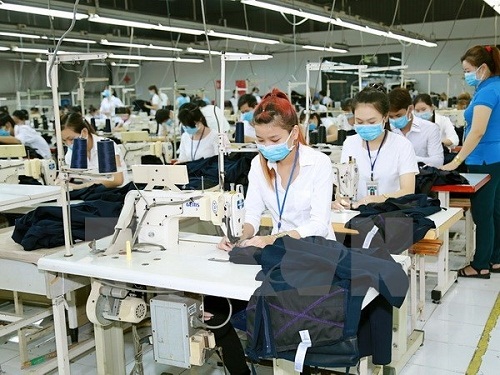 226.7kt of Indian cotton 181.6kt of Brazilian cotton and 170.7kt of Australian cotton. Imports of Brazilian cotton increased to the third position in 2018. Its import proportion was 54 per cent of US cotton, 16.7 per cent of Indian cotton, 13.2 per cent of Brazilian cotton and 12.3 per cent of Australian cotton. In terms of unit price, prices have fallen down generally since October 2018. Compared with Cotlook A Index, the imported cotton prices in Vietnam lagged behind about one to two months, which was related to the booking date and shipment.
Southeast Asia emerges a winner in the US-China trade dispute
"American tariffs on Chinese-made goods have led to a rapid shift of contract manufacturing to ASEAN (Association of Southeast Asian Nations) countries, such as Vietnam and Thailand. Even though, the increase in FDI in this bloc has been underway for a few years, the trade war is driving even more capital into the region. A red-hot economy, business-friendly policies and a Communist party led by free-traders are the incentives Vietnam is using to attract global investors amid the US-China trade war."
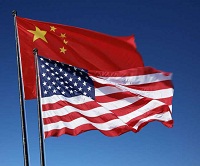 American tariffs on Chinese-made goods have led to a rapid shift of contract manufacturing to ASEAN (Association of Southeast Asian Nations) countries, such as Vietnam and Thailand. Even though, the increase in FDI in this bloc has been underway for a few years, the trade war is driving even more capital into the region. A red-hot economy, business-friendly policies and a Communist party led by free-traders are the incentives Vietnam is using to attract global investors amid the US-China trade war.
The country has already made a head start. It began making athletic shoes and sportswear for Adidas, Nike and other firms in the 1990s. Samsung now makes most of its mobile phones in Vietnam. The nation has become the chief source for the world’s largest phone producer, while the company is Vietnam’s largest employer.
Like Vietnam, Thailand too believes that the US-China trade war is good for its business. The country has growing clusters of vehicle assembly plants for Japanese, US, and Chinese auto companies. It also makes components for tier 1 suppliers. Panasonic is joining the latter by shifting production of auto stereos from China. Meanwhile, Thai electronics maker SVI has been sifting through requests from firms which, until now, had their work done in China.
Not this entire shift from China to Southeast Asia is in high-tech or high-value goods. Cambodia captured the bicycle production for U.S.-based Kent International, other light manufacturing for export, such as in apparel and furniture, is also picking up across ASEAN countries.
Trade war affects key players’ outlook
The US-China trade war has affected key players’ outlooks as well as results with 18.5 per cent either moving their production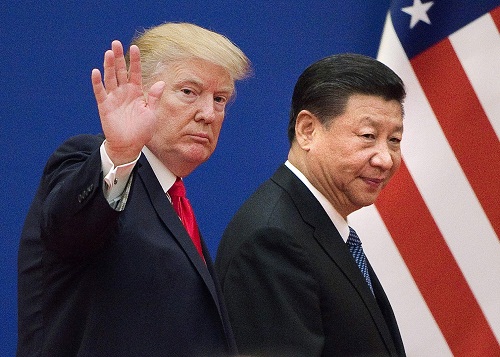 to Southeast Asia or considering it. Attendees at the Asian Financial Forum in Hong Kong, held early this year, noted 39 per cent of good investment returns to come from Southeast Asia, 35 per cent from China and 16 per cent from the USA.
Labor costs have been a fundamental driver behind the shift of manufacturing to Southeast Asia. ASEAN wages can run as low as one-third to one-half those in China. Also, majority of industries are incorporating new technologies and smart automation.
Tech skills and infrastructure need improvement
However, there are a few challenges that need to be tackled. Tech skills need to improve in many ASEAN nations including Vietnam and Thailand. Infrastructure also needs to be built across the nation as ASEAN countries are facing an increasing infrastructure deficit mainly due to rapid urbanisation and population growth.
Moreover Southeast Asia is not entirely safe from the effects of the US-China trade war. The region is likely to suffer in the short run from lower trade volumes and a lack of investor confidence. As both the US and China are major export markets for Southeast Asia, lower trade volumes from China negatively affected countries that are more reliant on international trade, like Singapore, Malaysia, Thailand and Vietnam.
The growth of the worldwide denim market
"Even as joggers and leggings have emerged as the top fashion bottom worldwide, the classic appeal of jeans along with new styles continues to attract consumers. A top reason for this is the addition of stretch to both men’s and women’s jeans. And Marshal Cohen, Chief Industry Advisor, NPD Group credits stretch with boosting the sales of women’s denim by 5 per cent to $16.4 billion in the year ending July 2018. Between 2011 and 2017, the percentage of denim jeans that contained stretch in the US increased from 44 to 75 per cent, according to Cotton Incorporated’s Retail and Lifestyle Monitor™ surveys. In China, the percentage increased from 26 to 56 per cent."
 Even as joggers and leggings have emerged as the top fashion bottom worldwide, the classic appeal of jeans along with new styles continues to attract consumers. A top reason for this is the addition of stretch to both men’s and women’s jeans. And Marshal Cohen, Chief Industry Advisor, NPD Group credits stretch with boosting the sales of women’s denim by 5 per cent to $16.4 billion in the year ending July 2018. Between 2011 and 2017, the percentage of denim jeans that contained stretch in the US increased from 44 to 75 per cent, according to Cotton Incorporated’s Retail and Lifestyle Monitor™ surveys. In China, the percentage increased from 26 to 56 per cent.
Robust growth expected for the denim market
As per a global market review published by Just-Style, the world market for denim jeans grew at an impressive 8.9 per cent between 2013 and 2018. It is expected to reach nearly $60 billion by 2023. United States ($20.1 billion) and Europe ($19.75 billion) account for 69 per cent of the world’s total value share in jeanswear, even though the population of these two continents represents less than 15 percent of the world’s total. While North America and Europe dominate the global denim market, the fastest growth is expected to come from Asia, South America, and Africa.
As per Monitor™ research, and CCI and Cotton Incorporated’s Global Lifestyle Monitor™ Survey, almost 77 per cent of Latin Americans prefer wearing jeans. This figure decreases slightly to 65 per cent in China and further to 55 per cent in the US.
Denim at all times for Mexican and US consumers
Monitor™ research indicates the US citizens prefer wearing jeans for running errands, at school, while going out to dinner, doing yard work, hanging out at home, on a date and also to work. While Chinese consumers prefer them when going to dinner and running errands followed by work.
In Mexico, denim is the preferred bottomwear for work, running errands, going out to dine, looking stylish or fashionable and hanging out at home (22 per cent). The Mexican consumer owns more pairs of jeans than US and Chinese. Mexican consumers also wear their denim more often than those in the US and China.
Growing demand for performance features
CCI and Cotton Incorporated’s Chinese Consumer Survey indicates that the Chinese prefer jeans that are made from 100 per cent cotton, having performance features , are moisture wicking, have extra stretch, are able to be wash less, and are created more sustainably. On the other hand, US consumers would be willing to pay more for denim jeans that fit them perfectly, are higher quality/last longer (79 per cent), are custom made to their fit and style (70 per cent) and kept their shape all day long (69 per cent), according to Monitor™ research.
While denim makers have started adding stretch, there are other athleisure-inspired features that can give their denim even more appeal. For instance, 64 per cent consumers are interested in moisture management in their clothing. Yet, moisture management is only available in 9 per cent clothing, according to Cotton Incorporated’s Retail and Lifestyle Monitor™ studies. Additionally, 61 per cent are interested in thermal regulation, yet it has just 2 per cent retail availability.
Indeed denim can evolve to meet customer desires and expectations, now it’s time for brands to rise to the challenge.
75 countries to commence informal talks on global e-commerce rules
More than seventy-five countries agreed to commence informal talks on fixing global e-commerce rules on the sidelines of the World Economic Forum meet at Davos in January 2019.
The talks—as reflected in the joint statement issued by the proposing WTO members—would be in conformity with existing WTO rules and would pay special attention to the interests and circumstances of LDCs and SMEs while aiming for high-standard outcomes.
The talks would take place outside the WTO with a negotiating agenda likely to take shape during the course of the year. However, with nearly half of WTO members agreeing to join the talks, the negotiations might formally shift to the global trade body in the foreseeable future.