FW
India may relax 30 per cent sourcing rule for FDI in single brand retail
India may relax the 30 per cent local sourcing norm in the single-brand retail sector. The aim is to attract big foreign players. Big single-brand retail firms may also be permitted to open online stores before setting up brick-and-mortar shops.
Currently, online sale by a single-brand retail player is allowed only after opening of physical outlets. Single-brand foreign retailers may be allowed to adjust the incremental sourcing of goods from India for global operations during the initial ten years from the current five years against the mandatory sourcing requirement of 30 per cent of purchases from India.
The relaxation, however, would be subject to a condition that a foreign entity would have to bring foreign direct investment in excess of $200 million within the first two or three years. During April to June 2018, FDI in India grew by 23 per cent.
In January 2018, India allowed 100 per cent FDI in the sector, permitting foreign players in single-brand retail trade to set up their own shops in India without approval. The mandatory local sourcing requirement of 30 per cent was relaxed. A foreign retailer was allowed credit from an incremental increase in sourcing for its global operations from India toward the mandatory 30 per cent local sourcing requirement for its business in the country.
China to squeeze environmental transgressions in textiles
In a presentation at the Texworld USA exhibition here in New York, CNTAC executive Yan Yan said the industry will continue with its squeeze on environmental transgressions in the textile sector as the country’s exports of textile and clothing now account for 36 per cent of all global trade worth an estimated $2.7 trillion in 2017. These are all part of China’s 13th Five-Year plan which runs from 2016-2020.
Rather than actively encouraging own companies to join and take up global textile apparel initiatives such as the Sustainable Apparel Coalition or fully backing the likes of the ZDHC, China has set up its own Textile Sustainable Manufacturing Coalition (TSMC), whose goals include the stewardship of chemicals, water and carbon to 2020, with a new ‘circular’ stewardship goal added. Several textile firms, chemical companies, leather companies, a certification company and one bio-technology enterprise are members of this coalition.
China dominates US intimates imports
China dominates US imports of cotton and manmade fiber nightwear and pajamas. China holds a 55.8 per cent share of the US market with a nine per cent share increase for the year through October. The next six major suppliers are all from volume-oriented and low-cost production Asian countries.
Cambodia, the number second supplier of intimates to the US, holds 4.25 per cent market share, with its share rising. Vietnam’s market share jumped 23.65 per cent to grab an 11.51 per cent market share. India’s market share increased 5.34 per cent in the period to 5.38 per cent. Bangladesh posted a 32.37 per cent increase to hold a 3.77 per cent market share in US imports, while Indonesia increased its market share by 10.67 per cent to 2.9 per cent on imports and Sri Lanka posted a 15.29 per cent hike to a market share of 1.9 per cent on imports.
The western hemisphere held a significant 25.38 per cent market share of underwear imports, a decline of 2.59 per cent in the period. The pull for manufacturing in the region comes from most of those imports benefiting from duty-free status under the North American and Central American Free Trade Agreements, and the speed-to-market and order-replenishment capabilities.
Burberry Q3 sales up one per cent
For the third quarter Burberry’s like-for-like sales inched up one per cent. Reported retail revenue dropped one per cent and on a currency-neutral basis, it was down two per cent. During the quarter, sales in China were up in the mid-single-digits.
The company is continuing to shift consumer perceptions of the brand, driving increases in digital engagement and endorsement from key influencers. It is building brand heat through its festive campaign, Vivienne Westwood collaboration and B-series product drops.
The company is still in the first phase of its multi-year plan to transform and reposition Burberry. It is transitioning from the straight see-now, buy-now model to a more nuanced approach. It has used the monthly B-series to generate a continuous flow of limited-edition products and keep consumers coming back for more. Sold predominantly through social media, these collections resonated strongly with new and younger customers and have been endorsed by key influencers around the world. In China, the B Series was recognised as 2018's most exciting luxury campaign on WeChat.
The collection with Vivienne Westwood also saw strong global demand and attracted exceptionally high traffic to its digital platform. Burberry’s social media presence is growing, with more than a million additional followers across Instagram and WeChat.
Intertextile Shanghai Apparel Fabrics to have bigger product zones
The upcoming Intertextile Shanghai Apparel Fabrics to be held from March 12 to 14, 2019, will see larger product zones and country pavilions – proving the fair’s growing recognition from worldwide suppliers who view these zones as gateways to the apparel market. Intertextile Shanghai Apparel Fabrics is a global flagship for apparel sourcing. Exhibitors and visitors alike will benefit from product zones with clear themes, from high-end wool to original designs, as the one-stop locations aim to make it easy for visitors to locate more potential business partners.
Verve for Design, a product zone for original designs from all over the world, will see an increase in floor space this year and four new international exhibitors joining the zone. Verve for Design enjoys increased popularity among worldwide exhibitors who view Shanghai as a prime business platform.
The Milano Unica Pavilion will feature high-quality Italian exhibitors and has increased in size. Turkey zone will include more suppliers and new exhibitors. Bunyem will display jacquard and plain fabrics for women’s wear. Kotonteks has fancy woven fabrics for women’s wear. Ramnur will offer jacquard and brocade. Unlu Transfer will bring digital printed, coated, foiled and embossed fabrics.
Bangladesh RMG makers adopt latest technologies to boost production
Apparel manufacturers in Bangladesh are investing in machinery and technology to cut production costs. Almost 100 new factories are coming up every year fully equipped with new technologies, compliant with factory norms. Around 250 factories have been using modern machines and technologies to meet international demand. State-of-the-art equipment helps reduce production cost by almost 40 per cent and raises productivity.
The collar stays machine is an example of the benefits of the latest technology. It helps the collar to stand on the neck a bit before it folds downwards. Earlier, it used to take ten to 11 workers to make 70,000 pieces to 80,000 pieces of collar stays. But now the same production can be achieved by only three workers with the help of automatic machines. The higher cost is spread out because a machine can yield a large volume and eventually increase efficiency.
Similarly carton machinery used for producing packaging material are costly but efficient in the long run. It takes 50 workers to produce 8,000 cartons to 10,000 cartons with manual machines, whereas automatic machinery can produce 15,000 to 20,000 cartons with only 25 workers. Bangladesh is fast growing as a major apparel accessory-producing hub.
Bangladesh to export $100 billion worth of garments by 2024
According to the Bangladesh commerce minister, the country will be able to export $100 billion worth of garment items by 2024 as the international apparel retailers are placing an increasing number of work orders. The country, by 2021, will export garments worth $50 billion.
According to data from the Export Promotion Bureau, the country’s garment shipments, last fiscal year, fetched $30.61 billion. It is now in the second position in garment exports globally after China. However, for expansion, entrepreneurs need bank loans at lower interest rate. The government has been developing 100 special economic zones across the country. The local and foreign investors are allowed to invest in them and contribute to export receipts.
Mercedes-Benz Fashion Week Russian invites global designers as participants
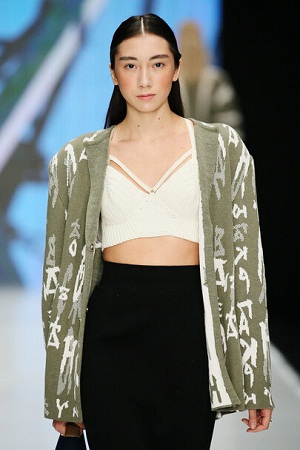 Mercedes-Benz Fashion Week Russia has called for emerging designers from all over the world to apply for a free participation in the catwalk schedule of the event. Emerging talents will be given an unique opportunity to show their collections to the world. Designers should have at least two years’ experience of operations, experience of at least three fully produced collections; a collection of at least 25 looks of the relevant season (fall/winter 2019).
Ten slots are available. The winners will get an individual fashion show time slot in the main Mercedes-Benz Fashion Week Russia catwalk program and organizational and logistics support. For the first time 10 selected emerging designers from different countries will be granted a show at the biggest fashion week in Russia and Eastern Europe.
Mercedes-Benz Fashion Week Russia is always looking out for new talents and has already launched a number of projects for young designers. The fashion week takes place in Moscow twice a year, in March and October, since 2000, showcasing over 150 designers. This edition will be held from March 30 to April 3, 2019. Each season, MBFW Russia is attended by over 55,000 guests, including thousands of buyers, journalists, and industry experts. The fashion shows are live streamed through hundreds of websites and media channels.
Karl Mayer unveils warp knitting machine at China event
Karl Mayer unveiled its new warp knitting machine with weft insertion at a well-attended in-house event which was held at its Chinese subsidiary in Changzhou, China, from January 15-18, 2019. Karl Mayer is a leading manufacturer of textile machinery for automotive, apparel, home, sports, and technical markets in Germany and all over the world.
Representatives from more than ten companies came every day to attend the machine presentation, and these included knitters and weavers, as well as finishers interested in moving into textile production. The guests travelled from all over China, mainly from Jiangsu and Zheijiang, as well as from Shandong and Hebei. They were all impressed by the cost:benefit ratio of the machines on show.
Two models of the TM Weft, 247”, E 24, were being demonstrated, both producing an interlining, that is, a traditional fabric with one guide bar and a version having a higher drapabiity for special applications with two guide bars, Karl Mayer said in a media statement.
Both machines were running at an impressive level of stability and at a high speed of 1,500 min -1. The entire concept was extremely well received.
Together with Steffen Trabers from Illies China, the company’s agent in the region, the sales manager of Karl Mayer had many conversations relating to specific projects. The first machines have already been sold and further orders are expected over the next few months.
With its features and conceptual direction, the TM Weft, as a basic model, is designed to complement the existing Wefttronic II HKS, which will continue to be available for the high-end market. Karl Mayer is, thus, extending its tried-and-tested two product line strategy in its technical textiles business unit. (GK)
Shima Seiki Italia to showcase state-of-the-art knitting solutions at Italy event
Shima Seiki Italia S.p.A, Italian subsidiary of leading Japanese computerised knitting machine manufacturer Shima Seiki Mfg Ltd, will be exhibiting at the 84th edition of the Pitti Immagine Filati exhibition in Florence, Italy. It will be showcasing hardware and software solutions for design, manufacturing and processing of knitted goods.
On display will be SVR123P, a computerized knitting machine that has a special loop presser bed, capable of producing hybrid inlay fabrics with both knit as well as weave characteristics. Furthermore it features new iPlating option that is capable of alternating yarn colours in any pattern thus producing jacquard like designs using plain jersey stitch. Plating can be performed within the same course and for individual needles for even greater diversity in knit design.
Moreover, the demand for such fabrics are very high across a wide range of applications starting from fashion apparel to sportswear, innerwear, outerwear, uniforms as well as home furnishings and technical textiles.
Besides this, the SDS-ONE APEX3 3D design system, company’s “Total Fashion System” concept will be another core area of attraction at the exhibition. APEX3 provides extensive support throughout the product supply chain, integrating production into one smooth and efficient workflow from yarn development, product planning and design to production and sales promotions.
The innovative solution improves on design evaluation process with its ultra realistic simulation capability where virtual samples minimize the need for actual sample making. This saves a lot of time, cost and material thus contributing to sustainable manufacturing.
It is worth noting that Shima Seiki is also the pioneer in complete garment manufacturing technology—called WHOLEGARMENT® —wherein an entire knitted garment is produced on the knitting machine without the need for linking or sewing after ward.