FW
Luxe brands dominate Top 50 Most Valuable Brands rankings
"Accounting for 47 per cent of the total value in Top 50 Most Valuable French Brands 2019 ranking, the luxury sector demonstrates the powerful position of traditional fashion houses within the country's corporate landscape. The rankings, released by WPP and Kantar, boasts of six new entries along with legendary brands Louis Vuitton, in the first position, Chanel at second and Hermes third. The new entries include: Céline at the 38 position, Van Cleef & Arpels 43rd , Vichy at 41st , Tefal on 46th Carte D’Or on 44th and Maisons Du Monde on the 49th position."
 Accounting for 47 per cent of the total value in Top 50 Most Valuable French Brands 2019 ranking, the luxury sector demonstrates the powerful position of traditional fashion houses within the country's corporate landscape. The rankings, released by WPP and Kantar, boasts of six new entries along with legendary brands Louis Vuitton, in the first position, Chanel at second and Hermes third.
Low innovation score dips total brand value
The new entries include: Céline at the 38 position, Van Cleef & Arpels 43rd , Vichy at 41st , Tefal on 46th Carte D’Or on 44th and Maisons Du Monde on the 49th position. The total value of top 50 brands rose 12 per cent, which though significantly ahead of the 2.3 per cent increase in the country's GDP, is less compared to the 21 per cent rise in total brand value seen in the BrandZ Global Top 100 Brands earlier this year.
A primary reason for this is comparatively low perceived innovation score for France's top brands. Taking 100 as the benchmark for this measure, the Top 50 most valuable French brands average 103 compared to 113 for both BrandZ Global Top 50 and the US Top 50 rankings.
Innovating with responsibility
Some French brands are emphasising on innovation by encouraging staff to act as brand ambassadors on social media and providing opportunities for consumers to test products. The number of brands that aim to be socially responsible has also grown 14 per cent over the past year, double the rate for brands that are low scorers. Brands in the Top 10 for CSR include: Decathlon, Michelin, Air France and Credit Agricole.
Trend alert
One of the best ways brands can boost innovation is through partnerships between traditional and new brands. The BrandZ French Top 50 study highlighted a few industry trends that included:
Dior, with its growth of 58 per cent over the last year, was the fastest riser in the ranking with Rémy Martin growing 39 per cent and Saint Laurent by 34 per cent.
French shoppers are opting for quality over quantity. From 29 per cent, the percentage of shoppers who preferred better fresh produce has grown to 33 per cent.
French consumers who preferred online shopping have reached 34 million, increasing 13 per cent over last year.
Technology and fashion are the most preferred sectors for online shopping
Shoppers are seeking ways to support local food producers with 58 per cent opting for local products.
Commissioned by WPP, the valuation behind the BrandZ™ Top 50 Most Valuable French Brands was conducted by brand equity research experts Kantar Millward Brown. The methodology is similar to the one used to calculate the annual BrandZ Top 100 Most Valuable Global Brands ranking, which is now in its 13th year.
Bangladesh exports to EU faces challenge
Bangladesh’s export receipts in fiscal 2018 were up 5.81 percent from a year earlier. But constraints hindered it from exploiting its full potential. The major constraints were low productivity, poor infrastructure and low price negotiation capacity.
Bangladesh may lose 1.6 billion dollars worth of apparel business from the EU once the country graduates from the least-developed country bracket to developing country in 2027 as local exporters have to pay eight percent to ten percent duty upon export to the EU.
Currently, the EU is the largest export destination for Bangladesh, accounting for 21 billion dollars worth of shipments.
Every year Bangladeshi exporters face a five percent higher cost of production for different reasons and secondly buyers always pay five per cent to six percent lower prices due to the exporters' low price negotiation capacity.
Currently, Bangladesh garment shipments face 15.62 percent duty in the US and yet they perform well. Garment manufacturers are therefore confident that if they can perform well in the US, they will also be able to perform strongly in the EU even after facing a ten percent duty upon graduation.
Bangladesh hopes to capture a significant share of the garment business that is moving out of China.
Alliance ends work in Bangladesh
Alliance has ceased operations in Bangladesh effective December 31, 2018.
Following the Rana Plaza building collapse in April 2013, that killed more than 1,100 people, mostly garment workers, North American fashion brands and retailers formed the Alliance for Bangladesh Worker Safety, which would run for five years, setting time frames and accountability for inspections, trainings and worker empowerment programs in Bangladesh’s readymade garment sector.
The platform inspected more than 700 readymade garment factories in Bangladesh from where they procure products. About 93 per cent of faults identified in the factories were corrected, while 428 factories completed 100 per cent remediation work.
The buyers’ group removed 178 factories from its compliant factory list because of their lack of progress in ensuring safe working conditions.
Fortifying safety in factories and equipping workers with empowerment tools was Alliance’s focus. Alliance designed a safety training workshop for senior factory managers and partnered with the Bangladesh University of Engineering and Technology on a graduate-level short course for Bangladeshi engineers, both designed to build in-country capacity on safety.
More than 1.4 million workers were trained in basic fire safety, and 1.3 million participated in refresher courses. Nearly 27,000 security guards were trained in fire safety leadership while about 20,000 received refresher training.
Shima’s latest solutions on show at DTG 2019
Leading computerised knitting machine manufacturer Shima Seiki of Wakayama, Japan, is exhibiting at the 16th Dhaka International Textile & Garment Machinery Exhibition (DTG 2019) in Dhaka, Bangladesh, in cooperation with its partner Pacific Associates. Operating in Bangladesh since 1996, this is the twelfth time the Japanese manufacturer will participate at DTG.
Shima Seiki will be exhibiting its latest solutions to meet the current needs of the Bangladeshi market, as well as advanced solutions for future market needs. The company will show a comprehensive line-up of Wholegarment knitting machines. MACH2X features four needle beds and Shima Seiki’s original SlideNeedle, capable of producing high-quality fine gauge Wholegarment knitwear in all needles.
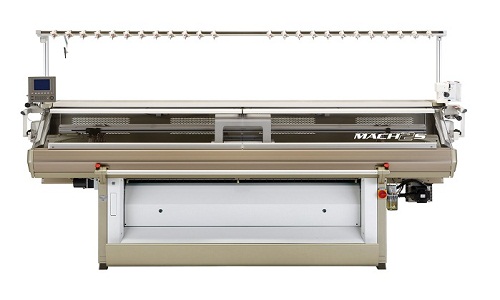
MACH2S is a V-bed machine that offers the flexibility of producing Wholegarment knitwear using every other needle, as well as conventional shaped knitwear using all needles. SWG091N2 provides opportunities in Wholegarment knitting across a wide range of items in a compact, economical package. In conventional shaped knitting, SVR123SP and SVR093SP each feature a loop presser bed mounted above the rear needle bed and is capable of inlay technique for producing unique, value-added hybrid knit-weave fabrics.
Each also features such Shima Seiki innovations as DSCS Digital Stitch Control System, spring-type moveable sinker system, stitch presser, yarn gripper and cutter and takedown comb. “Made in Japan quality, reliability, productivity, user-friendliness and cost performance all combine to satisfy the high expectations of the world’s fashion industry,” the company reports.
SVR123SP at DTG features the new i-Plating option, capable of alternating yarn colours in any pattern, producing jacquardlike designs using plain jersey stitch. Plating can be performed within the same course and for individual needles for even greater diversity in knit design.
“Shima Seiki will also show its all-around strength as a textile machine manufacturer by displaying its P-CAM series computerized multiply cutting machine and prototype P-SPR2 automatic spreading machine as part of its Shima Cutting Solutions strategically developed for the Asian and South Asian markets.”
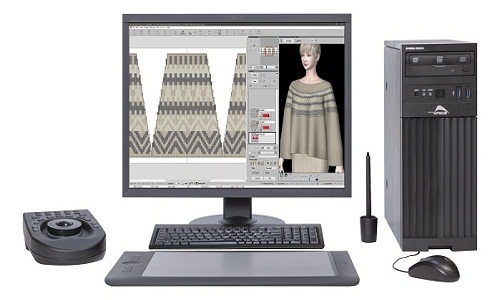
Also shown will be the SDS-ONE APEX3 3D design system. At the core of Shima Seiki’s Total Fashion System concept, APEX3 integrates all stages of apparel production into one smooth and efficient workflow from planning and design to production and sales promotion. With ultrarealistic product simulations, APEX3 is also capable of Virtual Sampling that minimises time, material and cost from the sample-making process. Also demonstrated at DTG is Shima KnitPLM, specialised PLM software for the knitting industry.
Exhibition details
Date: 9-12 January 2019
Hours: 12:00 Noon 8:00PM (Final day 7:30PM)
Location: International Convention City Bashundhara (ICCB), Kuril Bishwa Road (Next to 300ft. Purbachal Express Highway), Dhaka 1229, Bangladesh
Tel: +880 2 58970100
Organiser: Chan Chao Int’l
Tel: +886 226596000
Booth No.: Hall 7, Booth 311
Exhibited technology:
MACH2X 15L / MACH2S 8G / SWG091N2 15G Wholegarment knitting machines
SVR123SP-SV 14G / SVR093SP-SV 14G computerised flat knitting machines
SDS-ONE APEX3 3D design system
P-CAM223SA computerised cutting machine
P-SPR2 (prototype) automatic spreading machine
Shima KnitPLM PLM software for knitting
Ampro invests In New High-speed Hybrid Printing Technologies
Philadelphia, PA- Digital printing was introduced to the apparel industry 10 years ago but has struggled to supplant traditional silkscreening due to the high cost, low speed, and narrow fabric options. Ampro was a beta site for one of the largest digital printing technology firms 10 years ago, and has been following the technological improvements every year. With the knowledge that digital printing is likely to continue to become more popular, Ampro has been looking for digital printing equipment that can operate fast enough to compete with their high-end screenprinting presses.
“The Digital Squeegee is the first device entering the marketplace with the speed and quality we have been looking for. We’re extremely passionate about screenprinting as an art, but we recognize that digital printing is the future. Up until now, all the digital printing equipment was limited by speed, quality or reliability. They also were limited to printing on cotton only- no blended fabrics like CVC’s or triblends. As a hybrid printing technology, we are capturing the best of both worlds. We can utilize our superior, breathable, highly opaque screenprinting inks underneath the digital inks, so we can print on any fabric and guarantee the longevity of the print. The print should outlast the garment. This technology is extremely new; we will be one of only 9 printers in the nation with this equipment. We plan to put Philadelphia on the map as a Hybrid printing hub,” said Steph Shea, CEO of Ampro. “The Digital Squeegee is the fastest digital printer in the field, capable of printing over 1,000 t-shirts a day which is approaching the speed of our other commercial presses which can run upward of 4,000 t-shirts per day.”
Ampro is going to spend the months of January and February developing and refining their printing techniques on the Digital Squeegee before making it available to their clients. By Spring, they expect to be printing t-shirts and hoodies on new technology before rolling it out to additional items. Steph Shea notes, “We want to take some time to get comfortable with the new press- this technology is emergent and requires a fair amount of development. We’ll develop our own recipes for use before we run any production for customers. Our employees will receive all kinds of exciting new Ampro gear for wash and wear testing! If the print can survive the wash and use of a commercial print shop, it can survive anything.”
Check www.amprogo.com for updates on pricing and availability.
For more information about Ampro, contact the company here:
Ampro
Steph Shea
610-623-9000
This email address is being protected from spambots. You need JavaScript enabled to view it.
30 Bunting Lane. Clifton Heights, PA 19018
Kornit to launch new industrial printing solutions in 2019
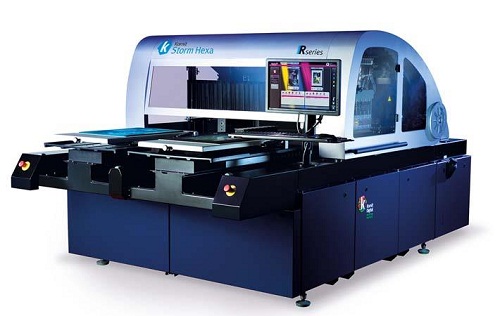
Announcing the development plan for Asia in 2019, Kornit Digital has revealed its upcoming launch of a new industrial production printing solution and a new solution for dark polyester printing. Both introductions will make waves in the textile printing market and bring unprecedented opportunities for the growth of the Kornit digital printing business. Now is the best time for Kornit Digital to seek breakthroughs in the digital printing market and continue to expand its business, said Kornit Digital CEO Ronen Samuel foreseeing business growth strategy for Asia.
With his veteran printing technology expertise and in-depth understanding of the textile market and technology, Samuel will continue to bring significant value for Kornit Digital and lead the company to achieve a global market revenue of $500 million within five years. At a media session during his first Asia tour this year, he revealed the three key factors for Kornit Digital’s rapid development – ??the right timing, the right technology and the right company.
"The e-commerce market is growing rapidly. Statistics reveal that the e-commerce market grows by $100 billion per year between 2014 and 2020. By 2020, the volume of the e-commerce market will reach $410 billion. The e-commerce market is largely occupied by clothiers who rely on the digital printing solutions led by Kornit Digital for rapid development of online and offline linkage, which in turn also boosts Kornit Digital’s development," Samuel said.
Kornit Digital can shorten the original 3-month and 6-month delivery cycle to just 2 to 3 days. This not only meets the on-demand production requirements of small-batch personalised products at the same or even lower cost but also significantly reduces the pressure on stocks.
Samuel forecasts that efficient, environmentally friendly and automated digital printing is the solution of choice for manufacturers to enhance their own strengths. "The concept of environmental protection is embodied in Kornit Digital’s DNA. From non-hazardous water-based inks to energy-efficient equipment and raw materials to finished products, the whole process is eco-friendly which provides manufacturers with sustainable production means."
Equipped with adequate prerequisites, Kornit Digital can respond efficiently to market changes and production needs while gaining market share. Kornit Digital also applies the concept of the micro-factory to its roll-to-roll printing. By integrating the production processes, it turns roll-to-roll printing into 'roll-to-product' to form a complete supply chain which is leading the market revolution.
Kornit Digital's new HD printing was widely adopted since its launch last year - over 200 units of the related equipment have been shipped. This new technology solution could print several hundreds of products per hour providing customers with both speed and quantity answers they’re looking for. The cutting-edge solution catering for dark polyester printing will also go to market in April next year. With new inks and processes, the new solution is designed to break through the limitations of traditional and digital production methods on dark polyester fabrics, while improving the color-fastness. Samuel revealed that the new inks secure enhanced adhesion, better hand-feel and richer color gamut. They can be printed on a wider variety of fabrics. A new ink with metallic feel will follow next.
"We look at the entire Asia market with a long-term perspective and we look forward with great anticipation to the lifting of the veils in the Asia Pacific market," he concluded. (RR)
Sustainable manufacturing drives the agenda at the digital textile printing conference 3.0
FESPA’s Textile Ambassador Debbie McKeegan discusses her experience at the Digital Textile Conference 2018 in North Carolina on 5th – 6th December. The event brought together industry experts and practitioners for an inspiring conversation.
The landscape of Digital printing is moving at an incredible pace. Driven primarily by the industries need for sustainable manufacturing across all market sectors. Digital technologies and Industry 4.0 practice offer the industry the roadmap for efficient manufacturing methods and our industry must adapt. Staying ahead of new developments as technologies emerge is critical for businesses large and small, worldwide.

The SGIA | AATCC Digital Textile Printing conference, which is now in its 3rd year, provides a forum for conversation, and was held in Raleigh, North Carolina on the 5th-6th of December 2018. Gathering Industry experts and practitioners together in one location for inspiring conversation….
The conference offers an insight into current and future technologies for manufacturers, and an explanation of current working practice and the changes needed, as we move towards automation and the consolidation of the supply chain.
Providing an insightful, inside track to technology and access to industry experts from both manufacturing and technology companies, the agenda provides an engaging, open forum and offers valuable use of our precious time.
Without question the most topical discussion was Sustainability, which was a consistent trend throughout many of the presentations. Talks from industry experts, manufacturers and software providers about how we manufacture our products regardless of industry sector sustainably, offered the audience an in depth, real time view into the opportunities and challenges that lie ahead.

Customization has become the industries new normal and in order to manufacture efficiently we all need to adopt new working practices at every stage of a products lifecycle. Starting at the very beginning. We need to make products on demand, and in doing so we will become more sustainable. But what tools do you need?
Software, and PLM programmes offer a number of solutions and there can be no doubt that the supply chain has to become automated to be able to offer flexible, just in time manufacturing to Retailers and Print Buyers.
Manufacturing equipment too, must be digitized wherever possible. Choosing the right technology for your application is critical and the conference offered a number of informative presentations from some of the world’s leading digital print technology companies.
Alongside a number of presentations from Industry practitioners, who are utilizing digital solutions at the front line of manufacturing in order to rationalize their businesses and produce sustainably.

Re-shoring was also a hot topic, as many large Retailers look to speed up their supply chain to offer localized, efficient, and importantly cost-effective production. However, it was also apparent that there are challenges ahead, and the manufacturing industry needs to invest in training. The Micro-Factory offers a sustainable solution for print on demand however, in the USA as in the West, practical resources for sewing and processing are few and far between. Companies must train from within to re-build the technical, practical skills of manufacturing.
The next decade will be an exciting chapter of Innovation for the Textile Industry, as it flexes and transforms to meet the demands of the Millennial consumer. As our supply chain management moves online all software, suppliers, machinery, manufacturers and consumables must talk the same digital language if they are to be part of a seamless manufacturing ethos.
It’s an age of collaboration and reform and one that I’m sure will deliver incredible opportunities for our Industry in the years ahead….
Words of Industry Wisdom:
“Sixty-two percent of millennials prefer to buy sustainable products” Debbie McKeegan, Texintel
“The Future requires an end to end solution” J Flint Davis, WeaveUp
“Our industry focusses on the value of items Sold, to be sustainable we must define the hidden value of what we waste” Duncan Ross, AVA CAD CAM
“Ink-jet printing is expected to replace srceen printing as the main method of production by 2021” Ming Wang, North Carolina State University
“Higher resolution and smaller drops expand gamut and improve colour consistency” Mike Raymond, Xaar
”Ink Fastness is more important that gamut and brilliancy” Roland Zimmer, Zimmer Austria
“The Sustainable solution - Purchase Activated Production” Sharon Donovich, Kornit Digital
Digital Ink Sciences upbeat about its ‘breakthrough’ new ink formulation
Digital ink development company Digital Ink Sciences has come up with DIS-250, a new ink formulation for Direct to Garment Printers and wide format Printers. This novelty is a Mid Viscosity ink formulation that is considered a breakthrough by industry insiders.
It requires lower maintenance and has better stability, jet, ability and nozzle integrity. The company also says that their inks 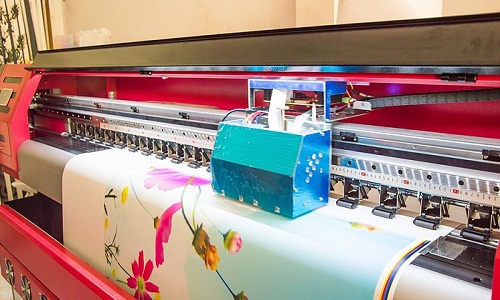 means less printer downtime and more shirt printing with fewer issues.
“This new ink set is surpassing every expectation. We’re getting better colors, deeper blacks, and the custom ink formulation is significantly reducing maintenance on the print heads.” – Grant French, Business Development Manager, Digital Ink Sciences
The company focuses their products on final output not just by developing the best colours available for Aqueous Textile inks, but also by concentrating on what company calls the ‘Perfect drop’”, which means more of the ink lands on the shirt and less gets dispersed into the air, and onto unwanted areas.
The system helps the operators to print the fabric with lower resolution and faster without compromising print quality. Moreover the optimized drop shape of the ink helps the printer to hit the same spot on textiles over and over again.
Notably, the current models that supports the ink are Ricoh G4, Ricoh G5- with optimized waveform and Ricoh GH2220/2420 heads.
SME sector of Chinese Weaving Sector runs Airjet and Waterjet looms
Qingdao Haijia Machinery Co. Ltd.founded in 1995, is the largest research and development, manufacture, sale and service professional jet loom manufacturer of China, which produced water jet loom taking the first market share for 8 years. Now the company has two standard production bases, the total area of 80,000 square meters, construction area of 40,000 square meters, has 8 advanced CNC machining centers, Nissan can produce 10 CNC lathes, more than 60 general machinery processing equipments such as vehicles, milling, drilling, a 200 meters automatically paint line, and more than 40 other auxiliary equipment. Company has more than 300 staff, 35 in management position. Since long time, company has always been adhering to "let quality create value for customers" as a core business purpose.
Through continuous exploration, efforts and providing customers with valuable advice, it pushed out HW3851, HW4008 , HW4010 series water jet loom, having advantage of stable performance, high efficiency, long service life, and widely sold in the world are well favored by customers. In recent years, company won the honorary titles, awards, recognitions and international standard quality management system certifications too.
Qingdao Haijia Machinery had arranged 3 weaving factories with medium size firms i.e. 1) Hong Ping Company, 2) Ling Shz Company, 3) Tran Taz Textile who are using Air jet technology for weaving with Haijia Machine which is fine demonstration of old technology to new technology of airjet. Company has arranged authentic Chinese Vegetarian and Non Vegetarian Lunch, everyone appreciated their hospitality.
We also met Distributor of Qingdao Haijia Machinery from India ie. Go Tex Machineries, incorporated by founder members Sandip Kedia and Ghanshyam Kukadiya, are the sole-selling agents of HAIJIA Waterjets & Airjets, Tayu Circular Knitting machines, KINGTEX Rapiers.
Go Tex Machineries have group company, called GOLDEN JD who also deals in multi head embroidery machines. It is also engaged in manufacturing top class embroidery thread with polyester, viscose & metallic yarn and created a brand image by providing consistent quality products.
Recently company have shifted to a new centrally located 6000 sq. ft. office with eye-catching interiors, audio-visual conference room, ample space for well-managed store room with a vision to serve all types of clientele as well and multiply their business exponentially in near future.
They have sold approximately 5000 sets waterjet looms & Airjet looms in India. Company have separate sales & service department, 20 persons team for the service for Machine Installation, Quality and Fabrics Settings with efficient team and 24 hours service. Vision of Directors came true after lot of hard work.
VDMA sums up 2018
The challenges for the textile machinery industry are manifold with a view to 2019, according to Thomas Waldmann, Managing Director of the VDMA Textile Machinery Federation. “The political and economic framework conditions have deteriorated, incoming orders in important markets are difficult to predict,” he said.
“Markets that have so far been less in focus have to be observed and worked on more intensively. Digitalization requires the design of business processes and models. At the same time, the recruitment and retention of both academic and industrial junior staff is becoming a permanent task for companies.”
ITMA Asia 2018
The ITMA Asia was the most important marketing and sales event for the industry in 2018 – albeit in China in a demand environment that is currently declining in many segments. Nevertheless, in a VDMA survey, 74% of participants rated the number of visitors to their own stand as “satisfactory” to “very good”.
“The quality of the discussions held with visitors from outside China was assessed even more positively,” added Mr Waldmann. “Members took advantage of the VDMA offers for image promotion, networking and exchange, in particular, the press conference and the Association’s half-time results evening.”
ITMA 2019
ITMA 2019, which will take place from 20-26 June in Barcelona, Spain, will offer visitors an overview of the innovation diversity of the entire industry: In line with this goal, a group of experts led by the VDMA is developing the Research & Education Area initiated in 2007 into the ITMA Innovation Lab.
Four strategic topics for textile entrepreneurs will be addressed by prominent experts at the Speakers Corner. These will include:
Innovative Raw Materials & Manufacturing Technology
Strategic Business Innovation through Automation & Digitisation
Technical Textiles Innovations and Manufacturing Technology
Sustainable Textile & Garment Manufacturing in the Circular Economy
The ITMA Innovation Lab approach also includes exhibitors presenting their innovative technology in the virtual framework of the ITMA Innovation Video Showcase.
New talent
“In 2017, joint textile research was able to raise project funds amounting to millions of Euros. Eighty-two projects were started, 161 projects are running at German textile institutes. Textiles continue to be the frontrunners of industries carrying out joint industrial research,” continued Mr Waldmann.
“Recruitment of is a long runner. Competition from other technology sectors is fierce. In 2019, the VDMA’s Walter Reiners Foundation will continue the tried and tested instruments of recruiting young people, at the same time breaking new ground and developing answers with its member companies to the question of how engineers can be enthusiastic about I4.0 tasks in the industry.” At the ITMA in Barcelona, the VDMA will once again give students the opportunity to visit the leading trade fair as part of an excursion group.
In April, the creativity awards of the Foundation will be presented for the first time in a “young environment” at the recruiting fair MG ZIEHT AN - GO TEXTILE. This year, the awards ceremony of the Walter Reiners Foundation of the German Textile Machinery Industry took place in the Digital Capability Center in
Aachen.