FW
Dependence on China fickle, India needs to formulate its own strategies
"Textile industry in China maintained a moderate rise in the first quarter of 2016. Textile exports grew by 22.16 per cent reaching EUR 24.6 billion. Exports to the European Union and the United States declined to 9.7 per cent as the set quota limits reached the sum of EUR 7.3 billion, 47 percentage points lower than the growth rate of the same period last year. According to a EUSME Centre report, textile exports from Mainland China to Japan, Hong Kong, Republic of Korea and the Association of Southeast Asian Nations (ASEAN), increased to 28.38 per cent."
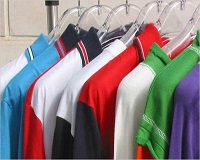 China’s textile and apparel exports, since the last 10 years, have been increasing at a CAGR of 5 per cent. The country’s exports in 2017 were valued at $266.97 billion, of which 59 per cent were from apparel and 41 per cent textiles. Textile and apparel imports during the period were $28 billion.
Exports to EU and US decline
Textile industry in China maintained a moderate rise in the first quarter of 2016. Textile exports grew by 22.16 per cent reaching EUR 24.6 billion. Exports to the European Union and the United States declined to 9.7 per cent as the set quota limits reached the sum of EUR 7.3 billion, 47 percentage points lower than the growth rate of the same period last year. According to a EUSME Centre report, textile exports from Mainland China to Japan, Hong Kong, Republic of Korea and the Association of Southeast Asian Nations (ASEAN), increased to 28.38 per cent.
The major export destinations for China’s textile trade, USA and Japan, have a share of 16 per cent and 8 per cent with trade value of $42.5 billion and $19.7 billion respectively in 2017. China has a strong finishing and apparel manufacturing infrastructure alongwith a strong presence in retailing. It also has a strong base for man-made filaments and staple yarns. Despite having the highest labor wages amongst the competing nations, China has developed sufficient training infrastructure to meet the industry requirements.
China’s textile trade is declining due to high labor cost and shift of focus on other more profitable sectors. China has overcome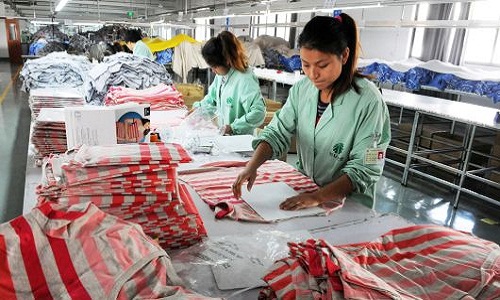 this problem by strategically investing in other countries like Vietnam, Cambodia and some other African countries for the manufacturing needs. This has helped it to provide competitive prices by retaining their share in global market. Technological advances, especially complete automated operations have helped China to increase productivity and lower per capita cost.
Unpredictable reactions deter Indian investors
However, Indian textile entrepreneurs are unsure of what strategy to adopt as most often China’s reaction can be quite unpredictable. For instance, a decade ago, China began expanding its business in other areas apart from textile indicating its slow exit from textiles; since the last three to four years, the country has again started procuring huge quantities of yarn from India. This resulted in the country setting up many new yarn exporting spinning companies in India focusing only on China as their export market. These Chinese markets were not concerned with the quality of yarn leading to the supply of inferior quality yarns by their Indian counterparts. Export of inferior yarn from India continued only for about two to three years before China stopped all imports from India. The units, setup for supplying only to China, started suffering the consequences.
Around six years ago, China started exporting fabric at very cheap rates. This impacted a large number of textile corporates in India who were planning to invest in the country. But, of late China has almost stopped exporting fabric to India due to which the Indian weaving industry is growing. Due to China’s constantly changing strategy, India is not able to strengthen its weaving, knitting and finishing processes thereby damaging the entire value chain. Therefore, instead of depending on another countries strategy, India needs to formulate its own strategies to maximise its strengths and overcome its weaknesses.
Under Armour refocuses attention on sportswear
Under Armour is returning to its roots as a sportswear company, refocusing its attention on making clothes for athletes. This refocus comes at a critical time for the Baltimore-based company. Earlier this month it issued an underwhelming financial forecast at an investor day, while its culture has also been in the spotlight after a report that employees put strip club visits on expenses.
Under Armour, started in 1996, expanded aggressively and took on the likes of Nike and Adidas. But its shares have fallen by 68 per cent since 2015 while sales have flagged in North America. Under Armour seeks to capitalise on rising demand for athletic-themed clothing. The company’s ventures into sports-inspired fashion included a tie-up two years ago with designer Tim Coppens, known as Under Armour Sportswear. It has since been discontinued.
Vietnam’s labor cost higher than Southeast Asian neighbours
Labor costs are higher in Vietnam than in other Southeast Asian countries. Wage costs per worker for the median Vietnamese firm are about twice as high as in Laos, Myanmar and Malaysia and about 30 to 45 per cent higher than in Cambodia, Thailand and the Philippines. Labor cost for a firm is defined as the cost of payments to workers divided by the number of workers.
But Vietnam’s high labor costs are in line with productivity levels and thus do not seem to be a major obstacle to competitiveness. The value-added per worker per year in an average manufacturing firm in Vietnam is higher than in most countries in southeast Asia.
Vietnam’s relatively high value appears to be partly driven by high and growing use of capital. The north-central and central coastal regions have the highest productivity while the southeast comes in second.
Foreign-owned firms are generally more productive than domestic firms, which can be explained by their easier access to technology and finance through their parent companies. Capital productivity is low in Vietnam. The ratio of sales to value capital in Vietnam is around 160 per cent, lower than in any of its peers in southeast Asia. It could be that capital is not used very efficiently in Vietnam.
US holiday retail sales hit highest growth rate in six years
Mastercard SpendingPulse, which provides insights into overall retail spending trends across all payment types, including cash and check, reported a 5.1 per cent holiday sales increase to over $850 billion this year – the strongest rate since 2012. The research firm reviewed holiday shopping from November 1 through December 24.
Led in part by a surge in home improvement spending, this season’s holiday retail sales were at their highest in six years. Online shopping increased 19.1 per cent over last year. The expenditure on home improvement was recorded at 9 per cent. Sales in the home furniture and furnishings category also increased by 2.3 per cent.
However, sales in electronics and appliances declined by 0.7 per cent. Department stores sales also slipped by 1.3 per cent following two years of growth below 2 per cent. Online sales growth for department stores, however, increased by 10.2 per cent.
Turkey aims at $19 billion clothing exports in 2019
Turkey’s clothing exports reached nearly $18 billion in 2018. The aim is now to reach $19 billion in 2019. The clothing sector has strategic importance for the country’s economy with its production power, contribution to employment, and value-added exports. Meanwhile, the country’s domestic clothing market size has grown 20 per cent since last previous year. The apparel sector contributes 10.7 per cent to Turkey’s overall exports and 13.1 per cent to industrial exports.
The EU is the biggest market for Turkey’s ready-to-wear and apparel sector. This is followed by Germany, Spain, Britain, the Netherlands, France, Iraq, the US, Italy, Denmark and Israel. Other significant markets are Russia, one of Turkey’s largest trading partners, and China, the world’s largest ready-to-wear supplier. Turkey’s exports of textiles and raw materials increased eight per cent in the first half of 2018.
The most exported product in the first half of 2018 was woven fabrics. Woven fabric exports increased 8.3 per cent compared to the same period in 2017. The second most exported product was yarn, which constitutes 18.1 per cent of total textile exports from Turkey. Exports of third important product group, knitted fabrics, increased by 2.3 per cent. Turkey is one of the world's leading manufacturers of knitted fabrics. Fiber exports, the fourth most exported product group, increased by 16.9 per cent.
Pakistan textile units await tax refunds
The textile industry in Pakistan is facing a serious liquidity crunch. The main problem is: sales tax refunds amounting to billions of rupees are yet to be formatted. Pakistan’s textile exports remained flat during the first five months of the current fiscal year as the value-added sector couldn’t perform up to the mark despite the constant currency devaluation against the dollar.
Export sector is the backbone of Pakistan’s economy and earns a major amount of foreign exchange and revenue. Besides, the sector is also labor-intensive and the largest employment provider and generator. Value-added textile exporters say they are battling for survival in the global market due to costly inputs and high cost of manufacturing. The currency has lost a quarter of its value against the dollar since December last year. Banks are reluctant to revise financing limits of companies as per the increased cotton rates.
Textile exporters want immediate payment against tax drawback and levies. They say current and deferred sales tax refunds are lying pending at various large taxpayer units and regional tax offices mainly due to the cross-matching of invoices. In addition exporters want an enabling business environment and a level-playing field.
Pakistan aims to have FTA with Latin America
Pakistan is interested in a free trade agreement (FTA) with countries of the Latin America trading bloc. The trade bloc comprises Argentina, Brazil, Paraguay, Uruguay and Venezuela.
Latin America is one of the most important non-traditional markets where Pakistan’s market share is negligible despite a huge potential for both traditional and non-traditional exports. A free trade agreement will provide Pakistan an opportunity to diversify exports and markets and enhance trade with Latin American countries in order to introduce new products in pharmaceutical, information and communications technology, auto parts and light engineering sectors.
It will also benefit the textile industry, which is currently Pakistan’s biggest exporter. And it will help in strengthening Pakistan’s business and trade relations in the region and will provide a level playing field to Pakistan vis-a-vis its competitors in Latin America.
Argentina and Brazil in particular are lucrative markets. These countries are among world leaders in agro-food production and adoption of modern technology in making innovations in seed production and food processing.
Pakistan hopes the preferential trade agreement it signed in 2006 will lead to a free trade agreement. So the free trade agreement will create win-win opportunities for both Latin America and Pakistan.
Iran textile exports up 40 per cent
This year, Iran’s textile exports grew 40 per cent and textile production grew by two per cent. Efforts are on to make things easy for garment manufacturers to enhance exports. The decision to prohibit imports of some items has created huge opportunities for local manufacturers to increase their exports despite all challenges pertaining to the currency.
The country has taken measures aimed at renewing the garment manufacturing industry, in a bid to enter international markets. Exporting apparel products to neighboring countries, including the CIS and, in particular, Azerbaijan, is on the agenda. There are about 50,000 apparel manufacturing units in the country.
Foreign representatives, branches and distributors of apparel in Iran who seek business licenses have been mandated to produce goods worth 20 per cent of their import value inside Iran and to export at least 50 per cent of this domestic production.
The initiative is aimed at increasing domestic production, creating jobs and reviving Iran’s apparel industry. Public interest in domestic products has dramatically surged over recent months. Plans are underway to establish a new apparel industrial town in Fashafouyeh, located in Tehran province’s Rey county, with the aim of limiting imports, boosting domestic production and making the price of Iranian clothing more competitive.
Louis Vuitton tops BrandZ’s France Top 50 ranking
"In the second annual BrandZ France ranking, released by WPP and Kantar, Louis Vuitton secured the first position ($46.4 billion), Chanel second ($39.2 billion) and Hermès third ($31.5 billion). The total value of BrandZ French Top 50 rose by 12 per cent. While this is significantly ahead of the 2.3 per cent increase in the country's GDP, it is less than the 21 per cent rise in total brand value seen in the BrandZ Global Top 100 Brands earlier this year. One potential reason for the growth lag could be comparatively low perceived innovation score for France's top brands. Taking 100 as the benchmark score for this measure, the Top 50 most valuable French brands average 103 compared to 113 for both the BrandZ Global Top 50 and the US Top 50 rankings."
 In the second annual BrandZ France ranking, released by WPP and Kantar, Louis Vuitton secured the first position ($46.4 billion), Chanel second ($39.2 billion) and Hermès third ($31.5 billion). The total value of BrandZ French Top 50 rose by 12 per cent. While this is significantly ahead of the 2.3 per cent increase in the country's GDP, it is less than the 21 per cent rise in total brand value seen in the BrandZ Global Top 100 Brands earlier this year.
One potential reason for the growth lag could be comparatively low perceived innovation score for France's top brands. Taking 100 as the benchmark score for this measure, the Top 50 most valuable French brands average 103 compared to 113 for both the BrandZ Global Top 50 and the US Top 50 rankings.
But some French brands are delivering on innovation with initiatives that include encouraging staff to act as brand ambassadors on social media and providing opportunities for consumers to test products. Sports retailer Decathlon is viewed by consumers as the most disruptive brand within the ranking
BrandZ French Top 50 study highlights the key trends:
Dior registers fastest growth: Dior emerged the fastest riser in the ranking, up 58 per cent, with Rémy Martin growing by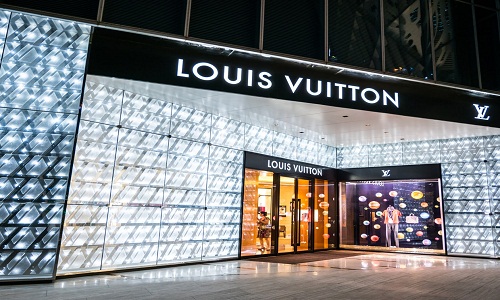 39 per cent and Saint Laurent by 34 per cent.
Preference for fresh products: The percentage of French consumers opting for fresh produced has risen to 33 per cent from 29 per cent a decade ago. More than half of French consumers say they will willingly pay more for higher quality.
Ratio of older consumers increase: Nearly a third of the French population is aged 55-plus and the proportion is growing. They also account for more than 40 per cent of spending on consumer goods and are on the lookout for great food, fashion, travel and tech.
Promoting regional products: Supermarkets and national brands are now promoting the regional heritage of selected produce, and a new brand, C'est qui le Patron, co-created with consumers, is successfully selling a growing range of fresh food, from milk and butter to burger patties.
Commissioned by WPP, the valuation behind the BrandZ™ Top 50 Most Valuable French Brands was conducted by brand equity research experts Kantar Millward Brown. The methodology is similar to the one used to calculate the annual BrandZ Top 100 Most Valuable Global Brands ranking.
The ranking combines rigorously analysed market data from Bloomberg and Kantar Consulting with extensive consumer insights. Globally, the research covers 3.6 million consumers and more than 122,000 different brands in over 50 markets. In France, we interviewed more than 101,000 consumers for over 1,100 brands in 88 categories. As the only brand valuation ranking grounded in consumer opinion, BrandZ's analysis enables French brands to identify their strength in the market and provides clear strategic guidance on how to boost value for the long-term. The BrandZ Top 50 Most Valuable French Brands is the most definitive and robust ranking of the country's brands available, and the brands ranked all meet these eligibility criteria.
Brands make sustainability inherent to their operations
"Even though in the Global Fashion Agenda, sustainability has been this season’s must have accessory, almost half of fashion industry is yet to take any action on it. The term has been reduced to self-serving market jargon used by brands to perk up sales. As Orsola de Castro, Co-Founder of Fashion Revolution notes, big brands usually associate th2e word ‘sustainability’ with something unobtainable. However, smaller labels and independent designers are effectively creating their garments in the most conscious way."
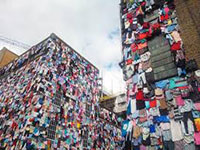 Even though in the Global Fashion Agenda, sustainability has been this season’s must have accessory, almost half of fashion industry is yet to take any action on it. The term has been reduced to self-serving market jargon used by brands to perk up sales. As Orsola de Castro, Co-Founder of Fashion Revolution notes, big brands usually associate th2e word ‘sustainability’ with something unobtainable. However, smaller labels and independent designers are effectively creating their garments in the most conscious way. The key to their success is their consideration for the environment, believes Clair Bergkamp, Head of Sustainability and Innovation at Stella McCartney. She advises brands to incorporate sustainability right from the inception of their operations.
Environmentalist advice focus on organic and recycled materials
Few leading designers are embracing sustainability by using recycled materials and deadstock fabrics. For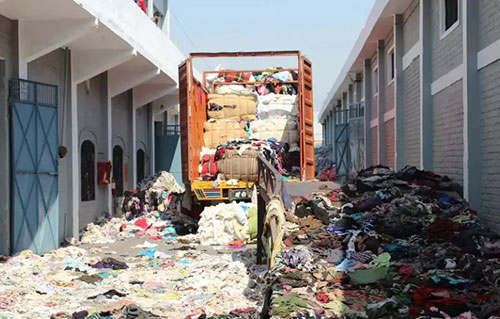 instance, womenswear designer Richard Malone works with nylon recycled from ocean plastics. Designer Bethany Williams sources her recycled denim from a waste depository in Kent and turns waste paper into woven textiles. Dutch designer Duran Lantink splices second-hand designer clothes into mash-up hybrids. Phoebe English sources all her organic recycled materials from Britain to reduce carbon footprint, while Stella McCartney recycled deadstock from previous collections into an entirely new one at Paris Fashion Week this season.
Bergkamp further advises these brands to focus on their fabrics, use organic cotton, recycled polyester and nylon, chose a viscose supplier that can guarantee they do not destroy ancient and endangered forests for their fibre, use hemp and linen and don’t use leather.
Independent suppliers, plant-based materials to deal with sustainability
One of the biggest issues the fashion industry faces in implementing sustainability is the arcane supply chain that is difficult to trace. To deal with this, new platforms such as the Open Apparel Registry are emerging to map out garment factories across the globe to encourage consumer transparency. Designers are also working with independent suppliers who are controlling their environmental impact. Richard Malone, for instance, uses plant-based dyes for his fabrics, many of which are recycled and made by a community of women who dye all the yarn, spin and hand-weave the fabric in Tamil Nadu.
According to Francois Sourchet, Head, Make Fashion Circular campaign, another method through which brands can reduce wastes is through repairing, customising, swapping, donating or resale. He believes if the clothing has been made from safe and renewable materials, and designed to be recycled, it can feed back into the system and be used to make new clothing.
New e-com channels and partnerships
The internet offers lots of information on the source of these clothes. De Castro believes consumers need to patiently go through this information, to read between the lines, and question everything, and then rely on their gut instincts to discern what feels relevant. Many companies are developing plant-based materials as an alternative to animal products. One such company Bolt Threads makes silk from protein, created using fermentation, and leather made from mycelium, the root structure of mushrooms.
For many, sustainability starts with limiting their production and building meaningful relationships with retailers and individual clients. This may also include working outside of the conventional fashion calendar, or simply partnering with recycled textile suppliers and designing smaller collections around those materials that are available. To achieve this, brands may have to ask their customers to wait longer for their clothes or make clothes only when required. They need to also employ the most appropriate business besides entering into new partnerships and collaborations. Only then, their goal of sustainability can be achieved.