FW
VF Corp Jeans names new jeans company as Kontoor Brands Inc
VF Corp. will call its independent, publicly traded jeans company Kontoor Brands Inc. Inspired by the idea of a perfect fit, the name is a variation of the word contour” that lets each brand maintain its own identity under one umbrella. The company announced the planned spinoff in August, as it aimed to focus on faster-growing trends such as athleisure and outdoor apparel. It still hasn’t revealed a full leadership team, stock symbol or strategic vision, which will come before the completion of the separation.
Choosing a broad if vague name that’s not immediately identifiable with a company’s products has been a recurring trend in the consumer space of late. Weight Watchers renamed itself WW, while Dunkin’ Donuts is becoming simply Dunkin’. Luxury fashion houses are taking a similar tack: Capri Holdings Ltd. -- formerly Michael Kors -- and Tapestry Inc. -- previously known as Coach -- have taken new names as they’ve added more brands.
Construction of Uzbek-Korean technopark commences
The construction of the Uzbek-Korean technopark, funded by the South Korean government, has commenced. This Technopark will be located in the Yakkasaray district of Tashkent city, where they will train students and young scientists, as well as conduct state and international research programs.
Uzbekistan accounts for over half of the trade turnover of the Republic of Korea with the states of the region. In the January-July 2018, the trade turnover between Uzbekistan and South Korea amounted to $762.4 million. Currently, there are more than 460 enterprises with participation of Korean capital in Uzbekistan (386 joint ventures and 75 enterprises with fully Korean capital). Representative offices of 75 South Korean companies are also accredited in the country.
These enterprises successfully operate in the oil and gas, petrochemical and chemical, machine-building, electrical and textile industries, information and communication technologies, transport, logistics and tourism.
Representative offices of 75 companies of Korea are accredited in Uzbekistan. The main areas of their activity are oil and gas, petrochemical and chemical, mining, engineering, electrical engineering, textile, information and communication technologies, transport and logistics, tourism, production of building materials, as well as processing of agricultural products.
India: 2nd edition of Denim Show to be held concurrently under Gartex 2019
The second edition of the Denim Show will be held as a concurrent event under Gartex 2019 at Pragati Maidan, New Delhi, from August 10-12, 2019. The exhibition that focuses on innovations in the denim industry will be organised by MEX Exhibitions in collaboration with Denim Manufacturers’ Association (DMA).
The show acts as a one-stop-destination for the suppliers, manufacturers, distributors, retailers, designers and other stakeholders in the denim and allied industries. It caters to the ultimate requirements of exhibitors, and helps amalgamate denim fraternity together under one roof. In its 2018 edition, the exhibition was attended by market leaders such as Arvind, Raymond UCO, Creora, Ginni, Jindal, Rossari, Mafatlal Industries, etc.
It comprises four segments including Denim Applications which highlights rapidly increasing applications of denim fabrics and textiles; Denim Talks which comprises a series of talks bringing forth innovation, education & sustainability; Denim Trends which defines future trends in the sector and Denim Walks which showcases latest fashion trends in denim through ramp walk
Sri Lankan JAAF launches new logo and website
The Sri Lankan Joint Apparel Association Forum (JAAF) at its 15th Annual General Meeting, launched a new website and logo. The logo contains the face of a lion, an animal symbolic of our culture. Highlighting India’s diversity, the lion’s mane sports several colors such as maroon, saffron, orange and green, representing the country’s rich mosaic of ethnic and religious identities.
The lion’s mane has 10 elements, representing the country’s position as a global hub for apparels on comprehensive fronts related to its business starting from education, conceptualisation, design, supply chain management, digitalisation and creativity, making, finishing and logistics embracing the entire value chain providing seamless solutions.
On this occasion, the industry aligned itself to be the forerunner in the national development spreading the message that the Sri Lankan brand image is based on its ethical sustainable and compliance footing.
Hermès, Gucci, Canada Goose emerge as top brands for resale
As per 2018 Holiday Resale Report by The RealReal, Hermès, Gucci, Van Cleef and Canada Goose are some of the top brands with a resale value. Hermès has bagged the top rank in women’s wear owning to its Birkin, Kelly and Constance bags, which have risen in resale value by seven percent year-over-year (YoY). Other stars included Goyard with a resale value of 80 percent, and select pieces from Moncler, which retail for up to 90 percent of their original price.
The men's category was topped by Canada Goose, scoring an 82 per cent resale value. As the hottest global brand, Off-White experienced a 12 per cent rise in resale price YoY, with the Off-White x Nike shoe is selling well over original retail value. Kenzo dropped 19 per cent, Chrome Hearts by 15 per cent and Dior Homme by 10 per cent.
Entering resale-friendly category of sneakers, Gucci Ace holds a strong 69 per cent of its resale value, followed closely behind by Louis Vuitton's logo-laden sneakers with a resale value of 67 per cent, and Prada at 62 per cent.
Focus on skill development in weaving sector, say experts
Skill development, technology adoption and global trade practices are imperative for the weaving sector to achieve its full potential, observed Sanjay Jayavarthanavelu, Chairman and Managing Director of Lakshmi Machine Works. He was delivering the keynote address at the first edition of Weaves, a textile fair, currently being held at Texvalley. A Sakthivel , Vice-chairman, Apparel Export Promotion Council, in his inaugural address also urged the government to create a level playing field to help the industry compete in the global market effectively before further setback.
M Duraisamy former Chairman of PDEXCIL (Powerloom Development and Export Promotion Council) pointed out the Council is keen to set up a CAD centre for the benefit of the weaving community. Weaves featured the first of its kind Fashion Show featuring the blend of rich tradition and modernity. The four-day expo will conclude on December 8. Organised by the Confederation of Indian Industry and Texvalley, the event is being conducted under the theme ‘Global Connect for Weaving’.
G-III Apparel Group Q3 net income rises to $94 million
A recent report from Coresight Research reveals, Q3 net income of G-III Apparel Group, which designs, sources and markets apparel and accessories under various owned and licensed brands, rose to $94 million from $81.6 million a year ago. The group raised its full fiscal year guidance as a result of its better-than-expected third quarter results. For the period, which concludes next month, G-III now expects net sales of approximately $3.08 billion and net income between $132 million and $137 million.
The group has the most substantial exposure to China of all the apparel companies analysed, with 65 per cent of its products sourced from China, down from 78 per cent in fiscal year 2016. The third quarter net sales of the group rose by 4.7 per cent to $1.07 billion from $1.02 billion in the year-ago period, missing Wall Street's expectations of $1.08 billion.
14th SIUF to showcase supply, distribution chain of intimate apparel industry
"Shenzhen Shengshi Jiuzhou Exhibition" owned by "Tarsus Group", China International Brand Underwear Fair, also known as SIUF, will offer the entire supply & distribution chain of intimate apparel industry in terms of fabrics, accessories, brands, production and solutions for intimates, swimwear, sportswear and lounge wear. The 14 edition of the fair will be held at the Shenzhen Convention and Exhibition Center IN China from April 19 to 21, 2019.
Featuring 825 exhibitors and 150,000 visitors from 49 countries in 2018, SIUF will be an important resource for intimate apparel professionals, distributors and retailers, suppliers, brand owners and designers of lingerie industry. Covering over 73,000 sq mt, the show is supported and endorsed by official bodies such as China Knitting Industrial Association, Guangdong Province Textiles Association, and Shenzhen Underwear Association.
The 2019 edition will offer a whole package of activities over three-days, comprising China's most authoritative brand and distributor awards the ‘Golden Dudou Awards’, lingerie and home wear design contests, trend forums, brand fashion shows and the ‘Supermodel Talent show.’
Convening over 650 brands, many with enlarged and upgraded booths, the fair will feature many product launches and trends. Participating exhibitors include: Invista, Lenzing, Muehlmeier, Eurojersey, Penn Textile Solution, Toyobo as suppliers and EmbryForm, Ordifen, Aimer, Nubra, Cosmolady, Oleno, Sunny, DE Ulife as brand owners.
4th Intex South Asia gets an overwhelming response with over 3,500 attendees
"The 4th edition of Intex South Asia, held from November 14 to 16, 2018, at the Sirimavo Bandaranaike Memorial Exhibition Centre (BMICH) in Colombo, Sri Lanka, showcased a wide range of innovative yarns, apparel and denim fabrics, clothing accessories and allied services. The show was jointly inaugurated by Taranjit Singh Sandhu, India’s High Commissioner to Sri Lanka as chief guest and Indira Malwatte, Chairperson & CEO, Sri Lanka Export Development Board (EDB) as guest of honour. Tan Yang Thai, High Commissioner of Malaysia in Sri Lanka and Sharad Amalean, Chairman, Joint Apparel Association Forum (JAAF) were the special guests at the event."
 The 4th edition of Intex South Asia, held from November 14 to 16, 2018, at the Sirimavo Bandaranaike Memorial Exhibition Centre (BMICH) in Colombo, Sri Lanka, showcased a wide range of innovative yarns, apparel and denim fabrics, clothing accessories and allied services. The show was jointly inaugurated by Taranjit Singh Sandhu, India’s High Commissioner to Sri Lanka as chief guest and Indira Malwatte, Chairperson & CEO, Sri Lanka Export Development Board (EDB) as guest of honour. Tan Yang Thai, High Commissioner of Malaysia in Sri Lanka and Sharad Amalean, Chairman, Joint Apparel Association Forum (JAAF) were the special guests at the event. The opening ceremony was attended by many diplomats, representatives of government bodies, heads of several trade bodies & chambers of commerce, industry leaders, delegates from several countries as well as electronic and print media of Sri Lanka and South Asia.
Sharad Amalean, while addressing in the inaugural session, said, “The reason for having Intex in Sri Lanka is, because it is a neutral ground in terms of the hub that is being created in textile industry in this region. So with advancement of digital platforms across the world, it’s important that the supply chain is being supportive in this region and this exhibition contributes for us to become faster, meaningful and relevant in the industry.
Strong line up of exhibitors spells success
The largest trade fair of its kind in the region, Intex South Asia welcomed over 200 leading and quality textile suppliers from India, Sri Lanka, Pakistan, Bangladesh, China, Taiwan, Hong Kong, Indonesia, Korea, Switzerland, Australia, etc. There were country pavilions from India with 45 companies and Taiwan with 12 companies organised by Federation of Indian Export Organisations (FIEO) and Taiwan Textile Federation (TTF) respectively.
This edition also saw the arrival of confirmed buyer delegations/groups from India, Taiwan, Nigeria and United Arab Emirates at the show. Overall, the show was attended by over 3,500 leading apparel exporters, sourcing offices, brands & retailers, indenting agents, e-tailers and others from over 18 countries and regions.
Focus on Textile 4.0 concept
A panel discussion on ‘Textile 4.0 – South Asia Dialogue’ highlighting the upcoming industry trends was organised alongside Fashion Fiesta at the event. The panel discussion was moderated by Rahul Mehta, President, CMAI and & Past President, International Apparel Federation and on the panel were Aroon Hirdaramani, Head of Future Leaders, Joint Apparel Association Forum of Sri Lanka& Director, Hiradamani Group; Ujwal Lahoti, Chairman, TEXPROCIL & Managing Director of Lahoti Overseas (India); Furqan Ahmed, Director, MN Textiles (Pakistan) and Md. Golam Saroar, Managing Director & CEO, Bengal Hurricane Group (Bangladesh) who presented their views on the challenges and future of the textiles & apparel industry of South Asia and how they see 4.0 concept could be implemented in their respective countries and businesses.
The Fashion Fiesta included a special dance performance by Sway Dance Group of Sri Lanka and series of fashion shows that unveiled the creativity and design in textiles presented by Taiwan Textile Federation, The Woolmark Company, Sri Lanka Textile & Apparel Institute and a special sequence to highlight and promote apparel brands made in Sri Lanka by the Sri Lanka Apparel Brands Association (SLABA).
Showcasing innovations and future trends
At the Interactive Business Forum held on the second day, Sarah Schlenger, Research & Development (R&D) Commercialisation Manager-USA, The Woolmark Company(TWC) presented the use of merino wool in today’s fashion garments such as active wear, athleisure, eveningwear and TWC’s focus on innovation related to product development from as well as fashion trends/forecast for 2019/2020. The second session was presented by Shafiq Ahmad, Country Manager-Pakistan, Better Cotton Initiative(BCI) who gave valuable insights on ‘Future Proofing for Business – The Sustainable Way’, the role and commitment of BCI towards sustainability and Global brands associated with sustainable cotton sourcing.
With Accord closing operations, Bangladesh workers could face a bleak future
"Working conditions for garment workers in Bangladesh are likely to turn bleak as the High Court of Bangladesh will soon give its judgment on the closure of Dhaka office of Accord on Fire and Building Safety and evict its inspectors. Established after the 2012 collapse of Rana Plaza, Accord is a legally-binding agreement among brands, retailers, and trade unions designed to build a safe Bangladeshi garment industry. The agreement, over the past five years, has been instrumental in forcing improvements in the factories that supply its signatory companies, which include H&M, Arcadia Group (owner of Topshop), and Inditex (owner of Zara). Though not perfect, Accord has been effective enough to be renewed this year for another five-year term."
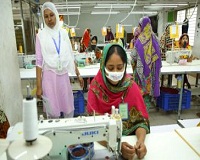 Working conditions for garment workers in Bangladesh are likely to turn bleak as the High Court of Bangladesh will soon give its judgment on the closure of Dhaka office of Accord on Fire and Building Safety and evict its inspectors. Established after the 2012 collapse of Rana Plaza, Accord is a legally-binding agreement among brands, retailers, and trade unions designed to build a safe Bangladeshi garment industry. The agreement, over the past five years, has been instrumental in forcing improvements in the factories that supply its signatory companies, which include H&M, Arcadia Group (owner of Topshop), and Inditex (owner of Zara). Though not perfect, Accord has been effective enough to be renewed this year for another five-year term.
Government inspection to fall short of Accord
Earlier this year, factory owners in Bangladesh advocated the government to takeover the compliance process as its initial term was set to expire. This resulted in a fierce government crackdown on garment worker activities which continued as government, workers, and factory owners renegotiated the country’s paltry minimum wage.
However, a government-directed inspection regime is likely to be far short of The Accord’s efforts. The Accord is a legally binding agreement which has the ability to force compliance at both ends of the supply chain. It can not only ensure that factories improve conditions, but that brands support these often-costly improvements and discontinue sourcing from factories that remain subpar. Clean Clothes Campaign is urging The Accord’s signatory companies to stipulate that upcoming orders are contingent on The Accord office remaining open, and its inspectors continuing their work.
Accord supporters ignore subcontracting
Some brands like Esprit also believe activism in key market countries could make the Bangladesh brand toxic to consumers in spite of the tremendous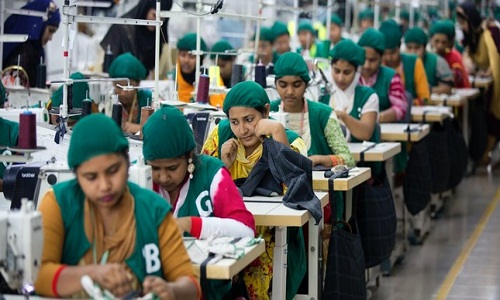 improvements it has achieved in recent years. Factory owners, however, believe that no brand which sources substantially from Bangladesh can afford to shift quantities overnight. These factory owners are aware that western brands, who reiterate their commitment to The Accord’s principals, often turn a blind-eye to subcontracting. These factory owners are aware of things happening around them yet turn a blind eye as the fast fashion business model relies on it.
An honest conversation needed
Though Center for Business and Human Rights wants The Accord office in Bangladesh to remain open, and for its inspectors to continue doing their work, the Accord is likely to fade away sooner or later. There, therefore needs to be an honest conversation about how clothes in Bangladesh are being made, and what it will cost the brands—and, by extension, consumers.