FW
Performance Days Munich focuses on sustainability
In its 10th year, Performance Days, the Munich trade fair for functional fabrics was held from November 28 to 9, 2018 at Messe München. The fair, featuring over 296 exhibitors, focused on sustainability and lifestyle. Exhibitors presented numerous innovations in the field of sustainability.
Primaloft introduced its new PrimaLoft Bio Insulation, the first synthetic insulation made entirely of recycled and biodegradable fibers. In a landfill, the fiber decomposes almost entirely after just over a year. Conventional polyester fibers take many decades to break down.
Polartec, one of the largest fleece producers in the world, launched Polartec Power Air, a fabric that releases less microplastic due to five times less fiber loss. Polartec Power Air is not, as usual, a high-pile, roughened knit construction with exposed fibers, but a completely new, double-sided knit construction that encloses loose, warming fibers in pockets.
Denim specialist Isko, which presented the B2B platform Arquas, also focused on sustainability in addition to the latest denim technology for performance and outdoor products. The brand has received a Life Cycle Assessment (LCA) for all of its more than 25,000 denim products.
This edition of Performance Days was particularly dedicated to the subject of water with numerous lectures on this topic offered on both days.
Coimbatore to host Texfair in August ’19
Texfair will be held in Coimbatore from August 9 to 12, 2019. This is a fair for textile machinery, spares and accessories. Manufacturers and suppliers of textile machinery and spares of ginning, spinning, weaving, processing, powerlooms, handlooms, knitting and garmenting will participate. Energy saving equipments, electrical and electronic items, sizing materials, dyes and chemicals and packaging materials will also be on display.
The fair provides a platform for stakeholders to zero in on their investments and expenses prudently, showcase their inventions and cost effective items and other products, enable technocrats and shop floor technicians to update their knowledge on the latest technology and create an awareness on cost cutting, encourage micro, small and medium entrepreneurs to showcase their products and get exposure to the market.
Hosting the event in August 2019 enables suppliers and users to plan their investments and renew their business. Texfair is organized by the Southern India Mills Association (SIMA), representing the organised textile industry in South India. SIMA has so far successfully conducted eleven such exhibitions since 2001. Response to the fair is getting better every fair. Coimbatore is the hub for the textile business in India and the fair would be an ideal platform to showcase and market the products.
Premium Textile Japan in May ’19 to attract domestic, overseas visitors
The spring edition of Premium Textile Japan will be held on May 21 to 22, 2019. This is a premium textile salon which provides authentic brands and products, a platform where top domestic and overseas buyers and suppliers converge. The fair has been widely acclaimed by buyers. Most visitors comprise apparel designers and managing directors who are decision-makers for fabric procurement, making the fair a real business-oriented negotiation salon. A productive and in-depth business related program coordinated by the organiser also adds to the appeal of this key event.
The fair attracts textile buyers of high-end brands, not only from the domestic markets, but also those from overseas, such as China. The total number of visitors recorded at Premium Textile Japan held in May 2018 was 5,987, an impressive 83 per cent were buyers, including numerous key fashion industry players. Moreover, over 150 overseas buyers from 19 countries and regions also visited the show, further enhancing its global recognition. The value of Japanese apparel imports fell 7.97 per cent in May 2018 as compared to April 2018. The value of knitted apparel imports and woven clothing imports too plummeted in May as compared to April. The fall was mainly due to the declining value of the yen.
EBA helps increase Cambodia’s exports to EU
The Everything-but-arms (EBA) agreement has helped increase Cambodia’s exports to EU, accounting to about 46 percent of its total exports, compared to 25 per cent of its exports to the US. The country benefited from zero tariffs, which made it more competitive and also from the EU’s reform of the procedures of the rules of origin which facilitated its industries. Before 2011, Cambodia imported fabrics from China or other countries and tailored them in the country. But these could not be exported to the EU under the strict rules of origin. However, after 2011 the EU rewrote its rules of origin, allowing fabrics from anywhere to enter the country to be used in the local factories exporting to the EU. The change in the rules of origin facilitated the strong growth of our exports to EU.
China rejects India’s plan for rupee trade to reduce deficit
China has not accepted India’s proposal to carry out bilateral trade in local currencies. India had suggested to China trade in local currency in order to boost its exports and tackle the widening trade deficit.
India’s exports to China stood at only $13.4 billion while imports were $76.4 billion in 2018, leaving a trade deficit of $63 billion. It was $51.11 billion in 2017. India has proposed trade in national currencies with some other countries, too, including Russia, Iran and Venezuela. New Delhi has a trade deficit with these three countries too.
Bilateral trade in domestic currencies will help India only in the case of those countries with which it has a trade balance. There should be no trade imbalance with the country with which India wants to do trade in the rupee. It will not help in bridging the deficit.
Indian industry and exporters have time and again raised the issue of increasing trade deficit with China and have sought greater market access for domestic goods in the Chinese market. Recently, China permitted exports of rice and sugar. But India wants to increase exports of several other items, including pharmaceuticals, engineering and services.
AWI partners brands in product development
Australian Wool Innovation (AWI) works with leading brands such as Adidas and Max Mara in new product developments. AWI partners premium brands and strategically invests in targeted campaigns – through both digital and traditional channels – to help create demand for Australian wool among consumers in key markets globally. It is determined to maintain the momentum in its international marketing efforts and in its investments in R&D. The aim is to unite the wool industry behind a common goal: to help woolgrowers be their best and get the best returns for their hard work. AWI collaborates with leading manufacturers and brands to promote the premium natural benefits of wool as a performance fiber.
The company is committed to greater engagement with Australian woolgrowers. The board is trying to have the right mix of skills and experience. A general manager of operations has been appointed– a new role that will allow the CEO to focus on more strategic activities. Meanwhile, wool prices have hit record highs in recent months. In 2018 growers were able to reap the benefits of an increase in the average EMI of 23 per cent from the previous year. The sports, outdoor and athleisure markets are helping drive up demand for Merino wool.
APL launches shoe collection featuring Australian Merino Wool
Athletic Propulsion Labs® (APL) has launched the APL TechLoom Breeze Merino Wool collection, its most sustainable and lightest running shoe to date. Each shoe in this collection features 80 per cent Australian Merino wool, innovatively knitted with APL’s patented, stretch-rebound TechLoom upper. This unique combination delivers greater elasticity, strengthens the shoe and allows it to naturally hug the foot for maximum support, especially during performance and sports lifestyle activities.
The APL TechLoom Breeze Merino Wool collection forms a part of APL’s Holiday 2018 Collection and is also the first technical-knit footwear to be certified by The Woolmark Company in the global market. More than two years in development, the certified wool rich blend engineered knit is designed to keep its form and shape, using filament-wrapped wool yarns to strengthen and add resistance to prevent abrasion and extend wear. The running shoe utilises the latest fully-fashioned knitting technology, meaning the shoe is knitted to its final shape, reducing the amount of wastage associated with regular cut-and-sew techniques. This innovative design also enhances wool's natural breathability, as the technology allows for seamless design features such as breathable panels.
AAFA hails trade war truce
AAFA is encouraged by the news of a 90-day cease fire in the US-China trade war – following the meeting between President Trump and President Xi on the sidelines of the G20 in Argentina recently.
In a statement American Apparel & Footwear Association President and CEO Rick Helfenbein said the resumption of talks between the US and China is encouraging for the industry.
AAFA is pleased that American consumers have been protected from additional tariffs on most of its products to date. This 90-day reprieve on increased and future tariffs will lead to the swift removal of the punitive tariffs already imposed by the administration. The association will continue to emphasise to the administration the need to stop taxing American consumers to the detriment of its retail economy.
AAFA cautions US against terminating NAFTA
Rick Helfenbein, President and CEO of the American Apparel & Footwear Association (AAFA) has cautioned the Trump administration against terminating the North American Free Trade Agreement prior to the ratification and implementation of the new US-Mexico-Canada Agreement, following reports that they will give a formal termination notice to Congress. As per Rick Helfenbein, president and CEO of the American Apparel & Footwear Association, terminating NAFTA before USMCA is ratified will definitely create economic havoc and uncertainty for American companies who conduct business in the region.
The association has told the US administration it is essential for the new agreement to be implemented seamlessly, so that its businesses can learn the new rules and have time to adjust our supply chains to take advantage of the deal. Adding additional pressure on Congress to sign or fail is not in the best interest of America.
Tariff increase on Chinese imports to escalate prices, hinder growth
"The apparel industry is waiting with bated breath for the much-anticipated meeting between President Trump and Chinese President Xi Jinping that will decide the future of US tariffs on Chinese exports. Trump is expected to slap tariffs on another $267 billion worth of Chinese goods, which also includes apparel and footwear. This would push up tariffs from 10 to 25 per cent in January 2019. China already faces $50 billion worth of tariffs."
 The apparel industry is waiting with bated breath for the much-anticipated meeting between President Trump and Chinese President Xi Jinping that will decide the future of US tariffs on Chinese exports. Trump is expected to slap tariffs on another $267 billion worth of Chinese goods, which also includes apparel and footwear. This would push up tariffs from 10 to 25 per cent in January 2019. China already faces $50 billion worth of tariffs.
Escalating tariffs to reverse economic progress
Currently, goods originating in China, including some apparel products and leather, nearly all raw materials used to make textiles, from cotton to cellulosic, polyester and even vegetable fibers, woven and nonwoven fabrics, certain textile machinery, hats and handbags, are subject to 10 per cent tariffs, and escalating the tariff threat could see some of those products facing a higher 25 percent tariffs.
For US companies importing manufacturing inputs or finished products, these additional significant costs will result in higher prices, fewer jobs, slower wage growth and reduced investment. The cost of the trade war can reverse this year’s economic progress.
Negative impact on brands
Julia K Hughes, President, United States Fashion Industry Association believes that more penalty tariffs will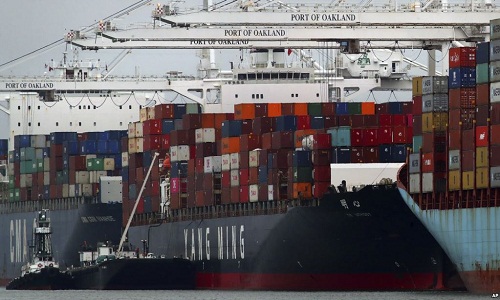 have a negative impact on fashion brands/retailers and customers as prices will rise across the board. The company believes there is a time lag before companies increase prices and it impacts customers. Increasing tariff on clothing and footwear would hurt both the economy and brands/retailers.
To deal with this, most companies have developed a contingency plan which includes shipping some products earlier than usual and shifting some production outside China. However, these actions will also have ripple effect on prices which is expected to rise in many countries and very little unused capacity at the most sophisticated production facilities.
According to Hughes, companies can adopt certain strategies in the short-term to minimise the price pressure. However, she warns if the duties increase to 25 per cent, there might be a substantial price increase by mid-2019.
Reshore jobs, bolster production
Auggie Tantillo, President and CEO, National Council of Textile Organizations (NCTO) supports the US president’s decision to address China’s unfair trade practices. However, he believes imposing tariffs on apparel and other textile end items would reshore jobs throughout the domestic supply chain. Further, it would bolster production throughout the western hemisphere where there is ample supply from multiple countries. Shifting sourcing away from China to suppliers in the USMCA/CAFTA region would also alleviate any impact to consumers, since producers in this hemisphere enjoy duty-free access to the United States.
Negative effects of non-China sourcing strategy
Rick Helfenbein, President and CEO, AAFA terms 25 per cent tariff as a non-starter. He believes American business operating on tight margins cannot absorb such an increase leading to a rise in prices for American consumers. He also feels an abrupt shift to a non-China sourcing strategy would have a catastrophic effect on its already fragile sourcing eco-system.