FW
Economic corridor enthuses Tirupur
Tirupur is looking to the Indo-Pacific economic corridor in the hope it would open up traditional apparel markets. This treaty is likely to have 12 countries including India, the US, Australia, Indonesia, Japan and New Zealand, on board. Under the treaty, each country is expected to provide a conducive climate for trade exchanges for different members and investment to develop infrastructure.
Recently, the US had announced investment worth $113 million in new infrastructure initiatives in the corridor. The corridor will provide a platform for grouping of selected nations and it will help others to develop their economies. If the partners are provided preferred status by other nations, it will be a win-win situation for both the sides.
Especially in the apparel market, India could utilise the advantage, if the US, which has a traditional apparel market, provides a lower import tariff and a softer approach. Apparel exporters in India could get a huge help from the corridor.
Though the economic corridor is mainly mooted to counter the advantages of China, it will not affect the neighboring country much, at least in the apparel market. Since Chinese firms have already made big investments in countries such as Bangladesh, Vietnam and Cambodia, which are top competitors of India in the apparel industry, the former may not feel the heat of the corridor.
Chinese units see their profits rise
From January to September, profits in China’s industrial enterprises above a designated size saw a year-on-year rise of 14.7 per cent. Textile industry profits were up 2.7 per cent year-on-year. Profit of the garment and accessories sector saw year-on-year growth of eight per cent.
From January to September, the main business income of China’s industrial enterprises above a designated size increased by 9.4 per cent compared with the same period of the previous year. Their main business cost saw a year-on-year rise of 9.1 per cent. Their profit margin was 6.44 per cent.
While China remains the world’s largest apparel exporter, its market shares measured by value fell from 38.6 per cent in 2015 to 33.7 per cent in 2017. Its market shares in the world’s top three largest apparel import markets, the United States, EU, and Japan, also indicate a clear downward trend in the past five years.
However, China is playing an increasingly important role as a textile supplier for apparel-exporting countries in Asia. For example, measured by value, 47 per cent of Bangladesh’s textile imports came from China in 2017, up from 39 per cent in 2005. Similar trends can be seen in Cambodia, Vietnam, Pakistan, Malaysia, Indonesia, Philippines and Sri Lanka over the same time frame.
Chinese firm plans green textile park in Philippines
China Zhejiang Guannan Group, based in Shaoxing in China’s eastern Zhejiang province, plans to set up a green textile park at the Cagayan Special Economic Zone and Freeport in Cagayan, Philippines. The park would be developed on 10,000 hectares of land in Sta. Ana and other neighboring towns. It will have its own power plant, water plant, sewage disposal plant, waste processing plants and other facilities and infrastructure.
The Chinese firm will also invest heavily in the development of townships and real estate following its major projects in Hong Kong, Shanghai and Shaoxing. The Philippines was once a major garment and textile exporter, with exports hitting $3bn in the country’s heyday. While these figures have dwindled in recent years, the country could be set to be a beneficiary of the ongoing trade war between China and the US, as the former shifts textile production to other locations to avoid US tariffs.
Lower labor costs and attractive inward investor sweeteners will also likely help attract more Chinese textile mills to the Philippines, especially if, as expected, trade tensions between China and the US do not thaw.
Accord to move to Amsterdam if forced to shut down Bangladesh operations
Accord-a group set up by European fashion brands to improve factory safety in Bangladesh plans to move its work to its Amsterdam office if it is forced to shut down in Bangladesh, as the legally-binding contract signed between its brand members extends up to 2021. The group has sought a stay on a court order that calls for its local operations to end this week.
The group’s five-year pact was set to expire in May 2018 but its brand signatories agreed last year to extend it to 2021 to complete remaining safety fixes, while the Bangladesh government set up a national regulatory body to take over its work. A High Court in Bangladesh in May, however, ordered the Accord to shut down by Nov. 30, following a petition filed by a local readymade garments supplier against the pact.
The group comprises more than 200 firms - including global clothing giants such as H&M (HMb.ST) and Zara-owner Inditex (ITX.MC) – who are signatories to the Accord on Fire and Building Safety in Bangladesh, formed after the Rana Plaza factory collapse in 2013, which killed more than 1,100 people.
AATCC debates performance and comfort
The AATCC finishing event held in the US listed a number of new devils in this eco-conscious world, including carbon nanotubes, microplastics/microfibers, several metals and other items considered impurities. Comfort, performance, flexibility and durability in garments – while being environmentally safe and sustainable – were of great interest to a number of representatives throughout the textile and apparel supply chain.
The two-day event was divided into four segments by topics: Comfort Solution, Regulations and Environmental Concerns, Protection and Surface and Garment Finishing, with subject-matter experts within each session.
Mike Abbott, Director of research for Hanesbrands, opened the symposium with a presentation on performance and comfort from a brand’s perspective. Abbott stressed the need to engage across the entire consumer journey, on all platforms. He explained the physical aspects of comfort and performance in apparel, before pointing out that because today’s consumer is empowered, it is imperative to know your customer. As such, Data Analytics, Artificial Intelligence (AI) and the Voice of the Consumer (VOC) are important tools to interact with and market to consumers.
Kevin Myette, Director of Global Brand Services at Bluesign Technologies, noted traceability is hard work for brands and added many chemical companies fail Bluesign’s system partnership process on their first try.
Micro-textile model promises a new dawn for the industry
"A T-shirt manufacturing factory proved to be the torchbearer for digital printing technology and DTG (direct to garment) printing that facilitated customised manufacturing. Today, multiple textile technologies offer a sustainable option to conventional production. They rationalise workflow besides offering the client “just in time” manufacturing. The traditional textile model is risky as both the manufacturer and retailer are unreasonably exposed during all cycles of this model, be it speed to market, value of stock, or consumer relevance."
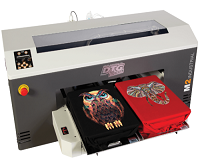 A T-shirt manufacturing factory proved to be the torchbearer for digital printing technology and DTG (direct to garment) printing that facilitated customised manufacturing. Today, multiple textile technologies offer a sustainable option to conventional production. They rationalise workflow besides offering the client “just in time” manufacturing. The traditional textile model is risky as both the manufacturer and retailer are unreasonably exposed during all cycles of this model, be it speed to market, value of stock, or consumer relevance. Also, the market uses extended financial credit lines which leads to reduced yields and offers a meager return on investment. As a result, profits grow slightly; stock grows in line with profits, until the time is reached when all of the profit is in the stock.
Providing a way forward
The Digital Textile Revolution including developments in CAD/CAM, augmented reality software, online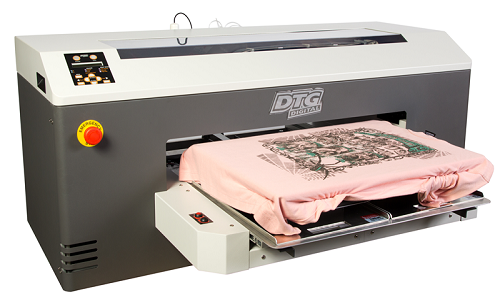 workflow, laser cutting, and digital textile printing are providing a way forward that is not only risk free but also consumes fewer resources.
The micro-factory model of “Sell, Produce, Deliver,” and not “Produce, Sell, Deliver” is driven by an online sales presence, alongside AR and AI software. The client selects buys and pays for their product before the item is produced. The model is capable of producing and delivering in 24 hours through n the speed of image processing, computerised workflow, digital printing and cutting and with computerised sewing (as an option) then dispatch,
This business model was first used by direct to garment (DTG) printers, who would deliver a sale within 24 hours of receiving the payment. The producer was able to cater to its consumers demands by creating and approving artwork, sending it to print, then packing and dispatching the blank t-shirts within the timeframe expected by the customer. The model has grown to encompass and attract many other sectors, with athleisure, swimwear and fashion taking up the opportunity to rationalise their production systems.
The online e-commerce tool in this model uses all the visual space of the selling website to make an extended offer in terms of product, color, size and design. When online orders are received, they immediately go into a computerised workflow, where the artwork is completed, the customer contacted and, upon approval, the production is initiated, all within a matter of minutes.
Adaptability with efficiency and profitability
The micro-factory produces textiles by using digital textile printing. The machinery is a fraction of the size of traditional machinery and also smaller in dimension. It consumes lesser heat, light, water and power than the traditional textile manufacturing model.
The micro-factory model is infinitely adaptive. A huge online range can be serviced efficiently and profitably, without enormous warehouses, without the risk of clearances, and without the uneconomic use of scarce cash reserves. It’s no wonder then, that the model is hailed as a new dawn for textiles, with its efficiency and profitability bringing manufacturing back to a more local base and offering jobs for workers in the country of origin.
Dutch brand Mud Jeans gets Nordic Swan ecolabel
Dutch brand Mud Jeans’ entire denim collection, or 41 styles, has received the Nordic Swan ecolabel certification. The ecolabel evaluates a product’s total lifecycle from raw material to recycling. The certification works to reduce the environmental impact from production and consumption of goods and make it easier for consumers to make eco-conscious purchasing decisions through labeling. The ecolabel is the holy grail of Scandinavian clothing certifications.
The Nordic Swan ecolabel certification is the official ecolabel of Nordic countries. It has a transparent and flexible supply chain and structured way of using materials and is known for its leasing program that allows consumers to keep, switch or recycle their jeans after one year.
The brand works with one denim mill and one garment supplier. All of its jeans contain post-consumer recycled denim and organic cotton and are finished with sustainable laser and ozone technologies. The internal audit for the certification took more than a year to complete. Through the process, Mud Jeans had to tweak some of its materials like adopt 100 per cent recyclable buttons. Mud Jeans has made mighty strides in sustainability, from not using any plastic polybags to eliminating the use of potassium permanganate to using waste as a resource.
India: Strong rupee hits cotton exports in Gujarat
Cotton prices in Gujarat have fallen. Among the reasons for the fall are: lackluster demand and exporters’ losing competitiveness due to appreciating rupee. A strong dollar allows Indian exporters to offer cotton at competitive prices in the international market as their realisations in rupee terms remain high even after some discounts. Overall, demand for the natural fiber has weakened as there are fewer buyers. Even the yarn market is bad and demand in the international market is also not encouraging.
Amid low demand, arrival of cotton in local markets, has slowed. Around 40,000 bales are arriving daily, as against 70,000 to 75,000 bales during the same time last year. Gujarat is expecting a 16 per cent decline in cotton output in 2018-19 despite an increase in the area under cotton cultivation.
There has been crop damage in major producing states such as Maharashtra and Gujarat. Almost half the country's cotton comes from these two states. Deficient and erratic Southwest monsoon this season followed by a long dry spell this winter season has impacted the standing crop. While the first cycle of cotton picking is over, the second and third cycles are likely to get impacted badly due to spoilt flower buds.
Spain refuses to sign China’s Silk Road plan
Spain has rejected China's ambitious "One Belt, One Road" initiative that seeks to better link Asia and Europe. The multi-billion-dollar initiative, unveiled by Xi in 2013, aims to link the continents through a network of ports, railways, roads and industrial parks. Beijing plans to develop the network through 65 countries representing an estimated 60 percent of the world's population and a third of its economic output. So far, around 70 countries have signed an MoU pledging their interest in the project. In Europe, countries such as Poland and Greece have signed but the project has created considerable anxiety that it masks an attempted Beijing influence grab.
SEAMS launches first ever Sewn Products Reshoring Award
SEAMS has launched its first ever Sewn Products Reshoring Award. Eligibility for this award includes production reshoring from offshore back to the United States or represent new production that has taken market share from imports between January 1, 2014, and January 31, 2019. The awards will be given in three industry categories including cut-and-sew manufacturers; brands/OEMS/vertical retailers; and textile providers.
Reshoring is the practice of transferring offshore business operations or sourcing back to the United States, and includes new or significantly increased production in the United States of product previously imported. The Made-in-America movement is focused on increasing production in the United States to strengthen the economy and bring jobs back. The SEAMS organisation drives this trend with a membership of the leading US brands, manufacturers and retailers in the sewn products industry.