FW
Denim jeans wave continues unabated in the US
Although denim jeans are mostly known as a fashion garment, they are still worn as protective garments by some individuals, such as cattle ranch workers and motorcycle riders, due to their high durability as compared to other common fabrics. The global jeans market is growing at a CAGR of 0.8 per cent from 2018.
Denim jeans are a cornerstone of the American wardrobe and an important cotton product accounting for almost one-fifth of all cotton clothing at retail. They are purchased for durability, longevity, and versatility because consumers find greater value in a product they know will last longer and fit better; therefore price is not the main factor in the denim jeans purchase decision, unlike other clothing. This positioning ensures that denim jeans will continue to have a place on store shelves and in consumers’ closets.
Denim is on the upswing in the US. Retailers are starting to rebuild their denim assortments. Brands that are consumers’ favorite are Levi’s, Lee, Wrangler, Gap, Old Navy and so on.
Europeans want supply chain transparency from apparel brands
European consumers want more transparency from apparel brands and retailers. They want fashion brands to publish the factories used to manufacture their clothes and they want fashion brands to say where the materials used in their products come from.
As per a study by Fashion Revolution, supply chain transparency and sustainability impact consumers’ purchasing decisions when shopping for clothing, accessories and shoes. When buying clothes, more than one in three consumers consider social and environmental impacts. For more people buying clothes made by workers paid a fair, living wage is important than any other topic including environmental protection, safe working conditions, animal welfare, local production and use of recycled materials.
Most people think it is important for fashion brands to reduce their long-term impacts on the world by addressing global poverty, climate change, environmental protection and gender inequality. People have an urgent, emotional desire to know more about how their clothes are made, and that they haven’t harmed the environment, the people who made them nor were tested on animals. And they want governments to hold brands and retailers to account to ensure this happens.
Fashion Revolution surveyed some 5000 European consumers aged 16 to 75 in the five largest European markets, including Germany, United Kingdom, France, Italy and Spain.
Global digital textile printing machine market to reach $1,248 m by 2024
A recent report by Allied Market Research reveals, the global digital textile printing machine market is expected to reach $1,248 million by 2024, growing at a CAGR of 10.0 per cent from 2018 to 2024.Surge in consciousness toward fashion and trends among consumers and growing adoption of sustainable and eco-friendly printing methods will drive market growth.
The direct-to-garment (DTG) segment is expected to grow at the fastest CAGR of 10.3 per cent from 2018 to 2024 due to high efficiency of DTG printers for short-run orders and their extensive use in the production of customised garments such as sportswear, pillow covers, tees, bottom wear, tops, and others.
However, the direct-to-fabric (DTF) segment is expected to remain dominant through the forecast period. This is because of the ability of DTF printers to print on a variety of materials such as cotton, rayon, silks, polyester blends, and others. Enhanced speed, higher print quality, and superior color gamut provided by DTF printers offer lucrative prospects for growth.
Europe contributed about 37 per cent of the total market share in 2017, while Asia-Pacific is expected to grab the largest market share by 2024, registering the fastest CAGR of 12.8 per cent from 2017 to 2024.
Cotton Incorporated focuses on denim recycling
Keeping denim out of landfills is a big priority for Cotton Incorporated. The company’s Blue Jeans Go Green program founded in 2006 allows people to recycle their old denim clothing of any brand in exchange for savings on new pairs of jeans. The program has collected more than two million pieces of denim. Those who’d like to recycle their denim jeans, skirts and similar items are able to drop them off at select clothing retailers, which offer a discount on a new pair of jeans.
The collected denim will be returned to its natural cotton fiber state and upcycled into Ultra Touch Denim Insulation for housing organizations across the US, helping to divert denim from landfills where millions of pounds of textiles are discarded annually.
To date, the program has kept over 700 tons of textile waste out of landfills. The Ultra Touch Denim Insulation is made of 80 per cent post-consumer recycled denim. It’s durable, environmentally friendly, has great sound absorption and is also mildew resistant. It’s a high-quality housing insulation product.
The average American throws away approximately 70 pounds of clothing and other textiles each year. Textile waste, including denim, which is made from biodegradable cotton, takes up nearly five per cent of all landfill space.
Bangladesh: Accord windup leaves global brands jittery
Fashion firms fear they will have to stop sourcing from Bangladesh if Accord ceases operations. One of these is Esprit, which produces about a third of its garments in Bangladesh. They feel the closure of Accord’s office will undermine the reputation of the textile industry.
Accord has been asked to cease operations on November 30, 2018. Accord has inspected more than 2000 factories in Bangladesh and helped draw up plans to fix 1,50,000 structural and fire hazards. Some 90 per cent of those issues have since been addressed.
More than 200 firms - including the world’s top fashion retailers like Inditex and H&M - signed the legally-binding, five-year Accord after at least 1,100 people were killed when the Rana Plaza complex collapsed. Low wages have helped Bangladesh build the world’s second-largest garment industry after China, with 4,000 factories employing about four million workers. The sector exports more than 30 billion dollars worth of clothes a year, mainly to the United States and Europe.
Brands fear the premature shut down of Accord, leaving workers in unsafe circumstances, would jeopardize brands’ ability to source from a safe industry and that activism in key market countries could make the Bangladesh brand toxic to consumers in spite of the tremendous improvements achieved in recent years.
Mexico emerges a strong market for UK, European brands
"Studies by research firm Global Data shows, the overall retail expenditure in Mexico is likely to grow 29 per cent to reach £285 bn by 2022. The country’s expenditure on clothing and footwear is forecast to grow by 45 per cent to £27bn – driven by a 167 per cent rise in online sales. The nation is currently flooded by British brands like Ted Baker, Karen Millen and AllSaints that are expanding through license and franchise partnerships."
 Studies by research firm Global Data shows, the overall retail expenditure in Mexico is likely to grow 29 per cent to reach £285 bn by 2022. The country’s expenditure on clothing and footwear is forecast to grow by 45 per cent to £27bn – driven by a 167 per cent rise in online sales. The nation is currently flooded by British brands like Ted Baker, Karen Millen and AllSaints that are expanding through license and franchise partnerships.
Factors like a large and growing population, increasing personal wealth, urbanisation, growing economy and a greater stability along with an increasing demand for retail make Mexico an appealing destination for UK and European brands. A striking example of this is premium womenswear brand BCBG which has 36 partner-operated stores and concessions in Mexico
Cultural similarities with the US also give Mexico an appeal over other destinations. The nation, being heavily influenced by the US culture and language, it is easier for global brands to trade in Mexico rather than Asia-Pacific countries. Spanish womenswear brand Desigual, entered the market in 2015. It currently has 13 franchise stores operated with upscale Mexican department store Palacio del Hierro, and more than 100 multi-brand points of sale.
Challenges in the market
However, the Mexican market has its own set of challenges. It is highly competitive and proximity to the US mega-brands and big retailers adds to its difficulties. The massive marketing budgets of brands like Tommy Hilfiger and Guess spill over into the Mexican market making it more difficult for a British brand to enter the market, unless it has some serious marketing support to create a buzz.
Mexico is a logical next step in expansion for British brands having a strong US presence. International fashion house specialising in women's fashion Karen Millen leveraged its experiences in the US market to target Mexican shoppers. The brand now operates in the market via a franchise partnership with an undisclosed partner.
Good environment triggers online sales
According to the Pitney Bowes Global Ecommerce Study 2018, nearly 90 per cent of consumers in Mexico shop online with 22 per cent shopping online at least once a week. There is a growing interest in well-known online British brands like Heritage and luxury brands that are otherwise difficult to get hold of in the domestic market. The environment for online sales is good with high urban density. It is the obvious route to understand demand without the risk of investing in property and locations.
Mexico’s logistic network is not fully equipped despite huge investments in it. Payment methods in the country differ from other markets. The use of credit cards is not very common with only 48 per cent of consumers using an ‘e-wallet.’
Finding a perfect trade partner
Apart from ecommerce, franchise and licensing can be the key to succeed in the Mexican market. Marquee Brands, the US owner of BCBG and Ben Sherman, operates with partners in Mexico, although the precise nature of the partnership structure is not known. This partner experience proves invaluable in tariffs, import processes, shipping mall rental agreements and department store logistics. Though Mexico has its challenges, a burgeoning appetite for international brands, growing consumer base and US connections should place the market firmly in the sights of UK and European brands seeking to expand.
Rise in Indian VSF imports
Indian VSF imports are almost 1.5 times compared to last year. If production remains stable, VSF consumption may increase by about 80,000 tons compared to the previous year.
According to the current market situation, increments are almost entirely used for domestic spinning. Combined with the production and sales ratio structure of Indian rayon yarn, the proportion of pure rayon single yarn and other yarns is about 1 :1. So the output of pure cotton single yarn has increased by 40,000 tons. Indian pure cotton single yarns imports are almost four times the previous year’s. Combined with production growth, Indian cotton yarn consumption last year increased by about 60,000 tons, and may move up further in 2019. Blended yarn imports also increased but amid small volumes the improvement was not large. Indian domestic blended yarn production was over 80,000 tons. The increment is insignificant compared with domestic rayon yarn volume, but in India, VSF increase was about 15 per cent of local production capacity.
As the Chinese cotton market continues to develop, the cotton market in South Asia and Southeast Asia such as India and Indonesia is also catching up rapidly. Production and consumption capabilities of spinning and fiber have improved in differing degrees.
Playing a vital role in Africa’s flat knitting sector
Africa has always played a significant role for Stoll, a leading manufacturer of flat knitting machines based in Reutlingen, with the oldest agency contract, in South Africa, dating back to more than 35 years. Especially in South Africa and Kenya, Stoll machines, built in the 1950s and 60s, are still running. The company is now sharing its success story and the future outlook on the growth opportunities in the region.
This is the last part of the story, exploring the company’s success in Ethiopia, Uganda, Ghana and Zimbabwe.
Ethiopia
Garment and leather shoe manufacturing, along with cultivation of agricultural products, are the main industries in Ethiopia, mainly driven by foreign investment. Local companies are not yet in the position to play a bigger role in this game. Due to the lack of foreign currencies, Ethiopian companies are outplaced when it comes to economic growth and wealth as they are simply not able to invest.

“Even though the textiles manufacturing sector has been named a number one priority for the country, there are still many obstacles to overcome. Qualified and well-trained people are not yet available to the extent as required. Foreign investors have to make use of expensive expats for quite a long period to get their business running and achieve the economic targets - this is where Stoll comes into the picture,” the company reports.
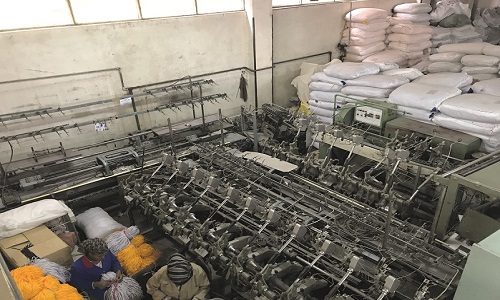
Stoll has been the first manufacturer of electronic flat knitting machines to supply two state-of-the-art CMS machines, along with two design software M1plus to the Textile Institute of Bahir Dar University. Today, Bahir Dar University is giving education to roughly 3,000 students. It is planned to double the number of students within the next five years. Bahir Dar is currently constructing a Mega Textile City within the University campus. The aim is to educate and produce simultaneously. Bahir Dar wants to become the biggest University in Africa for applied textile sciences, as well as one of the biggest textiles producers. Buildings are nearly finished and waiting to be equipped.
“Stoll will have a vital part in the flat knitting sector,” the manufacturer says. “This way, we can assist in further education/training as well as in production of flat knitted items. The Ethiopian government is attracting foreign investors with an exemption of income/profit tax, duty free import/export possibilities and quota free export to the US and Europe (for textiles). In addition, Ethiopia is selling energy at the lowest rate in the area and is building huge industrial estates country wide.
“The system of incentives will definitely attract all kinds of foreign manufacturing companies, at least for the period of the incentives, which is between 7-10 years respectively. The government is aware that these companies will move, once the incentives are not available anymore, but hopes, that until then, the local industries have grown in such a way that substitutes the foreign companies.”
“But, to achieve that, money has to be made available. There is still a long way to go, but this is possible to achieve with the new Prime Minister. Stoll is represented locally and is consistently monitoring the situation.”
Uganda
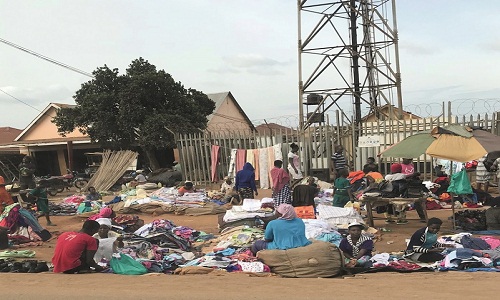
“Since we are active in Kenya, we also know that flat knitting is done in Uganda. The yarn trade between Kenya and Uganda made us discover potential customers. Like in all East-African countries, school uniforms are a must for children and students. As such, flat knitted sweaters and cardigans are part of the equipment. But, so far, everything is knitted on hand flat or semi-automatic machines,” the company says.
“Knitters were more than impressed when we showed them how to knit fronts, backs and sleeves completely shaped. No waste means saving around 30% of yarn (in comparison with the semiautomatic machines). In addition, the productivity and reliability of a computerised flat knitting machine speaks for itself.”
“Customers calculated quickly how much money they could save per year and, conclusively, the investment in computerised machines became cost effective. This is not limited to school students but also churches, hospitals, military and police sectors, and all government related industries that are in need of knitted sweaters. The potential is huge and has to be developed step-by-step.”
Ghana
Since 2018, Stoll has the first two CMS 530 HP machines in Ghana. A Catholic Diocese was able to realise this project with the support of the German company. The diocese today is doing garment manufacturing as well as knitting sweaters. “Getting the local technicians trained was a big challenge as they had no knowledge about knitting but, within a few weeks, they were ready to program and knit,” the manufacturer reports.
Zimbabwe
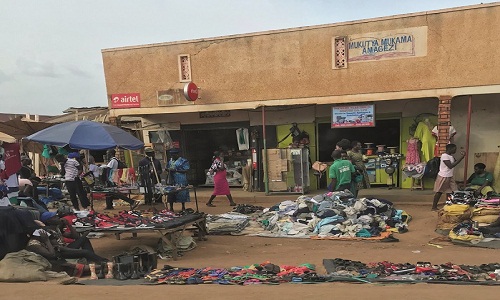
“Economically speaking, the South African neighbour is far behind, but hard-working people want to bring this country up,” the company says. “Unfortunately, there is still a big lack of foreign currency. Nevertheless, we have customers in Zimbabwe equipped with the latest CMS technology. And these customers are moving on steadily, but it always takes time to get the money released.”
“But they are confident that, with the new government, things will become easier in the future. Stoll is handled in Zimbabwe by our South African agent. A combination that has proved to be very successful.”
A digital and sustainable future for warp knitting
Karl Mayer, the leading German warp knitting machinery manufacturer, welcomed 760 visitors at last month’s five-day-long ITMA Asia + CITME trade fair, with the company’s stand being particularly busy during the first three days of the fair. Roughly 300 participants also visited the in-house show at Karl Mayer (China), which was held at the same time.
“ITMA Asia + CITME 2018 was a successful show, with many visitors from China and also from other countries in and around Asia. Our stand was THE meeting-point for the sector, with its modern design, innovative machines and solutions designed to cater for current trends. We have shown that we are also pioneers in the future issues of sustainability and digitisation, and we are opening up new opportunities for our clients,” said Arno Gärtner, Karl Mayer’s CEO.

The highlight of Karl Mayer’s presentation was the company’s demonstration of its digitisation strategy: the launch of the company’s own digital brand, Km.On, and the presentation of the associated digital solutions and the Karl Mayer Digital Factory, the start-up behind Km.On. “With the much-viewed brand launch and our first digital solutions, we were clearly showing that we are an expert partner for the digitalisation. Both our customers, as well as other textile machinery manufacturers, welcomed this initiative, which successfully positioned us as a real innovator,” said Arno Gärtner.
Integrated sustainability
Another focal point of Karl Mayer’s presentation were systems concentrating on greater sustainability during production, under the heading of Cleaner.Productions, and these were also a great success, according to Arno Gärtner. “We have shown that we are a global market leader in the field of sustainability as well. We have further developed our warp knitting technology in terms of environmental protection and presented it as a beneficial ecological alternative to other technologies,” he said.
The possibilities of replacing weaving with warp knitting quickly became a magnet for the public. Both weaving and warp knitting companies were also interested in the Terry.Eco for the environmentally friendly production of terry goods.
High output, flexible and reliable
The highlights for the warp knitting sector were tricot machines with three guide bars. An HKS 3-M, 280" and a TM 3 were on show. The extra-wide HKS 3-M was producing a velour fabric in a gauge of E 32. Referring to the TM 3 the guests were particularly interested in the opportunities for market expansion offered by the TM machine. It produces warp-knitted fabrics, which can be used to replace the fabrics woven on water-jet looms, thus offering advantages in terms of costs and sustainability.

Specific machines at the well-attended in-house show at Karl Mayer (China) in Changzhou were the TM 4 TS-EL terry warp knitting machine and the new five-bar tricot machine, COP 5 M-EL, 180". An RD 7/2-6 EN, 138" from the RD machine range was premiered at the in-house show. This new machine was presented as the first prototype. With 6 mm reduced flexibility of the trick plate distance, compared to the established RD 7/2-12 EN machine, it is said to deliver a 30% increase in speed.
Karl Mayer was also showing two lace machines at the in-house show. The OJ 83/1 B was producing a fine lace band during the show, and the new Leisuree.Fashion, type LM 41, was also presented as an attractive machine for producing functional, multibar lace in a gauge of E 28.
Warp preparation
Karl Mayer’s Warp Preparation Business Unit was demonstrating the new Isodirect direct beaming machine and the VSB Size Box. The technology of the Isodirect makes it an efficient direct beamer for the mid-range segment. Two features in particular have set it apart from the rest of the market: the smart reed for automatically adjusting the reed to suit the required yarn number and beam width, and a well-thought-out system to optimise the interfaces between the direct and the Prosize sizing machine.
The key element of the Prosize is the VSB Size Box, whose application system is designed to help reduce costs and the environmental impact. Up to 10% of the size alone can be saved, the company reports.

The demonstration of warp preparation was complemented by innovations for the denim sector and sectional warping, which were shown at Karl Mayer (China).
Solutions to build on
Karl Mayer’s Technical Textiles Business Unit was exhibiting as an expert, flexible partner for a wide range of applications. At the focal point of its demonstration of applications were textiles for the construction industry, such as concrete reinforcements, plaster carriers and roofing materials. This issue is currently a hot topic. The possibility of using textiles in the building sector is opening up new global markets and is arousing the interest of every textile producer in Asia.
“Traditional warp knitting companies in particular see the opportunities of opening up new business areas. Weaving companies with experience of technical textiles are surprised at the high productivity of warp knitting. Depending on the application, the cost:benefit ratio of warp knitting to weaving may be 1:17,” said Hagen Lotzmann, the Sales Manager of the Technical Textiles Business Unit.
Ricoh set to acquire ColorGATE Digital Output Solution GmbH
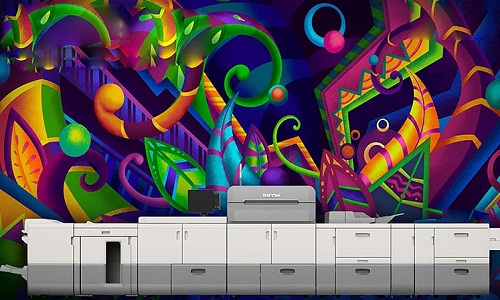
Ricoh Company based in Tokyo has recently announced to acquire ColorGATE Digital Output Solution GmbH, a leading software provider in the printing industry with specific competence in color management. This acquisition will strengthen Ricoh’s growing industrial printing business. The transfer of shares is scheduled to happen on November 30.
ColorGATE founded in 1997 is based out in Germany. It has been supporting the printing industry for about 20 years by providing software for the wide format and industrial printing sectors.The company has a huge customer base in Europe supplying industrial printing software with unique color management technology in order to support printing along with decorating a wide variety of materials that are used for packaging, floor and wall coverings as well as textiles and signages. Moreover it is one of the leading providers of performance optimized color management and workflow software so as to standardize and automate growing digital print market including the decor and textiles.
Thomas Kirschner, Co-founder, ColorGATE said ,“We are delighted to have been selected by Ricoh to contribute to this strong future growth strategy whilst we continue to serve our established customer base, OEM partners and reseller channel.” Thomas will continue to serve as the CEO.
Ricoh announced about its growth strategy plan, “ RICOH Ignite” in February this year and intend to reinforce its value offering by expanding its printing technology portfolio. The investment in ColorGATE is the latest part of the plan.
Moreover, in order to enhance its industrial printing business, the company has recently established a “Global IP Technology Center” as well as “ Global IP Marketing Center” located in Europe which is increasingly the center of incubation printing markets. This allows access to cutting-edge technology and also enables increased responsiveness to the market needs. The main purpose of the centers is to drive marketing, strategic planning and development of business and products with Ricohls alliance partners present all over the world.
Peter Williams, Corporate Vice President and General Manager of Commercial and Industrial Printing Business Group, Ricoh, mentioned, “By combining ColorGATE’s proprietary software technology with our own industrial printers, Ricoh will provide solutions covering the whole printing workflow from Pre-Press to Post-Press. This acquisition will enable ColorGATE to expand its industrial printing business and global presence as together we become better able to support our customers to accelerate their transition from analogue to digital based production.”
Ricoh is empowering digital workplaces using innovative technologies and services enabling individuals to work smarter. It has been there for more than 80 years and is a leading provider of document management solutions, IT services, commercial and industrial printing, digital cameras, and industrial systems.