FW
Fall in world cotton production likely this year
Global production of cotton is expected to decrease in 2018-19. Although Brazil and West Africa are expected to see an uptick in planted area, they are unlikely to be significant enough to offset losses in Australia, China, India and the United States.
The decline in global ending stocks continues as well, down 22 per cent from 2014-15. The trend is expected to continue next year, with the projected six per cent decrease further eroding stocks.
Due to uncertainties in the world economy and trading market, the global consumption forecast for 2018-19 has been revised downward to 27.5 million tons. Demand for Indian cotton is robust from China as a trade war is prompting the world's top consumer to avoid imports from the United States.
Indian cotton prices are ruling 10 per cent lower than international prices. The minimum support price is up 26 to 28 per cent, notwithstanding favorable monsoon conditions.
Cost makes brands dither on using organic cotton
After years of BCI cotton, organic cotton, laser technologies and more, it still costs brands to make and sell environmentally-friendly jeans. The reason some good innovations are still relatively expensive is critical mass hasn’t yet been reached. Brands show interest in sustainable alternatives, but cost is always a concern.
Companies are focused on the price of the fiber instead of looking at the total garment price. This micromanaging of pricing at each step makes it very hard. The only way to get around the issue of price is for all of the links in the supply chain to come together and really try to build the right price that’s fair to start accelerating change.
Educating the consumer about the innovation, and making it available at a price they’re already comfortable with paying, may make it easier to sell sustainable denim at a higher price down the road. In the future, if a brand needs to increase the price, consumers will understand why.
Rather than fixate on cost, the industry needs to shift its message to focus on value. Price is associated with value, and if the right value is provided, consumers will pay the price. So consumers need to be given what they want and at a good value.
Mexico, Turkey emerge new manufacturing destinations
"As per a new McKinsey study, western brands are finding it easier to produce in low-cost countries due to the rising costs in China. For brands selling in the US, Mexico has emerged as the most suitable option while for labels selling in Europe, Turkey is a prime manufacturing destination. According to McKinsey, labor costs in China in 2005, which were about one-tenth of the US, are now about one-third. This rise has resulted in labor in some “nearshore” countries being cheaper—than in China. For instance, making a pair of jeans in Mexico and importing it into the US costs about 12 per cent lesser. For a company looking to import its jeans into Germany, Turkey is 3 per cent cheaper than China."
 As per a new McKinsey study, western brands are finding it easier to produce in low-cost countries due to the rising costs in China. For brands selling in the US, Mexico has emerged as the most suitable option while for labels selling in Europe, Turkey is a prime manufacturing destination.
Benefits of nearshoring
According to McKinsey, labor costs in China in 2005, which were about one-tenth of the US, are now about one-third. This rise has resulted in labor in some “nearshore” countries being cheaper—than in China. For instance, making a pair of jeans in Mexico and importing it into the US costs about 12 per cent lesser. For a company looking to import its jeans into Germany, Turkey is 3 per cent cheaper than China.
Although producing the same pair of jeans cost 20 per cent less in Bangladesh; Turkey and Mexico are preferred due to their shorter delivery times from those countries. The shorter lead times yield a number of benefits, creating an added economic bonus.
New technologies to speed up deliveries
Fashion companies are embracing new technologies to speed up deliveries. McKinsey assumed a hypothetical scenario where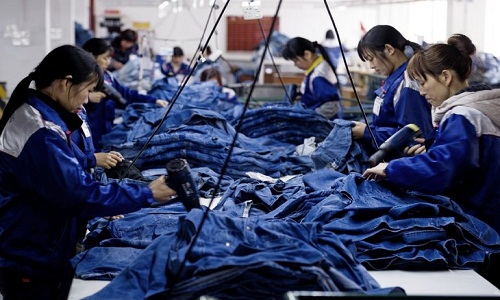 all major technologies currently in development were implemented, and worked with a university in Aachen, Germany, and the Digital Capability Center Aachen to calculate the cost savings in time and labor for producing a pair of jeans.
Based on their calculations, to produce the jeans in China with automation and import them into the US, the final cost ends up being around $11.40. But to produce them in Mexico with automation and import them into the US, the cost would be about $10, plus the assorted benefits of the shorter lead time, too.
Slow pace of growth
Experts agree these changes are happening but are likely to take a long time. China has built up a manufacturing infrastructure and capacity that other countries just can’t match. Some brands are already moving a share of production to nearby countries, but a large-scale shift might not be possible until those countries are able to build up factories to handle the workload.
The vast majority of this work currently happens in Asia, particularly in China, especially in the case of any specialised fabrics. Companies may assemble finished garments in Mexico or Turkey, but they buy and import all their materials from much further overseas. With shipping costs and duties rising, many Western brands are likely to keep their production in Asia.
A shift from China
Clothing and footwear brands are being pushed to look outside China and nearer to home for manufacturing. In a highly competitive market that’s splitting ever more into winners and losers, a fast, flexible supply chain is increasingly an advantage. It allows brands to respond better to the needs and wants of today’s demanding, internet-enabled shoppers, and that’s why brands including Nike, Adidas, Levi’s are changing the way they make their products—and investing in things like automation and moving production nearshore.
Ultimately, it’s not so much a question of whether garment production will move away from China and closer to Western markets, rather it will be how much of the supply chain will be rerouted, and when.
US-China trade war to reduce ‘Made-in-China’ labels
"It all began a year ago with the US administration, under the leadership of President Donald Trump, imposing a 25 per cent tariff on 818 categories of goods imported from China. This move further escalated into a major bilateral trade war between these two economic superpowers. Since then, US-based brands relying on Chinese manufacturing have seen their products cost escalating and profit margins declining, making it difficult for them to survive in the competitive market. As the latest quarterly survey of more than 150 global businesses by the Hong Kong-based QIMA supply chain audit and inspection service reveals, over three quarters of US respondents say they have been seriously impacted by US-China tariffs."
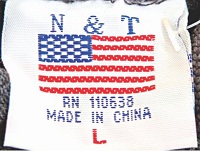 It all began a year ago with the US administration, under the leadership of President Donald Trump, imposing a 25 per cent tariff on 818 categories of goods imported from China. This move further escalated into a major bilateral trade war between these two economic superpowers. Since then, US-based brands relying on Chinese manufacturing have seen their products cost escalating and profit margins declining, making it difficult for them to survive in the competitive market. As the latest quarterly survey of more than 150 global businesses by the Hong Kong-based QIMA supply chain audit and inspection service reveals, over three quarters of US respondents say they have been seriously impacted by US-China tariffs.
There is no sign of this cycle of imposition and counter imposition of tariffs coming to an end. Last week President Trump announced his plans to impose 10 per cent tariff on another $300bn worth of Chinese imports from September 2019. China, in turn, responded by asking state-owned firms to halt their US agricultural purchases and by allowing its tightly controlled currency to slide to an 11-year low against the US dollar – a move that makes Chinese goods cheaper overseas and US exports to China more expensive.
Companies shift out of China
Alarmed by rising geopolitical and economic tensions between the US and China becoming a norm, a few US and other companies are shifting their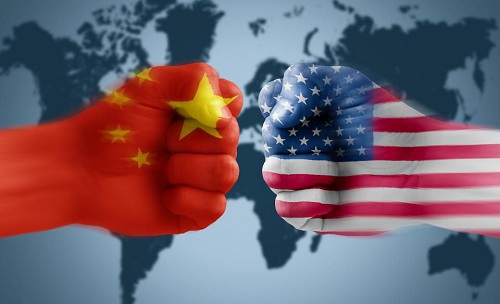 production facilities to other locations. A recent survey by the American Chamber of Commerce reveals around 40 per cent of the US companies that currently manufacture in China have either already shifting or are planning to shift their production facilities to other offshore locations.
Over 50 multinational companies including Apple, Nintendo and Dell are planning to shift at least some of their production to emerging alternative offshore manufacturing hubs including Vietnam, Malaysia and India. Electronics giant TCL is moving its TV production to Vietnam and Sailun Tire is shifting its tire manufacturing line to Thailand. Others are relocating manufacturing operations to more established, lower cost countries including Mexico.
Vietnam to emerge as beneficiary
Experts view these moves as a long-term structural change in the global trade flow, rather than a temporary response to the escalating US-China trade tensions. Most US-based manufacturers were already planning to move their operations out of China even before the US imposed its first round of tariffs on them. The US-imposed tariffs only accelerated this inevitable realignment.
This realignment will mainly benefit countries like Vietnam, whose foreign investment permit applications, have already risen by 26 percent to 1,720 in the first half of 2019. The shift will also benefit enterprise software and service providers – particularly those that enable companies to become Intelligent Enterprises and facilitate efficient, responsive and reliable supply chains.
According to business leaders including SAP’s Chief Executive, Bill McDermott, the recent disruption of trade patterns and supply chains could have profound long-term implications because once companies move their production out of China, they are not likely to return in the near future. This makes the realignment of global supply chains and uncertainty that accompanies such changes unlikely to end in the near future.
These changes impact the company’s ability to respond quickly to rapidly changing customer requirements and other external factors such as supply chain disruptions. For consumers, these moves will result in the reduction of ‘Made in China’ labels.
Textile Minister exhorts AEPC to spread the concept of Fabric of Unity
 Union Minister of Textiles, Smriti Zubin Irani, while unveiling the Fabric of Unity on the occasion of birth anniversary of Sardar Vallabhbhai Patel in Gurugram, exhorted AEPC to spread the concept in its offices. Minister urged the AEPC to put together the entire history and the textile designs of the then princely states which were united into the Indian Union by Sardar Patel.
The minister also flagged off Unity March. Smriti Zubin Irani administered the Unity Pledge to the office bearers, staff of Apparel Export Promotion Council (AEPC) and students of Apparel Training and Design Centre (ATDC).
Speaking on the occasion, she referred to Rs 6,000 crore package launched by the government in 2016 for the growth of apparel and garment sector to bring in more skilled labor in the organized sector.
Welspun Q2 net sales up, touches Rs 2440 cr
For the second quarter Welspun net sales were Rs 2440.03 crores as compared to Rs 2043.21 crores during the period ended September 30, 2017. Net profit was Rs 55.84 crores as against Rs 40.37 crores for the period ended September 30, 2017. For the six month period net sales were Rs 4525.54 crores as compared to Rs 3724.98 crores during the six month period ended September 30, 2017.
Net profit was Rs 99.49 crores as against Rs 91.55 crores for the six month period ended September 30, 2017.
The company has a guidance of eight to ten per cent in volumes for the current financial year. Hydro cotton has been commercially successful and continues to see good growth. Welspun sees a promising future for WEl-Trak after the success of hydro cotton.
The textile firm sees a positive growth momentum in volumes and is confident of achieving its annual guidance for revenues and profits. Welspun continues to pursue its differentiation strategy based on branding, innovation, sustainability and its patented traceability solution.
Versace winds up Versus
Versace will discontinue its long-established seconds line Versus Versace. This means the Italian label will focus on one contemporary range alone. In recent months, Versace examined several ways of streamlining its business model, to enable it to focus on its brand portfolio and ensure it remained innovative and relevant in everything it did.
Consolidation will allow the company to further develop the Versace Jeans collections and at the same time to preserve the DNA and design codes which made Versus so unique.
Fashion labels are increasingly streamlining their product range. The era of second and third lines seems to have come to an end. A similar approach has already been adopted by Giorgio Armani, who from spring/summer 2018 redesigned his corporate portfolio around three main labels: Giorgio Armani, Emporio Armani and A/X Armani Exchange.
Since 2009, accessible luxury label Versace Jeans has been produced by Swinger, the apparel company which owns the brand Genny and is also a licensee of Cavalli Class.
Versace was acquired last September by US group Michael Kors and is active in the luxury segment with ready-to-wear, accessories, jewelry, watches, eyewear, fragrance and home decoration lines. Versace products are distributed via 200 monobrand stores and over 1,500 multibrand retailers worldwide.
Vietnam and Malaysia may gain from trade war
Vietnam and Malaysia are among the Asian countries expected to benefit the most from the US-China trade war. New opportunities will open up for exporters in these countries as American and Chinese importers will look for alternative suppliers. Vietnam and Malaysia will benefit particularly in low-end manufacturing of information and communications technology products, such as intermediate components and manufacturing of consumer goods like mobile phones and laptops. Malaysia's ICT industry is well-poised to gain from the shift in trade, partly owing to its strong logistics network and a good business environment.
Both Malaysia and Vietnam have a strong road, rail and port infrastructure, which has in turn helped to develop strong local logistics and shipping networks to support merchandise trade. The positive business environment in Malaysia (an existing clear and stable system for corporate law) and Vietnam (strong investment promotion policies via new special economic zones) will make these two countries even more attractive for companies that are considering them as potential locations for investments.
Within Asia, apart from Malaysia and Vietnam, the likes of India, Indonesia and Thailand may also stand to gain. The ongoing tiff has seen the two economic superpowers so far imposing trade tariffs or taxes amounting to around 360 billion dollars on merchandise between them.
US retailers forge tie-ups to boost sales
Retailers in the US, like Macy’s and Kohl’s, have sought new partnerships and other tie-ups to appeal to shoppers. Last year, Kohl’s, for instance, has expanded to about 100 stores where Amazon customers can return their Amazon-bought items to Kohl’s to be packaged and shipped back for free.
Kohl’s is also looking at downsizing its store size of an average of about 90,000 sq ft to about 60,000 sq ft with the remaining space to be leased to fitness centers or other retailers. The point is to have a neighbor who will drive traffic for the retailer.
On its part, Macy’s will be much more aggressive in its lease models and feature restaurants and other categories that revolve around the way customers live and shop. Macy’s has also taken a stake in Silicon Valley start-up b8ta, which features different online upstart brands and major labels like Sony at its locations, including an in-store boutique at Macy's New York flagship. b8ta, which drives traffic and sales by regularly featuring new brands and by allowing customers to try and interact with products in out-of-box-setting, is also using its technology to expand The Market at Macy's pop-up shop concept.
Macy's this year also bought Story, famous for its New York shop that hosts different brands with unique themes.
Fast Retailing acquires 35 per cent stake in women’s fashion brand Elise
Uniqlo’s parent company, Fast Retailing, has acquired a 35 per cent stake in Hanoi-based women’s fashion brand Elise. Elise, which has over 100 stores across the country, has received millions of dollars from the deal – a figure much higher than its entire charter capital.
The store will be operated by a joint venture between Fast Retailing and Mitsubishi Corporation. Its arrival in Vietnam will intensify competition for foreign brands as Zara and H&M who have already successfully launched there.
Vietnam is one of the markets Uniqlo is counting on to double its store network in Southeast Asia and Oceania to around 400 by 2022.According to German firm Statistics Portal, Vietnam’s fashion revenue will annually grow 22.5 per cent from 2017 to 2022, and its clothing sales will surge to an estimated $245 million this year.