FW
Surface finishing solutions by Santex Rimar Group
Santex Rimar Group presented the new surface finishing solutions under Sperotto Rimar brand: Softa – high speed brushing - and Velura – high speed raising – running machines will be exclusively showed during ITMA Asia tradeshows days.
Cavitec launched the Cavimelt P+P LINE, the new hotmelt coating and laminating line with rotogravure system, perfect for sportswear productions, developed to be highly productive, precise, operator friendly and cost effective.
Smit presented the newGS980 F: The fastest free flight rapier machine for an outstanding terry quality. With seven different working widths, from 220 to 360 cm, SMIT GS980F is perfect for weaving terry towels or bulk terry, in one or several panels.
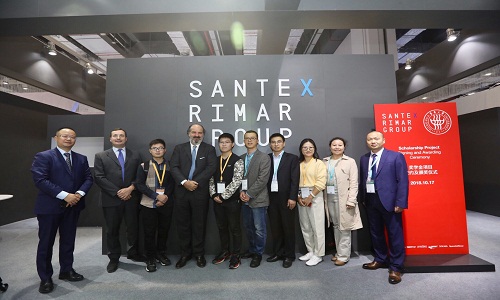
Innovations in the German Pavilion at ITMA ASIA 2018
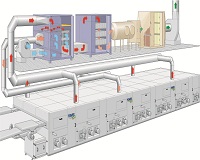 BRÜCKNER launched the power frame stenter, having over 7 m working width for the finishing of geo-nonwovens at ITMA ASIA 2018. The company, in its new plant in Tittmoning produces modules with a width of up to 9 m.
The ANDRITZ carding machines and the new flat belt oven, enable customers to benefit from high production capacities and high-performance fabrics from 16 to 80 gsm, produced with bicomponent fibers. The flat belt oven has been designed to cope with speeds much higher than normal capacity to make sure that it’s future proof in terms of increased running speeds.
Autefa Solutions Injection card enables (Drylaid) web forming at very high production. The card uses a unique combination of mechanical and aerodynamic principle for a gentle fiber treatment. Its Web Master Future card is developed and designed for high production speeds with a special focus to improve the cost factor of maintenance.
Benninger exhibited a Trikoflex drum washing compartment and a Küsters DyePad - two key components of its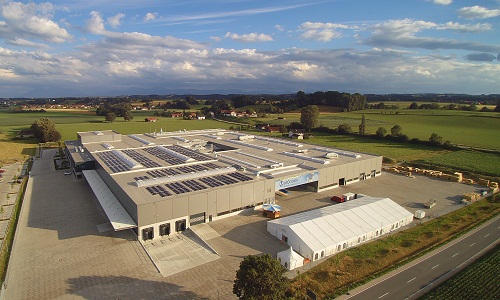 customised processing solutions. The main technology driver for Benninger includes smart solutions to save limited resources such as water and energy as sustainability is becoming a more and more important cost factor for the textile industry in future.
Kaeser Kompressoren developed highly effective tools for planning of new compressed air supply systems andoptimisation of existing ones: With information gathered from carrying outa detailed air demand analysis (ADA)and using the specially developed Kaeser Energy Saving System (KESS), the project engineers were able to provide individually tailored compressed air system solutions.
Mayer & Cie. (MCT) presented three machines. Along with the OVJA 1.6 EE 3/2 WT and the OVJA 2.4 EC the manufacturer exhibited a Spinit 3.0 E in Shanghai. The spinit systems technology, which was put to use in this machine, sets standards in terms of sustainability. Neuenhauser, a global leader in automation for spinning mills offers solutions for different packing styles like palletising, box packing or poly bag packing. The company provides a QCS – System (Quality Control System) which scans packages and checks for different customised parameters. Off-Standard packages are automatically taken out. HMI (Human Machine Interface) solutions promise the bridging between material and data flow – for customer value. These topics were the central point of the “Oerlikon Innovation Forum” at which presentations in English and Chinese were held several times a day for visitors of the exhibition booth. Saurer Spinning Solutions showcased a range of innovative new products, from the new card to new ring spinning and winding machines featuring the latest technology. Also included were its Saurer’s digital control and analysis tools, as well as quality assuring components. Textechno Herbert Stein GmbH & Co. KG (Germany) and its partner company Lenzing Instruments (Austria) introduced their automatic systems for testing all kind of fibres and yarns.Textechno's Balexpert and Spinexpert, both parts of the new designed Fibre Classifying System FCS, determine the quality and spinnability of both, cotton- and synthetic fibres. The WEKO-Fluid-Application-System (WFA) offers the right olution for sustainable textile and nonwoven finishing. This high-tech system made in Germany applies functional liquids contact-free by fast rotating rotor discs which spray ultrafine micro-droplets to the material web.
ITMA ASIA enforces interim injunctions against design patent infringe-ments
In order to protect the lawful interest of intellectual property rights own-ers during the exhibition, the sponsors of ITMA ASIA 2018 installed an on-site intellectual property rights office (“IPR Office”), consisting of the spon-sors, external IPR administrative authority and IPR practitioners.
Complaints against violation of intellectual property rights
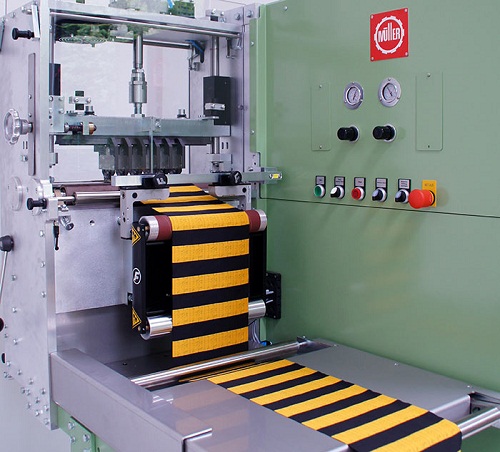
On the first day of the fair, Jakob Müller found that the machines of the three companies showed clear violation of COMEZ’s intellectual property rights without Jakob Müller’s or COMEZ’s permission. The patentee at once filed a complaint to the IPR Office against these companies, to prohibit the exhibition of the infringing systems.
The subsidiary corporation of Switzerland based Jakob Müller AG, Comez International s.r.l has at the on-site IPR Office successfully applied for interim injunctions to stop design patent infringements against Chinese manufacturers DKY Machinery Co., Ltd, Huibang Machine (Yingkou) Co., Ltd and Dah Heer Industrial Co., Ltd.
Action initiated against perpetrators
The IPR Office served the complaint materials to three companies in the morning of second day and set a time limit of 24 hours for a counterstate-ment to the three infringers. One of them, Dah Heer, removed the infringing system actively, and the others, DKY and Huibang, submitted a counter-statement. After the IPR Office assessed these statements and evaluated the possibility of the infringements, the IPR Office required them to remove the systems concerned in the patent on 17th October 2018. The systems con-cerned were removed by DKY and Huibang and not exhibited any more until the end of the fair.
Bernhard Engesser emphasised that Jakob Müller AG will take a high priority against further patent infringements.
Itema launches new textile solutions at ITMA ASIA
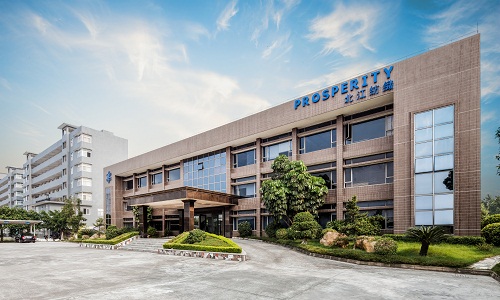
Prosperity Textile, one of the main denim producers worldwide, launched one of the most interesting and sustainable-oriented Itema technologies, iSAVER equipped on the Itema R95002 denim.
This new technology completely eliminates the left-hand weft waste, allowing the insertion of the weft yarns in the fabric without the need of additional yarns.
iSAVER significantly reduces raw material waste, leading to tangible benefits in terms of machine’s efficiency, cost reduction and energy saving. iSAVER, will also 1.000 kg of cotton per machine per year – the 3 per cent of the total raw materials - will be saved, thus avoiding the waste of 20 million liters of water, equivalent to 400.000 showers. iSAVER is one of the key features of the Itema R95002 denim, the rapier weaving machine born and designed to weave denim guaranteeing to weavers superior textile quality.
French innovations at ITMA Asia 2018
 Some of the French innovations at ITMA Asia +CTME 2018 included:
NSC Fiber to Yarn
At ITMA ASIA 2018 in Shanghai, “NSC fiber to yarn” which includes N.schlumberger and Seydel trademarks will exhibit one drawing head of the new model GC40 chain gill drawing machine well-known for producing of high quality yarn in long staple fibres for combing, recombing, spinning preparation and tow to top in polyester and acrylic.
NSC fiber to yarn will advertise its latest technological advances made to its product range. A new GC40 family drawing machines, GN8 intersecting drawing machine, evolution of its ERA comber will be particularly unveiled to its international customers.
During the ITMA ASIA 2018, NSC fiber to yarn will take the opportunity to introduce its service centre with its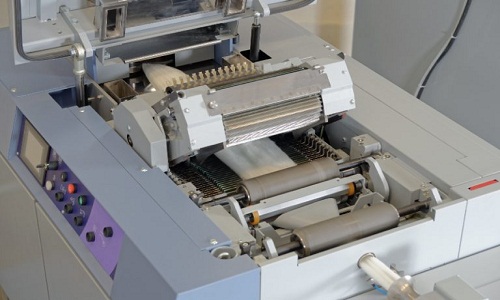 genuine spare parts stock in Zhangjiagang, Jiangsu and significant evolutions such as performances of production, quality standards, operating and maintenance costs, instant control and diagnosis, cost energy savings thanks to a reliable concept of construction, to electronic controls implying a user-friendly man-machine dialogue and an increase productivity
Laroche
Laroche has been a major player in the textile waste recycling and airlaid nonwoven field and is deeply involved in new technologies for turning post consumer goods into valuable products. The company has recently introduced new lines that can open used clothing back into fibers whilst removing the metal and plastic contaminants. The fibers can then be airlaid and thermobonded into felts for the automotive, bedding and furniture industries.
Old mattresses can be deconstructed and the foam can be shredded into chips, the textile portion can be opened back into fibers and airlaid and thermobonded back into components for new mattresses.
Superba
Superba, a member of the Vandeweile family of companies is the world leader in space dyeing and heat setting for carpet yarn. The company’s TVP3 heat-setting line offers the highest pin-point definition with their saturated steam processes. The recent improvements in Superba’s space-dyeing technology like bicolor printing or dyeing polyester yarn are likely to arise great interest among the Chinese manufacturers.
FIL Control
At ITMA ASIA 2018, FIL Control recommends a newly tension sensor MYT-T, This is a load cell sensor devoted to assembling, winding and texturing operations. It delivers an analog signal proportional to yarn tension. This information is used by the machine controller to keep yarn tension constant or stop the spindle if tension is out of normal operation range.
AESA Air Engineering
AESA supplies air conditioning and waste collection system for the textile industry as well as various other industrial processes. The company offers Weave Direct Systems that offer substantial reduction in power consumption combined with an accurate process condition on weaving looms thanks to a dedicated supply air ducting system with diffusers above ach loom.
The user friendly and accurate Digivent Control and Monitoring System communicates in interactive screen functions and allows a wide usage of recorded data for analysis, statistics and housekeeping.
India: Tirupur manufacturers opening units abroad to tap US, EU markets
"The multi-million Indian knitwear industry, which faced the brunt of demonetisation and GST, is in doldrums today as many garment manufacturers are shifting their units from Tirupur to countries like Ethiopia and Sri Lanka that provide free access to major markets like the US and EU. The country offers excellent infrastructure to young entrepreneurs. It also has geographical advantage over others as the flying time from Coimbatore to Colombo is just 70 minutes. In the past six months alone, four well-known garment manufacturers, who excelled in the sector for decades, opened factories in Ethiopia."
 The multi-million Indian knitwear industry, which faced the brunt of demonetisation and GST, is in doldrums today as many garment manufacturers are shifting their units from Tirupur to countries like Ethiopia and Sri Lanka that provide free access to major markets like the US and EU. The country offers excellent infrastructure to young entrepreneurs. It also has geographical advantage over others as the flying time from Coimbatore to Colombo is just 70 minutes. In the past six months alone, four well-known garment manufacturers, who excelled in the sector for decades, opened factories in Ethiopia.
Cheap labor, market access lures manufacturers abroad
Some major reasons why many manufacturers are opting to open units in foreign countries are: cheap labor, free market access to the EU and US, readily available infrastructure and absence of red-tape. The Indian industry, which was growing at over 10 per cent every year, has been reporting a 7 per cent dip since 2011, resulting in loss of a whopping Rs 2,000 crore ( US$ 0.27billion) . Exports, valued at Rs 26,000 crore ( US$ 3.54 billion) in 2016-2017, declined to Rs 24,000 crore ( US$ 3.27 billion) in 2017-2018 and domestic sales stood at around Rs 18,000 crore( US$ 2.45 billion) .
India does not offer free market access to EU and the US, which puts manufacturers in Tirupur at a disadvantageous position since entry tax is levied once goods reach the destination countries. Bangladesh and Sri Lanka, on the other hand, offer free access to the EU; Ethiopia also offers free access to both the EU and the US – thus attracting most of the buyers.
The labor cost in Tirupur is $150 to $200 (between Rs 11,000 to Rs 15,000) a week, while it is just $75 (Rs 6,000) in Ethiopia. Secondly, in India, separate labor is hired for stitching, packing, etc. Foreign countries, however, train their labor to multi-task, saving much more on the cost involved.
Plug and play model add to the attraction
The Ethiopian government keeps its infrastructure ready for garment manufacturers – all they have to do is to go with their machines, hire employees, train them and their factory is up and running. This plug and play model attracts manufacturers as they don’t have to go through the hassle of looking for land, constructing a building and get permissions. Everything is done by the government; all they have to do is to start our operations
R Rajkumar, Managing Director, Best Corporation, which launched operations in Hawassa, Ethiopia a couple of months ago, operates 500 machines in the country in two shifts. The company plans to increase capacity to 2,000 machines gradually. Santex Inc, which was also lured by the free market access that Sri Lanka offers to the EU, has opened a factory near Kandy in the country.
Indonesia explores new markets
Indonesia will open more markets through numerous trade deals. It currently has signed trade deals with Pakistan, India, United States of America, Spain, Swiss, Tunisia, Bangladesh, Taiwan, New Zealand, and Morocco. The United States and the European Union are the main destinations for Indonesia’s textile exports. With such agreements in place Indonesia expects its exports of textile and textile products to increase three-fold.
The cooperation agreement with Japan has helped increase Indonesia’s exports. The country’s trade balance had experienced a surplus of $230 million throughout September 2018, a contrast to the previous month, which experienced a $1.02 billion deficit. The industry in Indonesia wants downstream products to be protected from the onslaught of imports.
Other aspects that need improvement include electricity tariffs, ease of distribution and quality of human resources. For Indonesia, trade agreements with partner countries can increase the export value and increase market share. Despite the export growth, Indonesia’s imports still exceed its exports.
Till now lack of market access has been a constraint for the textile industry. Meanwhile, textile products from neighboring countries, such as Vietnam, can enter with a zero per cent import duty.
At present, the market share of new domestic textile products is around 1.8 per cent while in Indonesia the textile industry has been integrated from upstream to downstream so that the potential for development is still large.
Safety of textile chemicals in focus
Large amounts of commodity chemicals used in the textile industry are contaminated with potentially hazardous substances that routinely end up in wastewater. Some of these substances are phthalates, chlorobenzene, toluene and other restricted chemicals.
Commonly used chemicals such as salts, soda ash, organic and inorganic acids, peroxide and caustic soda – which are often by-products of other industries – can be laced with potentially hazardous substances. The safety of specialty textile dyes, pigments and auxiliaries has long been under the microscope. Traded on the open market by dealers, and often repackaged under different trade names, these bulk commodity chemicals are often bought based on price only with price being directly related to the purity of the product.
Reports of a new potential huge source of hazardous contaminants in textile wastewater will come as a shock to many apparel brands and retailers. Identification of the problem could also help the textile sector to identify unknown sources of wastewater contaminants that have puzzled the industry for many years. Already, the development of a new screening tool for commodity chemicals is one positive outcome of this research, which aims to help textile mills make better informed decisions on the type of commodities they source.
Yarn Expo Autumn features over 500 exhibitors from 15 countries
Yarn Expo Autumn, held from Oct 15-17, 2018, featured over 500 exhibitors from 14 countries. The expo showcased a range of yarn & fiber products at the National Exhibition and Convention Center. The fair organised by Messe Frankfurt (HK) and the Sub-Council of Textile Industry, CCPIT, attracted leading industry players like: PT Indo-Rama, Chemtax, Shandong Ruyi, Jiangsu Shenghong and Jilin Chemical Fiber Group among others who use the fair as a platform to debut new products each year.
New companies included Safilin from France, that offered premium linen products developed through the brand’s extensive history, and Italy’s Sinterama Asia who showed their range of 1,200 diverse chemical fibers and end uses. Novetex Textiles from Hong Kong featured super soft merino in a wide range of colours, along with sustainable options in glen merino and 100 per cent lamb’s wool. Parkdale Mills from the US, the world’s leading manufacturer of spun yarns, showcased cotton varieties, such as open end fibres, ring spun, air jet and vortex, in different blends.
Sweden supports North African textile industry
Sweden and the International Trade Centre will strengthen international competitiveness of textile and clothing producers in Egypt, Jordan, Morocco and Tunisia. The program will support the four countries to build sustainable export-oriented sectors with increased sales to traditional markets in Europe and North America along with new markets in sub-Saharan Africa.
Creating long-term and better-paid work, especially for women and young people, is a key goal of the project along with boosting exports, creating jobs and raising incomes across the Middle East and North African region. Another goal will be to strengthen regional economic integration among the four countries.
To achieve lasting improvements in the sector’s export competitiveness, the project will focus on bolstering the capacities of national institutions such as textile and clothing business associations and training centers to help better support local businesses. This will involve improving internal management processes and service portfolio development.
The project will also work directly with domestic enterprises, providing advisory services, training and coaching designed to help firms move up the value chain from cutting and sewing to fabric sourcing, product and design development and branding. The vast majority of products from Morocco and Tunisia go to the European Union, while Egypt’s and Jordan’s top export destination is the United States.