FW

India will revive the free trade negotiations with the European Union (EU). As many as 16 rounds of negotiations took place between the two sides for the proposed FTA from 2007 to 2013 before formal talks were stuck.
Differences have persisted on the broad contours of the proposed FTA, including the EU’s insistence that India cut import duties on auto parts and wine and strengthen its intellectual property rights regime and the Indian demand for more liberalisation in services and greater flexibility on data privacy. India also feels the flexibility shown by it in further opening up to foreign investments in more than a dozen sectors should be considered positively by the EU.
The EU — including the UK — made up for 17.6 per cent of India’s goods exports in the first ten months of the current financial year. Garments were India’s biggest export segment, followed by engineering goods and gems and jewelry. Similarly, the country imports capital goods and gems and precious stones worth billions of dollars from the EU.
Access to the EU market is crucial for a number of Indian sectors, especially textiles and garments and information technology. Similarly, India is a lucrative market for European auto and pharma companies.
Jayashree Textiles is staring at a sharp fall in profits in the current fiscal. One reason is the dumping of Chinese products in the Indian market. Pre-GST, Chinese players had effected a 23 per cent price drop, which made the company's products uncompetitive in the domestic market. Post-GST, Chinese imports get a 15 per cent offset in the value chain which takes the effective drop in selling price to 38 per cent.
The manufacturer of linen yarn and fabric as well as merino wool is expecting a steep fall in Ebidta margins between 2015-16 and 2017-18, particularly after the implementation of GST.
Jayashree Textiles, part of the Aditya Birla Group, is India’s top linen manufacturing company. It sells in over 50 countries and is the only integrated linen factory in the country with state-of-the-art facilities equipped with the latest spinning, weaving and finishing systems from Switzerland and Italy. Jayashree runs the Linen Club brand of stores, which sell the company's apparel and yarn. Linen Club is on an expansion mode across the country. There are 180 Linen Club stores in the country. The plan is to add 30 to 35 stores each year. All the stores are run on a franchisee basis.
The US-China trade war of slapping tariffs on each other’s imports, on the surface, the disruption could be seen as a disaster for other countries in Asia. A blow to Chinese exports could ripple through the supply chains that stretch across the region, robbing other economies of growth opportunities and jobs.
At the same time, a US-China trade war will spill over into another ongoing economic battle -- the one between China and its low-wage competitors in global export markets. For many emerging economies, the long-term benefits might well outweigh the short-term damage.
China, the world’s largest exporter, has long been the destination of choice for US and European companies looking to outsource and offshore manufacturing, especially of labor-intensive consumer goods such as clothing, footwear and electronics. As factory wages in China have risen to the highest in emerging Asia, however, other developing countries with lower costs have begun to steal away investment and jobs, helping to promote industrialization and boost growth at home. Apparel and electronics manufacturers, for instance, have already started diversifying production to rivals such as Vietnam and India.
Vietnam has been enjoying an export boom, led by sectors traditionally dominated by China, including clothes and mobile phones.
Egyptian cotton is the preferred option for towels and bedding among American consumers. This is among the findings of a survey commissioned by the Cotton Egypt Association (CEA). When consumers were asked to arrange a list of cotton brands in order of perceived quality, 89 per cent placed Egyptian cotton as one of their top two choices. Pima made the top two in 45 per cent of selections, followed by Turkish cotton, Supima and Sea Island Cotton.
CEA takes measures to root out dishonest manufacturers and counterfeit goods from the supply chain. Egyptian cotton is the most recognized cotton brand in the United States. Egyptian cotton is also the name most people associate with quality and the cotton fiber they say they are prepared to pay a premium for. While 86 per cent of those questioned couldn’t name a brand of cotton, among those who could, 95 per cent cited Egyptian cotton, with the remaining five per cent naming Pima.
For 52 per cent consumers, texture is the most important consideration when buying a cotton product and only two per cent consider products being manufactured in the USA as an important factor, when asked to rate the importance of listed qualities.
The fundamentals for the US textile industry are sound. This is true even though some markets for US textiles and apparel were soft last year. The industry’s commitment to capital re-investment and continued emphasis on quality and innovation make it well-positioned to adapt to market changes and take advantage of opportunities.
Any sluggishness is due to factors beyond control, such as disruption in the retail sector caused by shifting of sales from brick and mortar outlets to the internet. Of the US exports of apparel and textiles last year, fabrics made up the largest portion of exports at 31 per cent. Cotton, wool and fine animal hair followed, accounting for 21 per cent, while apparel was 20 per cent. Man-made fibers were 15 per cent of exports, and home furnishings and non-apparel sewn products accounted for 13 per cent.
The United States is especially well-positioned globally in the fiber, yarn, fabric and non-apparel sewn products markets; it was the world’s fourth largest individual country exporter of those products in 2016. Among the top three export markets for US apparel and textile goods were Mexico, Canada and China. Exports to NAFTA countries in 2017, accounted for 41 per cent of the total. The next largest share went to Asia, 30 per cent of the total.
Uzbekistan is ready to take its textile manufacturing capabilities to the next stage by investing in latest technology for downstream processes of fabric manufacture, finishing and make-up. The country is already a strong producer of raw cotton and yarns. It has signaled its intent to foster advances in both technology and the range of activities by its textile manufacturers.
The fact that Uzbek currency is now convertible for international exchange is the foundation for a significant increase in foreign trade. Uzbekistan continues to take consistent steps aimed at developing its textile industry. The country intends to implement 132 investment projects in the textile industry, half of which will be financed through foreign investments and loans, by the end of 2019. In particular, 112 modern, high-tech industrial factories will be created and 20 operating capacities will be expanded, modernized and technologically upgraded. All this will increase the export potential of the industry up to 2.5 billion dollars a year and create more than 25,000 jobs.
Uzbekistan is the world’s sixth largest cotton producer. It is taking steps to increase the volume of cotton fiber processing. A textile factory is coming up. The factory will annually produce 10,000 tons of polyester fiber, 10,000 tons of polyester yarn, 20 million running meters of mixed fabrics and 7,000 tons of blended linen.
VF Corp is committed to improving the lives of apparel and footwear industry workers and their communities around the world.
The company’s Responsible Sourcing program is a global collaborative approach to sourcing products responsibly, including collaborating with industry partners and multi-stakeholder organizations across 50 countries to maintain safe, healthy environments for workers, manufacturing products responsibly, and improving workers’ lives.
An integral component to VF’s Global Supply Chain organization, the Responsible Sourcing program ensures VF’s more than 1,000 contract suppliers and sourcing partners are operating with the same high standards VF sets for its owned and operated manufacturing operations. VF shares with its supply chain partners the company’s manufacturing best practices and knowhow, and often serves as a consultant to help them continually improve their operations and environmental and socially responsible initiatives.
VF Corporation is changing to a circular business model. Consumers come back with lightly used jackets, shoes, clothes, and they get some type of incentive to purchase something new. VF takes those products and, through a third party, cleans, resells, and recycles them. VF, based in the US, is an apparel, footwear, and accessory company and has more than 1,500 owned and operated retail locations around the world across its brand portfolio. The company has found that every time a retail store has such a program, traffic to that store goes up, the conversion rate goes up, and the average retail sale goes up.
Aizel.Ru Internet Store and Mercedes-Benz Fashion Week Russia have joined hands to support emerging Russian designers.
Starting March 10, 2018, Aizel.Ru will become the main platform for sales of local brands, presented at the shows of the key fashion event this spring. Over 100 emerging Russian designers will get a chance of being presented at the internet site.

Aizel Trudel has long been cooperating with dozens of Russian designers. However, giving hundreds of new designers a chance of getting through, Aizel. Ru will become the largest RuNet-based platform across the globe to present Russian fashion. It believes its cooperation to be an education project for emerging designers, for whom the internet should become a key channel of promotion.
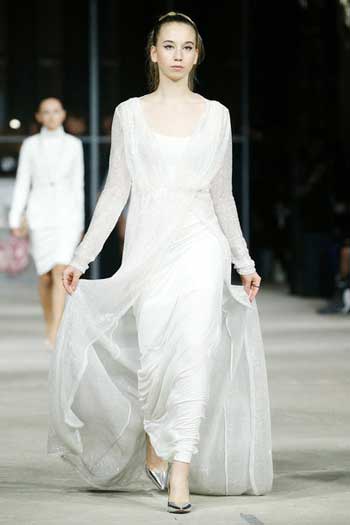
Aizel.Ru will support brands with its expertise in the fashion e-commerce sphere. The marketplace will help designers with professional shooting of their collections and will offer support right after they enter the platform and while they use it.
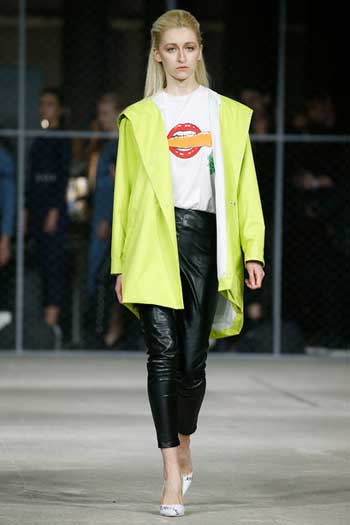
Aizel.Ru is the first Russian fashion marketplace, a member of the Aizel Group, an internet store selling clothes and shoes for women, men and children, as well as accessories and cosmetics of the top global brands. This unique totally Russian fashion project in the online retail sphere has been operating for over 17 years. Aizel.Ru presents fashion trends in both the premium luxury category and in a more affordable segment, and offers brands popular among progressive youth, too. In particular, the store features brands such as Gucci, Burberry, Valentino, Dolce & Gabbana, Balenciaga, Alexander McQueen, Stella McCartney, Christian Louboutin, Marc Jacobs, Victoria Beckham etc.
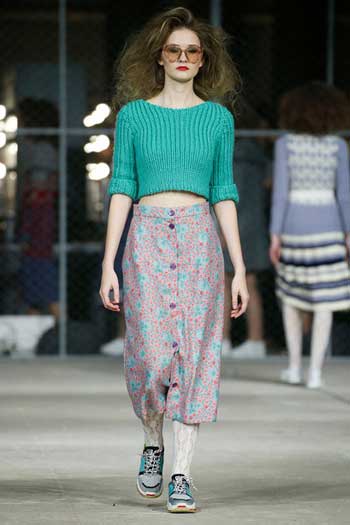
Mercedes-Benz Fashion Week Russia kicked off in full swing this Saturday, attracting thousands of visitors and fashionistas.
The week launched with several children’s runway shows, with children’s brand Acoola presenting its Street Tropical, Seaview and School collections and the country’s largest children’s department store Detsky Mir showing off its latest seasonal looks, created by the retailer’s designers.
On day one, arguably the most famous of all Russian designers, Zaitsev looked radiant when he himself appeared on the runway. He was met with a standing ovation - truly, the most respected of all Soviet and post-Soviet Russian couturiers deserves no less. His models led him to the end of the runway and back.

The Mercedes-Benz Fashion Week Russia this year played host to the Kazakhstan Fashion Week Showcase, showing off designers from the former republic.

For day two the schedule included street wear, more designers from Kazakhstan, classic couture and a secret performance by a Russian star of screen and stage. The day began with a conceptual show by the Moscow brand Sensus Couture. This is well-known for its brave search for nowness and its inspired originality.

Leather, latex and silk were the course for the day, and Sensus employed its traditional color palette - red, white and lots of black. Many looks were straight-on street wear, with models strolling in pullovers and shorts with some thigh-high boots, while others were traditional evening wear - little black dresses with Ziggy Stardust-like lightning symbols, bold jackets with leopard skin prints, sheer golden coats.

Day three of the Mercedes-Benz Fashion Week Russia started off with much aplomb, with a whole new slew of young designers to whet the visitors’ insatiable appetites. The first major show of the third day was by Snezhana Paderina.

This Parsons School of Design graduate is well-known for her love of architecture, technology and cyberpunk, and her interest in combining modern technology and traditional techniques in her approach. Combat boots and beautifully-crafted high heels accentuated the otherness of this collection, and modernist art was often incorporated into the garments.

Day four offered a diverse cast of designers. Students of Moscow’s HSE Art and Design School presented a show. First, deconstructed capes and ponchos made of recycled fabrics filled the runway, then oversized trench coats and tulle capes with the collection’s name emblazoned in bold lettering, then even more deconstructed garments, with long tendrils of fabric flowing behind the models. A lot of what was shown could still be classified as modernist street wear, but with a definite avant-garde feel to it.

At the next show, Nastya Nekrasova presented her new collection. One of the constant themes in Nekrasova’s work has been the work of the Athens sculptor Leochares. As for the garments themselves, these had a lot of classical in those as well - silk and wool numbers, free and flowing shapes, oversized sleeves (as if from an antique theatre costume), and busts models carried underarm. But this was a collection by a young Russian designer, so a little modernism was unavoidable - skirts with abstract scribble art and high leather heels spiced up this avant-garde collection.

The final day saw a collective show by the leading educational fashion project in the country, Rebel School. The project gathers the best tutors in the country. Rebel School students presented a diverse collection of modern avant-garde street wear, with designs ranging from oversize orange hoodies and capes and catholic schoolgirl outfits to comfy trousers and shirts to Alice-in-Wonderland style dresses.

Color combinations were the traditional to street wear black, orange, white and red, with several striking blue outfits in the mix. The show bended gender norms, with model Sima Kozochka coming out in a men’s prison robe inspired fit, while other female models wore stylish men’s suits.

"An average consumer buys four pairs of jeans a year in the US; in China’s Xintang province, a hub for denim, 300 million pairs are made annually. These figures could illustrate the harmful impact of denim manufacturing on the environment. And showcasing these effects, award-winning filmmakers David McIlvride and Roger Williams, have created a new documentary film, ‘The RiverBlue: Can Fashion Save the Planet?’ It is estimated that 70 per cent of Asia’s rivers and lakes are contaminated by the 2.5 billion gallons of wastewater produced by that continent’s textile industry."
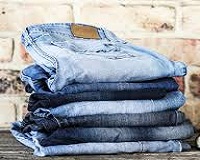
An average consumer buys four pairs of jeans a year in the US; in China’s Xintang province, a hub for denim, 300 million pairs are made annually. These figures could illustrate the harmful impact of denim manufacturing on the environment. And showcasing these effects, award-winning filmmakers David McIlvride and Roger Williams, have created a new documentary film, ‘The RiverBlue: Can Fashion Save the Planet?’ It is estimated that 70 per cent of Asia’s rivers and lakes are contaminated by the 2.5 billion gallons of wastewater produced by that continent’s textile industry. In scene after scene, the dark frothy spill off can be seen rushing out of dye facilities while a cadre of scientists and environmental experts detail the public health crisis that has resulted from the largely unregulated manufacturing process.
Loads of chemicals & counting
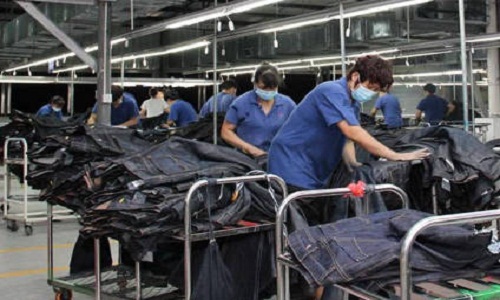
To get the desired look, denim is subjected to several chemical-intensive washes. Campaigners from Greenpeace, who tested the outflows near dyeing and finishing facilities in top denim producing towns of Asia, found five heavy metals (cadmium, chromium, mercury, lead and copper) in 17 out of 21 water and sediment samples taken from throughout Xintang one of the locales featured in the project. Toxic campaigners in China also discovered heavy metals like manganese, which can be associated with brain damage, in the rivers. These chemicals don’t stay put. They can also be transported to North American oceans, atmosphere and food chains and accumulate in places far away from their original source.
The change agent
The film poses a very pertinent question to viewers: Are brand-name clothing corporations disregarding the environment in their zeal to make clothes faster and cheaper for consumers? Offering a solution, the film illustrates through innovation and consumer education there can be change. In California, a designer was trying to re-establish himself as manufacturer of good jeans when director David McIlvride found him. He narrated an incidence that he led them to the Spanish company, Jeanologia where they distress jeans by engraving images on the fabrics with lasers (light and air) and eliminating water without increasing the cost. They are now considered a leading industry innovator.
Jeanologia now creates technology to treat and finish jeans (giving them a certain feel or aesthetic). The company started searching for ways to make garments in a more sustainable way. They have been dyeing clothes with water since the beginning of time and faced the reality that even though it had been done this way in the mass consumer world, it was not sustainable, explained Alex Penadés, Jeanologia. Jeanologia developed several technologies using light and air to finish jeans using little water and no chemicals.
Using these innovations, an average pair of jeans requires just a glass of water to finish when it used to require 300 litres. However, it requires a big capital investment. Depending on the business model the capital investment is made by the dyeing and finishing facilities or brands. Jeanologia has Environmental Impact software to measure the footprint of every style and brands know where they are and how they can improve. Three years ago, about 16 per cent of the jeans in the world were made in a sustainable way he says. Now 35 per cent of jeans are made sustainably and about six billion pairs of jeans are made a year so that means two billion pairs are now being made in a more sustainable way.
According to Penadés, brands have a choice to manufacture in a traditional way or a sustainable way. The water and energy of traditional production is costly and so is pollution. Today, including the capital investment, you can produce the same product at the same price. Brands can do it. If the consumer is aware, they have to request these kinds of products today. Consumers must also know what their impact on the environment is because of their acts of consumption. It’s all about co-responsibility.