FW

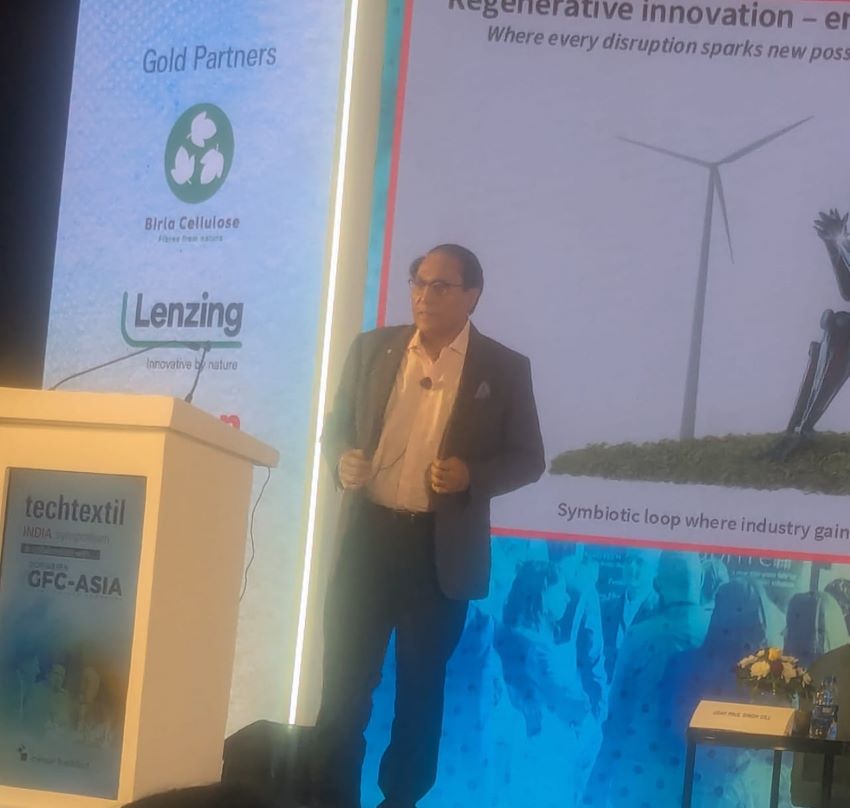
Birla Cellulose has emerged number one in a ranking of 11 global viscose rayon producers. The ranking has been done by the NGO Canopy from the sustainability angle. These 11 viscose rayon producers represent 70 per cent of global viscose production.
Birla Cellulose uses sustainably sourced fiber for its pulp operations. It adheres to strict standards of global fiber sourcing, which focus on protection of high conservation value and ancient and endangered forests. The company engages with the entire textile value chain and plans to further support traceability, certifications and sustainable innovations.
Canopy found Birla Cellulose’s current supply chains indicate that the risk of sourcing wood from ancient and endangered forests or other controversial sources is low. Canopy works for the conservation of ancient and endangered forests, in particular, high conservation value forests. It ranked the world's top viscose producers on their progress on eliminating endangered forests from their supply. This year the ranking features five new criteria, including priorities on conservation solutions and transparency.
The report is highly anticipated by over 105 global brands, retailers and designers that are part of the Canopy Style initiative. It has become a go-to resource for fashion brands since it was first published in 2016
Bangladesh will open at least six new denim mills in the next two years. Increasing demand for denim fabrics from garment makers has encouraged investors to establish new factories. Currently, Bangladesh has 30 denim mills with a capacity to produce 435 million yards of fabrics a year.
Local suppliers can meet only 40 per cent of Bangladesh’s annual demand for denim fabrics and the rest is met through imports from China, India and Pakistan. Last fiscal, Bangladesh exported denim goods worth $2 billion. Existing investment in the denim sector is more than $1 billion. Bangladesh is moving away from basic denim products to high-end denim products.
Many foreign companies are now coming to open offices or factories in Bangladesh, the hub for denim. With higher demand for denim, Bangladesh has overtaken China to become the largest denim supplier to the European Union. Its denim exports to the 28-nation bloc have a 21.18 per cent market share. Bangladesh supplies denim products to major global retailers, including Levi's, Diesel, G-Star Raw, H&M, Uniqlo, Tesco, Wrangler, s.Oliver, Hugo Boss, Walmart, and Gap. Annually 2.1 billion pieces of denim are sold globally. Bangladesh’s denim exports are forecast to reach seven billion dollars by the end of 2021.
It was led by a 37 per cent growth in the branded business, which made an operating profit of Rs 23 crores against Rs 1 crores last year. Total net profit was down by 19 per cent due to weak performance of the textile division.
The demerger of its branded apparels and engineering businesses is expected to unlock the value of the branded apparel business which is growing at a faster rate than the rest of the business and hence can command higher valuation.
There has been a 25 per cent jump in Arvind's stock since the past six weeks.
A key factor to watch out for would be the growth rate of Arvind’s apparel business in the coming quarters. It has been growing at over 25 per cent for the past five years. The company has guided for a sales growth of 22 per cent to 24 per cent and ebidta growth of 3540 per cent for the next five years.
With no other pure-play branded apparel maker in the listed space, this business could command premium valuation.
However, valuation in subsequent quarters will depend upon the business growth.
In the third quarter, Adidas’ revenues were up 12 per cent. Revenue growth was driven by an increases in distribution channels, with particularly strong support from e-commerce, where revenues grew 39 per cent. In euro terms, sales for the company were up nine per cent in the third quarter.
Gross margin increased 2.4 percentage points to 50.4 per cent. Other operating expenses increased eight per cent. As a percentage of sales, however, other operating expenses decreased 0.1 percentage points to 37.5 per cent. Operating profit increased 35 per cent. Net income from continuing operations was up 35 per cent and basic earnings per share from continuing operations grew 33 per cent. Net income attributable to shareholders increased 36 per cent, resulting in basic earnings per share from continuing and discontinued operations up 34 per cent.
Sales in the football and basketball categories declined. Revenues at Reebok brand grew one per cent. The strategic growth areas - North America, Greater China and e-commerce - were the main drivers of the company’s strong topline performance during the third quarter.
The company expects sales to increase at a rate between 17 per cent and 19 per cent in 2017. Net income from continuing operations is projected to increase at a rate between 26 per cent and 28 per cent.
Textile major Arvind’s profit plummeted 15 per cent for the second quarter. Revenues witnessed a 13 per cent rise. Q2 turned out to be another challenging quarter for the industry with GST implementation impacting Arvind’s domestic textile business.
Even the consumer facing brand business was impacted in the month of July as both the wholesale and retail channels were under pressure. However, the brand business saw a strong performance in August and September leading to good growth overall.
Arvind will demerge the branded apparel and engineering businesses from the parent firm into separate listed firms. The move will help unlock the full potential of the two divisions. The apparel business will be merged with Arvind Fashions while the engineering division will be shifted to Anveshan Heavy Engineering. Demerger will free Arvind’s resources and allow it to renew its focus on the textile business, which is not only the foundation but is now well-placed to achieve an accelerated growth trajectory.
Over the next three or four years, Arvind will invest almost Rs 1,500 crores and transform the textile business. Arvind is one of India’s largest manufacturers and exporters of textile products. The company is also one of the largest producers of denim fabrics.
Walmart is committed to buying more garment, footwear and luggage products from Cambodia. The US multinational is encouraged by the increased capacity of factories and improved labor conditions in the country. It is also happy with the quality of garment, footwear and luggage products.
Walmart with a chain of large stores with branches in most US states is a big buyer of garment products from Cambodia. Cambodia’s garment and footwear exports to the United States were up 6.9 per cent in the first half of this year.
The US last year granted duty-free benefits for Cambodia for the export of travel goods such as luggage, backpacks, handbags and wallets under the Generalised System of Preferences. The country gets 100 per cent preference from Australia, New Zealand, Norway and Switzerland and 99 per cent preference from the EU under the Everything But Arms clause.
The garment industry of Cambodia earns 80 per cent of Cambodia’s foreign exchange earnings and employs an estimated 3,50,000 people in more than 300 factories. Companies which buy from Cambodia include H&M, Inditex, Marks & Spencer, New Look, Adidas, Nike, Levi’s and Uniqlo.
Cambodia relies heavily on garment exports to earn foreign earnings. There are now plans to shift from low-priced garment manufacturing to higher end manufacturing of automobile, machinery and electronic parts.
No new garment units have opened in Tirupur in the past year. In fact, many garment units have shut in recent months. Reason: cash crunch following demonetization last November. The textile industry used to directly employ around 5,00,000 workers and log yearly sales of around Rs 40,000 crores. The cash crunch brought the industry, mainly comprising micro, small and medium enterprises, to a grinding halt. There was no business for three to four months.
A worker earning Rs 500 to Rs 600 a day had to lose a day’s salary to stand in the queue to exchange a sum of Rs 2000. The textile industry of Tirupur was expected to earn Rs 30,000 crores from exports alone in the year that ended on March 31. It ended with Rs 26,000 crores in exports, besides Rs 16,000 crores from domestic sales.
Even as the textile industry struggled on, it was hit by another disruptive event: GST. The Tirupur cluster has been facing a slow decline over the years. In 2004, India was a global leader in knitwear, just next to China. With the growing global market in Bangladesh, Cambodia, Vietnam, Sri Lanka, Myanmar and Ethiopia, it is no longer in the top position.
Swedish machinery manufacturers are exploring the Vietnamese market. These companies have leading edge production equipment and technology and are all well-established leaders in various areas of textile manufacturing process. The companies offer a unique combination of production expertise, textile manufacturing knowledge, and superior products and services.
They are the perfect match for the Vietnamese textile industry. They are a relatively small, tight knit group of companies, each specializing in a different key areas along the manufacturing process. Their size gives them flexibility and they work closely with customers, listen and adapt quickly to their changing needs.
Vietnam is emerging as the new global production center of textile products. Vietnam has been identified as a hub for the Asian textile industry in the next decade. The main reason for this is the increasing cost levels in China, causing many textile and garment brands to relocate in Vietnam. Sweden is bringing world-leading innovative expertise of smart industries into Vietnam, which will make Vietnam highly competitive globally.
Production in the Vietnamese textile and clothing industry is expected to increase by an average of 12 per cent to 14 per cent between 2016 and 2020. Exports are expected to reach 50 billion dollars by 2020.
Over the last year Primark’s revenue rose 19 per cent or 12 per cent currency-neutral. On a comparable week basis currency-neutral sales were 14 per cent with comp sales up just one per cent.
On the back of all this, Primark’s adjusted operating profit rose seven per cent (up three per cent currency-neutral) but the adjusted operating profit margin dropped to 10.4 per cent from 11.6 per cent. Even with challenges, Primark is hugely profitable and able to drive sales despite the volatile trading conditions. The chain performed particularly well in the UK over the past year with sales 10 per cent on a comparable basis and its share of the total clothing market up significantly.
After a good first half, trading in the third quarter was strong in the lead-up to Easter and trading in the fourth quarter was equally strong, driven by the ability of buying, merchandising and design teams to identify and deliver key seasonal trends.
Sales in continental Europe were 16 per cent ahead currency-neutral. Of Primark’s top 20 stores by sales density, 15 are now in continental Europe including seven in its newest markets of France and Italy. Primark is unique among mega-sized retailers in not selling online.
Pakistan is interested in hiking exports of textile to Japan to reduce the trade deficit. Japan-Pakistan relations are embedded in business, aid, politics and security. Japan assigns high value to its bilateral relations with Pakistan since the nature of their cooperation is multidimensional. Japan has helped Pakistan with humanitarian assistance, social security and infrastructure development.
The Indus Highway that connects Peshawar to Karachi stretches across 1200 kms and is being carried out with the assistance of Japan. It will be completed in June 2018. Pakistan-Japan relations have their roots in the ancient civilization of Gandhara.
Since the creation of Pakistan in 1947, the two countries have enjoyed cordial and friendly relations. Right now Japan focuses on small-scale socio-economic projects mostly run by NGOs in Pakistan. Japan would be better served by participating in big national mega-projects such as railways, roads, tunnels, ports, and shipping.
Soon after the San Francisco peace conference, Pakistan was one of the very few countries which opened their commercial office in Japan. In the 1980s, bilateral relations were further bolstered due to Pakistan’s role in securing the withdrawal of Soviet forces from Afghanistan and the sea lanes security through which Japan receives the bulk of its oil.