FW
Sri Lanka records highest-ever apparel exports in 2017
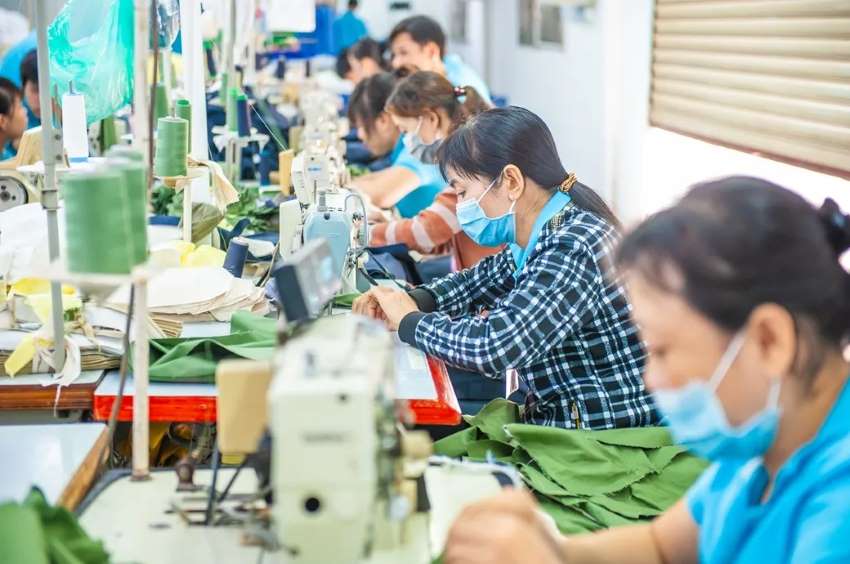
Sri Lanka recorded its highest-ever level of apparel exports during the year ending December 2017. The Joint Apparel Association Forum (JAAF) reports that Sri Lanka's total apparel export figure last year was over $4.8 billion, which was an increase of 3.06 per cent over 2016. However, Sri Lanka has not yet announced its official full-year (2017) total textile export figures. During 2017, Sri Lanka had exported apparel valued at over $2.2 billion to the US (up by 1.9 per cent as against 2016), $2.0 billion worth of apparel to EU nations (up by 4 per cent) and $630 million to the rest of the world (up by 3.7 per cent) .
JAAFs general secretary Tuly Cooray has said they had set an ambitious target of $5.2 billion in textile and apparel exports for 2018 and an $8 billion apparel export target in 2020. "We are happy to say that we are gradually gaining the benefits of GSP+; during the last two or three months, it has really boosted our exports," he said. The apparel sector in Sri Lanka's is both the highest industrial employment generator and its highest foreign exchange earner.
The Central Bank, in a statement, said Sri Lanka's export earnings from garments increased for the fifth consecutive month in November 2017, largely due to increased demand from the EU, the US and non-traditional markets such as Australia, Hong Kong and the UAE. Their records show Sri Lanka's earnings from textiles and garments during the first eleven months of 2017 increased by 1.6 per cent year-on-year to $4.6 billion.
The first eleven months of 2017 recorded $1.96 billion in exports to the US and $1.8 billion in exports to the EU. Post restoration of the GSP+ facility, earnings from garment exports to the EU continued to grow and in November 2017, it grew by 13.8 per cent year-on-year, while garment exports to the US increased by 11.9 per cent.
Oerlikon Barmag focuses on Asia
Switzerland-based systems manufacturer Oerlikon Barmag is a solutions provider of efficient production processes. The new systems that will be commissioned over this year are primarily focused on the Asian region; however, Oerlikon is experiencing huge demand for industrial yarn systems from producers in Europe due to the comparably high margins and specialized areas of application. Customers are asking for products that offer an interesting margin, such as specialties and industrial yarns.
The company’s current machine concepts for industrial fine-titer nylon yarns allow it to offer configurations that are specifically tailored to the product requirements of the end application of these yarns, such as tents, tarpaulins, parachutes, etc. The focus of the machine design is both on the product quality of the yarns in typical titer ranges of between 20 and 70 den and on production efficiency and, above all, on the optimization of the conversion costs.
The market for industrial yarns is continuing to diversify and develop very much in line with specific end applications. The rising demand for so-called high-performance tires is resulting in both increased demand for PET HMLS yarns and in greater output of PA66 yarns for use in cap ply. The vast majority of the additional output of polyester and polyamide yarns will be deployed in the automotive sector (airbags, safety belts, tire cord).
NHPA conference in Prague on March 7 and 8
Conversion of recycled carbon fibre composites into second life products’ will be a key theme at the forthcoming Nonwovens for High Performance Applications conference (NHPA 2017) that takes place in Prague on March 7 and 8. In the last year, ELG Carbon Fibre began manufacturing a range of nonwoven mats on a new production line at its plant in Coseley, UK.
The line, has been custom built to produce a variety of nonwoven materials, including 100 per cent recycled carbon fibre mats and thermoplastic blends such as carbon fibre mixed with PP, PA, PPS fibres. The machine is unique in being able to use reclaimed carbon fibres that have been obtained through pyrolysis of scrap prepreg materials or cured laminates, providing important feedstock flexibility compared to existing equipment available in the marketplace which can only accept dry manufacturing waste.
The obstacles the company has overcome in creating its new Carbiso M and Carbiso TM materials will be highlighted and the major opportunites offered by recycled carbon products will be discussed. ELG believes its range of materials will strongly appeal to OEMs in the transportation sector seeking cost effective options for lightweighting with its another key theme the conference.
In a keynote address at the Prague conference, Michael Effing, President of Composites Germany would talk about the current and future opportunities for nonwovens and other technical textile reinforcements in the fast-moving environment that is Europe’s composites industry. In the second keynote, sales director for industrial nonwovens at Tenowo Detlev, Käppel will explain how his company has transformed itself from a traditional German textiles company into a 21st Century leader in engineered nonwovens – most notably in lightweight components for the automotive sector.
In charting the company’s progress, the parallel expansion of a product portfolio of highly-engineered nonwovens and technical textiles will be detailed and lessons learned along the way shared. Tenowo has constantly expanded and now has major manufacturing plants in the USA, India and China as well as in Germany.
India to chalk out strategy for WTO-Nairobi meet
After submitting a concept note on a trade facilitation agreement on services at the World Trade Organization (WTO), India is planning to firm up its strategy for the next course of action across key issues at the multilateral body. The idea is to prepare a road map for post-Nairobi ministerial world order and take stock of steps already taken by the country at the WTO.
Doha round of negotiations has remained stalled since 2008 primarily over the issue of huge trade-distorting subsidies being given to farmers by rich countries. The fundamental objective at Doha was to improve trading prospects for developing nations. While India and other developing nations are waiting for this, developed countries are seeking to mostly dilute the negotiations and widen the mandate with new issues including e-commerce and the global value chain.
India has also been seeking concrete work plans on a special safeguard mechanism for developing countries to protect their farmers from a spurt in imports and on a permanent solution to the issue of its official grain procurement and food security in the country as agreed on in the Bali ministerial. The foreign trade policy of April 2015 targeted to double export of goods and services to 900 billion dollars by 2020.
Amazon US launches active wear
US retailer Amazon is launching a line of private label active wear brands. The retailer already owns at least seven of its own trademarked brands that are already selling through the e-commerce site: Franklin & Freeman, Franklin Tailored, James & Erin, Lark & Ro, North Eleven, Scout + Ro, and Society New York.
The company plans to beef up its in-house clothing brands in the coming months, expanding both its men's and women's lines. Amazon has also been spending more on fashion acquisitions lately, scooping up online stores like ShopBop, MyHabit, and EastDane. And in 2015 it sponsored the New York Men's Fashion Week for the first time. Amazon's total share of the US apparel market is expected to jump from five per cent in 2014 to 14 per cent by 2020, making it the largest US apparel retailer, replacing the current leader, Macy's.
Meanwhile in India Amazon has included a new selection of about 150 Indian and international premium brands like Emporio Armani, Tarun Tahiliani, Versace, Payal Pratap and Monisha Jaising. The platform has about 70 exclusive brand partnerships. Not just apparel, the website has also added luxury watches on its e-shelves like Invicta, Stuhrling, August Steiner, Burgi and Akribos. The sale of watches has been contributing 15 per cent to Amazon’s fashion business, with the business in premium watches doubling in October this year.
Amazon in fray to buy American Apparel
Online giant Amazon and Forever 21 are bidding to buy teen retailer American Apparel. Employees are bracing for the worst. Security has been ramped up at the Los Angeles headquarters, where the company employs more than 3,000 factory and administrative workers. Notices about career training and job placement have been posted in elevators.
American Apparel filed for Chapter 11 bankruptcy in the US in October 2015. American Apparel, based in Los Angeles, began as a wholesale T-shirt business in 1998. It eventually built an image around provocative advertising for fashionable merchandise. But the hoped-for turnaround of the clothing manufacturer and retail chain—which has long grappled with shrinking sales and an outsize store footprint—did not happen. A plan to improve online selling didn't pay off, and, at a time when shoppers are going online in greater and greater numbers, American Apparel watched its online sales fall.
The brand has 110 stores in the US and 83 others around the world including UK, Ireland, Germany, Spain, Canada, Japan and Australia. The UK stores have been shut. At least eight US teen retailers have filed for bankruptcy in the past two years as the spending habits of young people shift and they visit malls less often.
Safexpress laps up the CII SCALE Awards, 2016
"Safexpress, Knowledge Leader and Market Leader of supply chain & logistics industry in the country, has been honored with the Overall Excellence in Supply Chain & Logistics Award by CII SCALE Awards 2016. The award ceremony took place at Hotel Le Meridian, New Delhi on the December 16 last year. The awards recognize and celebrate the outstanding achievements of a company for their exceptional efforts in developing the business to a stage which essentially would facilitate next level of growth."
Safexpress, Knowledge Leader and Market Leader of supply chain & logistics industry in the country, has been honored with the Overall Excellence in Supply Chain & Logistics Award by CII SCALE Awards 2016. The award ceremony took place at Hotel Le Meridian, New Delhi on the December 16 last year. The awards recognize and celebrate the outstanding achievements of a company for their exceptional efforts in developing the business to a stage which essentially would facilitate next level of growth. The award has been presented in recognition of the firm’s performance in the field of Road Transportation, 3PL and Warehousing since the last two decades.
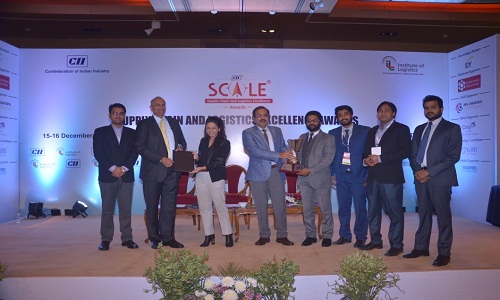
For its massive contribution in the field of skillng, Safeducate, a specialist in supply chain and logistics training, has been honoured with Best Training and Skill Development Company Award by CII SCALE Awards 2016. Speaking on the occasion, Rubal Jain said that supply chain and logistics industry was one of the largest employment generators in the country and happens to be the backbone of the economy. India’s supply chain & logistics industry is poised for an accelerated growth. With India striving to become the global manufacturing hub, it needs to radically improve its supply chain in order to best utilize the various opportunities in the national and international markets. Since it is a people-intensive industry, therefore availability of quality manpower is extremely vital for the success of this industry. For the last many years, Safexpress has been driving a 3PL revolution in the country. On its part, the firm was adding maximum value to businesses at every level, right from providing world-class warehousing support to ensuring time-definite deliveries of goods anywhere in India.
Also speaking on the occasion, Ms Divya Jain averred that this award was an acknowledgement of the organisation’s passion and assertive ideas in the field of supply chain & logistics training and added “Safeducate has been working towards bridging the huge skill gaps prevalent in the Indian economy. Under the Skill India Mission launched in 2015 by the Prime Minister Narendra Modi and Union Minister of State for Skill Development & Entrepreneurship, Rajiv Pratap Rudy, the organization created the Safeducate Container School last year”.
Beginning its journey in 1997, Safexpress began with a mission of delivering logistics excellence to its customers and ensuring their success. Today, the firm has firmly entrenched itself as the ‘Knowledge Leader’ and ‘Market Leader’ of supply chain & logistics industry in India. It offers a wide range of innovative supply chain services including Express Distribution, 3PL and consulting.
Alessandro Michele gives a fresh look, feel to iconic brand Gucci
"The appointment of à la Alessandro Michele, the quiet Italian creative, to the Gucci team has created quite a buzz in the fashion world owing to his womenswear debut in Milan in February 2015. The ‘multicolored, sparkly’ frocks from that collection have grabbed eyeballs of fashion police. He has been a favourite among celebrities, bloggers, buyers, and editors for his designs – from floral print garments to kangaroo fur lined shoes."

The appointment of à la Alessandro Michele, the quiet Italian creative, to the Gucci team has created quite a buzz in the fashion world owing to his womenswear debut in Milan in February 2015. The ‘multicolored, sparkly’ frocks from that collection have grabbed eyeballs of fashion police. He has been a favourite among celebrities, bloggers, buyers, and editors for his designs – from floral print garments to kangaroo fur lined shoes.
Why is the need for so much drama about the appointment of new creative or major shake ups in the fashion world? Vanessa Friedman explained that products themselves require investment. They are not cheap. Consumers have to believe they will hold their meaning over time. And the meaning is created by the designer.
What it means for the luxury fashion?
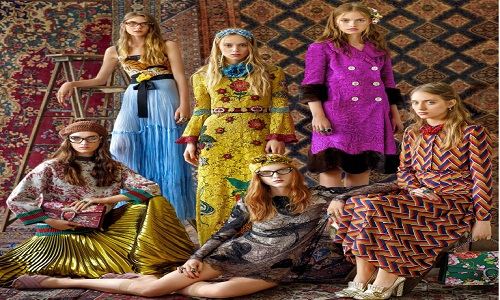
The recent announcement has certainly given fellow Italian brand, Prada, a run for its money in terms of being one of the most anticipated and talked-about shows during any given season and has given Gucci another lease of life to become the most favoured luxury brand. It is believed that consumers may just be buying a lot more Gucci than before. The house has posted growth (Gucci revenue advanced 4.8 per cent for the fourth quarter of 2015, compared with the 1.5 per cent growth expected by analysts, as reported in February), whereas its Prada continues to struggle in that regard.
Gucci has taken its newfound fame and capitalized on it, using celebrities as leverage. For the editors and columnists of leading fashion journals, Gucci is the celebrity’s go-to brand at the moment because it’s the hottest brand around, their photos go viral when they wear it, and Gucci is brilliant about working with celebs.
There is also something to be said for making and showing clothes people actually want to wear – something few houses have managed to do quite as well (as indicated by their need to revamp other aspects of their brands, such as the runway schedule and their deliveries, in an attempt to lure consumers back into stores).
Giving a historic touch
Michele has tapped a nerve. He is drawing bits and pieces from many other labels and putting them together, as per the fashion analysts, which is working well for the brand. He has again brought back the social media frenzy for the brand with celebrities and socialites flaunting the Gucci collection in their posts. It seems Gucci is doing it right from every angle: public relations, the right amount of accessibility, celebrity endorsement, street style endorsement, and this season, help from an edgy street artist.
Gucci is the brand for the ultimate maximalist. Pushing perhaps even higher than Miuccia Prada’s label, Michele layers historical reference on historical reference, creating a collection that is a carefully created dressing-up box of aesthetically beautiful and well-crafted clothes. It is expected that with such creations, profits will rise steadily into the double-digit increases. In a landscape that is pushing for more disruption of the traditional high fashion model, including a wider sense of inclusiveness, there is certainly something worth mentioning Michele’s approach.
Fast fashion is about quick copying
The Spanish brand Zara has a huge reputation for fast fashion but apparently it also has a reputation for stealing designs.
One of its victims is German apparel brand Acronym. Zara has begun incorporating a functional strap into the insides of its some of its coats, which is similar to Acronym’s double-strap backpack-style version. The cross body jacket styling grabbed the attention of millions when rapper Kanye West wore an Acronym jacket on stage during a concert.
In fact Acronym has been ripped off by a lot of designers and brands. But the level of quality and of technical capabilities associated with Acronym's garments - the majority of which include years of research and development - are completely unrivaled by the subsequent copies.
Acronym, which opened in 2002, has limited distribution channels. The brand does not engage in traditional advertising and its price points are high. Also the fact that it has a low key profile emboldens copying to take place.
Replicas are a major problem for the fashion industry. There is a whole spectrum for copying – ranging from cheap knock-offs to accurate reproductions. While most replicas are poor copies, replacing embroidery with print and using inferior fabric, there are some replicas that mimic the originals well.
Chumbak applies for single license
Chumbak Designs, based in Bangalore, is a foreign-funded homegrown single brand company.
It opened in 2010 and initially supplied to multi-brand stores. Today it operates 18 Chumbak-branded stores in various popular malls and high streets. In recent years, Chumbak has also diversified into apparel and fashion accessories for men and women like wallets and bags as well as home products. It retails over 100 categories.
Chumbak has applied for a single brand license that will allow them to carry out retailing through brick-and-mortar as well as online stores.
In November 2015, India allowed foreign-funded local manufacturers that are controlled by Indians to sell their products through company-owned e-commerce platforms, provided such firms manufacture 70 per cent of their total products themselves and source the rest from local companies.
Prior to that, such companies could sell online only if they manufactured 100 per cent of their products themselves. Currently, an unified single brand permission allows such companies that sell a host of products under a single label to sell through various retailing options including wholesaling, own stores, franchisees and through company owned e-commerce.
Like Chumbak, others like Fabindia and online furniture seller Urban Ladder are seeking such a single brand license.