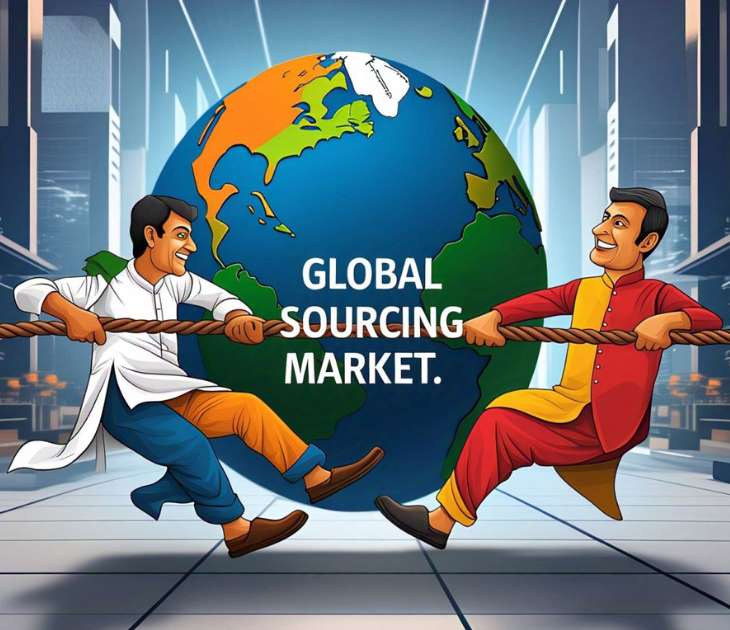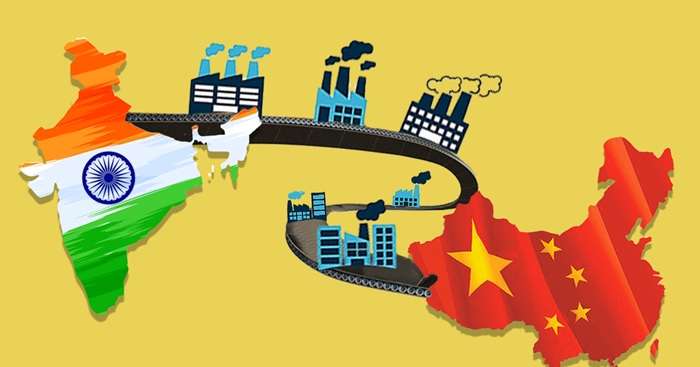
With the US imposing a flat 15 per cent tariff on Chinese imports under Section 122 as of February 2026, brands are scrambling for alternatives. The assumption that this diverted business will flow seamlessly to India is proving overly simplistic. While Indian textile exporters are looking at an increase in enquiries, the real challenge is less about capacity and more about capability. India faces a capability test, where speed, flexibility, and end-to-end operational competence determine who truly wins.
The speed-to-market trap
The era of the standard 1,000-unit minimum order is rapidly fading. Retailers are shifting toward small-batch production: 100-unit capsule launches, followed by restocks of 500 units in days. This model demands agility, rapid response, and robust coordination across the value chain. China, with decades of experience in absorbing such volatility, remains unmatched. Indian mills, historically optimized for large, slow-moving cotton cycles, are struggling to keep pace. Data for the first half of FY26 shows India’s Readymade Garment (RMG) exports rising to $6.77 billion, a 5.78 per cent increase. While growth is positive, it lags behind Vietnam, which is seeing double-digit increase.
Supply chain analysts say, the 'obvious' shift to India is hitting a bottleneck of agility. Brands aren’t just looking for a new zip code; they want partners who can manage the entire value chain from yarn to finished garment without coordination chaos.
The synthetic fiber deficit
India’s limitation lies in its production mix. Global demand favors Man-Made Fibers (MMF) and high-performance polyesters, areas where China dominates. Vietnam has ridden this shift, now exporting a basket that is 56 per cent MMF. In contrast, India remains 30 per cent MMF, with the remainder predominantly cotton.
Table: Country RMG exports and advantage
|
Country |
Projected RMG exports (FY26) |
MMF share (%) |
Competitive advantage |
|
China |
$170 bn |
70%+ |
End-to-end ecosystem & speed |
|
Vietnam |
$48 bn |
56% |
FTAs & high synthetic integration |
|
Bangladesh |
$45 bn |
28% |
Massive scale & low-cost labor |
|
India |
$17.5 bn |
30% |
PLI schemes & raw material base |
This imbalance underscores that capturing global orders is not simply a matter of offering competitive pricing; it requires a move toward high-synthetic, fast-response production systems.
Vertical integration as a resilience play
Companies that control the end-to-end process from fiber to finished garment are already moving ahead. KPR Mill, one of India’s largest integrated textile players, exemplifies this approach. In FY25, KPR reported consolidated revenue of Rs 6,462 crore while sustaining a 20.4 per cent EBITDA margin despite global headwinds. KPR’s edge lies in its ability to eliminate coordination chaos. By managing spinning, weaving, and garmenting in-house, it delivers the transparency and traceability demanded by EU Digital Product Passport (DPP) regulations. Its 190 MW of self-generated green energy also meets the ESG benchmarks global buyers increasingly require for long-term sourcing partnerships.
Geopolitical and logistical hurdles
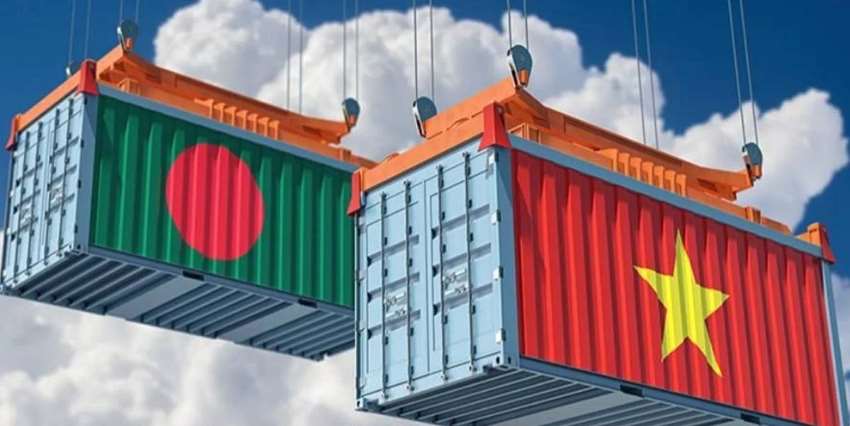
External shocks complicate India’s opportunity. The Red Sea crisis has inflated shipping costs by 40-60 per cent and added up to 20 days to transit times for Indian exports to Europe and the US East Coast. For low-margin products, these delays render Indian exports less competitive than Southeast Asian alternatives that use shorter maritime routes. Trade agreements offer only partial relief. While the India-UK FTA (July 2025) eliminates the 10-12 per cent tariff disadvantage in that corridor, Indian exporters still face an average 9.6 per cent tariff in the EU. Bangladesh, enjoying LDC status, and Vietnam, via the EVFTA, benefit from preferential or zero-duty access, giving them a structural advantage.
The scale paradox
India’s textile landscape remains fragmented. Unlike the mega-factories of Guangzhou or Dhaka, most Indian facilities are small- to mid-sized, with inconsistent management systems and variable production discipline. This makes plug-and-play scaling difficult. The real question is not whether brands will come to India, but whether India can retain them once they do. Without infrastructure upgrades and standardized operational protocols, the China plus One opportunity risks flowing instead to Vietnam and Bangladesh by default.
India’s textile ambitions
India is the world’s second-largest textile producer, contributing 2.3 per cent to GDP and employing 45 million people. Traditionally a cotton specialist, the country is shifting toward MMF and technical textiles. Government-backed PLI incentives of Rs 42,000 crore and seven PM MITRA mega-parks are central to this strategy, with a goal of reaching $100 billion in textile exports by 2030. These initiatives aim to align India’s production capabilities with global demand for speed, synthetic integration, and sustainability compliance.
In the end, the China exodus is both a massive opportunity and a challenge. India’s future success will depend less on its scale and more on its ability to combine capacity with capability matching global expectations for agility, integration, and traceable compliance. For now, the race is as much about structural readiness as it is about market access.