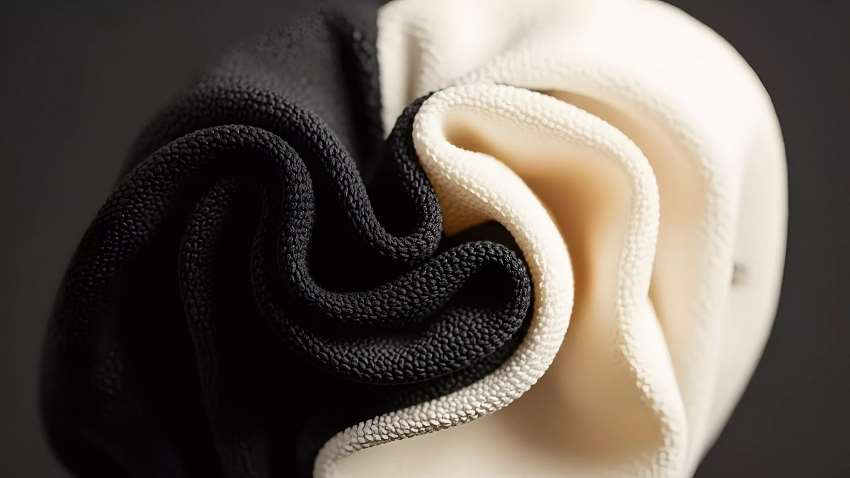
Chinese sweaters, caps, pullovers, sweaters, children’s dresses, mufflers, and blankets are flooding Ludhiana, the hosiery capital of India. They look stylish, attractive and have a large variety of designs and cheap pricing, which make them popular among buyers. These Chinese hosiery items are priced around 15 to 20 per cent lower than locally made products.
It’s estimated that these Chinese imports have occupied around 20 per cent of the market. If an Indian cap costs Rs 400, a China-made cap costs around Rs 300. There are several reasons for the increasing share of such goods in the market. First, they are of better quality due to high class machinery. Also the Chinese government promotes technological advancements. If industrialists in Ludhiana want to install high-tech machines, they have to pay an interest of 10 to 13 per cent. In Japan they pay three per cent. But in China, the loan is interest-free. The industry in Ludhiana wants similar schemes that will promote it and enable it to flourish.
It’s estimated that Chinese products could have a much higher share in the cities of coastal India like Chennai, due to less freight charges. About 85 to 90 per cent of the demand of the woolen market in India is met by Ludhiana. Most of these units are small- and medium-sized.
- 1
- 2
- 3
- 4
- 5
- 6
- 7
- 8
- 9
- 10
PM MITRA parks face execution test as India’s textile exports recalibrate
India’s textile and apparel sector closed FY 2025-26 with exports worth Rs 3,16,334.9 crore, a 2.1 per cent increase that,... Read more
Dominance of Pure Play: Apparel is rewiring growth around precision, AI and trac…
The global fashion industry is entering a structural reset, and it’s not just because of cyclical demand decline or tariff... Read more
New Australian Wardrobe Economy: Where AI, sustainability, e-commerce converge
Australia’s fashion and apparel industry is no longer defined by post-pandemic recovery; it has entered a transformative phase. According to... Read more
Intertextile Shenzhen 2026- Pioneering the AI-driven future of fashion technolog…
The global textile industry is descending upon the Shenzhen Convention & Exhibition Center from June 9–11, 2026, for the highly... Read more
Yarn Expo Shenzhen 2026: GBA connectivity and AI innovation drive mid-year sourc…
The global textile industry is preparing for a strategic return to the South China manufacturing heartland as Yarn Expo Shenzhen... Read more
Indo-Dutch alliance targets textile circularity as global green jobs hit 142 mn
Netherlands and India formalized a roadmap to scale circular design and textile recycling. At the FICCI RECEIC Global Symposium 2026... Read more
Redefining what responsible production looks like
India's textile and apparel sector has set the global benchmark for sustainability at scale, and two clusters are leading the... Read more
China’s duty-free revival meets a reality check as Hainan shifts from VICs to va…
Hainan’s retail recovery is beginning to look less like a cyclical rebound and more like a rewiring of China’s domestic... Read more
Zombie inventory and shrinking margins inside China’s fashion returns meltdown
China’s digital fashion market, long celebrated as the world’s most sophisticated test bed for e-commerce innovation, is facing a destabilising... Read more
Circularity by Design: How EU rules are turning data into fashion’s new currency
The European fashion sector has entered a compressed transition window. Two regulatory confirmations: the revised EU Textile Labelling Regulation (effective... Read more