Pakistan’s textile industry has experienced decreasing investments over the last decade. Potential investors have been hesitant to make new investments due to high business costs. This has caused the sector to miss out on technological advantages to its competitors.
Currently around 35 per cent of the textile industry’s production capacity is impaired. The industry will need an additional 10.3 million bales of raw cotton, 345 million kilograms of manmade fiber, 1.98 billion kilograms of additional yarn and an additional 7.93 billion square meters of processed fiber.
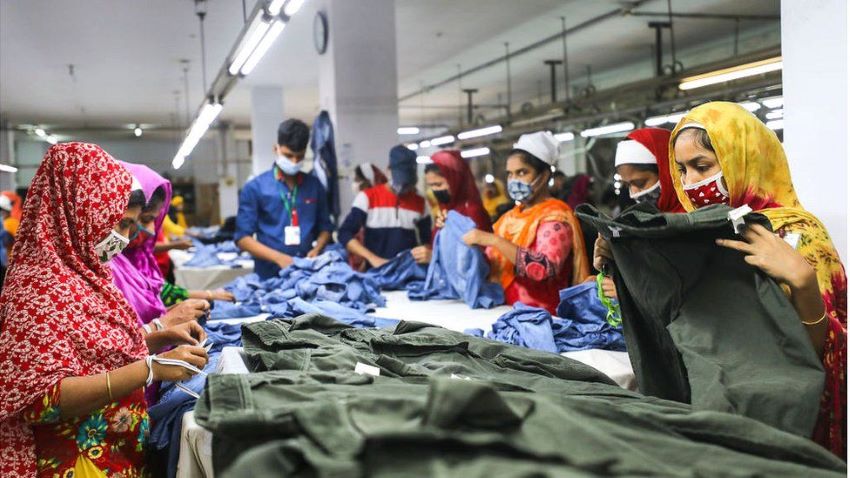
Although the textile sector has performed poorly overall, readymade garments have shown reasonable growth. Exports of readymade garments registered a 5.55 per cent year-on-year growth against the overall flat growth of the textile sector. The industry wants long-term financing facility for indirect exports, Islamic financing and building of infrastructure for garment plants. It has also sought a long-term policy which includes consistent energy prices across the country, removal of the surcharge on the electricity tariff along with extending the duty drawback scheme for five years with drawbacks to be increased every year by one per cent for garments (up to 12 per cent) and made-ups (up to ten per cent) against realisation of export proceeds.
- 1
- 2
- 3
- 4
- 5
- 6
- 7
- 8
- 9
- 10
Beyond Cotton How Kapok could redefine sustainable insulation in textiles
In the lush, humid heart of Southeast Asian rainforests stands a giant, a silent sentinel of the forest canopy. Growing... Read more
Bharat Tex 2026: Redefining the global textile value chain
Union Minister of Textiles, Giriraj Singh, has officially unveiled Bharat Tex 2026, signaling a significant leap in India’s influence over... Read more
Intertextile Shanghai Spring 2026: A hub for global textile innovation
The textile industry’s pulse is quickening as Intertextile Shanghai Apparel Fabrics – Spring Edition prepares to open its doors from... Read more
Moscow Fashion Week 2026: Blending sustainable innovation with timeless glamour
Scheduled to run from March 14-19, 2026 in Moscow, Russia, the Moscow Fashion Week (MFW) is cementing its status as... Read more
The Store as Stage: How fashion is crafting immersive consumer worlds
The North American fashion retail sector in 2026 is shedding its product-first identity and shifting towards a model that values... Read more
Turning the supply chain upside down, on-demand production reshapes apparel
The global fashion industry, long celebrated for its creativity and scale, is facing a structural reckoning. For decades, retailers and... Read more
Intertex Milano 2026 - A global nexus for textile innovation
Intertex Milano is set to return this summer, confirming its status as a premier international destination for the textile and... Read more
Primark at crossroads as AB Foods weighs spin-off amid digital and Lefties press…
The long-standing supremacy of Europe’s budget fashion champion, Primark, is facing a test. As of February 2026, Associated British Foods... Read more
Vietnam, Bangladesh, Cambodia drive US apparel imports in 2025
The 2025 year-end data for the US apparel sector reveals an industry in structural flux. Despite aggressive tariff measures and... Read more
The New Dress Code: Sportswear’s takeover of modern wardrobes
For much of the last decade, fashion retail has been defined by volatility. Trends have shortened, discount cycles have intensified... Read more