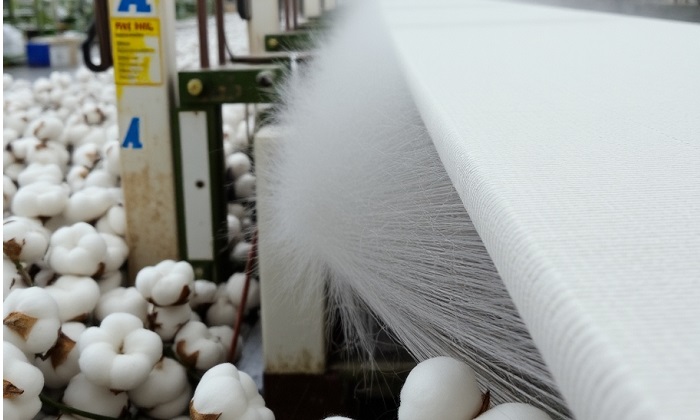
The demand for airbags yarn is expected to increase by five per cent annually over the next five years. Reason for the increased demand for airbag yarns is the global rise of road safety requirements. India has revised vehicle safety rules and regulations. The new version, which comes into force in 2017, demands greater occupant safety, particularly with regards to side and front impact. Compliance with these new safety rules and regulations can only be achieved with the installation of airbags.
The average volume of textile fibers and filaments in automobiles is around 30 kg; just under 19 per cent of this is airbag yarn. This opens up a highly-profitable growth market for industrial yarn manufacturers. Greater safety in vehicles is also a much-discussed topic in Latin America, which is having a positive impact on the airbag and safety belt manufacturing industry: two South Korean airbag producers have already announced investments in Central America.
To date, airbags have been predominantly manufactured using polyamide 6.6 yarns. However, there is a noticeable trend towards polyester. Industrial yarn producers are increasingly perceiving the airbag yarn segment as a growth market. To this end, four projects for manufacturing airbag yarns from polyamide 6.6 and polyester supplied by systems builder Oerlikon Barmag have been successfully commissioned in the past 12 months alone.
- 1
- 2
- 3
- 4
- 5
- 6
- 7
- 8
- 9
- 10
Bharat Tex 2026: Redefining the global textile value chain
Union Minister of Textiles, Giriraj Singh, has officially unveiled Bharat Tex 2026, signaling a significant leap in India’s influence over... Read more
Intertextile Shanghai Spring 2026: A hub for global textile innovation
The textile industry’s pulse is quickening as Intertextile Shanghai Apparel Fabrics – Spring Edition prepares to open its doors from... Read more
Moscow Fashion Week 2026: Blending sustainable innovation with timeless glamour
Scheduled to run from March 14-19, 2026 in Moscow, Russia, the Moscow Fashion Week (MFW) is cementing its status as... Read more
The Store as Stage: How fashion is crafting immersive consumer worlds
The North American fashion retail sector in 2026 is shedding its product-first identity and shifting towards a model that values... Read more
Turning the supply chain upside down, on-demand production reshapes apparel
The global fashion industry, long celebrated for its creativity and scale, is facing a structural reckoning. For decades, retailers and... Read more
Intertex Milano 2026 - A global nexus for textile innovation
Intertex Milano is set to return this summer, confirming its status as a premier international destination for the textile and... Read more
Primark at crossroads as AB Foods weighs spin-off amid digital and Lefties press…
The long-standing supremacy of Europe’s budget fashion champion, Primark, is facing a test. As of February 2026, Associated British Foods... Read more
Vietnam, Bangladesh, Cambodia drive US apparel imports in 2025
The 2025 year-end data for the US apparel sector reveals an industry in structural flux. Despite aggressive tariff measures and... Read more
The New Dress Code: Sportswear’s takeover of modern wardrobes
For much of the last decade, fashion retail has been defined by volatility. Trends have shortened, discount cycles have intensified... Read more
Hemp finds its moment in India’s $500 billion American trade calculus
In the grand arithmetic of India’s expanding trade engagement with the US, the headlines usually gravitate toward oil cargoes, aircraft... Read more