Online shopping has permanently altered fashion consumption, making convenience, algorithmic recommendations, endless assortment and doorstep delivery standard expectations. Yet the economics of digital retail are forcing fashion companies to reassess the role of the physical store.
Increasing customer acquisition costs, tighter privacy regulations and high e-commerce return rates are putting pressure on digital margins. At the same time, stores are evolving from transactional outlets into experiential, fulfilment and customer-engagement hubs.
The shift does not signal a retreat from e-commerce. Instead, fashion retailers are building integrated models in which digital channels generate discovery while physical stores drive product validation, conversion, fulfilment and loyalty.
Stores make a comeback
Physical retail continues to account for nearly 80 per cent of global retail sales, underlining the commercial importance of stores despite the rapid expansion of online commerce. For fashion, the physical advantage is particularly pronounced. Consumers can assess fabric texture, colour, drape and fit before purchase attributes that remain difficult to reproduce on a smartphone screen.
The economics are also significant. Online apparel return rates can reach 20-40 per cent, compared with around 8-10 per cent in physical stores. Bracketing, where consumers order multiple sizes or colours with the intention of returning most of them, adds considerable reverse-logistics costs to digital fashion businesses.
Table: Category Return Rates & Omnichannel Economics
|
Product category |
Online return rate |
In-store return rate |
Return drivers |
|
Apparel & Fast Fashion |
20.0% – 40.0% |
8.0% – 10.0% |
Sizing inconsistencies, fit mismatch, "bracketing" |
|
Footwear & Shoes |
17.0% – 30.0% |
6.0% – 9.0% |
Comfort issues, tactile arch support validation |
|
Accessories & Bags |
12.0% – 22.0% |
4.0% – 7.0% |
Material expectation mismatch, size proportion |
|
Beauty & Personal Care |
1.0% – 5.0% |
Less than 2.0% |
Hygiene restrictions, product sampling in-store |
Physical stores also function as return-processing centres. More than half of shoppers prefer returning online purchases at physical outlets, giving retailers an opportunity to recover part of the lost transaction through additional purchases.
Technology enters the fitting room
Fashion companies are consequently redirecting investment towards technology-enabled stores. Smart fitting-room mirrors can recommend complementary products, RFID systems provide real-time inventory visibility, and mobile checkout tools reduce queues. Digital screens and interactive displays can connect physical merchandise with broader online inventories, allowing shoppers to order unavailable sizes or colours without leaving the store.
The emergence of digital product passports could further strengthen this model. As regulatory requirements around product traceability and sustainability expand, scannable garment-level information can allow consumers to access details about materials, provenance and supply chains directly from the shop floor.
The objective is not to make stores resemble websites. It is to combine the convenience of digital commerce with the sensory advantages of physical retail.
Omnichannel economics take centre stage
The strongest argument for stores lies beyond the sales counter. A physical outlet can simultaneously function as a showroom, fulfilment point, returns centre, customer-service location and local inventory hub. This gives retailers greater flexibility in managing stock while reducing the distance between merchandise and consumers.
Industry research indicates that omnichannel retailers using stores for online order returns can reduce blended return-processing costs substantially. Buy Online, Return In Store (BORIS) also creates an additional opportunity for impulse purchases, turning what would otherwise be a costly reverse-logistics transaction into a customer-engagement moment.
The economics therefore favour retailers that can make inventory work across channels rather than treating e-commerce and stores as separate businesses.
Zara shows the new rules
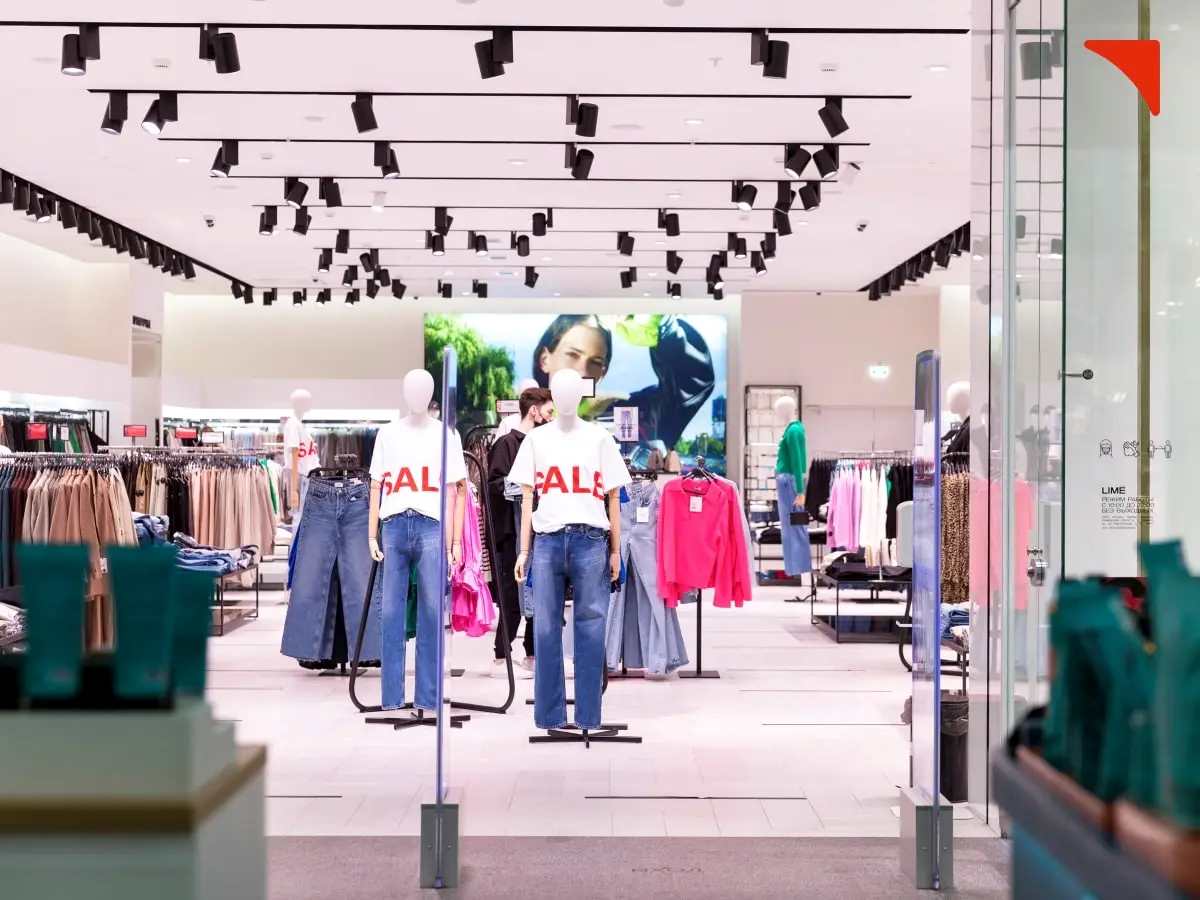
Inditex, the Spanish parent of Zara, illustrates how the physical store is being redefined. Rather than simply expanding sales-floor density, leading Zara locations have increasingly incorporated curated displays, automated collection infrastructure and digitally connected inventory systems. Click-and-collect facilities allow stores to handle large volumes of online orders, while redesigned interiors place greater emphasis on brand presentation and customer experience.
The strategy reflects a broader change in retail architecture: stores are becoming less like warehouses and more like physical media platforms.
Inditex operates more than 5,600 stores globally across brands including Zara, Massimo Dutti and Pull&Bear. The group has also invested heavily in technology, logistics and larger-format stores, demonstrating how physical expansion can coexist with sophisticated digital infrastructure.
Experience comes with a price
The physical-store revival, however, is not without risks. Transforming conventional outlets into technology-enabled destinations requires substantial capital expenditure. Smart mirrors, RFID infrastructure, spatial computing, automated fulfilment systems and redesigned interiors can increase investment requirements without guaranteeing an immediate improvement in sales.
Retailers also face the challenge of separating genuinely useful technology from expensive gimmicks. A customer who wants to try on a garment and leave quickly may value inventory accuracy and faster checkout more than an elaborate digital installation.
Store economics are particularly sensitive to rent, staffing, inventory productivity and footfall. As discretionary spending remains vulnerable to inflation and broader economic uncertainty, retailers need to ensure that experiential investments translate into measurable improvements in conversion, basket size, retention or operating efficiency.
The store becomes an ecosystem
The next phase of fashion retail is therefore unlikely to be defined by online versus offline competition. The more important battle will be over how effectively brands integrate the two.
Experiential retail is gaining momentum globally, with the market estimated at around $133 billion and projected to expand at a double-digit pace through the decade. Asia-Pacific is expected to remain among the fastest-growing regions, supported by urbanisation, rising consumption and the integration of social commerce with physical retail.
For fashion companies, the winning model will be neither a return to traditional stores nor an abandonment of digital commerce. It will be a unified retail ecosystem in which smartphones drive discovery, stores provide tactile validation, technology removes friction and inventory moves seamlessly between channels.
The fundamental lesson is simple: digital platforms may capture consumer attention, but physical stores still have the power to capture confidence and, ultimately, the wallet.