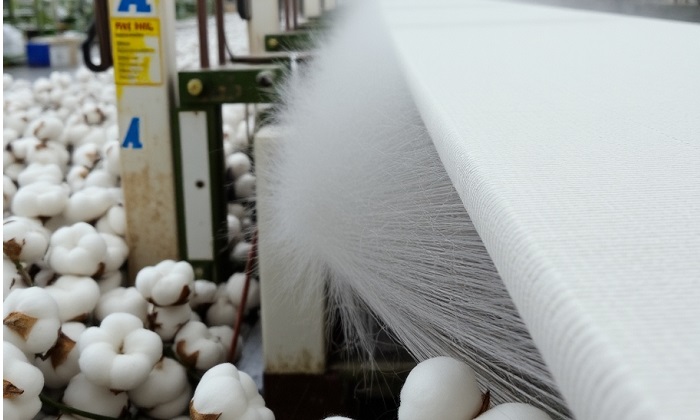
The Ministry of Textiles has initiated a structural overhaul of the domestic manufacturing framework, directing the industry to abandon its traditional ‘summer-centric’ focus in favor of a 12-month operational cycle. Union Textiles Minister Giriraj Singh recently identified, India’s current concentration on a four-month peak export window leaves significant revenue on the table, as the global apparel market demands year-round procurement. By diversifying production into winter wear and transitional garments, the government aims to boost India’s share of global textile trade from the current 4.7 per cent to an ambitious 14.7 per cent. This transition is supported by the National Fiber Mission, which seeks to scale annual fiber output from 15 million to 23 million metric tons, ensuring a steady supply of raw materials for diverse seasonal collections.
Strategic capital deployment and technical fiber adoption
Achieving the $100 billion export target by 2030-31 necessitates a projected $100 billion investment in automation and advanced manufacturing technologies. A critical component of this strategy is the shift from cotton-dominance to Man-Made Fibers (MMF) and Technical Textiles, which are essential for high-value functional clothing.
The upcoming Bharat Tex 2026 exhibition in New Delhi will act as a commercial catalyst, leveraging $465 billion in market access recently secured through new Free Trade Agreements. Scaling up manufacturing excellence is no longer optional if we are to compete with the diversified seasonal calendars of Vietnam and Bangladesh, noted a senior ministry official. This shift is expected to stabilize employment for 45 million workers by eliminating the seasonal troughs that historically disrupted industrial output.
The Indian textile industry is a primary economic driver, contributing 2.3 per cent to national GDP. Current growth plans involve the establishment of seven PM MITRA parks to centralize the value chain. Historically a cotton-led hub, the sector is now modernizing toward high-tech synthetic and functional fabrics to meet evolving global standards