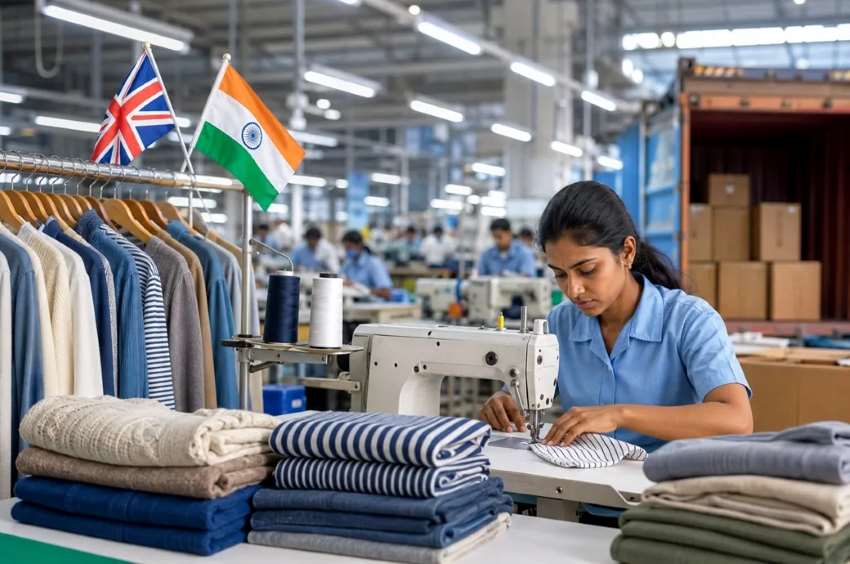
India will soon have a simplified textile policy. The new policy is aimed at increasing production and productivity of the textile sector, generating more employment, bringing down the cost of production, penetrating into newer markets, and introducing more value added products and focusing both on exports and domestic markets.
There may be some relaxation in labor laws such as allowing women to work at night. Some kind of tax incentives may be provided to weavers to make the sector attractive. This also includes tax holidays and interest subvention.
Most incentives or subsidies given now are production related. Those related to processing and skilling would be continued. Exports from India are expected to become unviable after 2017 as India is a signatory to WTO guidelines. There will be a review of subsidies and concessions. Some will be continued and some will be phased out. There may be production-related sops.
The Textile Upgradation Fund scheme has been revised. The growth of Indian textile sector has been hampered by factors such as high cost of production, sudden spurt in interest rates on working capital and an increase in labor wages. The industry has sought modifications in contract laws.
- 1
- 2
- 3
- 4
- 5
- 6
- 7
- 8
- 9
- 10
Industrial automation and AI take center stage at Garment Technology Expo (GTE) …
The conclusion of the 39th Garment Technology Expo (GTE 2026) in Greater Noida has signalled a decisive shift in South... Read more
The End of Geographic Masking: Shein and peers reclaim Made in China as a strate…
The era of the corporate ghost is ending. For years, the world’s most aggressive retail disruptors operated under ambiguity, relocating... Read more
$120 Crude, Zero Margin: How India’s textile hubs are paying the price
For India’s textile clusters, the current West Asia crisis is no longer a distant geopolitical headline. In Surat’s polyester corridors... Read more
Luxury under pressure as stagflation and geopolitics redefine the winners’ circl…
The 2025 earnings for Europe’s listed luxury majors have delivered a verdict that has far more implications than the prevailing... Read more
Luxury resale goes global, sneakers, handbags, archival fashion redrawing border…
The luxury resale market in 2026 is no longer a monolithic global block. According to the RB Insights January 2026... Read more
China out but can India deliver? The realities of the global sourcing shift
With the US imposing a flat 15 per cent tariff on Chinese imports under Section 122 as of February 2026,... Read more
Luxury in Retreat: Why the aspirational consumer is gone for good
The global luxury industry is confronting an unprecedented situation. The active consumer base, which peaked at 400 million in 2022,... Read more
The Invisible Bleed: How a single chemical is slowing India’s apparel machine
The global fashion industry has spent the better part of the past two years obsessing over visible disruptions viz. volatile... Read more
The Closet Paradox: How ‘nothing to wear’ is driving global overconsumption
In an era of overflowing wardrobes and instant fashion gratification, a striking paradox has emerged: the more clothes we own,... Read more
US trade rulings and labor slowdown reshape 2026 cotton supply chains
The global cotton industry is entering a period of adjustment, shaped by legal rulings, trade policy recalibrations, and a softening... Read more