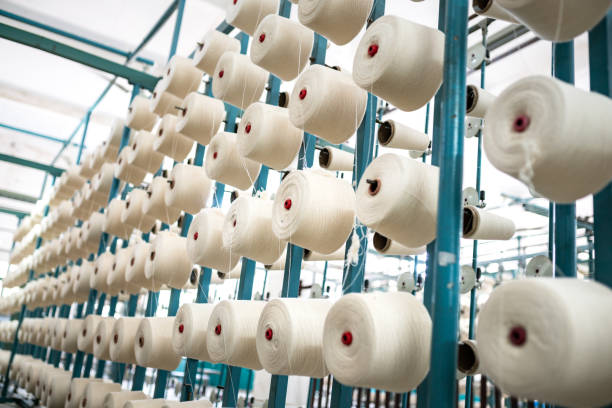
Despite having considerable wool production, Kashmir exports 34 lakh kg of wool a year at throwaway prices due to lack of processing units. This resulted in losses of crores of rupees to the state economy as well as farmers. The Wool Board is able to purchase only 1.5 lakh kg a year out of the 34 lakh kg produced in the valley. The board was established in 1980 for undertaking market interventions in the wool sector.
The wool exported from Kashmir to Punjab and other states does not fetch breeders more than Rs 80 or Rs 100 per kg and in return finished woolen products from the same wool are bought back to the valley costing thousands of rupees.
Monopoly of middle men continue as the Wool Board apart from doing limited grading and auctioning of wool is unable to work like a regulator of this industry in Kashmir. It is not even able to play the role of a rate fixation authority. Ideally it should have been setting a base price of wool purchase from breeder to exporters but there are many hurdles in doing so such as a resource crunch. Jammu and Kashmir in total produce almost 80 lakh kgs of wool annually.
- 1
- 2
- 3
- 4
- 5
- 6
- 7
- 8
- 9
- 10
PM MITRA parks face execution test as India’s textile exports recalibrate
India’s textile and apparel sector closed FY 2025-26 with exports worth Rs 3,16,334.9 crore, a 2.1 per cent increase that,... Read more
Dominance of Pure Play: Apparel is rewiring growth around precision, AI and trac…
The global fashion industry is entering a structural reset, and it’s not just because of cyclical demand decline or tariff... Read more
New Australian Wardrobe Economy: Where AI, sustainability, e-commerce converge
Australia’s fashion and apparel industry is no longer defined by post-pandemic recovery; it has entered a transformative phase. According to... Read more
Intertextile Shenzhen 2026- Pioneering the AI-driven future of fashion technolog…
The global textile industry is descending upon the Shenzhen Convention & Exhibition Center from June 9–11, 2026, for the highly... Read more
Yarn Expo Shenzhen 2026: GBA connectivity and AI innovation drive mid-year sourc…
The global textile industry is preparing for a strategic return to the South China manufacturing heartland as Yarn Expo Shenzhen... Read more
Indo-Dutch alliance targets textile circularity as global green jobs hit 142 mn
Netherlands and India formalized a roadmap to scale circular design and textile recycling. At the FICCI RECEIC Global Symposium 2026... Read more
Redefining what responsible production looks like
India's textile and apparel sector has set the global benchmark for sustainability at scale, and two clusters are leading the... Read more
China’s duty-free revival meets a reality check as Hainan shifts from VICs to va…
Hainan’s retail recovery is beginning to look less like a cyclical rebound and more like a rewiring of China’s domestic... Read more
Zombie inventory and shrinking margins inside China’s fashion returns meltdown
China’s digital fashion market, long celebrated as the world’s most sophisticated test bed for e-commerce innovation, is facing a destabilising... Read more
Circularity by Design: How EU rules are turning data into fashion’s new currency
The European fashion sector has entered a compressed transition window. Two regulatory confirmations: the revised EU Textile Labelling Regulation (effective... Read more