While much of the global apparel industry has focused on the rapid rise of digital-first retailers such as Shein and Temu, Spain's Inditex is pursuing a different strategy. Rather than building an entirely new low-cost retail model, the company is utilizing the scale, technology and supply chain that power Zara to transform Lefties into a formidable value-fashion competitor across Europe.
Originally created as an outlet chain for excess Zara inventory, Lefties has evolved into a standalone brand positioned to challenge established discount retailers including Primark, Kiabi and Gémo. The strategy goes beyond competing on price alone. By combining Inditex's sourcing capabilities, logistics network and omnichannel infrastructure, Lefties is emerging as a technology-enabled value retailer capable of delivering fast fashion at highly competitive prices.
Price meets scale
Inditex is positioning Lefties squarely within Europe's highly competitive budget apparel segment. Entry-level pricing across key apparel categories closely matches or undercuts traditional discount chains while remaining competitive with digital-only platforms.
Table: Core apparel pricing benchmarks in Euros
|
Product category |
Lefties (Inditex) |
Primark baseline |
Kiabi baseline |
Shein digital baseline |
|
Basic T-Shirt |
€3.99 |
€4.50 |
€4.00 |
€3.49 |
|
Casual Dress |
€9.90 |
€11.00 |
€10.00 |
€9.49 |
|
Standard Jeans |
€12.99 |
€15.00 |
€14.00 |
€13.99 |
|
Structured Shirt |
€15.99 |
€16.00 |
€15.00 |
€14.49 |
Industry observers note that the real competitive advantage lies not in marginal price differences but in the industrial ecosystem supporting Lefties. Unlike independent value retailers, the brand benefits from the same centralized sourcing, merchandising expertise and logistics capabilities that have made Zara one of the world's most efficient fashion businesses.
Powered by the Inditex group
The discount apparel market has traditionally been dominated by retailers with distinct competitive strengths. Primark relies on massive physical store volume, Shein has perfected algorithm-driven online merchandising, while Kiabi leverages strong regional market penetration. Lefties combines elements of all three while drawing on Inditex's global infrastructure.
Table: Retail competitor analysis
|
Retailer brand |
Parent entity |
Core operational strategy |
Primary supply chain advantage |
Digital capability focus |
Average Est. margin profile |
|
Lefties |
Inditex Group |
Tech-Driven Value Flagships |
Centralized Logistics & Nearshore Sourcing |
Omnichannel: Click-&-Collect / RFID Sync |
Moderate (High Group Backup) |
|
Primark |
Associated British Foods |
High Physical Store Volume |
Massive Long-lead Far East Sourcing |
Limited (Click-&-Collect Only Trial) |
Low to Moderate |
|
Kiabi |
Association Familiale Mulliez |
Regional Proximity & Family Focus |
Established French/European Hubs |
Standard E-commerce Baseline |
Moderate |
|
Shein |
Independent Entity |
Digital-First / Algorithmic Fast |
Direct-to-Consumer Small-Batch On-Demand |
Pure Play UI/UX Data Maximization |
High Gross / Volatile Net |
The model enables Lefties to utilise global procurement, premium retail locations, sophisticated inventory management and integrated digital services that many traditional value retailers cannot easily replicate. The strategy is backed by strong financial performance. During the latest first quarter, Inditex reported revenue of €8.75 billion, up 5.8 per cent year-on-year, while net profit increased 5.4 per cent to €1.38 billion. These results provide the financial flexibility to fund an aggressive expansion into value retail despite inflationary pressures across Europe.
Rapid store expansion
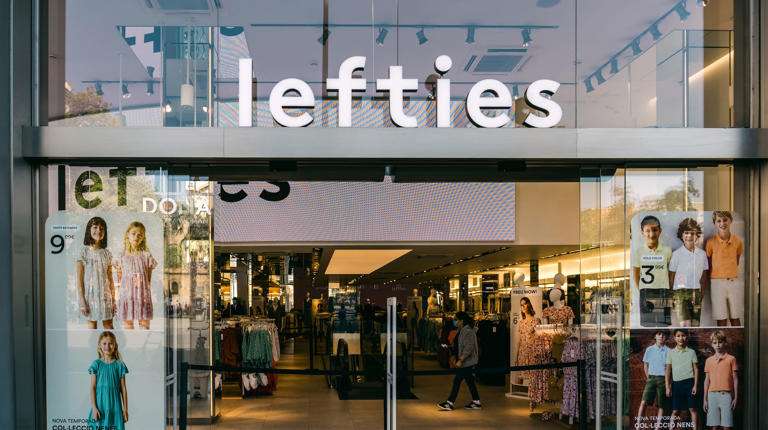
Physical retail remains central to Lefties' growth strategy. Inditex plans to add around 200 stores across Western Europe, targeting high-footfall shopping destinations where consumers are increasingly seeking affordable fashion. A major milestone is the brand's planned entry into the UK, directly confronting Primark in its home market. Flagship stores are planned for London's Oxford Street and Westfield London, alongside locations at Lakeside in Essex, Bluewater in Kent and Metrocentre in Gateshead. Each outlet will average approximately 1,800 square metres, reinforcing Inditex's commitment to large-format value retail. Beyond Britain, the expansion includes Germany, with a flagship in Düsseldorf, as well as France and other key European markets.
Technology as a differentiator
Where Lefties differs from many traditional discount retailers is its investment in digital retail infrastructure. Many value chains have deliberately limited technology investments to protect thin operating margins. Primark, for example, has always maintained only a limited e-commerce offering. Lefties is moving in the opposite direction by integrating omnichannel services into its stores.
New flagship locations feature extensive self-checkout areas, automated click-and-collect services, LED digital displays and integrated inventory systems that connect online and offline shopping. The stores also adopt the clean, modern layouts associated with Zara and other Inditex brands rather than the warehouse-style format common among discount retailers. This allows Lefties to offer a premium shopping experience while maintaining value-oriented pricing.
Balancing growth and margins
Despite the opportunities, the expansion also has its challenges. Budget fashion inherently operates on thinner margins, making operational efficiency critical. Inditex must ensure that the rapid growth of Lefties does not dilute the profitability of its broader brand portfolio, which achieved a gross margin of 61.2 per cent during the first quarter. Competition is equally intense. Primark enjoys strong customer loyalty and significant economies of scale, while Shein continues to dominate digital fast fashion through data-driven merchandising and on-demand manufacturing. Regional players such as Kiabi also retain deep local market knowledge.
For Lefties, sustained success will depend on whether its combination of nearshore sourcing, rapid product development and advanced retail technology can generate sufficient volumes to offset the costs of operating large-format stores while maintaining low prices.
Originally launched in 1999 as an outlet concept, Lefties has undergone a complete transformation. Today the brand operates more than 210 stores, serves over five million active customers in Spain and Portugal, and has expanded into Mexico, the Middle East and North Africa. Supported by Inditex's €2.3 billion capital expenditure programme and an increasingly Gen Z-focused social media strategy, Lefties is now positioned as a key pillar of the group's next phase of international growth.
As inflation continues to reshape consumer spending patterns, Inditex is signalling that the future of value fashion may no longer belong solely to discount specialists or digital disruptors. Instead, it could increasingly be defined by retailers capable of combining scale, technology and operational excellence under one integrated platform.