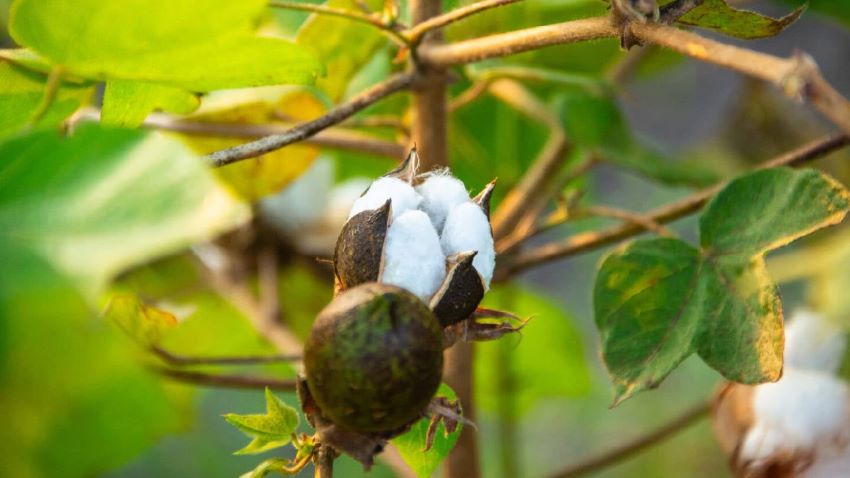
Monsanto in cooperation with the Lubbock Economic Development Alliance (LEDA) announced plans to begin construction of a new, state-of-the-art cotton seed processing facility in Lubbock, Texas. The construction of the new facility is expected to begin in March 2016 and be completed in the second half of calendar year 2017.
With an investment of $140 million, the facility is expected to employ 40 full-time personnel. The site will be established as Monsanto’s primary US hub for all commercial cotton seed processing operations - to include cleaning, treating and bagging of cotton seed - while existing processing facilities will transition to support storage and warehousing, pre-commercial operations and research in various parts of the cotton belt.
Last October, Monsanto announced a number of strategic actions to help drive greater scale in its business and further enhance its overall operations. Location of the new hub facility, Monsanto’s established relationship with LEDA and the opportunity to leverage new production technology factored into the decision to consolidate and optimize its U.S. commercial cotton seed processing operations.
- 1
- 2
- 3
- 4
- 5
- 6
- 7
- 8
- 9
- 10
Beyond the DTC Rush: Levi’s hybrid channel strategy sets a new retail benchmark
The global apparel sector is entering a phase where channel strategy is no longer a tactical lever but a core... Read more
The New Rules of Resale: EPR turning secondhand into fashion’s strategic growth …
The global fashion industry is facing a decisive regulatory and commercial reset. What began as a sustainability narrative around reuse... Read more
The 2027 Mandate: Why denim’s future hinges on verifiable data
For decades, the global denim industry has relied on a narrative of durability, heritage, and authenticity. That narrative is now... Read more
Europe’s textile core unravels as costs, imports and policy pressure bite
Europe’s textile and apparel sector, long seen as a benchmark for craftsmanship and industrial depth, is slipping into a prolonged... Read more
Automation, innovation, regulation are the forces shaping textiles in 2026
The global textile sector has entered a new era. Early 2026 saw the industry breach a $1.06 trillion valuation, reflecting... Read more
The new Brussels rulebook, every EU apparel order is now a balance-sheet risk
The humble export order sheet is undergoing a transformation. What was once a straightforward commercial instrument: SKU, volume, FOB price,... Read more
Why 2026-27 could be a defining cotton year for India’s farm-to-fashion economy
The global cotton economy is entering a more constrained phase, and for India, the implications run far beyond the farm... Read more
Luxury resale’s next big battle is no longer digital, it is about who controls s…
For nearly a decade, the luxury resale story was written in the language of platforms. Market leadership was measured by... Read more
Digital Arms Race: Indian apparel giants deploy AI to neutralize tariff crisis
The Indian textile and apparel sector is in a digital survival phase in 2026, shifting from traditional labor-intensive models to... Read more
Europe’s Textile Endgame: Why Project FAE is becoming fashion’s most critical in…
Europe’s apparel majors are no longer treating circularity as a branding layer. With Project FAE or Feedstock Activation Europe, the... Read more