Pakistan looking to sign a free trade agreement with the US. The country is trying to get preferential market access to the United States. Pakistan has been formulating this strategy after the United States decided to strip India of its preferential market access that exempted Indian exports worth billions of dollars from American tariffs.
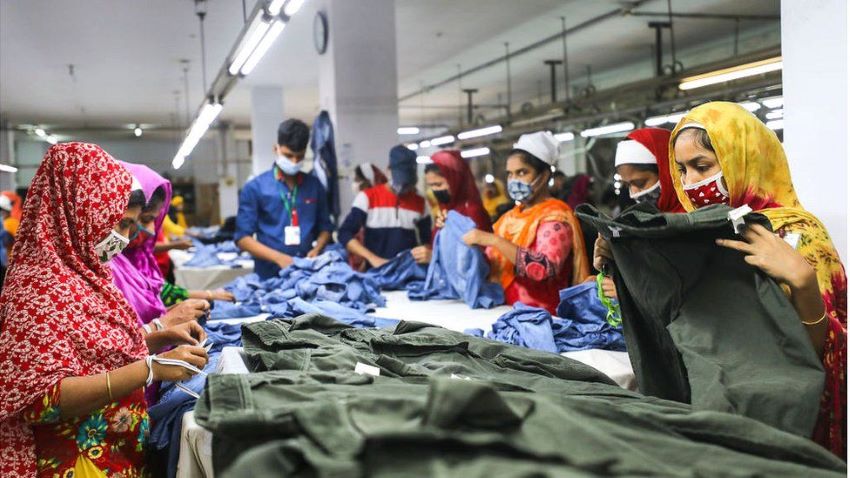
Pakistan was the 55th largest supplier of goods to the United States in 2017 with total exports worth $3.6 billion, while imports from the US were $2.8 billion in the same period. Pakistan’s main exports to the US include textile articles, knit apparel, woven apparel, leather products, cotton, and agricultural products.
As a first step Pakistan is increasing its production and value addition. Lucrative incentives will be offered to local and foreign investors to set up new industries to increase the country’s production line for exports and capture the international market with quality goods. Pakistan has been benefitting from tariff preferences (mostly zero duties on two-thirds of all product categories) under the Generalized Scheme of Preferences (GSP) Plus arrangement awarded by the European Union since January 2014. This has helped Islamabad increase its exports by 13 per cent so far. However, there is no guarantee that the US’ abolishment of preferential market access to India will automatically benefit Pakistan.
- 1
- 2
- 3
- 4
- 5
- 6
- 7
- 8
- 9
- 10
The End of Youth Obsession: Retail’s shift toward the silver economy
Forget the youth obsession, the ‘Silver Economy’ is no longer peripheral, it is the nucleus of global retail growth. In... Read more
Footprint up, like-for-like down, Primark’s demerger comes at a critical moment
Associated British Foods’ decision to demerge Primark into a standalone listed entity, marks one of the most consequential shifts in... Read more
Yarn Expo Shenzhen 2026: GBA connectivity and AI innovation drive mid-year sourc…
The global textile industry is preparing for a strategic return to the South China manufacturing heartland as Yarn Expo Shenzhen... Read more
Fiber Rebalance: Why cotton is gaining ground in a volatile synthetic market
Into the 2026/27 season global cotton economy is entering a decisive phase. Fresh projections from the International Cotton Advisory Committee... Read more
PM MITRA parks face execution test as India’s textile exports recalibrate
India’s textile and apparel sector closed FY 2025-26 with exports worth Rs 3,16,334.9 crore, a 2.1 per cent increase that,... Read more
Dominance of Pure Play: Apparel is rewiring growth around precision, AI and trac…
The global fashion industry is entering a structural reset, and it’s not just because of cyclical demand decline or tariff... Read more
New Australian Wardrobe Economy: Where AI, sustainability, e-commerce converge
Australia’s fashion and apparel industry is no longer defined by post-pandemic recovery; it has entered a transformative phase. According to... Read more
Intertextile Shenzhen 2026- Pioneering the AI-driven future of fashion technolog…
The global textile industry is descending upon the Shenzhen Convention & Exhibition Center from June 9–11, 2026, for the highly... Read more
Yarn Expo Shenzhen 2026: GBA connectivity and AI innovation drive mid-year sourc…
The global textile industry is preparing for a strategic return to the South China manufacturing heartland as Yarn Expo Shenzhen... Read more
Indo-Dutch alliance targets textile circularity as global green jobs hit 142 mn
Netherlands and India formalized a roadmap to scale circular design and textile recycling. At the FICCI RECEIC Global Symposium 2026... Read more