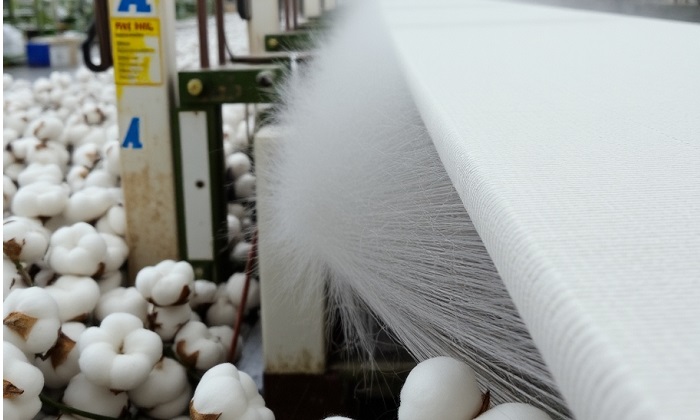
East African nation of Rwanda wants to develop its own textile industry, cut import of garments and create jobs through factories. Every year, the country is spends over $15 million importing second hand clothes. In order to reduce reliance on imported clothing, the country is seeking funds and skills from Chinese investors to establish garment factories.
Among the economic platforms, tailoring has been seen top opportunities for increasing more locally made products. It is possible that some imported knitted clothes such as uniforms can be made by locals. And Chinese investors have offered to train local tailors.
Rwanda has the advantage of a strong and disciplined workforce. The country wants to achieve large-scale industrial manufacturing and develop a broad base of skills in manufacturing and diversify the country’s export base. In time it hopes to start exporting textile garments to Europe and the US.
The tie-up with Chinese companies will help Rwandan youth and women acquire practical skills on manufacturing garments for both domestic consumption and export, establishing garment and textile production centers. Activities like cutting, finishing, packaging and warehouse will equip them with the necessary skills.

- 1
- 2
- 3
- 4
- 5
- 6
- 7
- 8
- 9
- 10
Cotton trade under pressure as war risks and tariff chaos raise apparel costs
The global textile and apparel industry is entering a high-stakes period of volatility as the ongoing Iran war creates a... Read more
Copenhagen GFA summit 2026 signals reset in global apparel finance
" " The global apparel, textile, and fiber manufacturing industries are entering a decisive phase of financial and operational realignment, as... Read more
Global apparel supply chains realign as India navigates trade volatility
The global apparel and textile sector is experiencing a significant structural shift, as major manufacturers and retailers move away from... Read more
India’s textile sector targets global supply chain shift with $100 bn export pus…
As global brands push up efforts to diversify sourcing beyond traditional manufacturing hubs, India is repositioning its textile industry through... Read more
India balances farm interests and export ambitions with temporary cotton import …
" " The textile industry has received a policy reprieve after the Ministry of Finance eliminated the 11 per cent import... Read more
Global supply chain strain deepen as fashion brands tighten sourcing costs
The global apparel industry is dealing with growing sourcing tension as big fashion retailers intensify efforts to reduce procurement costs... Read more
From Voluntary to Mandatory: Asia’s manufacturing hubs lock in green compliance …
The multi-billion-dollar Asian apparel export market is entering a enforced sustainability era, where environmental and labour compliance is no longer... Read more
MediaVision report signals the end of mass-market fashion marketing
" " The latest MediaVision Q1 2026 Fashion Report highlights, the age of broad-spectrum marketing and passive brand awareness is rapidly... Read more
Circularity as Strategy: BRICS countries turn waste into competitive advantage
The global fashion industry’s long-standing take-make-dispose model is being reset as BRICS economies increase their transition toward circular production systems.... Read more
Amazon’s €15 bn bet on France and the future of commerce
As Europe’s luxury sector enters a phase of austerity, a parallel transformation is unfolding in the continent’s retail foundations. What... Read more