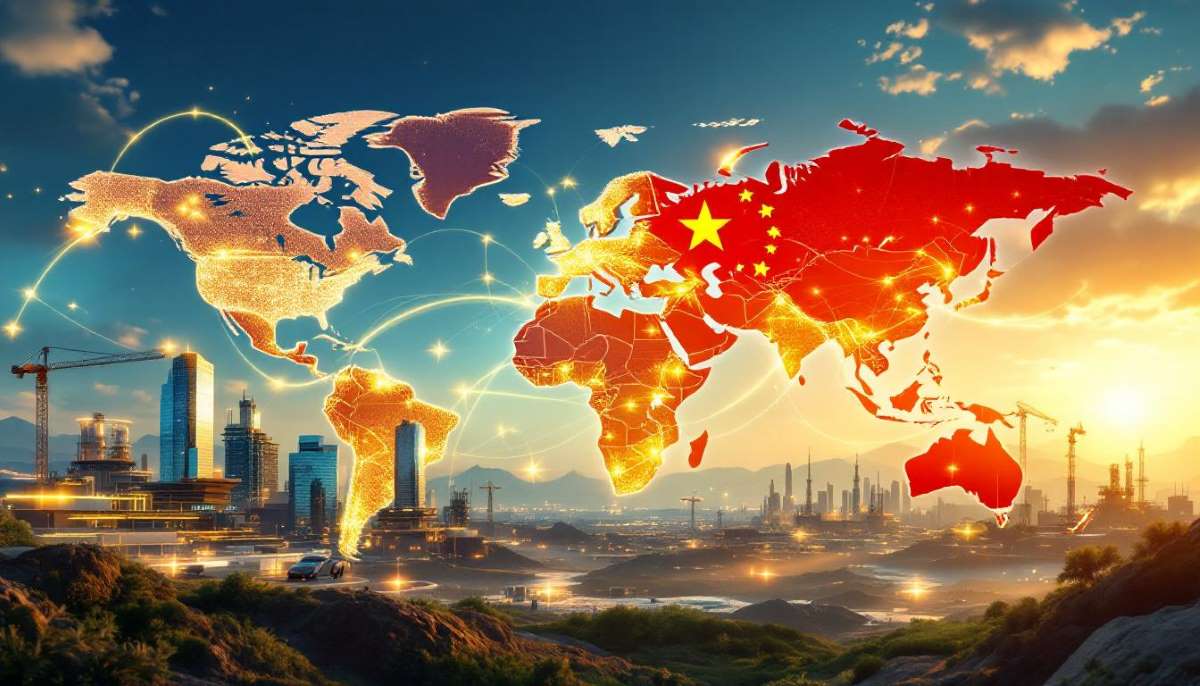
The Economic and Technology Co-operation Agreement (ETCA) with India is expected to increase Sri Lanka’s competitiveness in industrial exports and help Sri Lanka gain better access to India’s rapidly growing market. Another area Sri Lanka is looking forward to is a free trade agreement with China, where the focus will be on apparels, tea, gems and jewelry, rubber products, coconuts and spices as key industries.
Together the Chinese FTA and the Indian ETCA are expected to give Sri Lanka preferential access to a market of 2.5 billion people and an emerging middle class larger than the whole of the EU. Sri Lanka has also launched negotiations on a free trade agreement with Singapore and is particularly focused on encouraging Singaporean investment into Sri Lanka and new concepts such as re-manufacturing industries.
Sri Lanka’s FTA with Pakistan also provides an opportunity for Indian investors to access that market on a preferential basis by locating to Sri Lanka. There is a possibility of redirecting some of Indo-Pakistan trade currently transmitting through Dubai. The SAARC region is one of the fastest growing regions of the world. India accounts for 78 per cent of the region’s GDP followed by Pakistan and Bangladesh at 10 per cent and eight per cent.

- 1
- 2
- 3
- 4
- 5
- 6
- 7
- 8
- 9
- 10
Why European consumers are spending more but buying less fashion
For much of the last two decades, the European fashion industry operated under the assumption that rising consumer wealth would... Read more
Why US apparel prices defied inflation while product quality improved
As inflation reshapes nearly every aspect of American household spending, one consumer category continues to stand apart. Housing costs have... Read more
The Resale Revolution: Vinted’s marketplace model reshapes European retail
The French fashion market has reached a turning point. In a development that highlights the growing influence of circular commerce,... Read more
France declares war on ultra-fast fashion with new green law, will reshape globa…
France has become the first major economy to legislate specifically against the ultra-fast fashion business model, a watershed moment for... Read more
France declares war on ultra-fast fashion with new green law, will reshape globa…
France has become the first major economy to legislate specifically against the ultra-fast fashion business model, a watershed moment for... Read more
Click-and-Collect: Why retailers are turning pickup counters into sales machines
Modern retail has changed the role of the physical store. Once viewed primarily as a point of sale or inventory... Read more
Why fashion e-commerce returns persist despite smarter sizing technology
For over a decade, the fashion sector has invested heavily in virtual fitting rooms, AI-powered size recommendations, and 3D body... Read more
A Quest for Essence: Unveiling the 2027 A/W Trends at Intertextile Shanghai Appa…
As the global textile industry looks toward the upcoming season, the Intertextile Shanghai Apparel Fabrics – Autumn Edition stands ready... Read more
Beyond globalization, local consumer behavior rewriting fashion retail strategy
The traditional blueprint for global fashion expansion is being rewritten. For decades, apparel companies assumed globalization would gradually create a... Read more
Virtual wardrobes redraw retail boundaries as gaming platforms become fashion ec…
The boundary between physical clothing and digital apparel is rapidly eroding as gaming environments evolve into fully functioning consumer markets.... Read more