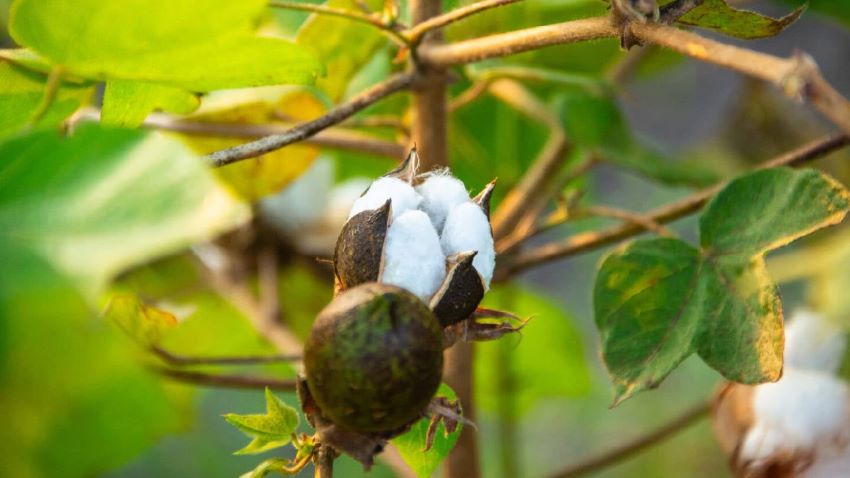
Cotton producers in the United States could plant up to 9.1 acres of cotton this coming spring, up 6.2 per cent from 2015. In the mid-south, growers intend to plant 1.2 million acres, which is a 24.9 per cent increase from last year. Growers in the southwest are eyeing 5.3 million cotton acres, which indicates a 6.1 per cent leap.
Elsewhere in the US, far west cotton producers expect to plant 2,13,000 acres, totaling 24.4 per cent more than what was recorded in 2015. The southeast is the only region with an expected decrease of 5.1 per cent, reducing its total to 2.1 million acres.
Planted acreage is just one of the factors that will determine supplies of cotton and cotton seed. Ultimately, weather, insect pressures and agronomic conditions play a significant role in determining crop size. Upland cotton intentions are 8.9 million acres, which is a 5.7 per cent jump from 2015. Extra-long staple intentions of 2,08,000 acres make up a 31.2 per cent increase.
History has shown that US farmers respond to relative prices when making planting decisions. Cotton is grown in 17 states stretching across the southern half of the United States. Cotton is produced on about 18,600 farms in the US.
- 1
- 2
- 3
- 4
- 5
- 6
- 7
- 8
- 9
- 10
Beyond the DTC Rush: Levi’s hybrid channel strategy sets a new retail benchmark
The global apparel sector is entering a phase where channel strategy is no longer a tactical lever but a core... Read more
The New Rules of Resale: EPR turning secondhand into fashion’s strategic growth …
The global fashion industry is facing a decisive regulatory and commercial reset. What began as a sustainability narrative around reuse... Read more
The 2027 Mandate: Why denim’s future hinges on verifiable data
For decades, the global denim industry has relied on a narrative of durability, heritage, and authenticity. That narrative is now... Read more
Europe’s textile core unravels as costs, imports and policy pressure bite
Europe’s textile and apparel sector, long seen as a benchmark for craftsmanship and industrial depth, is slipping into a prolonged... Read more
Automation, innovation, regulation are the forces shaping textiles in 2026
The global textile sector has entered a new era. Early 2026 saw the industry breach a $1.06 trillion valuation, reflecting... Read more
The new Brussels rulebook, every EU apparel order is now a balance-sheet risk
The humble export order sheet is undergoing a transformation. What was once a straightforward commercial instrument: SKU, volume, FOB price,... Read more
Why 2026-27 could be a defining cotton year for India’s farm-to-fashion economy
The global cotton economy is entering a more constrained phase, and for India, the implications run far beyond the farm... Read more
Luxury resale’s next big battle is no longer digital, it is about who controls s…
For nearly a decade, the luxury resale story was written in the language of platforms. Market leadership was measured by... Read more
Digital Arms Race: Indian apparel giants deploy AI to neutralize tariff crisis
The Indian textile and apparel sector is in a digital survival phase in 2026, shifting from traditional labor-intensive models to... Read more
Europe’s Textile Endgame: Why Project FAE is becoming fashion’s most critical in…
Europe’s apparel majors are no longer treating circularity as a branding layer. With Project FAE or Feedstock Activation Europe, the... Read more