A weaker ringgit will be the immediate impact to Malaysia from Brexit, which fell steadily against the US dollar at a pace last seen in the Asian financial crisis of 1997/1998 by midday yesterday as investors dumped riskier assets in emerging markets for so-called safe-haven assets such as US treasuries, Japanese government bonds, German bunds and gold.
Malaysian Rating Corp Bhd chief economist Nor Zahidi Alias says the whole issue boils down to uncertainties that will have impact on business decisions and the real economy especially in Europe. Brexit will cause a knee jerk reaction to the financial markets - currencies being the most vulnerable. The volatility in equities and bonds cannot be underestimated in the short term but will eventually subside when a clearer picture emerges.
For now, the pound sterling has weakened against the ringgit but the cross-rate will be up for a lot of volatile trading. Analysts have pointed out before the referendum that the ringgit and the rupiah were the most vulnerable Asean currencies to swings associated to the uncertainties surrounding the aftermath of Brexit.
The direction of commodity prices and crude oil in particular, will be key to the ringgit’s performance. The global crude oil benchmark, Brent, declined by more than 4 per cent in the late morning as British media confirmed that Brexit was imminent. There is every indication that crude oil prices will continue to be volatile because demand may be crimped by Brexit uncertainties stemming from recessions in Britain and the EU, potentially slower US economic growth and the unresolved Chinese debt crisis.

- 1
- 2
- 3
- 4
- 5
- 6
- 7
- 8
- 9
- 10
From cotton to MMF cost equation is rewriting global textile trade
The global textile and apparel trade has grown from $560 billion in 2006 to $914 billion in 2025, reveals the... Read more
Polyethylene stretch yarn challenges elastane’s hold on activewear
The global activewear, denim and intimate apparel markets have built a substantial business around stretch. But the same fibre combinations... Read more
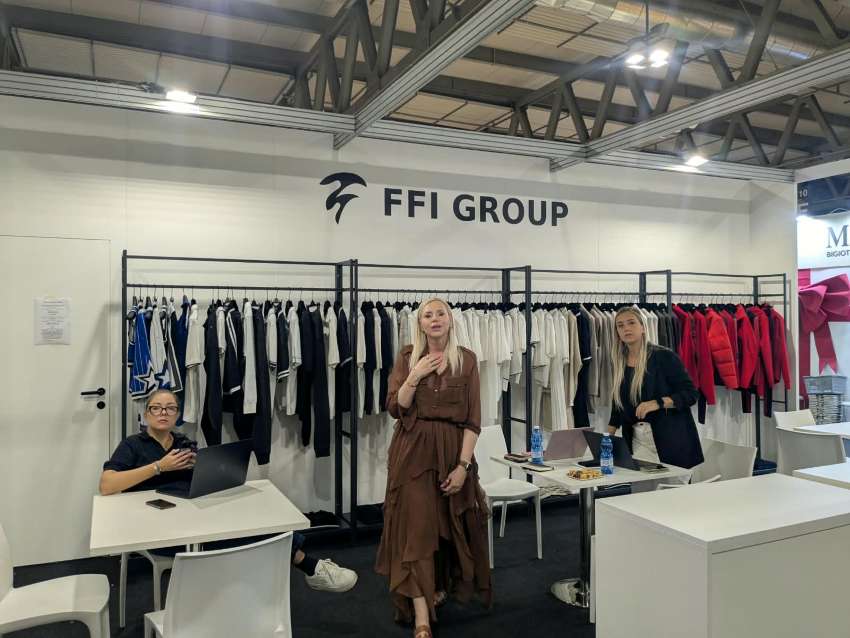
Automation Meets Italian Design: FFI Srl unveils ‘Next-Gen Robotics’ to help bra…
At the recently concluded autumn edition of Ready to Show inside Hall 10 at Fiera Milano-Rho—staged alongside the Milano Fashion... Read more
From Dhaka to Milan: Mascom Composite backs Southern Europe’s sports and lifesty…
While the trade floor of Ready to Show Milano inside Hall 10 at Fiera Milano-Rho placed a heavy spotlight on... Read more
How surging silver prices are reshaping ‘Mid-Tier’ fashion jewellery
Escalating global bullion volatility and raw material pricing pressures are forcing a fundamental reassessment across the mid-tier fashion jewellery trade.... Read more
Milano Fashion & Jewels: How ‘Re-Engineered’ heritage crafts are driving hig…
A counter-movement against industrial uniformity is reshaping European bijouterie, transforming authentic craftsmanship into a powerful lever for high-margin boutique growth.... Read more
The "Total Look" Retail Revolution: The integration of jewellery, acce…
The conventional boundaries separating fashion jewellery, ready-to-wear and leather goods, have collapsed on the international retail floor. At the September... Read more
Why Rules of Origin could limit India’s FTA gains
India’s growing network of trade agreements promises lower tariffs and wider market access for its textile and apparel exporters. But... Read more
India-New Zealand FTA opens tariff-free route for textile exporters
The India-New Zealand Free Trade Agreement (FTA), which comes into force on October 20, 2026, creates a new tariff-free corridor... Read more
Virgin polyester drives global fibre output to record 139 mn tonnes
Global textile fibre production reached a record 139 million tonnes in 2025, up 5.3 per cent from 132 million tonnes... Read more