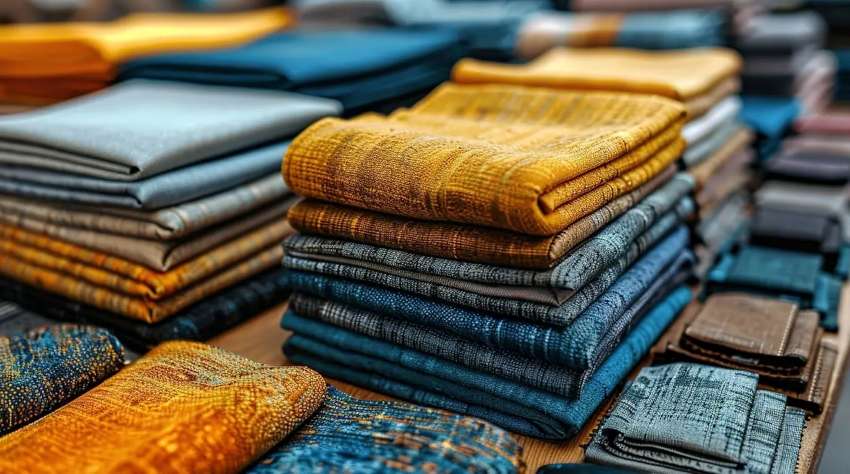
Cotton not only accounts for roughly a third of the world’s textile consumption but is also in danger of becoming a scarce resource as the world’s increasing population needs more land for food production. European brands have taken to making garments made entirely from recycled cotton. The technology allows them to recycle all materials that contain cellulose.
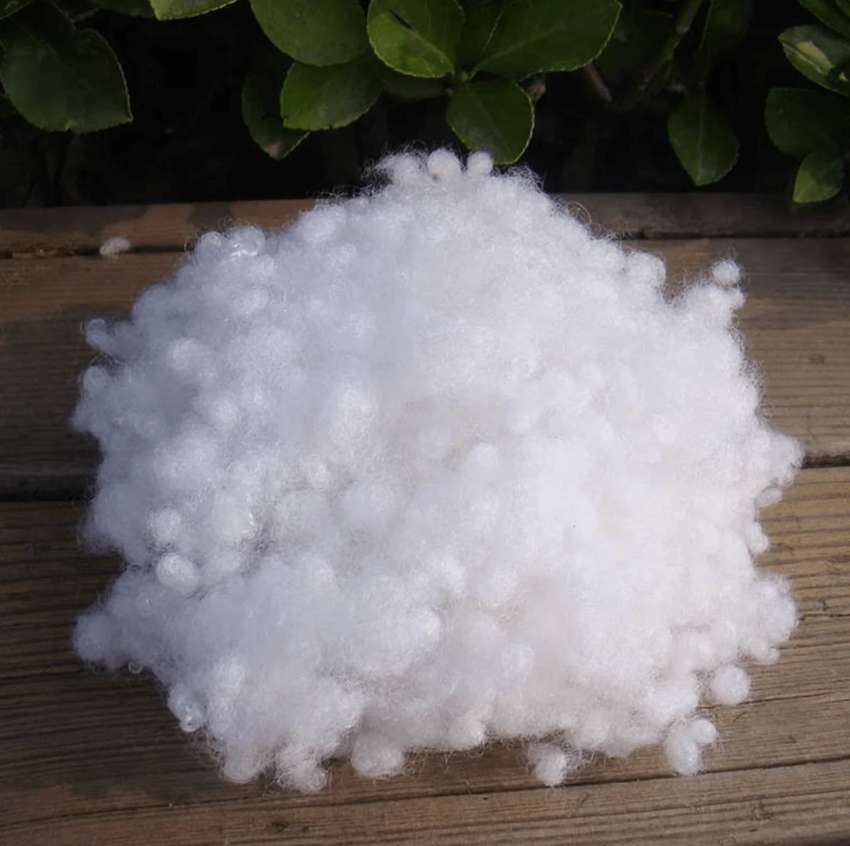
Old cotton clothes are brought to a factory and shredded and then turned into a porridge-like substance. After non-recyclable pieces like zippers and buttons have been removed, the porridge is broken down to the molecule level and turned into a fiber substance to be used for thread, resulting in rayon fabric. It is possible to recycle fabrics that contain a mix of cotton and other materials but the best results are got when recycling pure cotton.
From a sustainability perspective, cotton recycling scores particularly well as it uses no new ingredients other than timber, whose cellulose fibers can be added to the existing cotton ones.
But recycling of fabric often involves dangerous materials such as heavy metals. And because rayon is much harder to recycle than cotton, the recycling doesn’t go full circle. A better approach would be to compost the clothes. Valuable nutrients could be added to clothes, which would benefit the soil when they are composted.

- 1
- 2
- 3
- 4
- 5
- 6
- 7
- 8
- 9
- 10
From cotton to MMF cost equation is rewriting global textile trade
The global textile and apparel trade has grown from $560 billion in 2006 to $914 billion in 2025, reveals the... Read more
Polyethylene stretch yarn challenges elastane’s hold on activewear
The global activewear, denim and intimate apparel markets have built a substantial business around stretch. But the same fibre combinations... Read more
Automation Meets Italian Design: FFI Srl unveils ‘Next-Gen Robotics’ to help bra…
At the recently concluded autumn edition of Ready to Show inside Hall 10 at Fiera Milano-Rho—staged alongside the Milano Fashion... Read more
From Dhaka to Milan: Mascom Composite backs Southern Europe’s sports and lifesty…
While the trade floor of Ready to Show Milano inside Hall 10 at Fiera Milano-Rho placed a heavy spotlight on... Read more
How surging silver prices are reshaping ‘Mid-Tier’ fashion jewellery
Escalating global bullion volatility and raw material pricing pressures are forcing a fundamental reassessment across the mid-tier fashion jewellery trade.... Read more
Milano Fashion & Jewels: How ‘Re-Engineered’ heritage crafts are driving hig…
A counter-movement against industrial uniformity is reshaping European bijouterie, transforming authentic craftsmanship into a powerful lever for high-margin boutique growth.... Read more
The "Total Look" Retail Revolution: The integration of jewellery, acce…
The conventional boundaries separating fashion jewellery, ready-to-wear and leather goods, have collapsed on the international retail floor. At the September... Read more
Why Rules of Origin could limit India’s FTA gains
India’s growing network of trade agreements promises lower tariffs and wider market access for its textile and apparel exporters. But... Read more
India-New Zealand FTA opens tariff-free route for textile exporters
The India-New Zealand Free Trade Agreement (FTA), which comes into force on October 20, 2026, creates a new tariff-free corridor... Read more
Virgin polyester drives global fibre output to record 139 mn tonnes
Global textile fibre production reached a record 139 million tonnes in 2025, up 5.3 per cent from 132 million tonnes... Read more